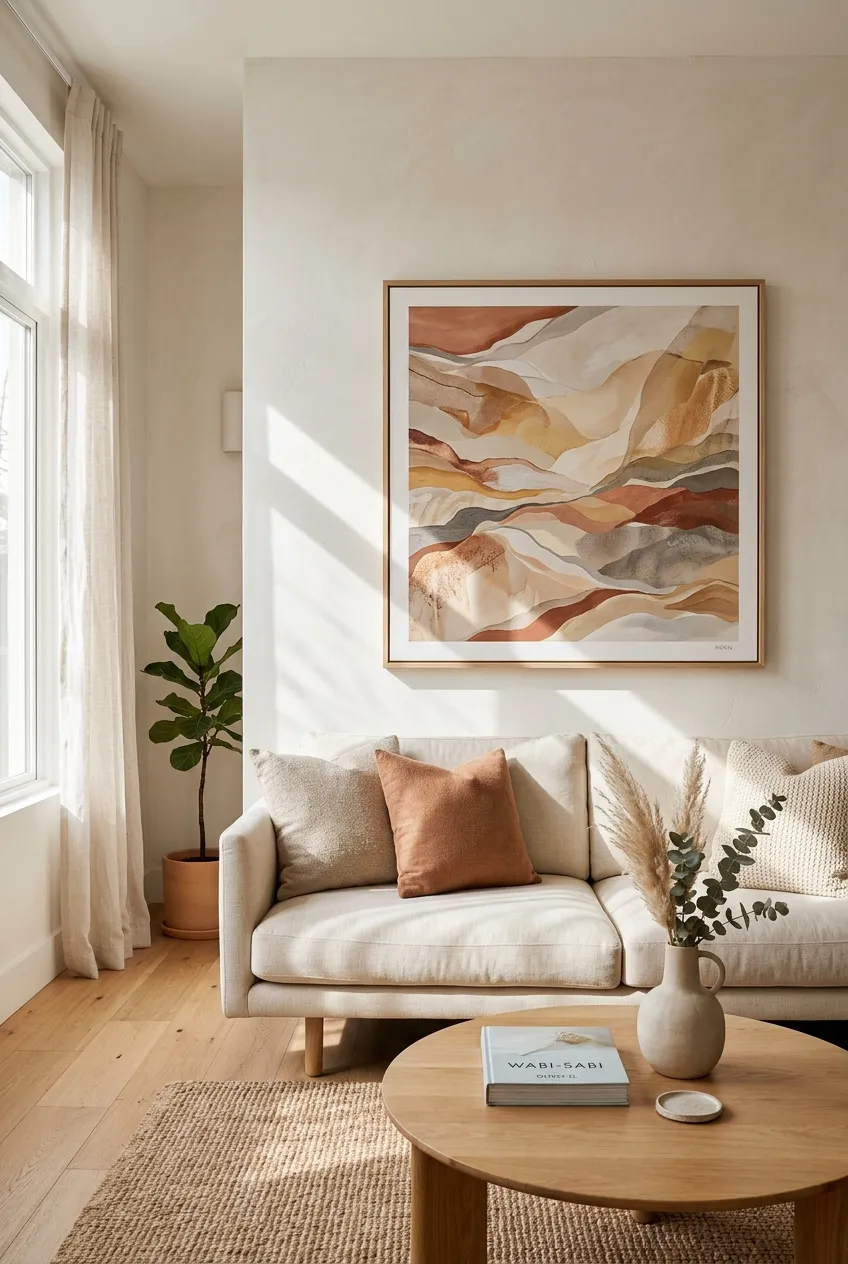
The entryway is one of the first parts of your home people see, but it is also one of the easiest spaces to overlook. Because it is usually smaller than a living room or bedroom, it can end up becoming little more than a place to drop keys, shoes, bags, and whatever else you are carrying.
A well-designed entryway does not need to be large or expensive. Even a narrow hallway can feel intentional when the furniture is correctly scaled, the lighting is warm, and everyday items have a proper place.
The best entryways also balance beauty with practicality. A console can provide a surface for keys and decorative objects, while a bench can make putting on shoes easier. A mirror can add visual interest while giving you one last chance to check yourself before leaving.
Whether you have a spacious foyer, a small apartment entrance, or simply a blank wall beside your front door, these entryway ideas can help you create a space that feels organized, warm, and connected to the rest of your home.
1. Warm Natural Wood Entryway
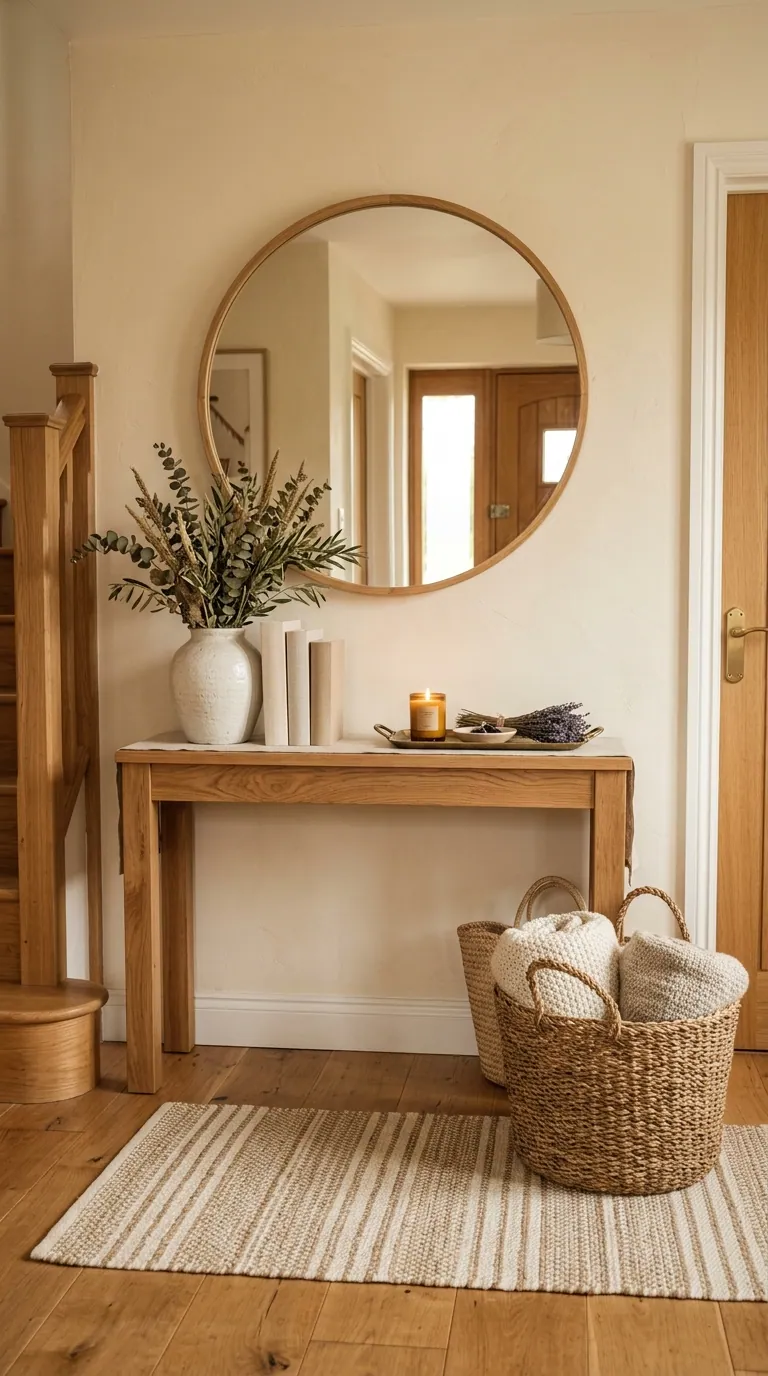
Natural wood immediately gives an entryway warmth without requiring much decoration. An oak console with simple lines can become the main feature of the space while keeping the room feeling light.
Pair the wood with cream walls, a neutral runner, and a small ceramic vase for a relaxed look. The combination works particularly well when the rest of the home uses similar natural materials.
2. Round Mirror Over a Console
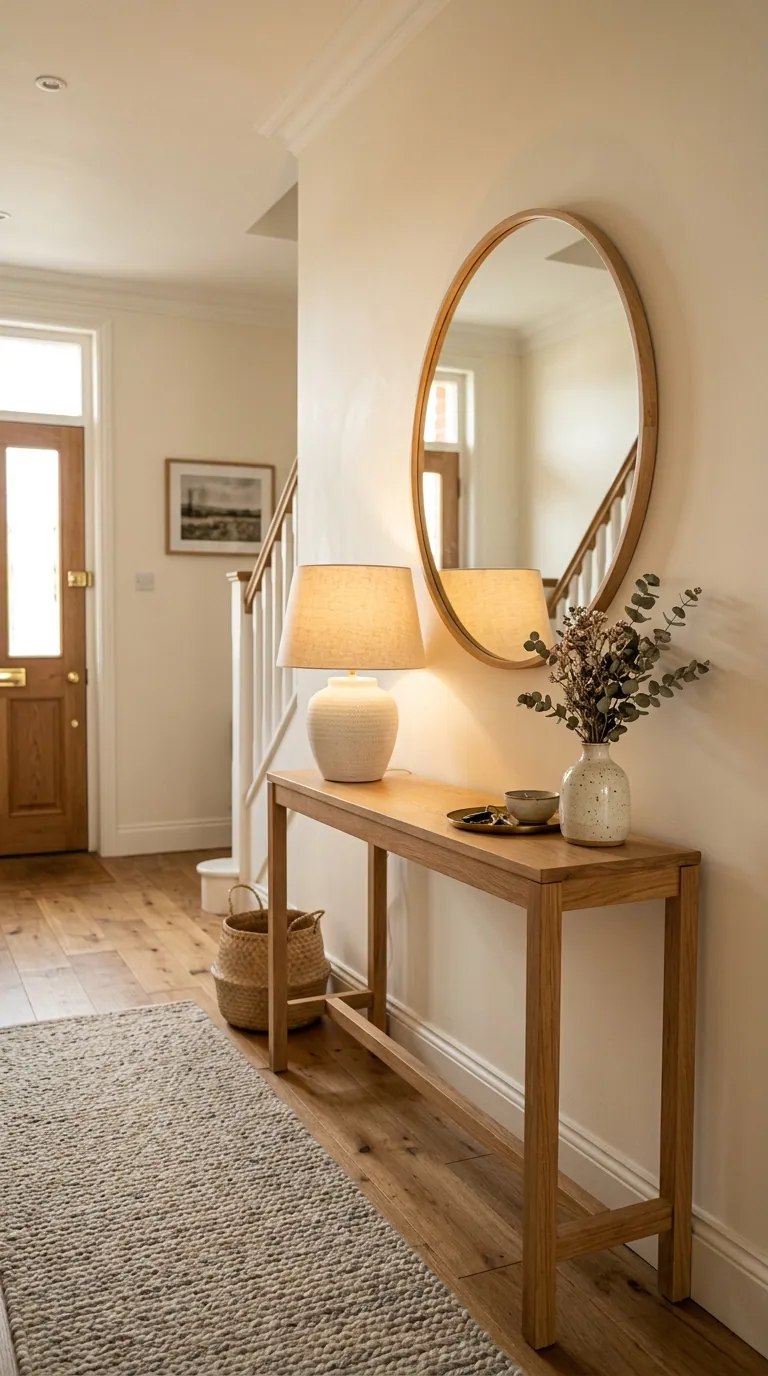
A round mirror can soften an entryway filled with straight architectural lines. Placing it directly above a console creates an easy focal point without requiring a large piece of artwork.
Keep the console styling simple. One lamp, a small decorative object, and a bowl for keys are often enough.
3. Narrow Console for a Small Entryway
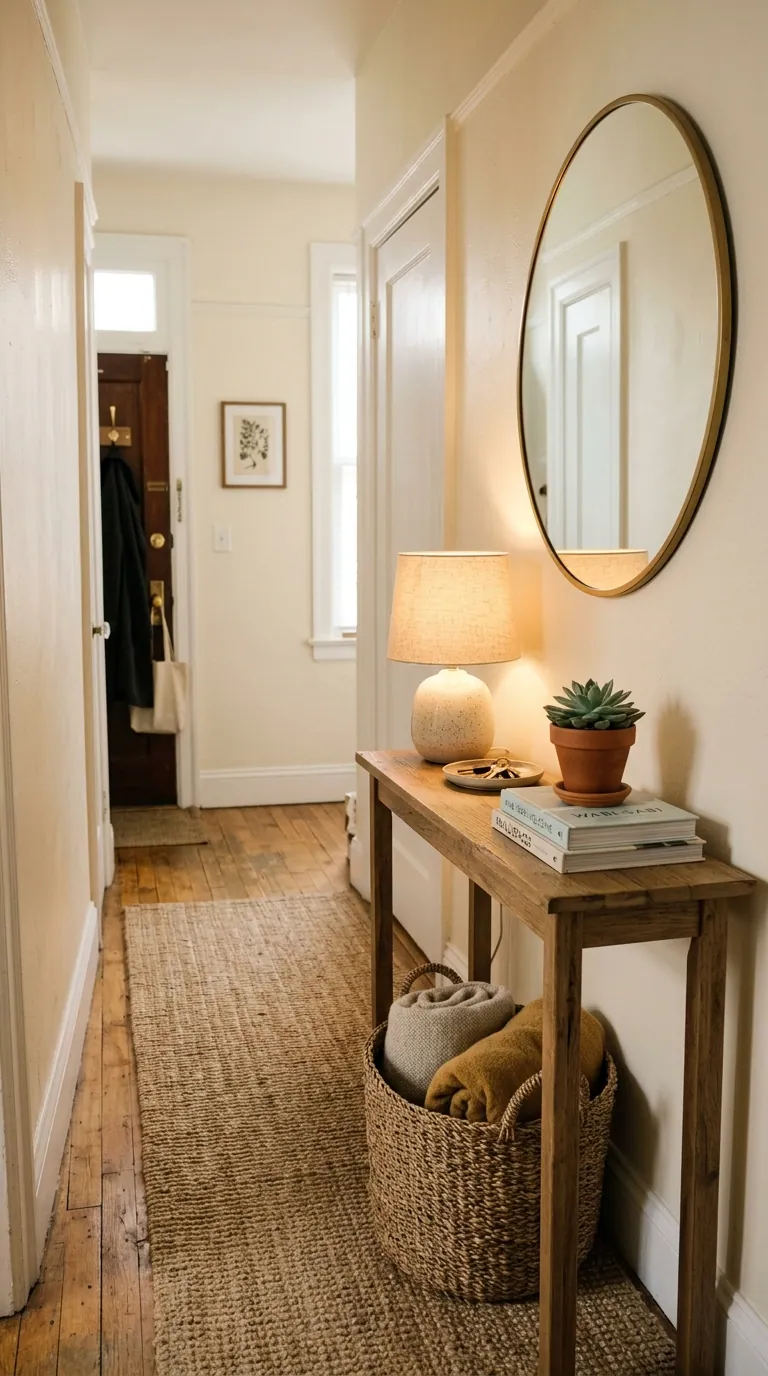
If your entryway is narrow, choose furniture based on depth rather than simply choosing the smallest piece available.
A slim console can provide useful storage without blocking circulation. Look for one with drawers or a lower shelf if you need somewhere to hide everyday items.
4. Comfortable Entryway Bench
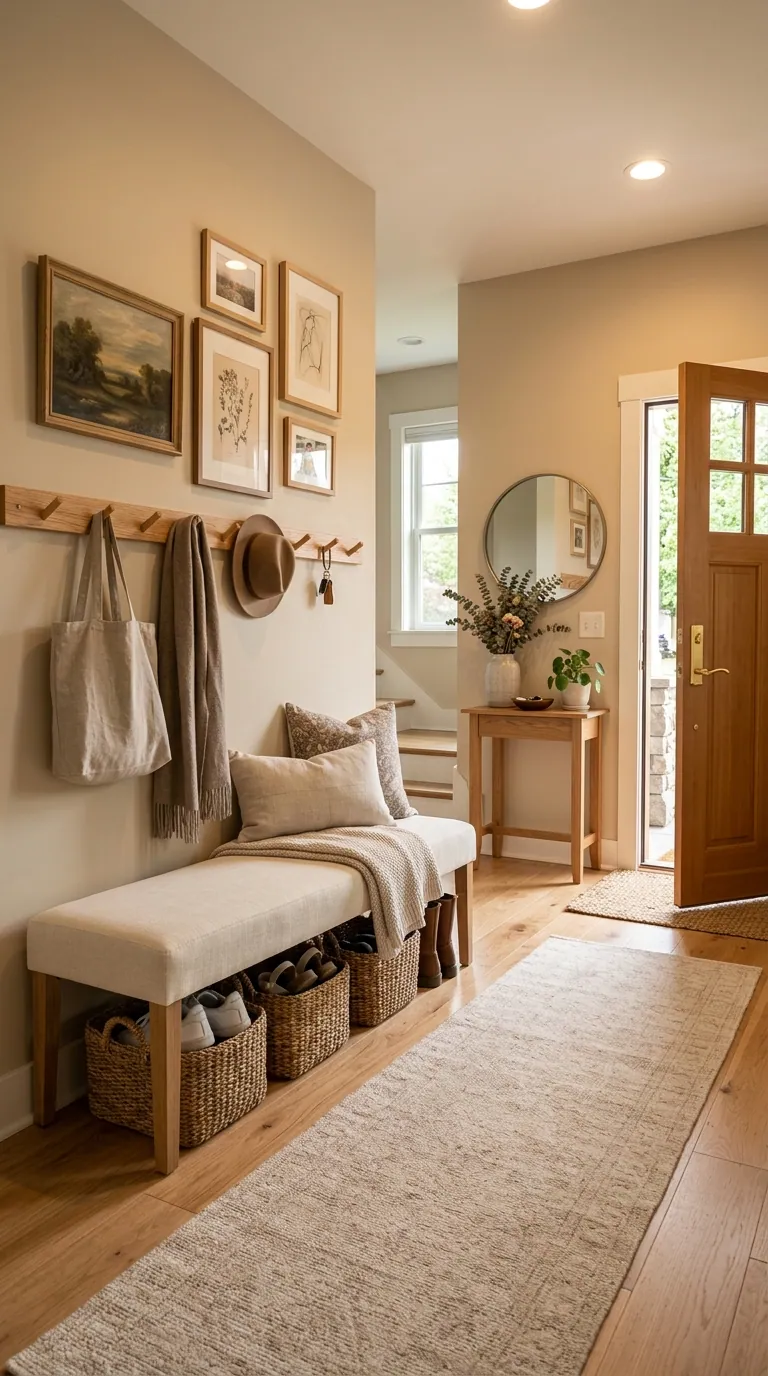
A bench makes an entryway considerably more practical, especially for households where shoes are regularly removed near the door.
Choose upholstery in a durable neutral fabric and leave enough room underneath for baskets or shoes. The result can feel both useful and decorative.
5. Entryway With Closed Storage
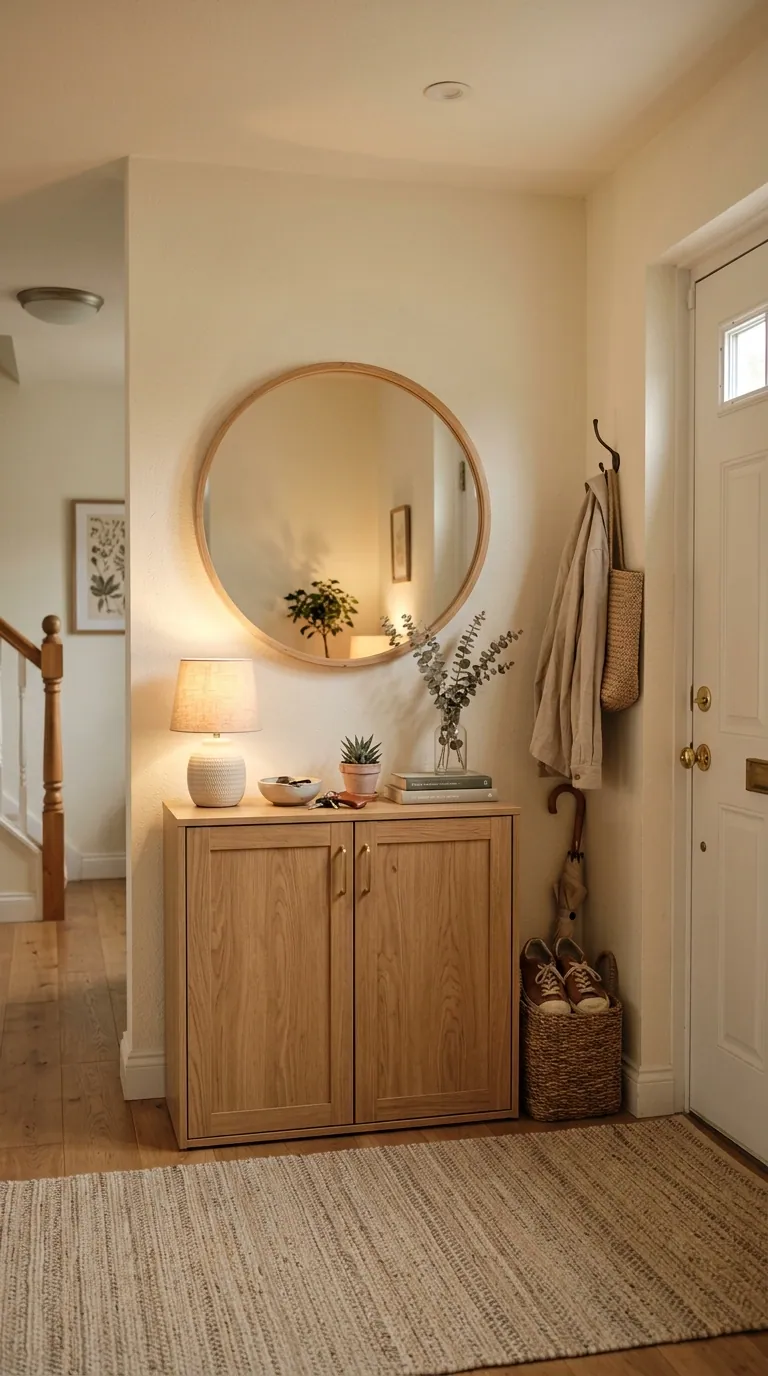
Open storage can quickly make an entrance look messy. Closed cabinets are useful when you want everyday clutter hidden from view.
Use the cabinet surface for just a few decorative pieces so the area still feels intentional rather than purely functional.
6. Layered Entryway Lighting
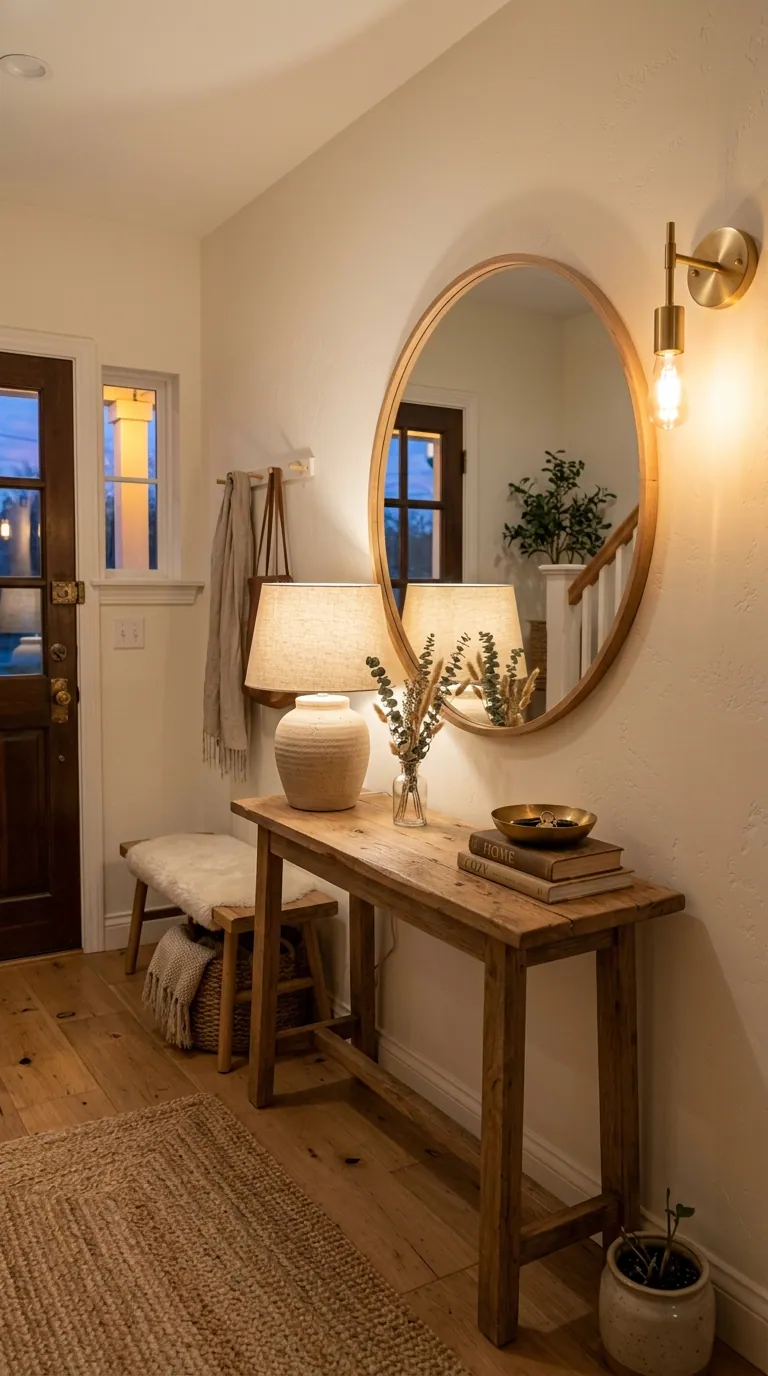
Good lighting can completely change the feeling of a small entrance.
Instead of relying entirely on an overhead fixture, combine a wall sconce, table lamp, or warm ceiling light. Multiple light sources create a softer transition between the outdoors and the rest of your home.
7. Entryway With a Large Mirror
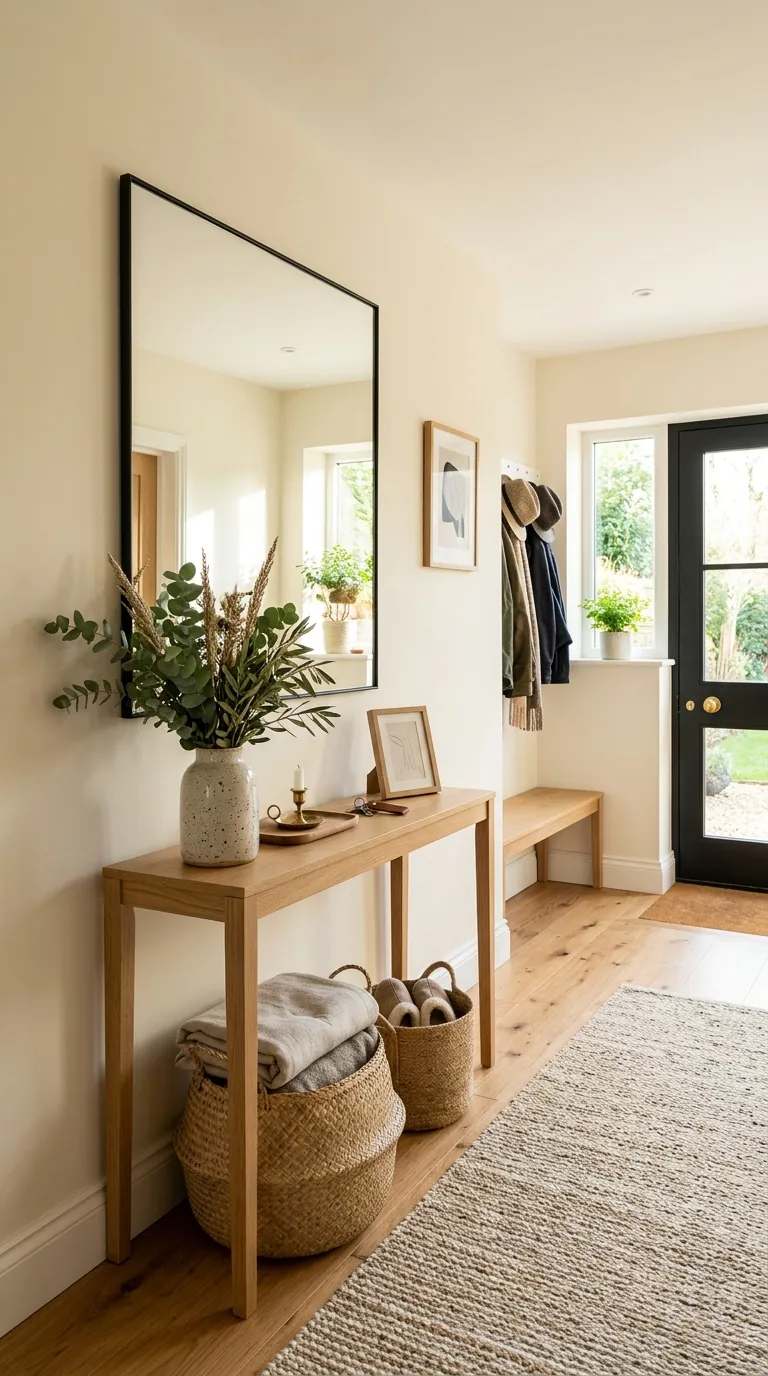
A large mirror is especially useful in smaller entrances because it reflects light and gives the wall more visual presence.
A simple rectangular mirror works well in modern interiors, while a softer framed design can suit more traditional spaces.
8. Soft Neutral Entryway
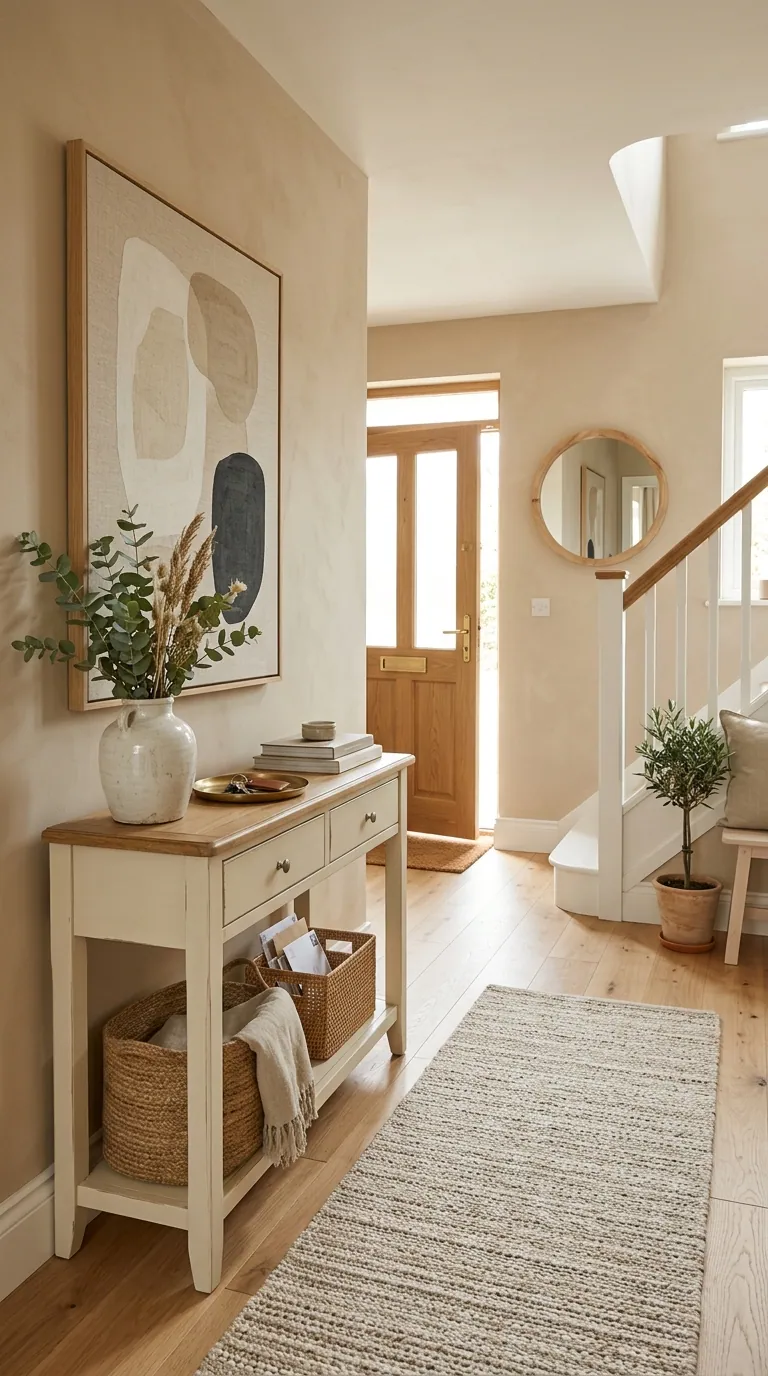
Neutral colors are an easy way to make an entryway feel calm and timeless.
Instead of using several shades of white, introduce beige, oatmeal, light wood, stone, and cream. Small differences in texture keep the palette from feeling flat.
9. Entryway With Hooks and Baskets
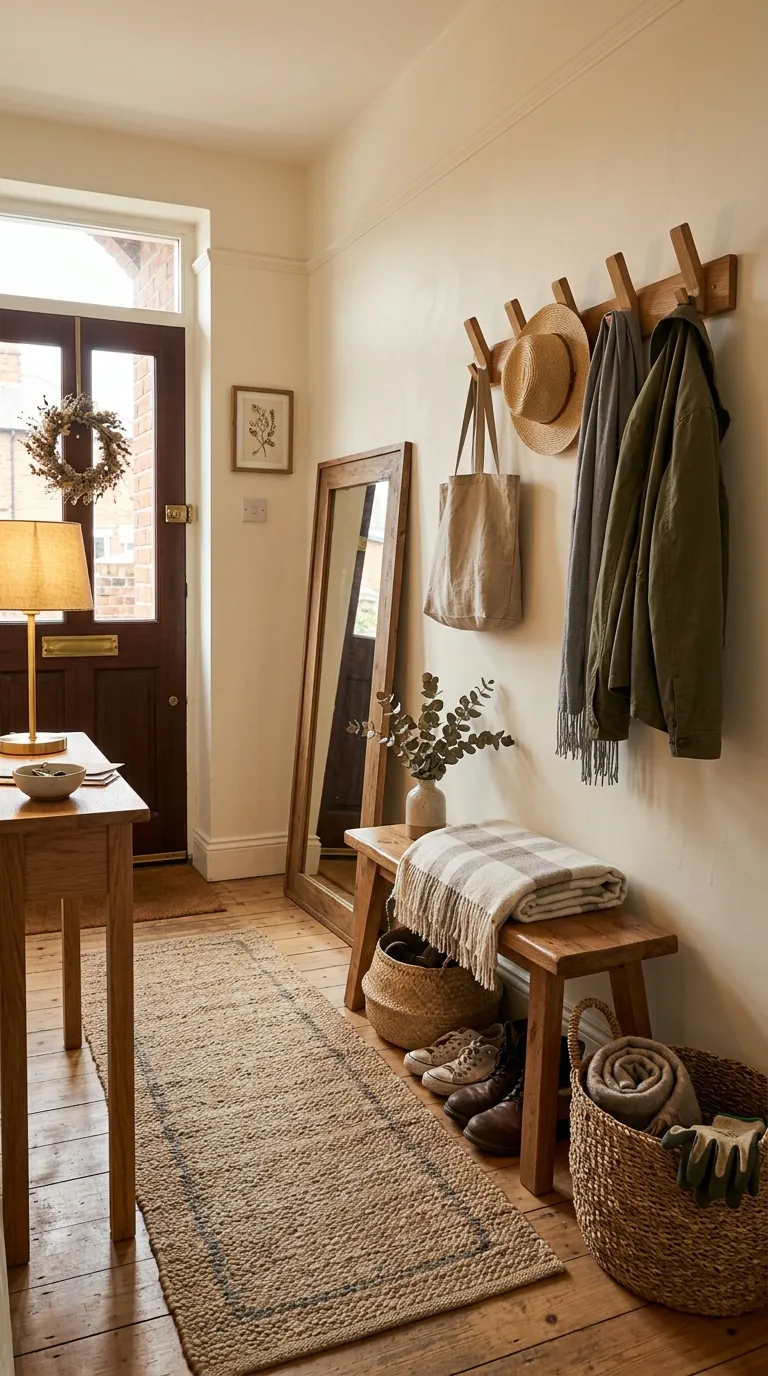
For a family entryway, accessible storage can be more valuable than decorative furniture.
Install a row of attractive hooks for coats and bags, then add baskets underneath for shoes, scarves, or smaller accessories.
10. Small Apartment Entryway
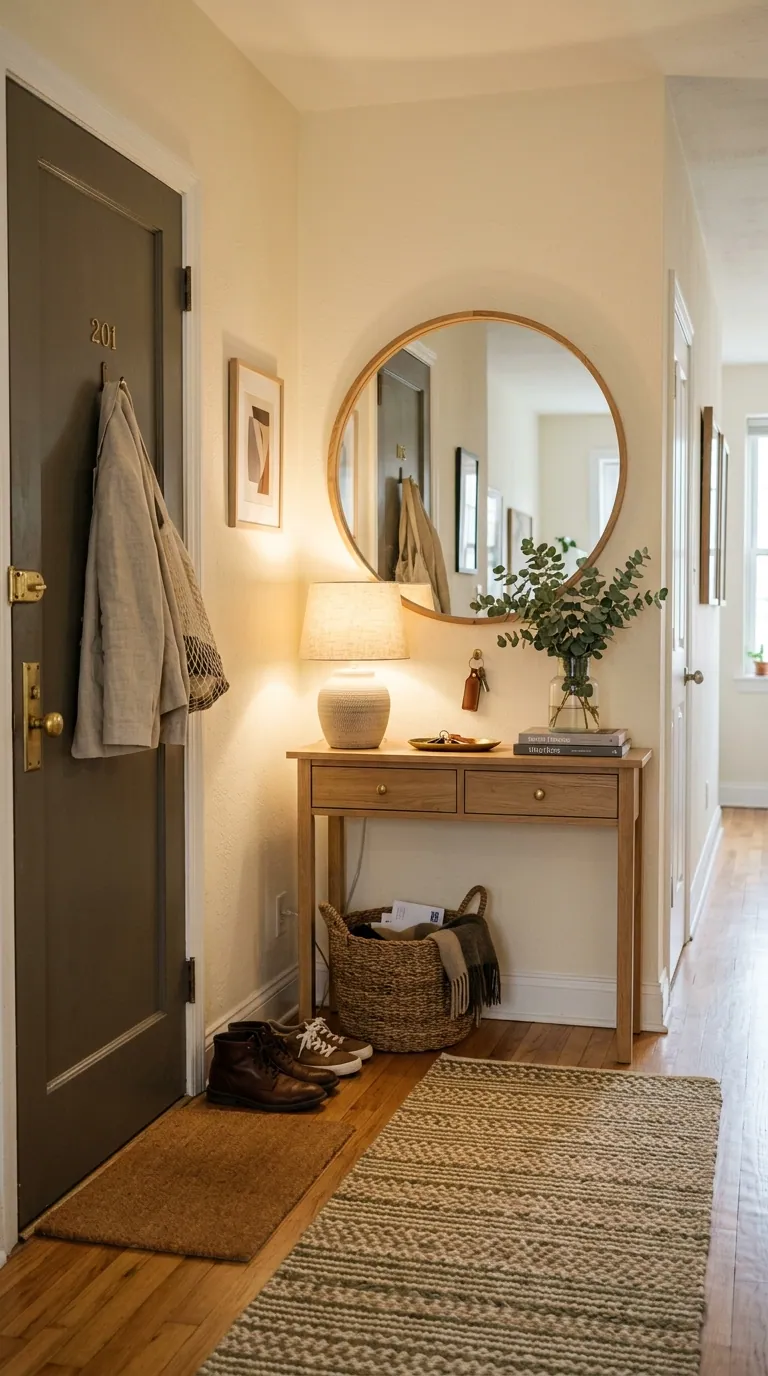
Apartment entrances often need to perform several jobs at once.
A narrow console, wall-mounted hooks, and a small basket can create an organized landing zone without taking over the available floor space.
11. Entryway With a Runner
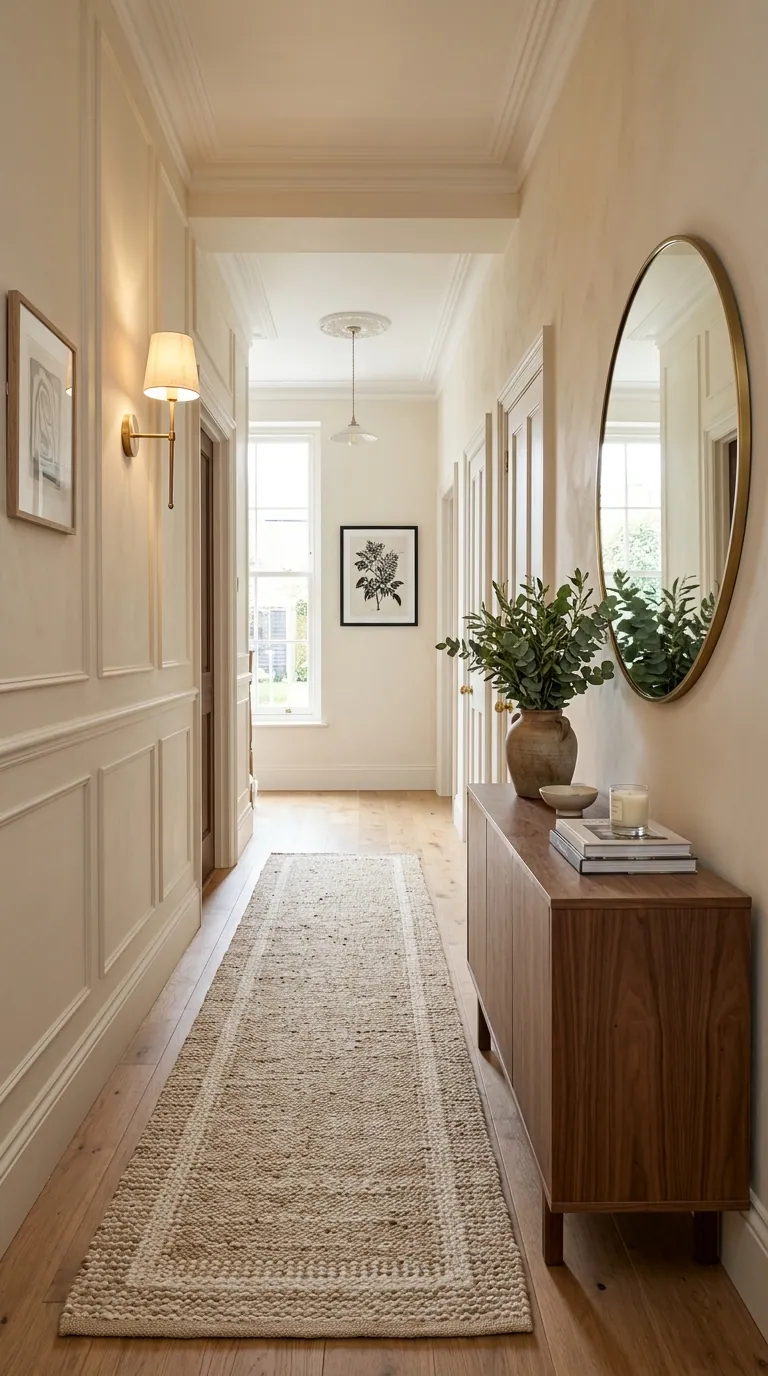
A runner can visually connect the front door with the rooms beyond it.
Choose a durable design that can handle regular foot traffic. A subtle pattern can also help disguise everyday dirt better than a completely plain rug.
12. Entryway Gallery Wall
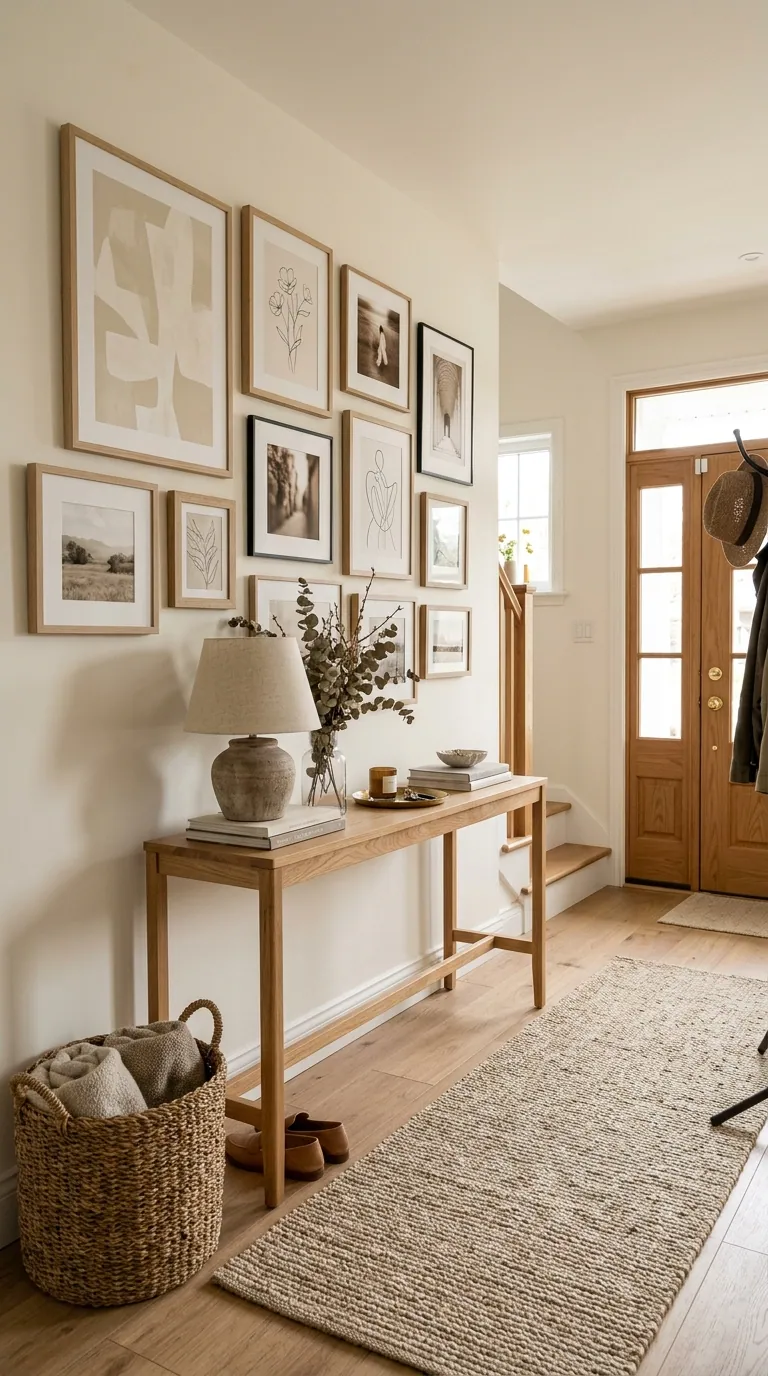
An entryway is a good place to display artwork because it can introduce the personality of your home before someone enters the main living spaces.
Mixing different frame sizes can create a collected appearance, while keeping the artwork within a restrained color palette keeps the arrangement cohesive.
13. Floating Entryway Shelf
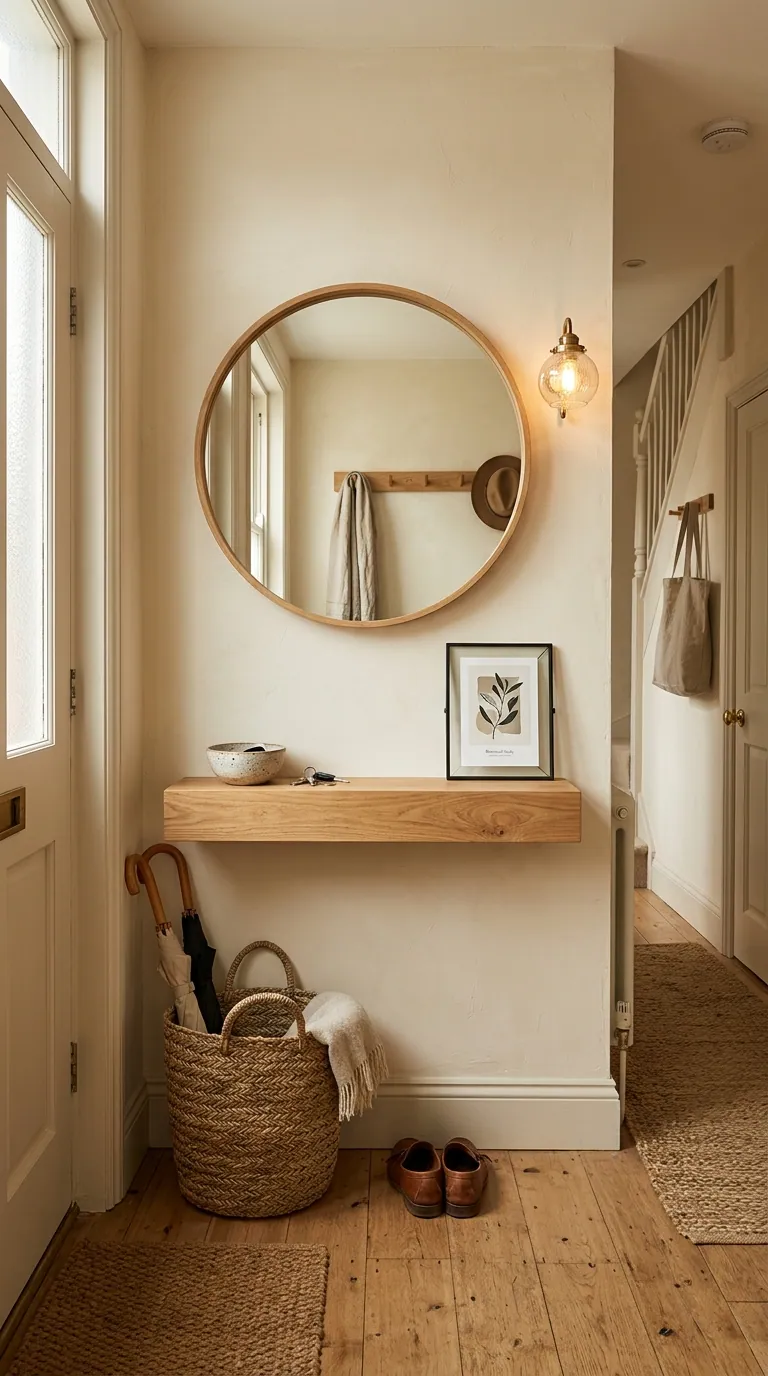
If there is not enough room for a console, a floating shelf can provide a similar visual effect.
Use it for keys, a small vase, or one decorative object. Because the furniture does not reach the floor, the entrance can also feel more open.
14. Entryway With a Statement Pendant
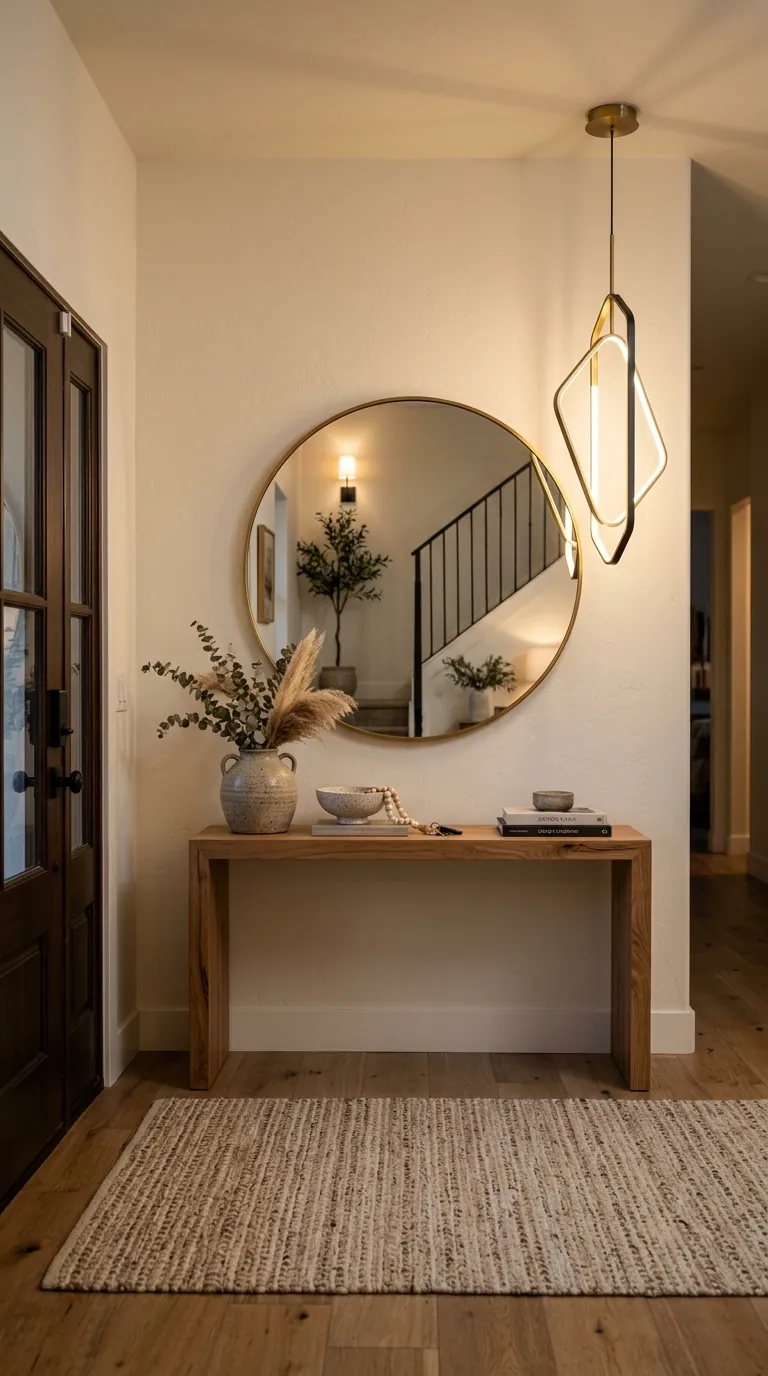
When the entryway has enough ceiling height, a statement pendant can become its main decorative feature.
Keep the furniture relatively simple so the light fixture has room to stand out.
15. Warm Brown Entryway
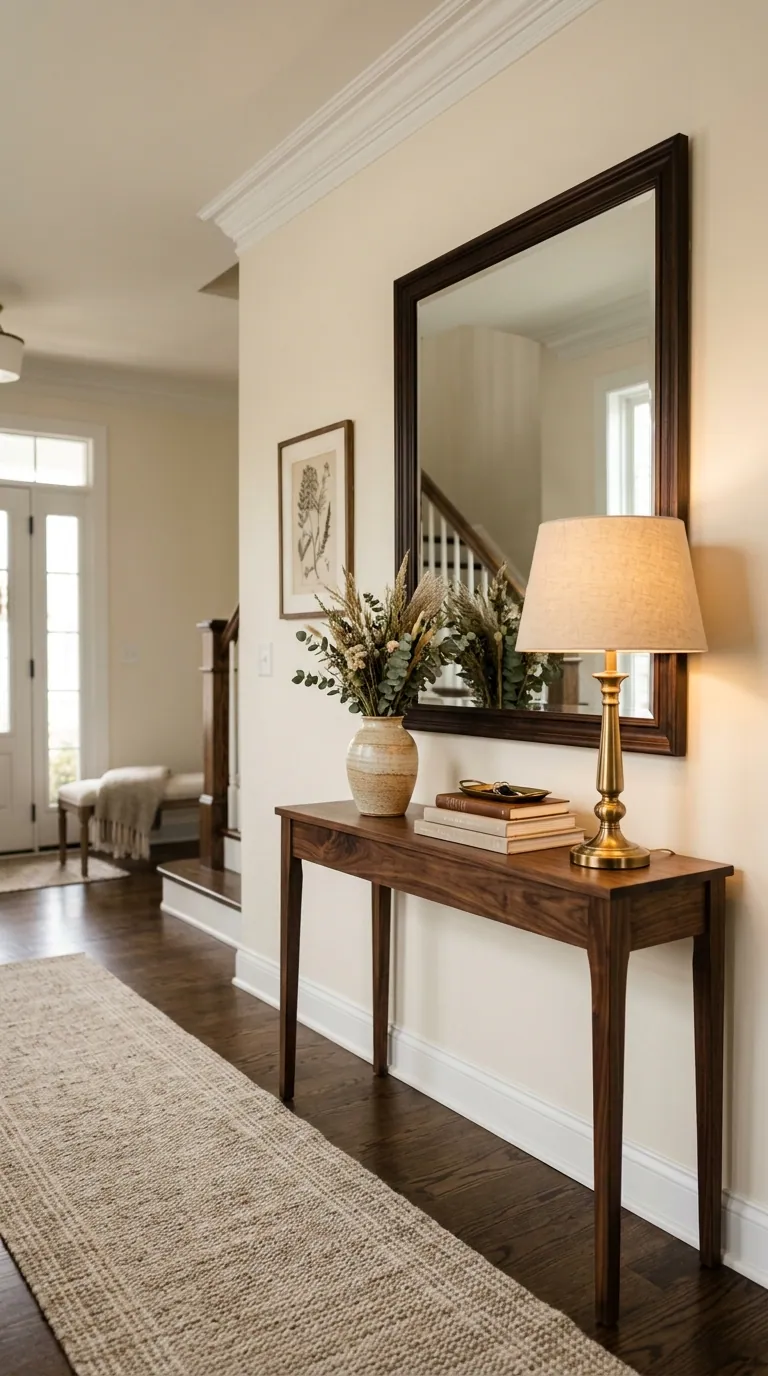
Brown wood gives an entrance a grounded feeling and works particularly well with cream and beige.
Walnut furniture can add richness without requiring darker walls or dramatic decoration.
16. Entryway With a Built-In Bench
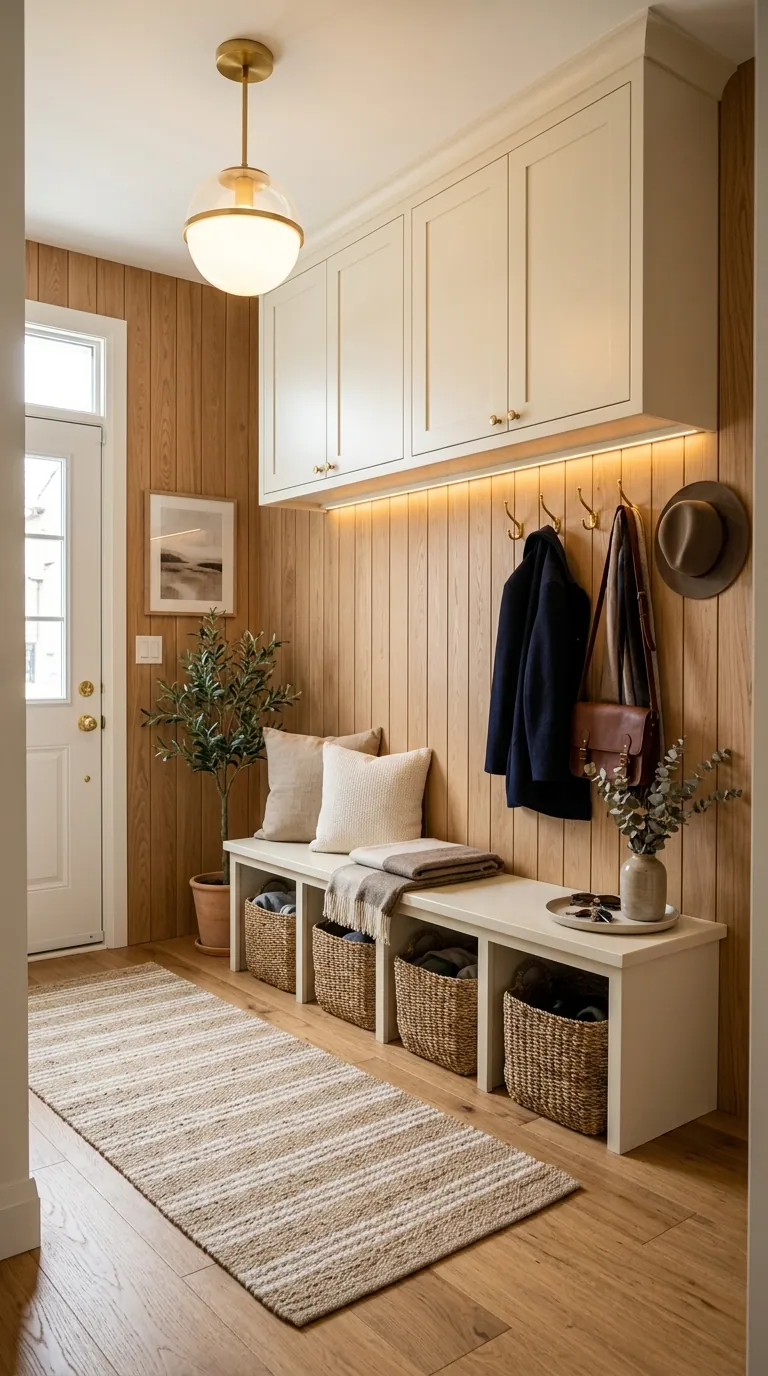
A built-in bench can turn an awkward wall into highly functional storage.
Use cabinets above or beside the seating area for coats and household items, while baskets below keep smaller belongings contained.
17. Minimal Entryway
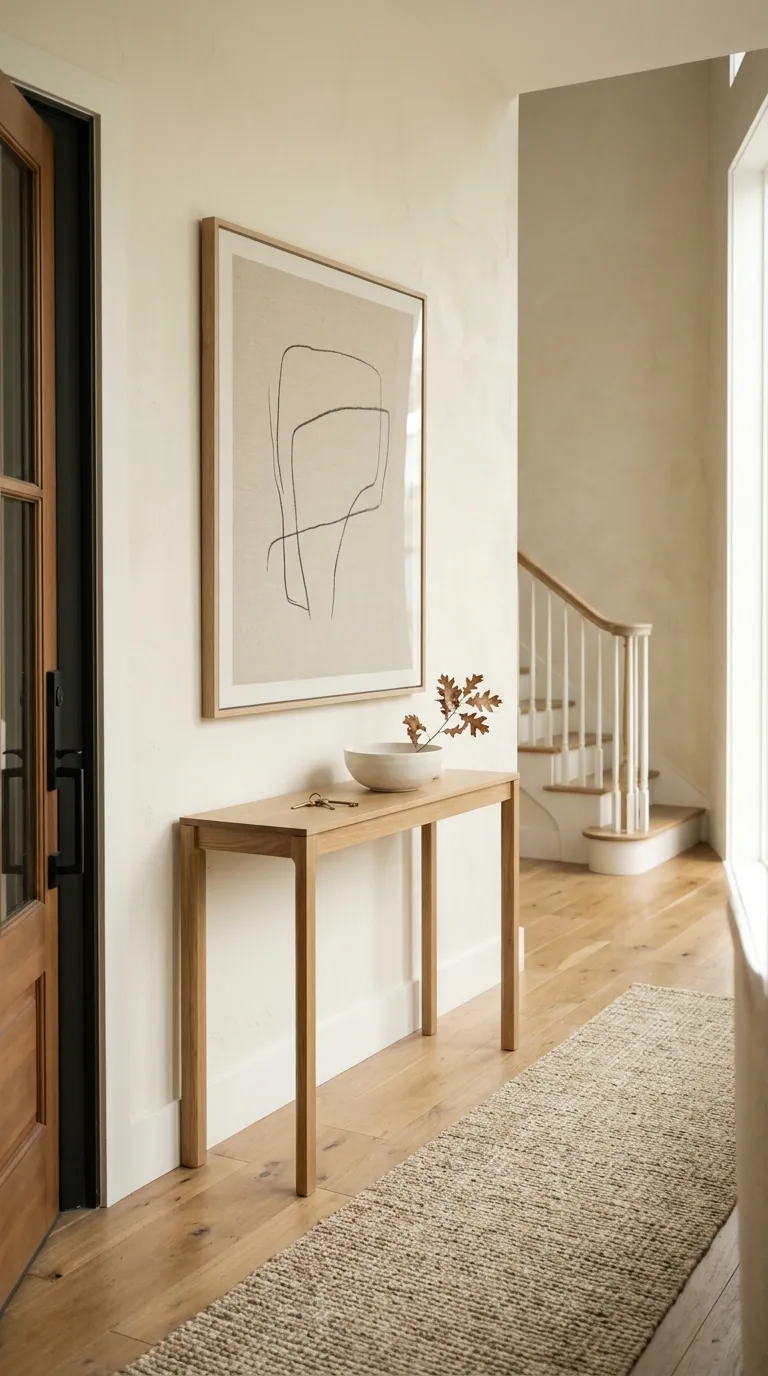
Minimal does not have to mean empty.
The goal is to remove unnecessary visual noise while keeping the pieces that make the space useful. One beautiful mirror, a simple console, and a small decorative arrangement can be enough.
18. Entryway With Greenery
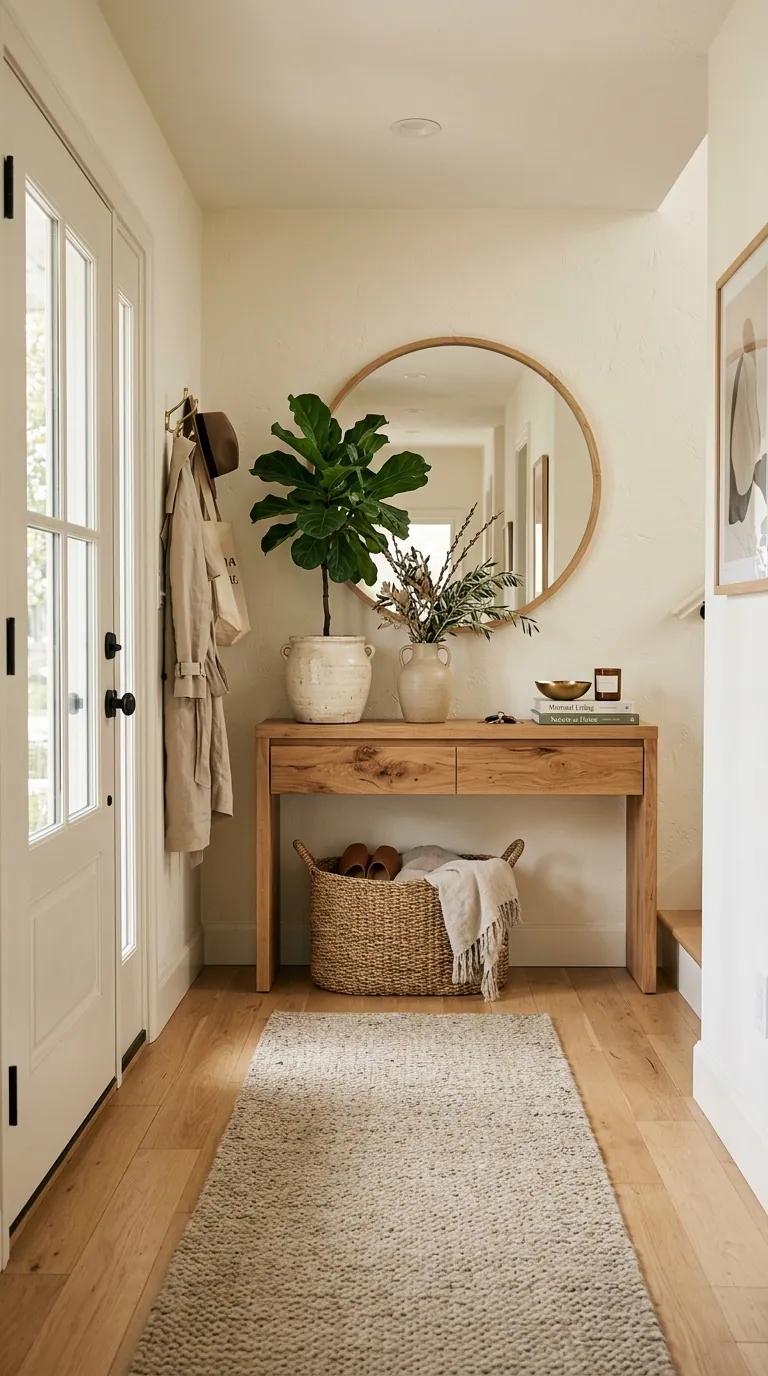
Plants can bring life into an entrance that otherwise relies heavily on neutral colors.
A tall plant works particularly well beside a console or in an empty corner where smaller decorative objects might feel insignificant.
19. Vintage-Inspired Entryway
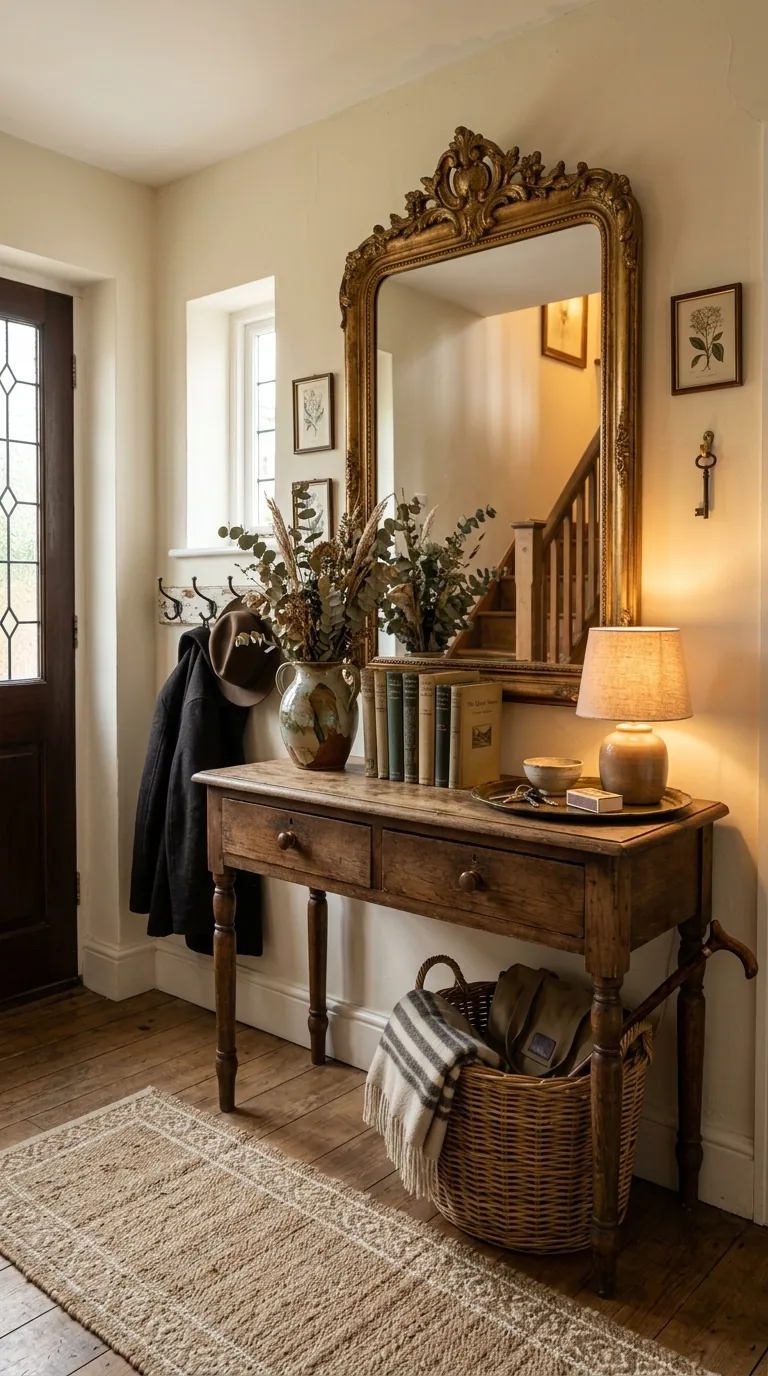
A vintage piece can make an entryway feel more personal than a room filled entirely with new furniture.
You do not need an antique-heavy interior. One older console, mirror, or artwork can provide enough character when paired with simpler contemporary pieces.
20. Entryway With Wall Paneling
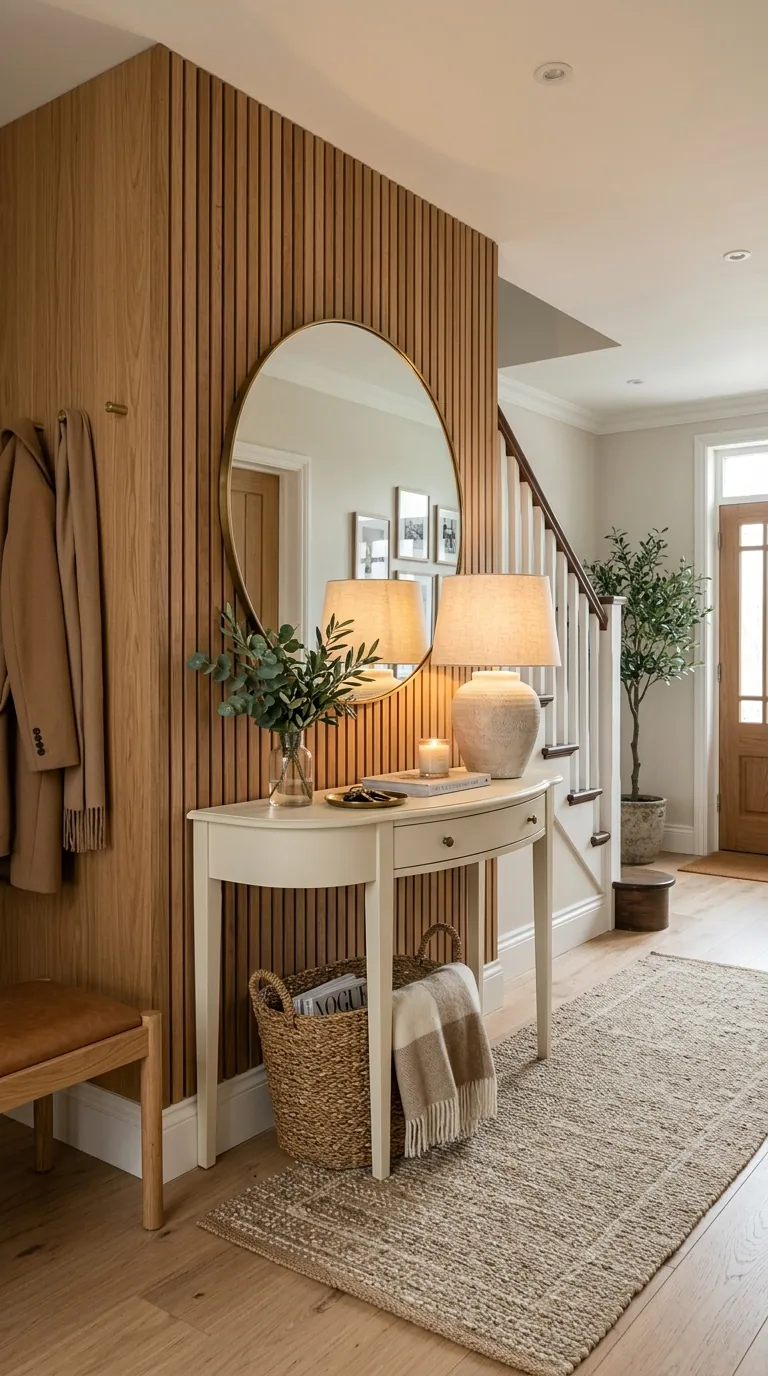
Wall paneling can give a plain entrance more architectural character.
For a subtle look, use simple vertical or rectangular panel details rather than heavily decorative molding.
21. Entryway With a Small Stool
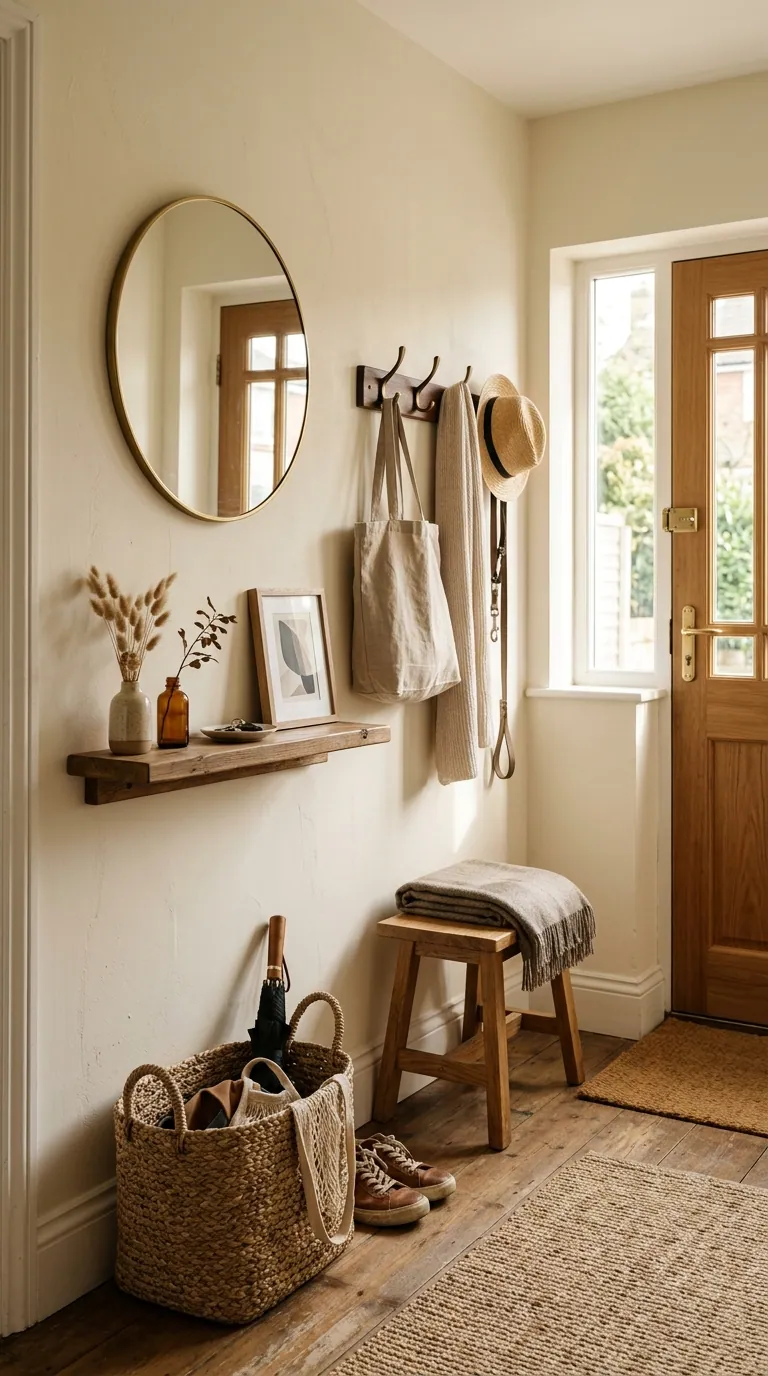
A full bench is not always necessary.
A small stool can provide a convenient place to sit while taking off shoes without consuming the width of the entire entryway.
22. Black and Natural Wood Entryway
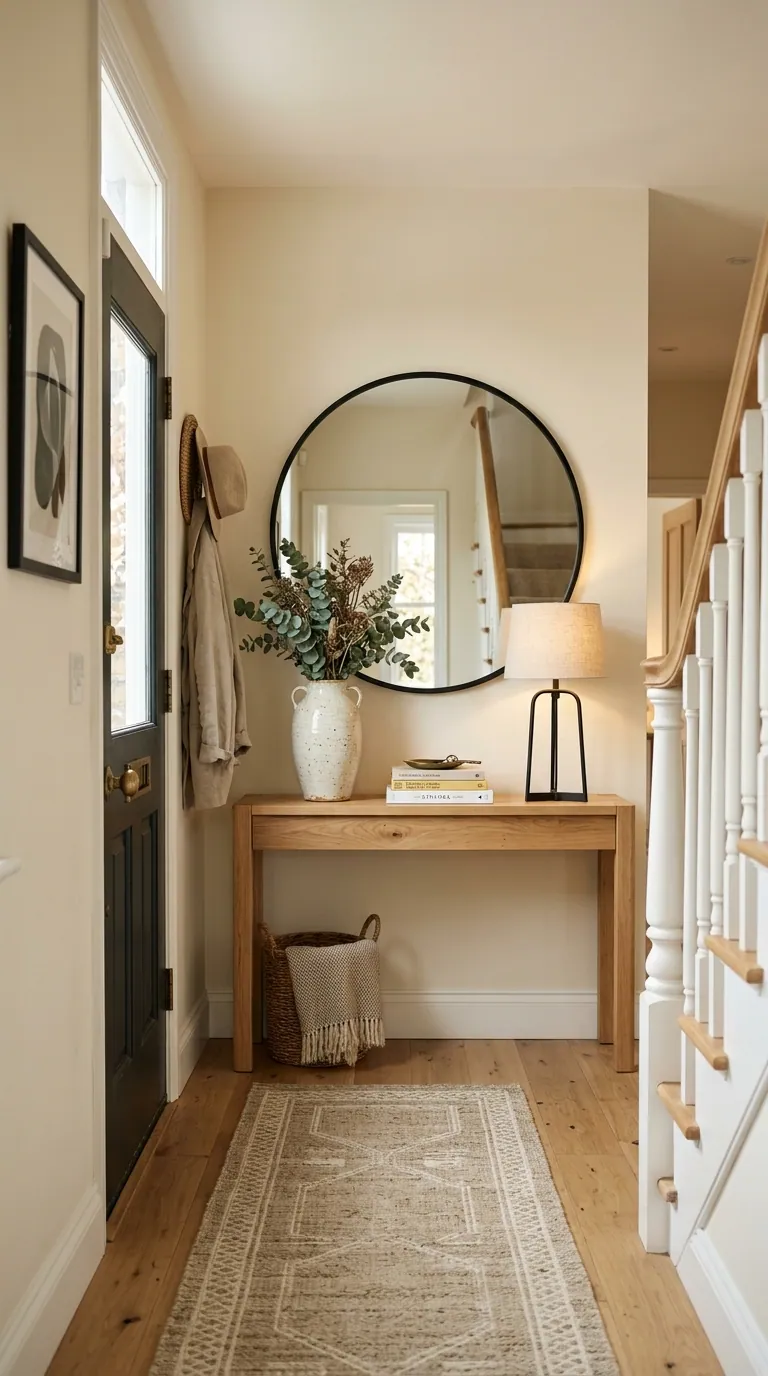
A small amount of black can provide contrast in an otherwise neutral entrance.
Use it through a mirror frame, lighting fixture, hardware, or artwork rather than covering the entire space in dark finishes.
23. Entryway With a Decorative Bowl
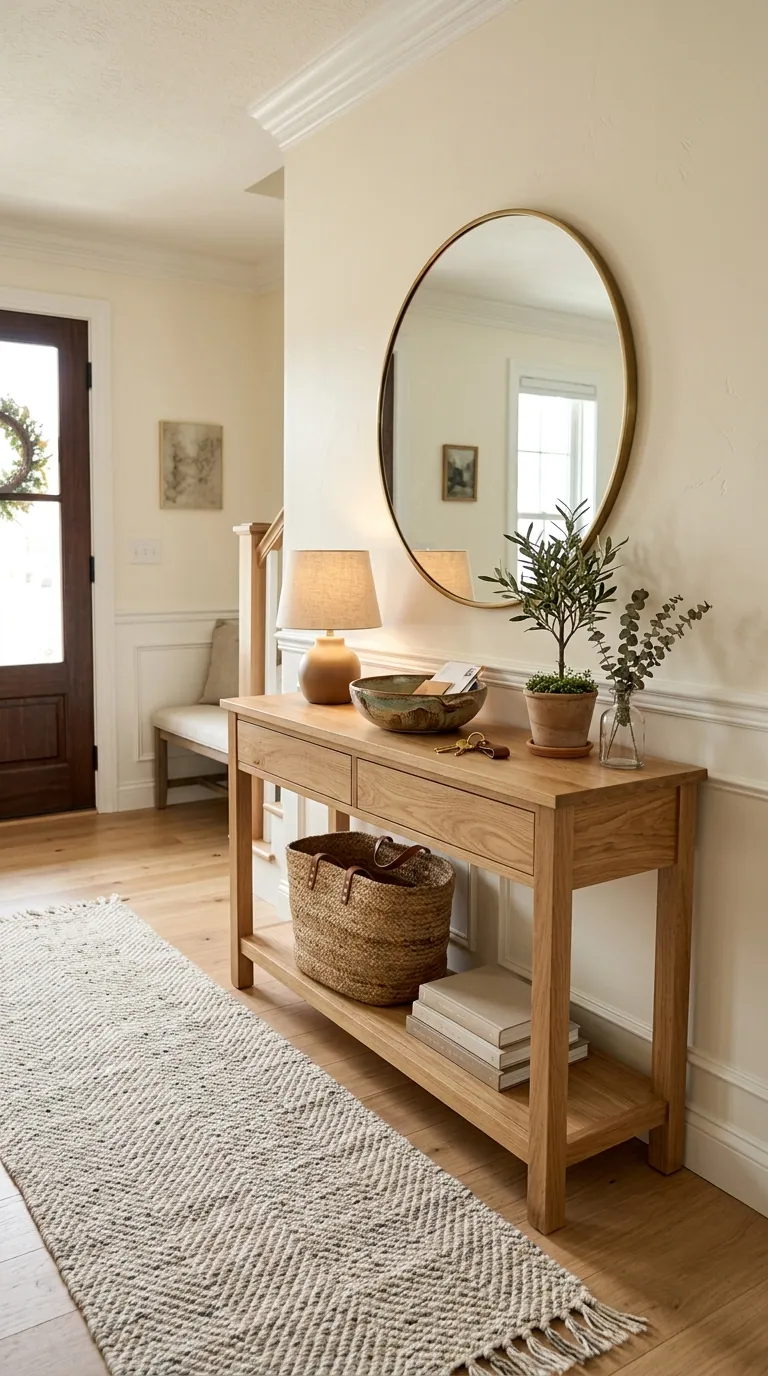
One of the simplest entryway upgrades is giving everyday objects a designated home.
A decorative bowl on the console can hold keys and small items while still looking like part of the decor.
24. Bright Entryway With Natural Light
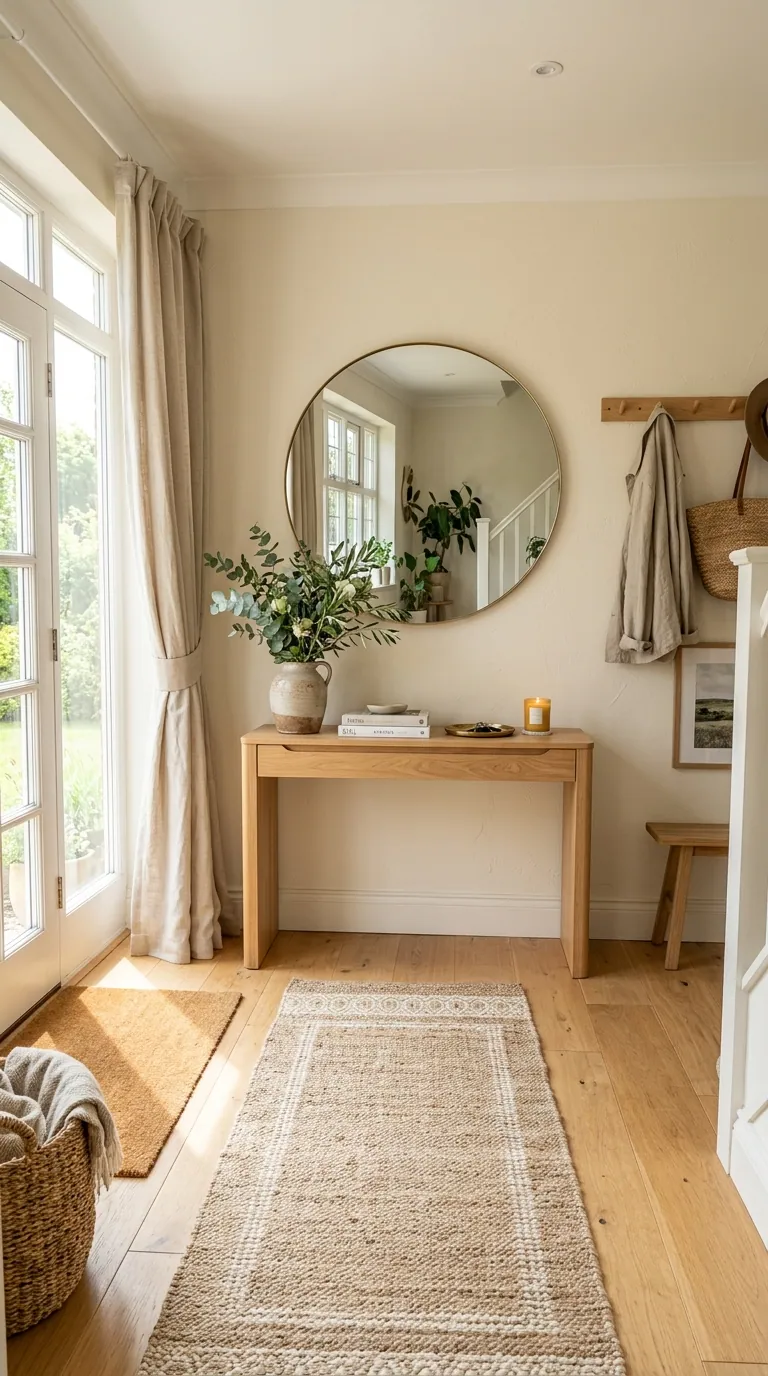
If your entrance receives natural light, avoid blocking it with oversized furniture.
Light-colored walls and reflective surfaces can help distribute that daylight throughout the space.
25. Cozy Entryway Corner
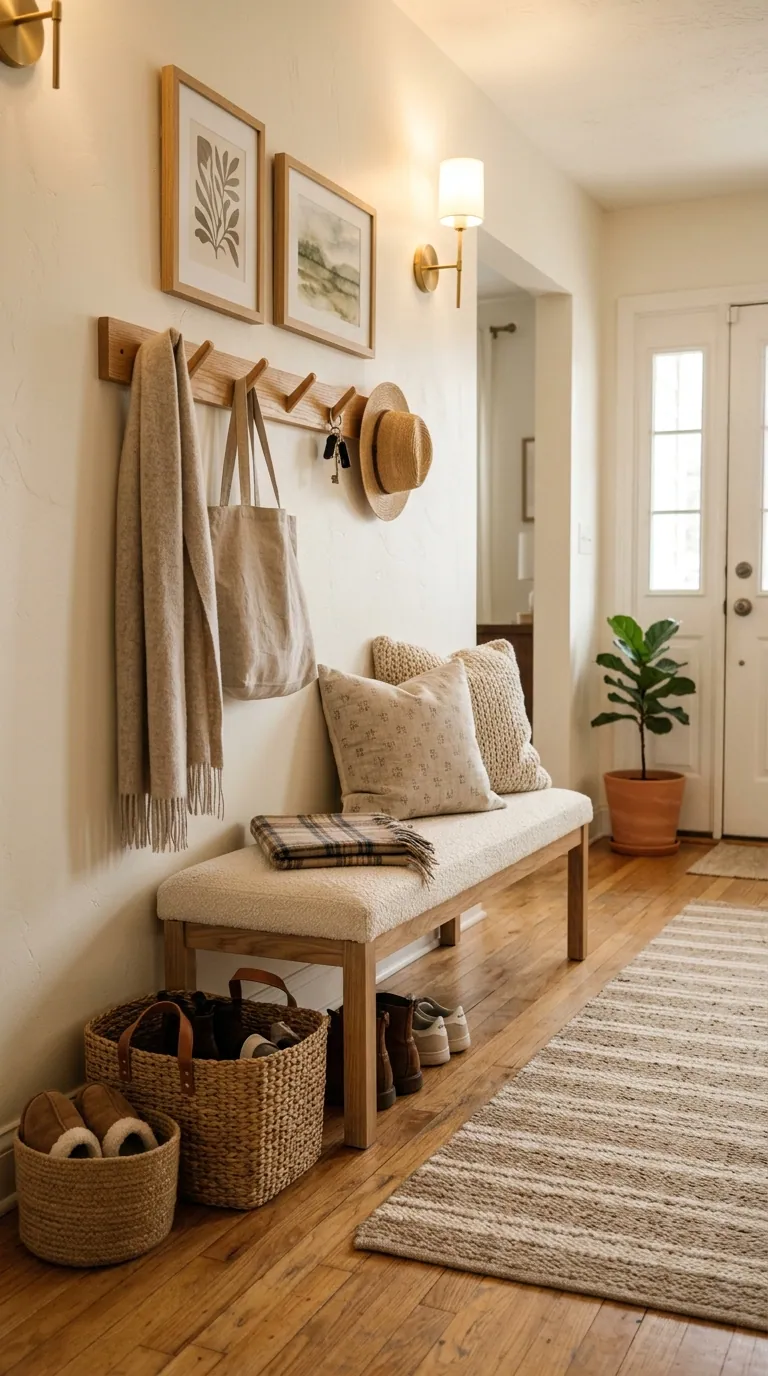
Even a small corner can become a deliberate part of the home’s design.
Add one comfortable seat, a few hooks, and a basket underneath. The result is useful without feeling like a storage area.
26. Elegant Entryway With Brass Details
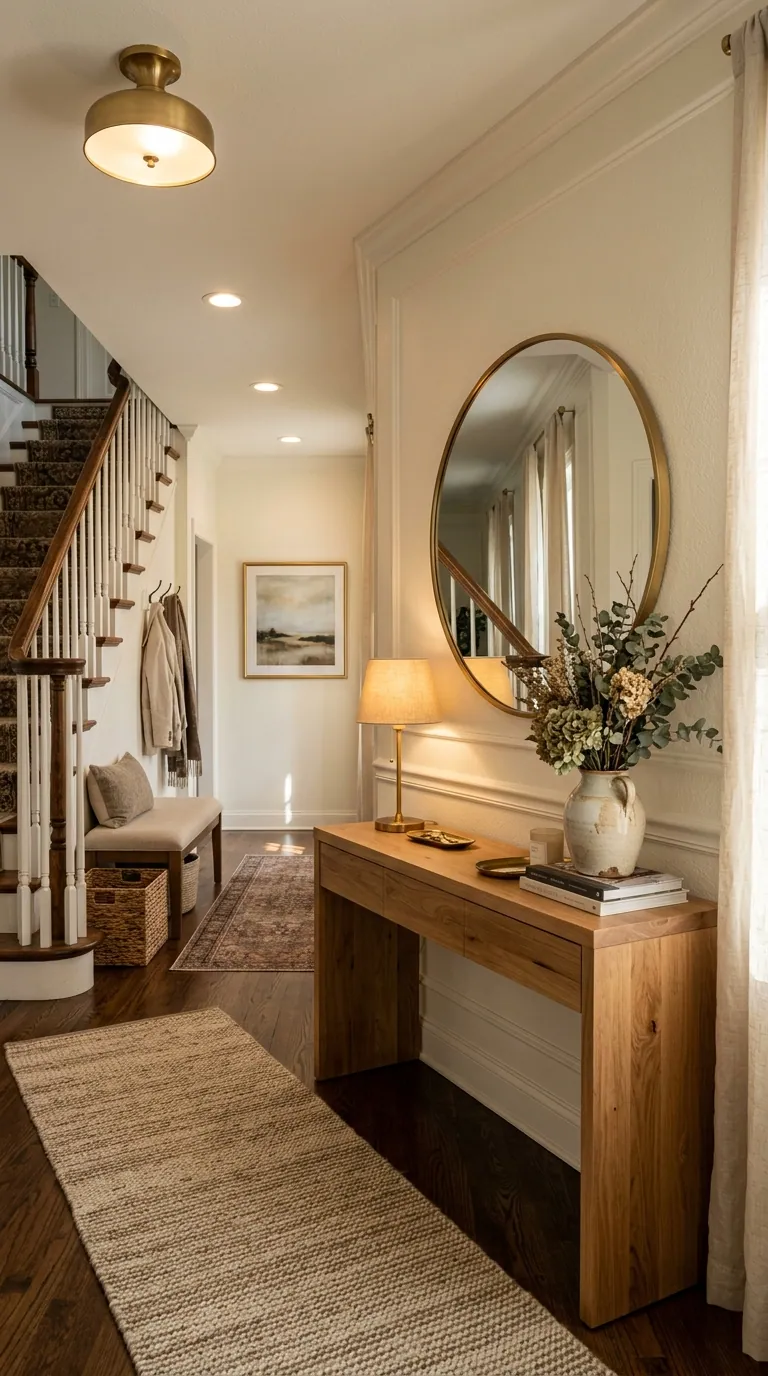
Brass can add a little polish without making the entryway feel formal.
Use it sparingly through lighting, mirror frames, hooks, or small decorative details. Warm brass tends to pair especially well with natural wood and cream.
27. Complete Welcoming Entryway
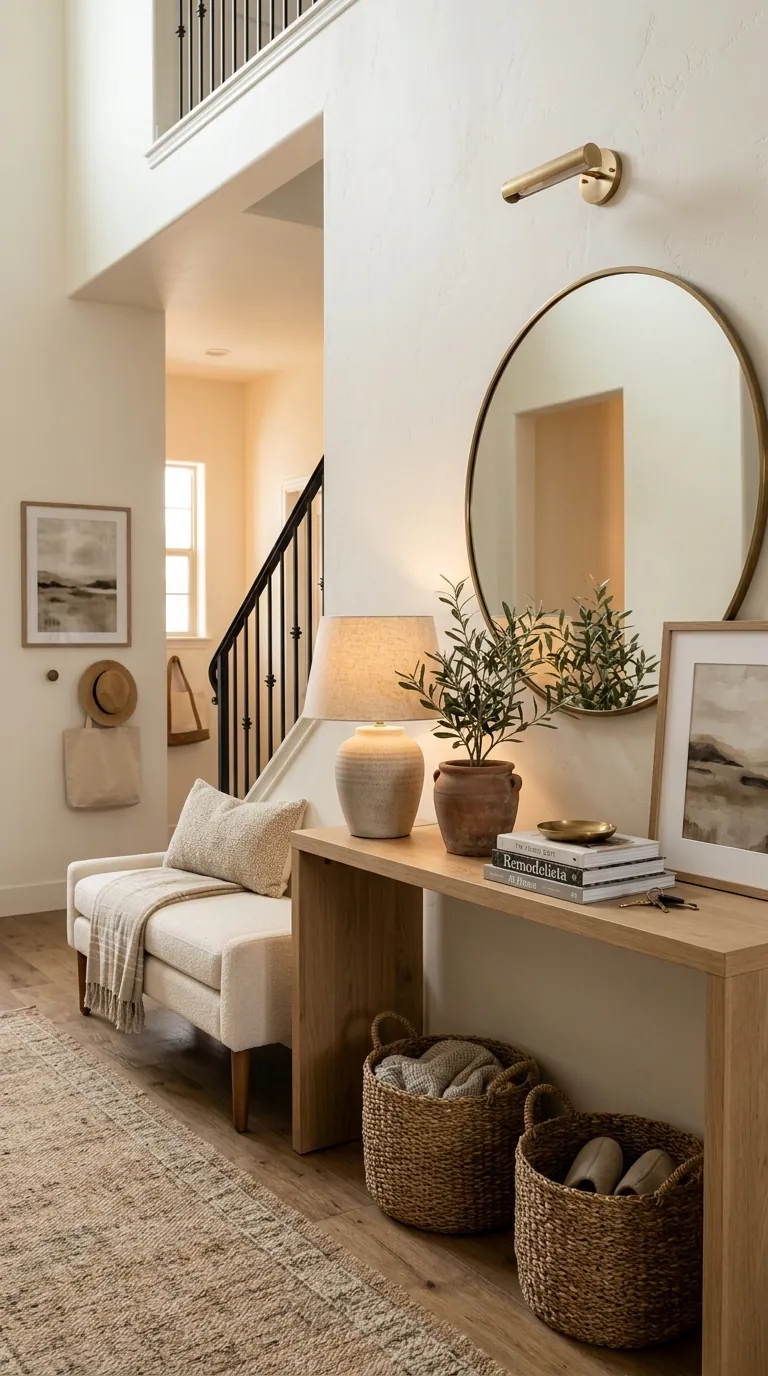
The strongest entryways usually combine several simple ideas rather than relying on one dramatic feature.
A practical console, comfortable seating, useful storage, warm lighting, and a few personal objects can create an entrance that feels finished without becoming overly decorated.
How to Make an Entryway Feel More Welcoming
You do not need a large foyer to create a welcoming entrance. Start by considering what you actually need when you arrive home.
If shoes tend to collect near the door, add a bench and baskets. If keys constantly disappear, create a dedicated bowl or tray. If coats accumulate on chairs, install attractive hooks or a compact storage cabinet.
Then consider the visual side. Warm lighting, natural materials, artwork, and a rug can make the entrance feel connected to the rest of the home.
The goal is not to fill every available surface. A welcoming entryway should feel easy to use as soon as you walk through the door.
Entryway Ideas by Style
Warm Modern
Use natural oak, cream walls, simple furniture, rounded mirrors, soft textiles, and warm lighting.
Minimal
Choose fewer pieces with clean shapes and keep the surfaces mostly clear.
Traditional
Try a classic console, framed artwork, decorative mirror, table lamp, and traditional runner.
Organic Modern
Combine natural wood, stone-inspired ceramics, woven textures, greenery, and warm neutral colors.
Collected
Mix newer furniture with vintage artwork, older wood pieces, books, ceramics, and personal objects.
Easy Entryway Updates on a Budget
You do not need to replace all your furniture to improve an entryway.
Try changing the mirror, adding a runner, replacing a harsh light bulb with warmer lighting, or introducing a large plant.
A thrifted wooden console can also become a strong foundation. Sanding or refinishing an older piece can give it a completely different appearance.
Small accessories matter too. A ceramic bowl, framed print, woven basket, or simple vase can make an otherwise empty console feel intentional.
How to Choose an Entryway Rug
Choose the rug according to the shape and traffic level of the space.
For a long hallway, a runner usually works best. For a larger square foyer, a larger rectangular or round rug can help define the entrance.
Durability matters because entryway rugs receive more foot traffic than many decorative rugs elsewhere in the home. Look for materials and patterns that can handle regular use and are reasonably easy to clean.
Entryway Storage Mistakes to Avoid
Using furniture that is too deep
A beautiful console is not useful if it makes the entrance difficult to walk through.
Leaving everything visible
Open hooks and shelves are convenient, but too many visible items can quickly create visual clutter.
Ignoring lighting
An entryway with only a harsh overhead light can feel much less welcoming than one with softer layered lighting.
Decorating without considering function
The entrance should work for your daily routine. A beautiful table that provides nowhere to put keys or bags may not be the best choice.
Buying furniture before measuring
Always measure the wall, walking path, door swing, and available clearance before purchasing large entryway furniture.
Frequently Asked Questions
What should I put in an entryway?
A console, mirror, lighting, rug, storage basket, bench, artwork, or plant are all useful options. You do not need every item; choose based on the size and function of your entrance.
How can I decorate a very small entryway?
Use shallow furniture, wall-mounted storage, mirrors, hooks, and light colors. Keeping the floor as open as possible will make the entrance feel less cramped.
What furniture works best in a narrow entryway?
A slim console or floating shelf usually works well. If seating is needed, choose a narrow bench or small stool rather than a deep chair.
Should an entryway have a mirror?
A mirror is not essential, but it can be both practical and decorative. It can reflect light and make a small entrance feel more open.
How do I keep my entryway from looking cluttered?
Give everyday items specific storage locations. Use baskets for loose belongings, hooks for coats and bags, and a bowl or tray for keys.
What colors work well in an entryway?
Warm whites, cream, beige, taupe, soft green, brown, and muted earthy colors are versatile choices. The best color depends on the lighting and the palette used in the rooms nearby.
Final Thoughts
A beautiful entryway does not need to be large, expensive, or filled with decoration.
The most successful spaces combine practical furniture with a few thoughtful details. A slim console can organize everyday essentials, a mirror can add light and dimension, and a bench or stool can make the entrance easier to use.
Focus on creating a space that feels like a natural introduction to your home. When the materials, colors, lighting, and storage all work together, even a small entrance can feel warm, organized, and genuinely welcoming.