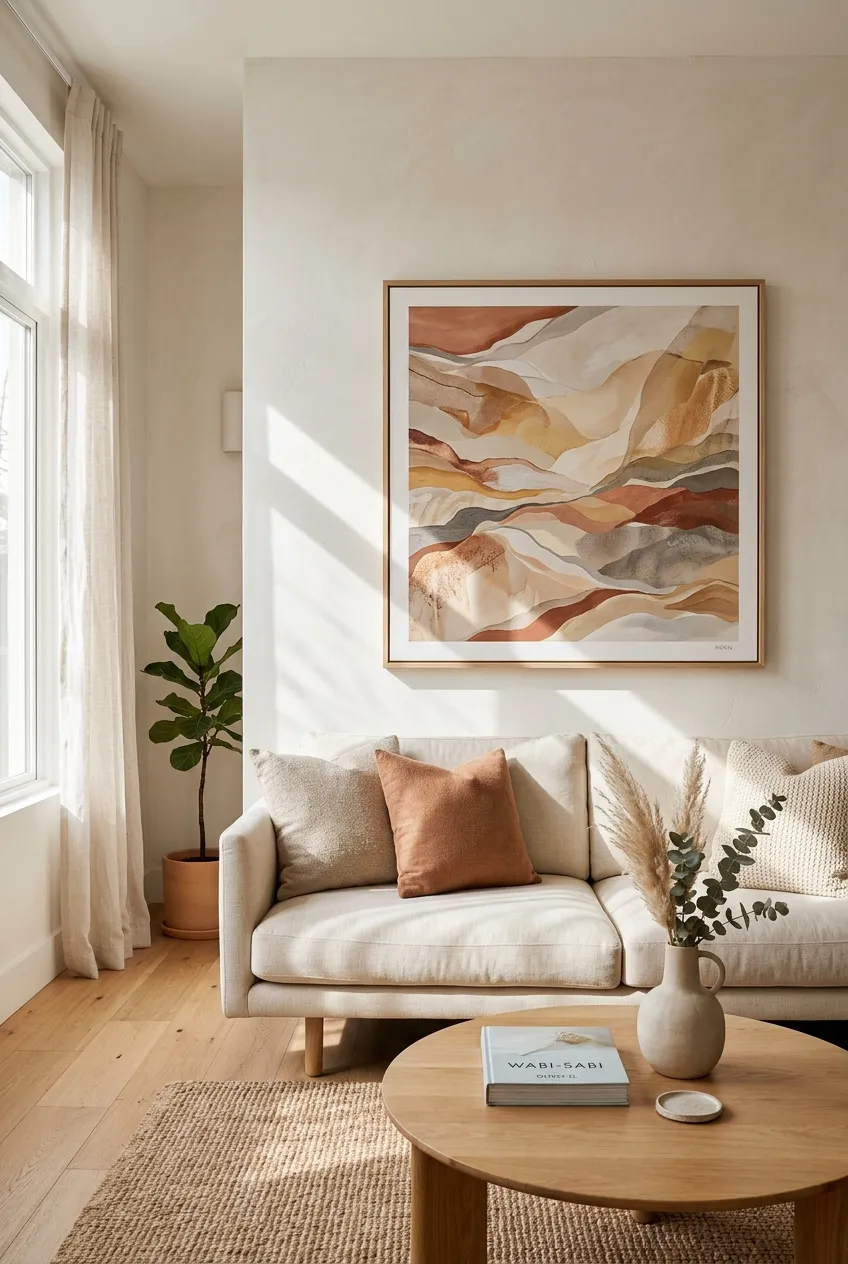
Walls have a way of telling people what a home feels like before they notice anything else. A completely empty wall can make a room feel unfinished, while a thoughtfully decorated one can add warmth, personality, and a sense of history.
The best wall decor doesn’t necessarily come from expensive artwork or perfectly coordinated pieces. Sometimes, it’s a collection of photographs, a vintage mirror, a handmade textile, or a few objects that simply mean something to you.
Whether your style leans modern, cozy, minimalist, rustic, or eclectic, these wall decor ideas can help you create spaces that feel collected rather than simply decorated.
1. Create a Personal Gallery Wall
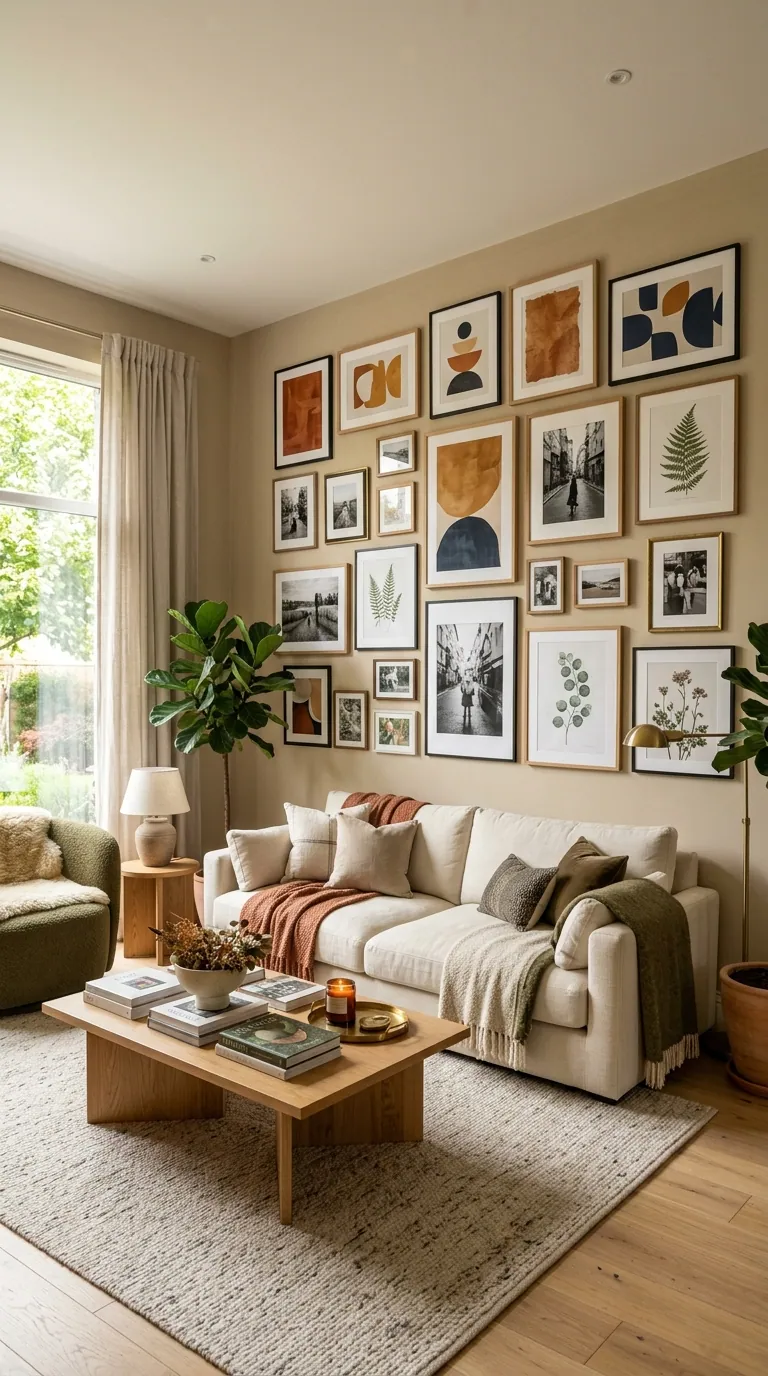
A gallery wall is one of the easiest ways to turn a blank wall into something that feels uniquely yours. Combine artwork, photographs, sketches, prints, and meaningful little pieces instead of relying on identical frames.
Keep the overall arrangement intentional, but don’t worry about making every frame match. A mixture of frame finishes can actually make the display feel more collected over time.
2. Display Family Photographs
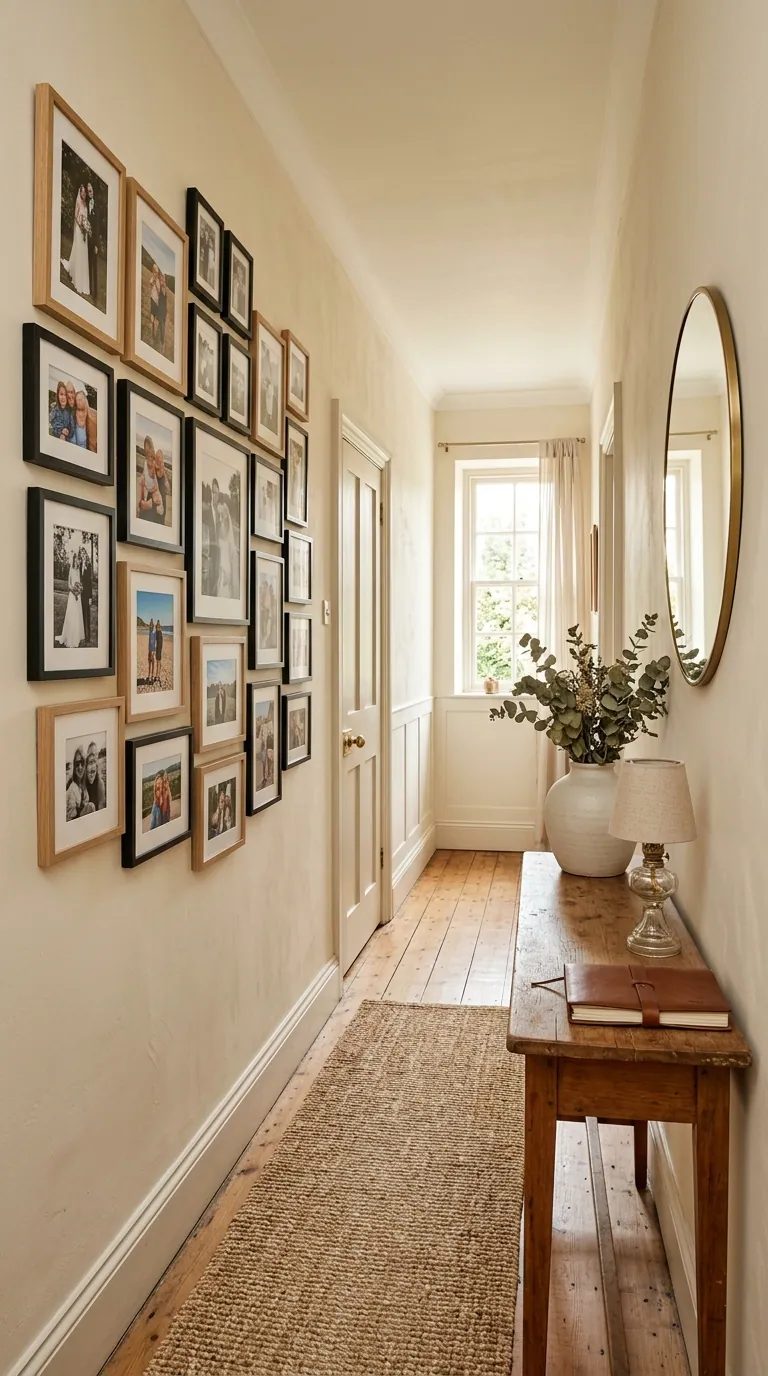
Family photographs instantly make a room feel more personal. Instead of filling an entire wall with formal portraits, choose everyday moments that remind you of people, places, and memories.
Black-and-white photographs work beautifully in sophisticated interiors, while color photographs can bring warmth and life to neutral rooms.
3. Hang a Large Statement Artwork
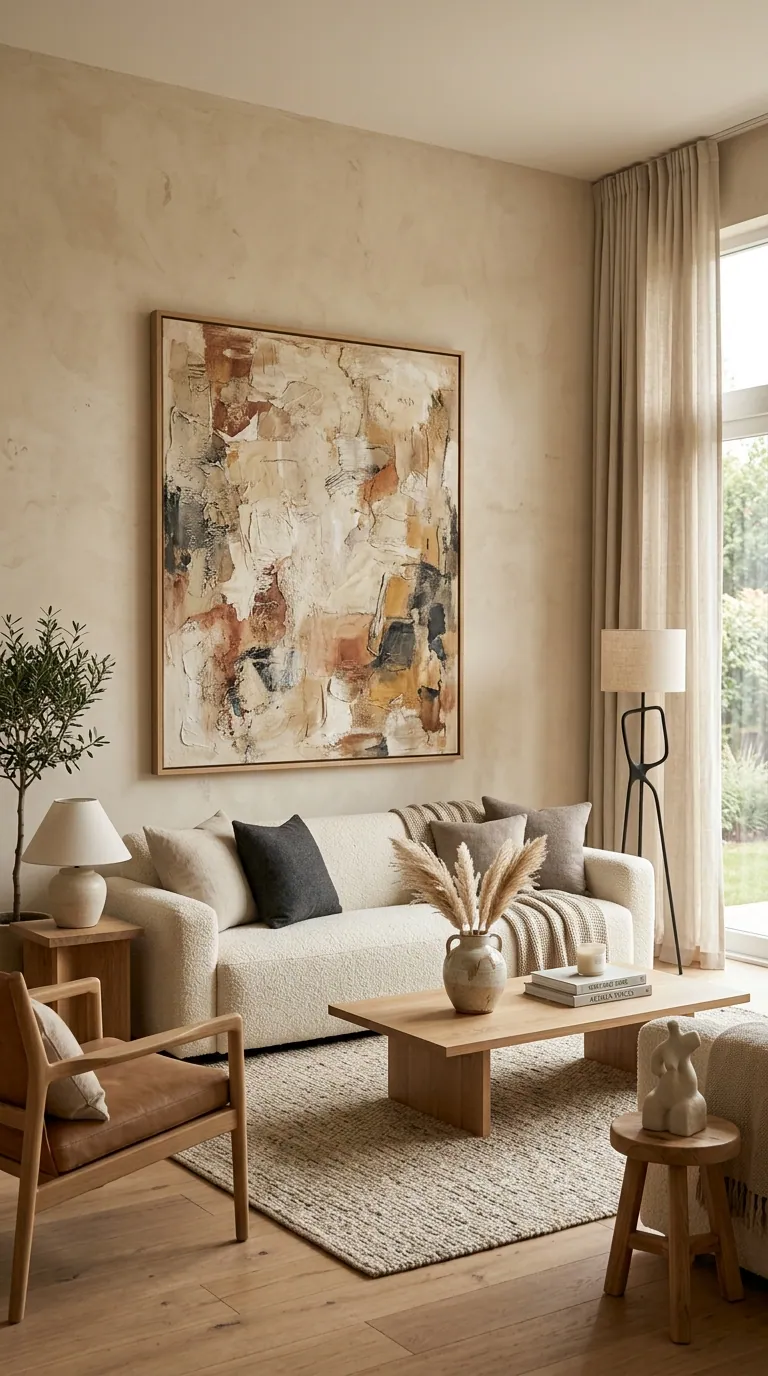
Sometimes one meaningful piece is enough. A large artwork can give a room a strong focal point without making the wall feel crowded.
Choose something that genuinely speaks to you rather than simply matching your sofa or rug. The right artwork can become part of the identity of the entire room.
4. Make a Memory Shelf
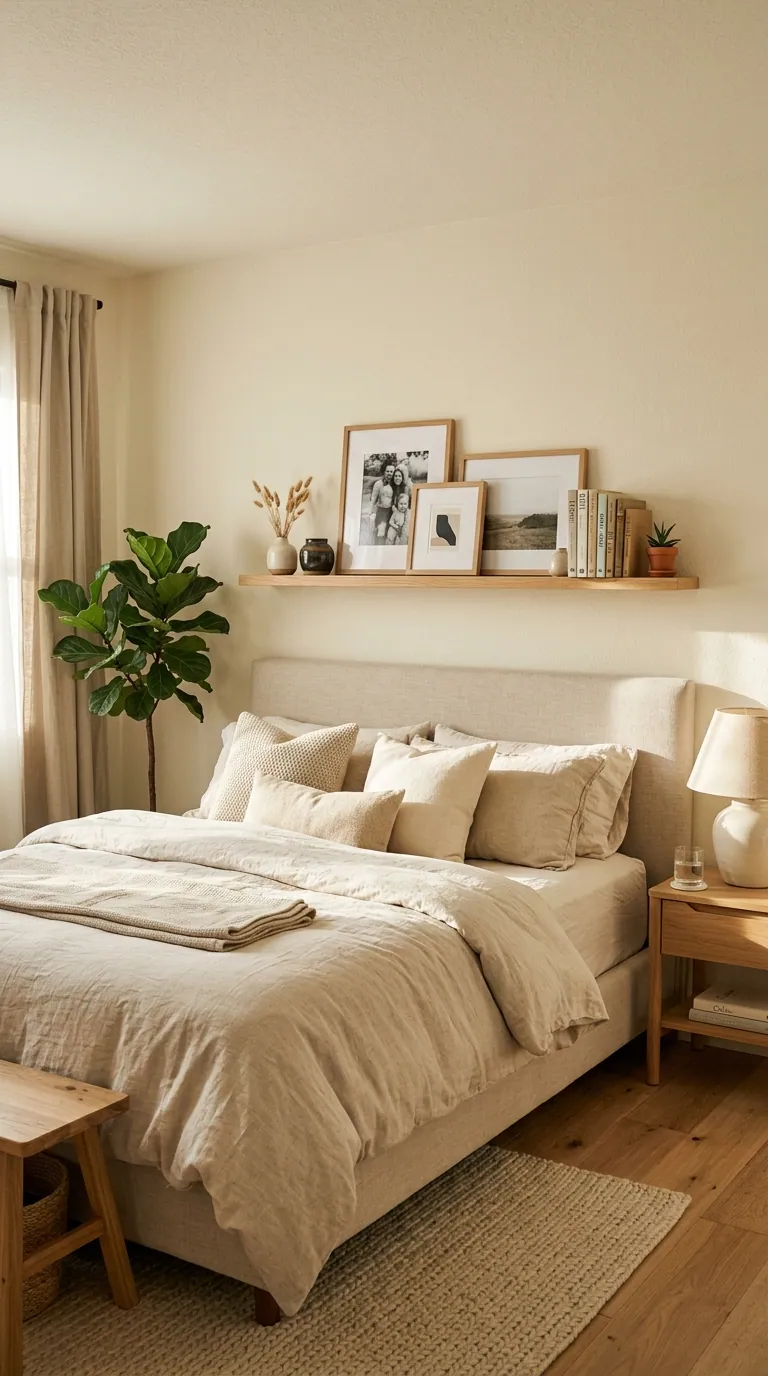
A picture ledge or floating shelf gives you somewhere to display small objects that have meaning.
Layer framed photographs with books, ceramics, travel souvenirs, candles, and small artworks. Because the objects can easily be moved around, the display can evolve as your life changes.
5. Use a Vintage Mirror
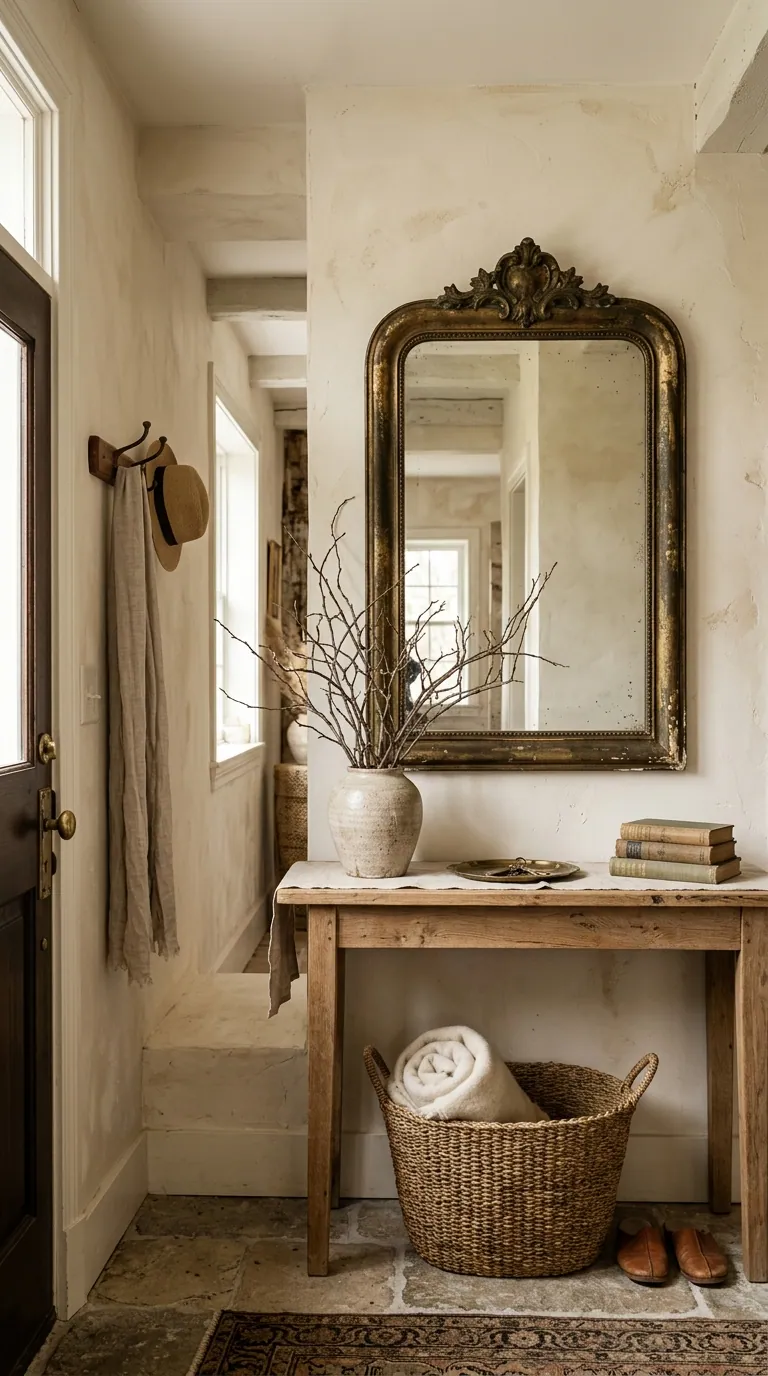
A vintage mirror adds both character and function. Look for an interesting frame rather than focusing on achieving a perfectly polished appearance.
An aged brass, carved wood, or softly distressed frame can make a modern room feel as though it has developed over time.
6. Display Handmade Ceramics
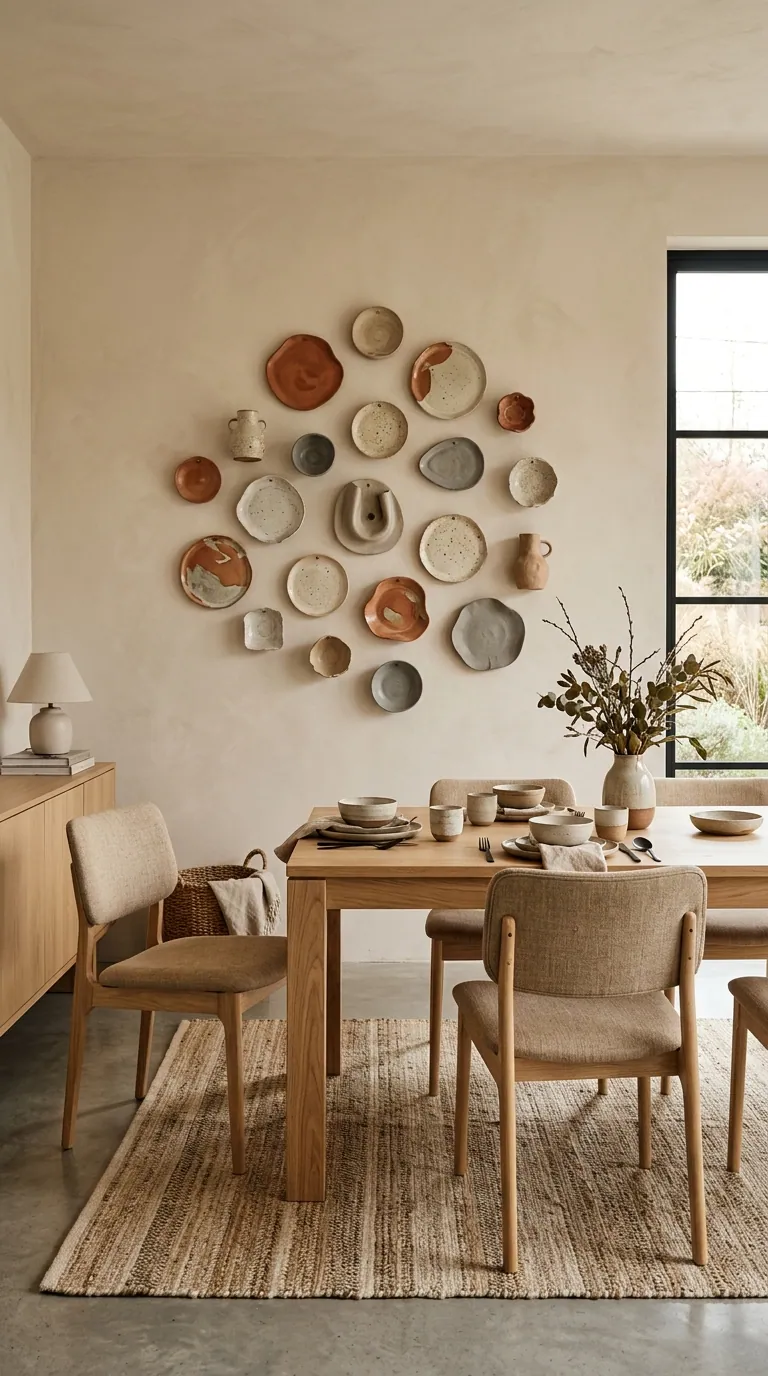
Small ceramic plates, sculptural pottery, and handmade vessels can turn a wall into a subtle art installation.
Arrange pieces at different heights rather than creating a perfectly symmetrical grid. Their handmade imperfections add warmth that mass-produced decorations often lack.
7. Frame a Textile
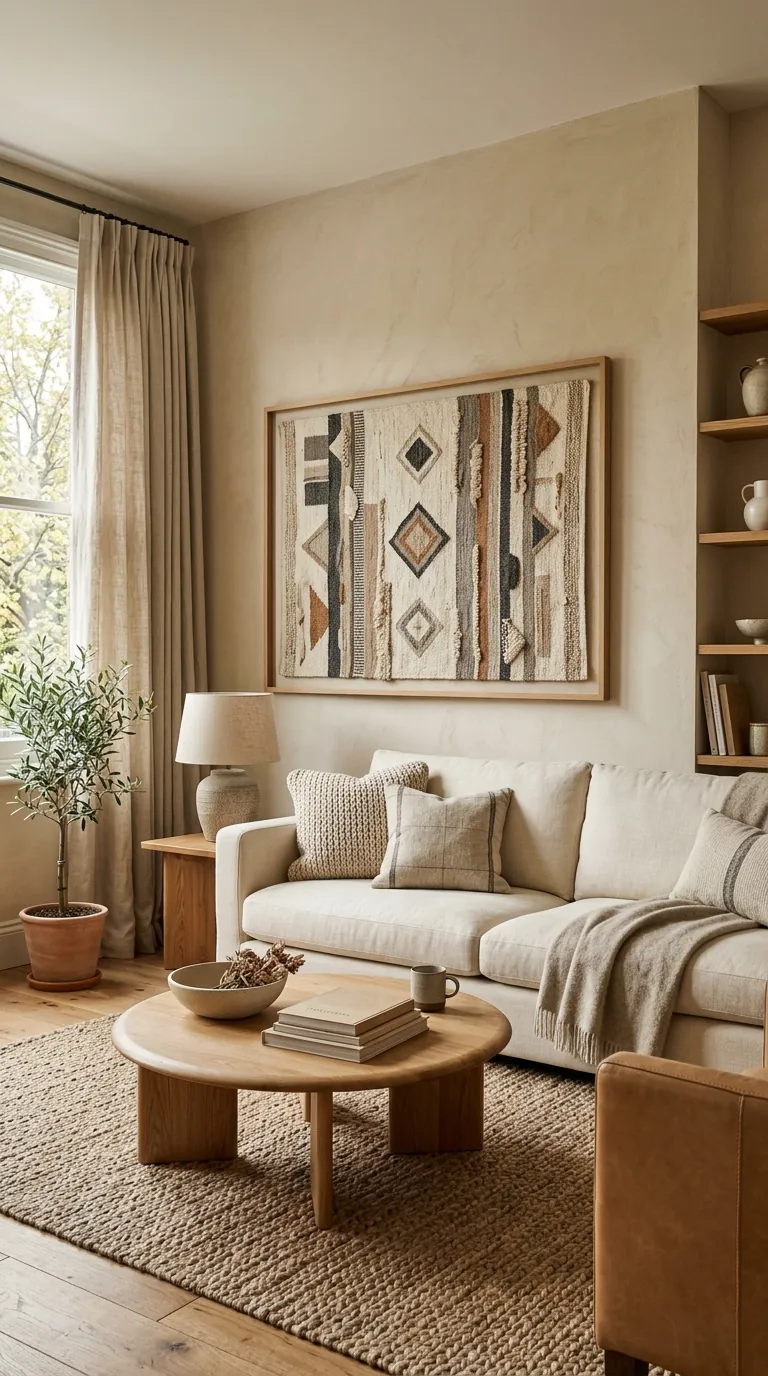
Textiles can bring softness and visual depth to walls. A woven tapestry, embroidered fabric, vintage textile, or handmade wall hanging can work particularly well above a bed, sofa, or console.
The texture also prevents a neutral room from feeling flat.
8. Build a Book-Lover’s Wall
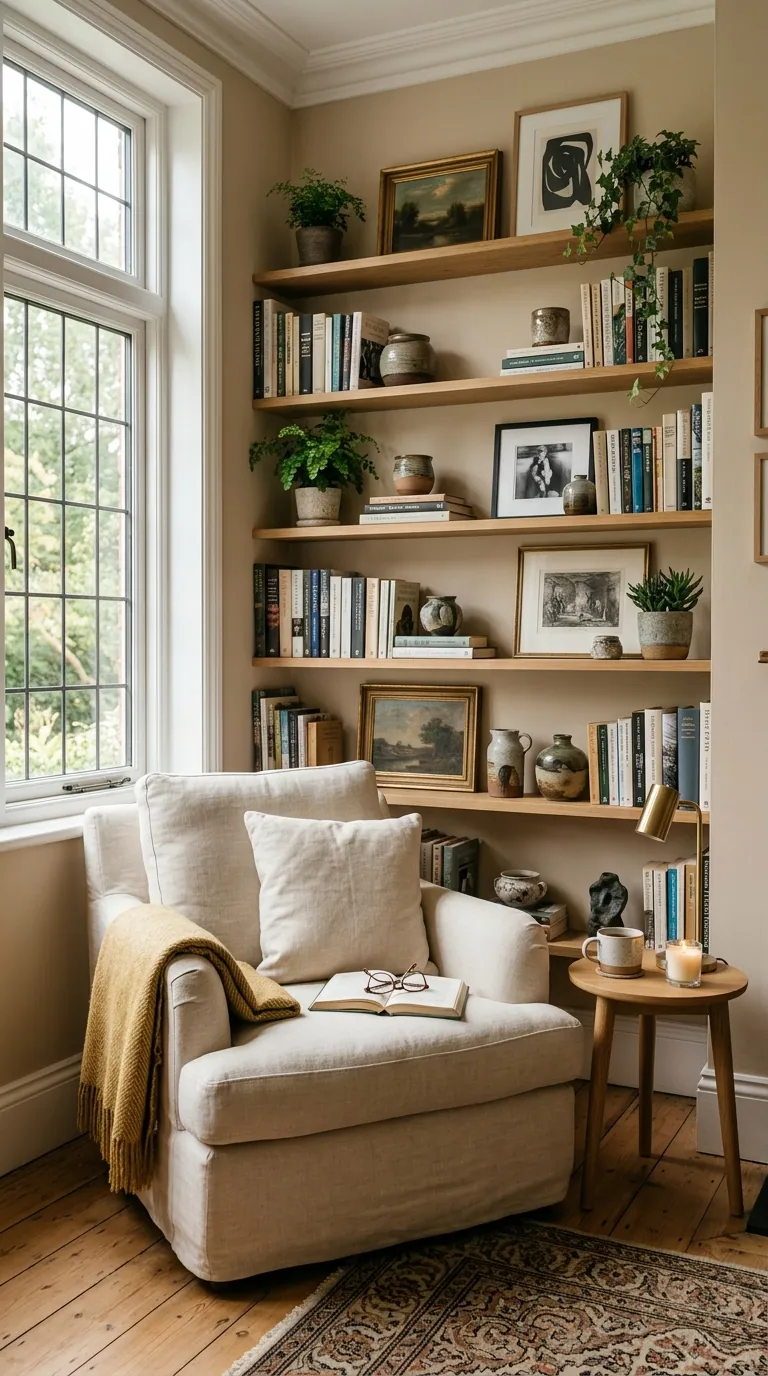
Books don’t have to live exclusively inside bookcases. A few shallow shelves can turn your favorite books into part of the decor.
Mix books with photographs, ceramics, small plants, and objects collected over the years so the wall feels like a reflection of your interests.
9. Create a Travel Memory Display
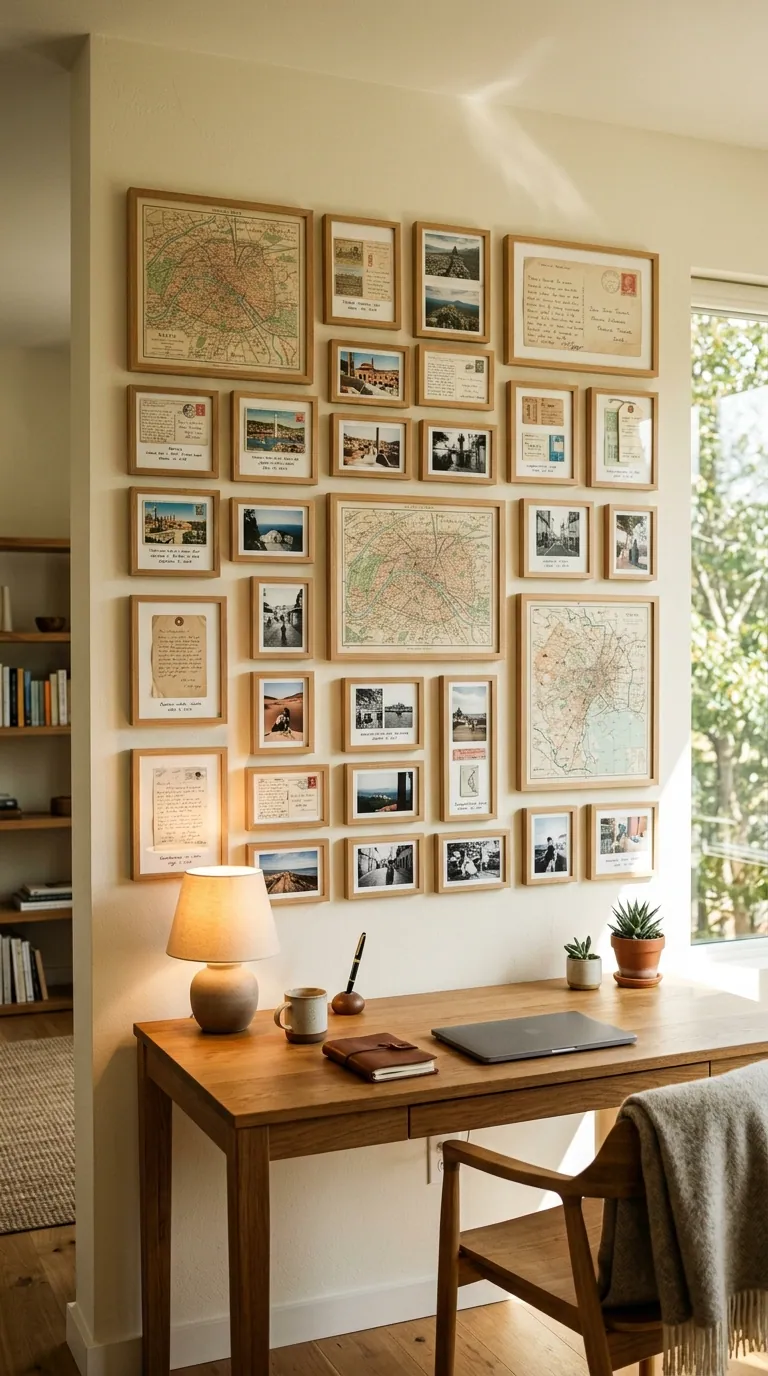
Travel souvenirs can become much more meaningful when displayed instead of stored away.
Frame maps, postcards, tickets, small prints, or photographs from places you’ve visited. The result becomes a visual record of experiences rather than simply another decorative arrangement.
10. Add an Organic Gallery
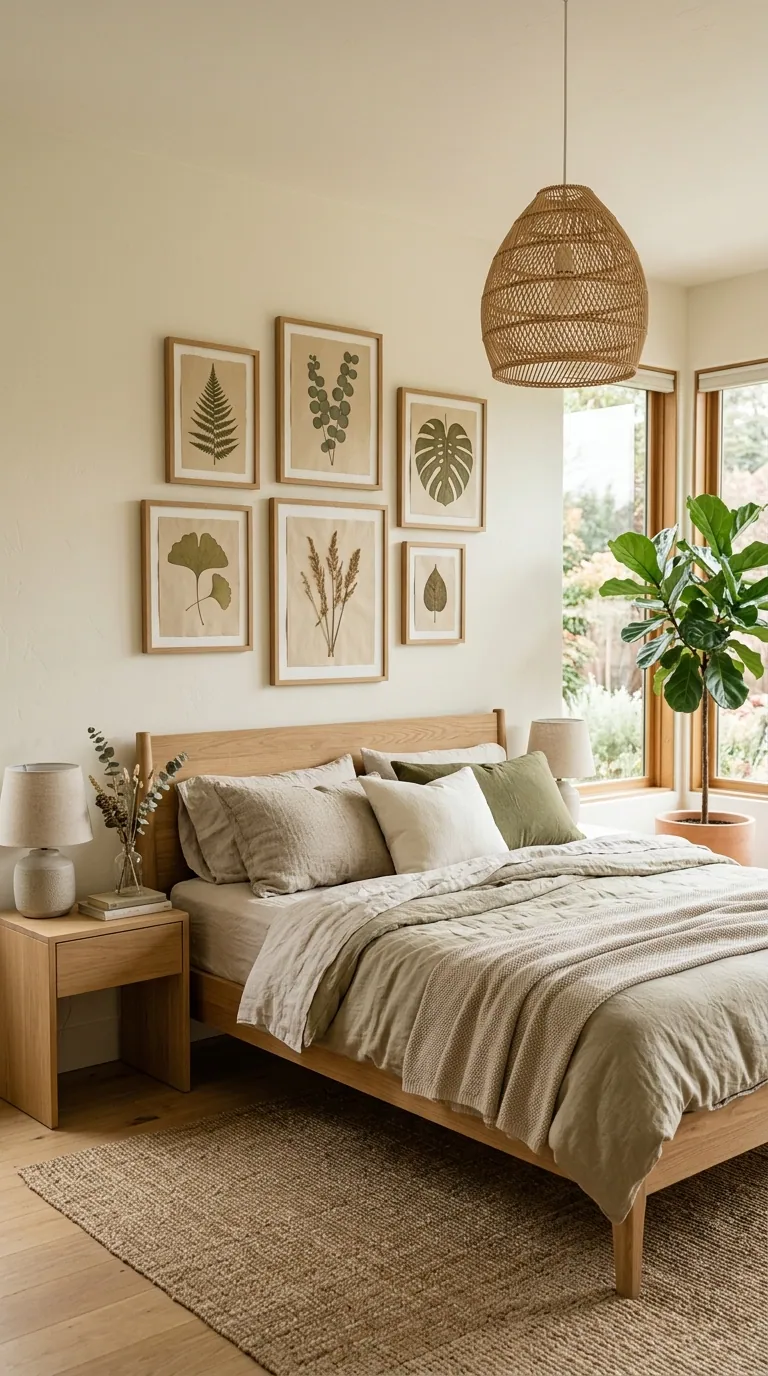
For a softer alternative to traditional framed art, create a gallery using botanical prints, pressed leaves, natural fibers, and simple organic shapes.
This works especially well in homes with earthy colors and natural materials.
11. Hang a Sculptural Wall Piece
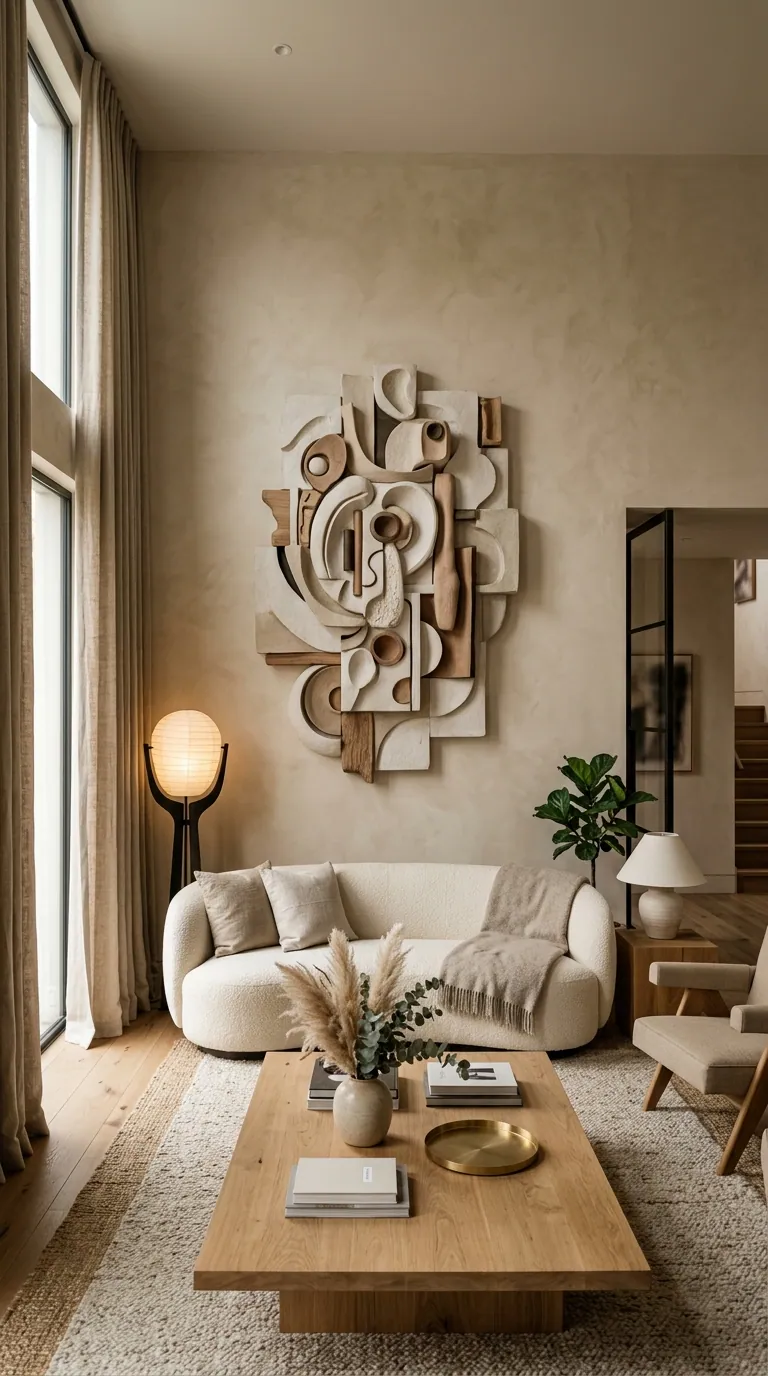
Wall decor doesn’t have to be flat. Sculptural pieces can introduce shadows, texture, and dimension.
Look for handmade wood carvings, woven forms, plaster sculptures, or abstract dimensional artwork.
12. Turn a Hallway Into a Gallery
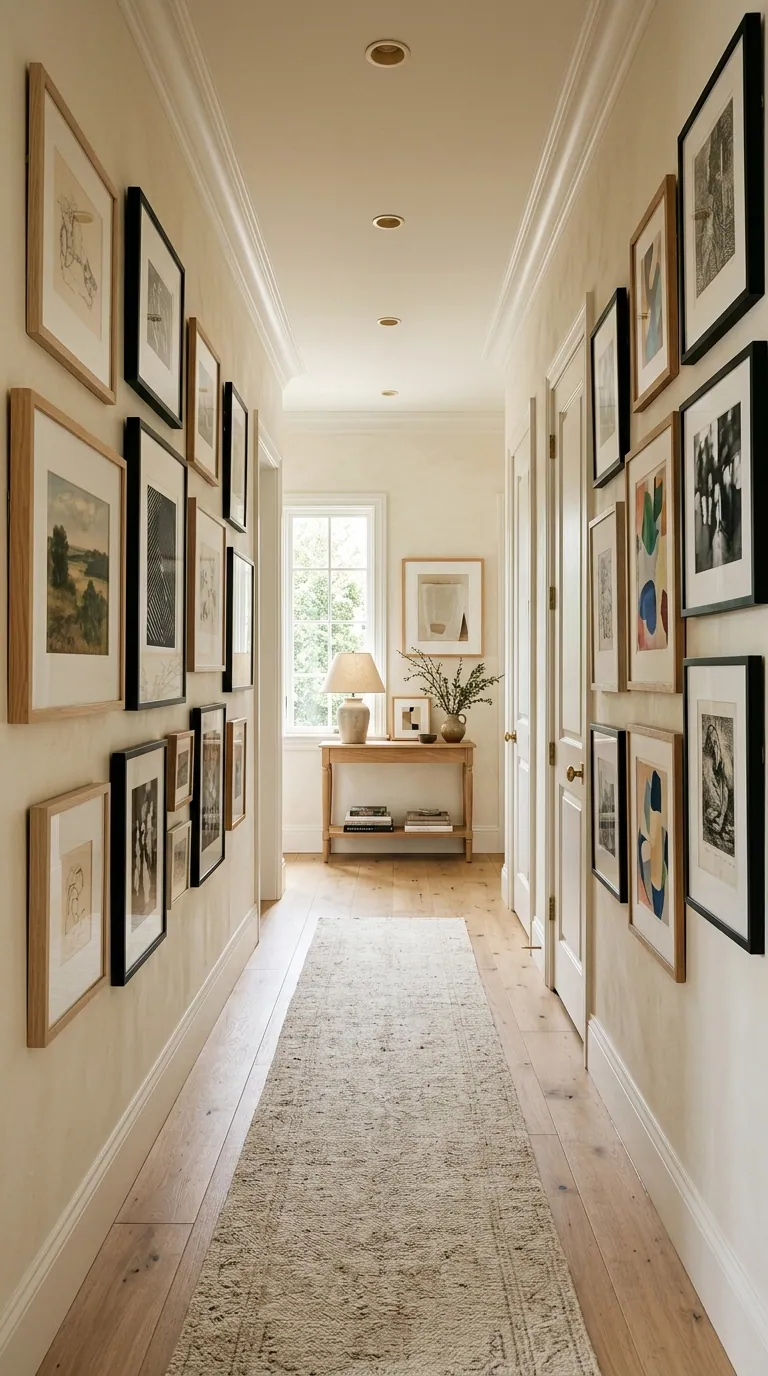
Hallways are often forgotten when decorating, even though they’re perfect spaces for personal displays.
A sequence of photographs or artworks can make a simple passageway feel intentional without taking up floor space.
13. Display Children’s Artwork
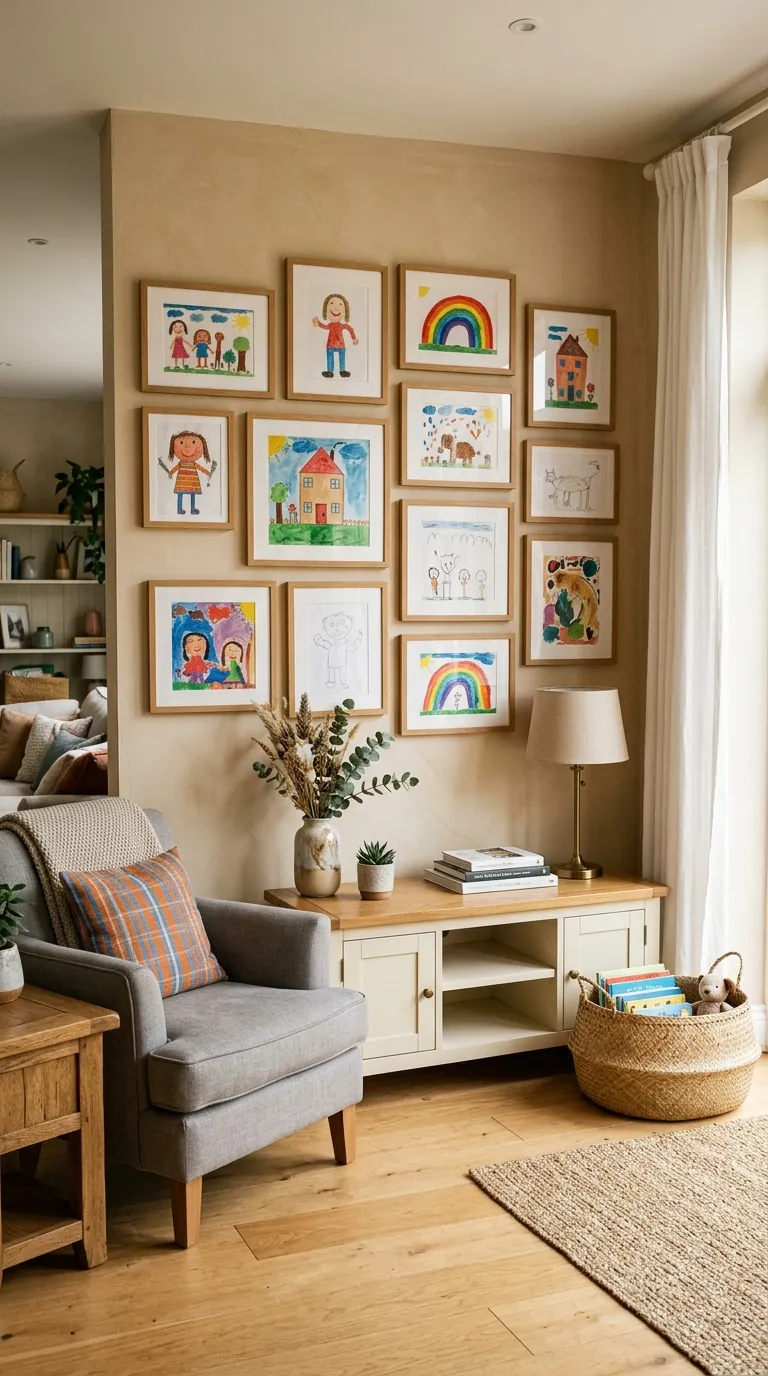
Children’s drawings can become some of the most meaningful artwork in a home.
Use simple matching frames or rotating picture ledges to display new pieces while preserving older favorites. It adds personality without making the space feel overly themed.
14. Use a Large Decorative Clock
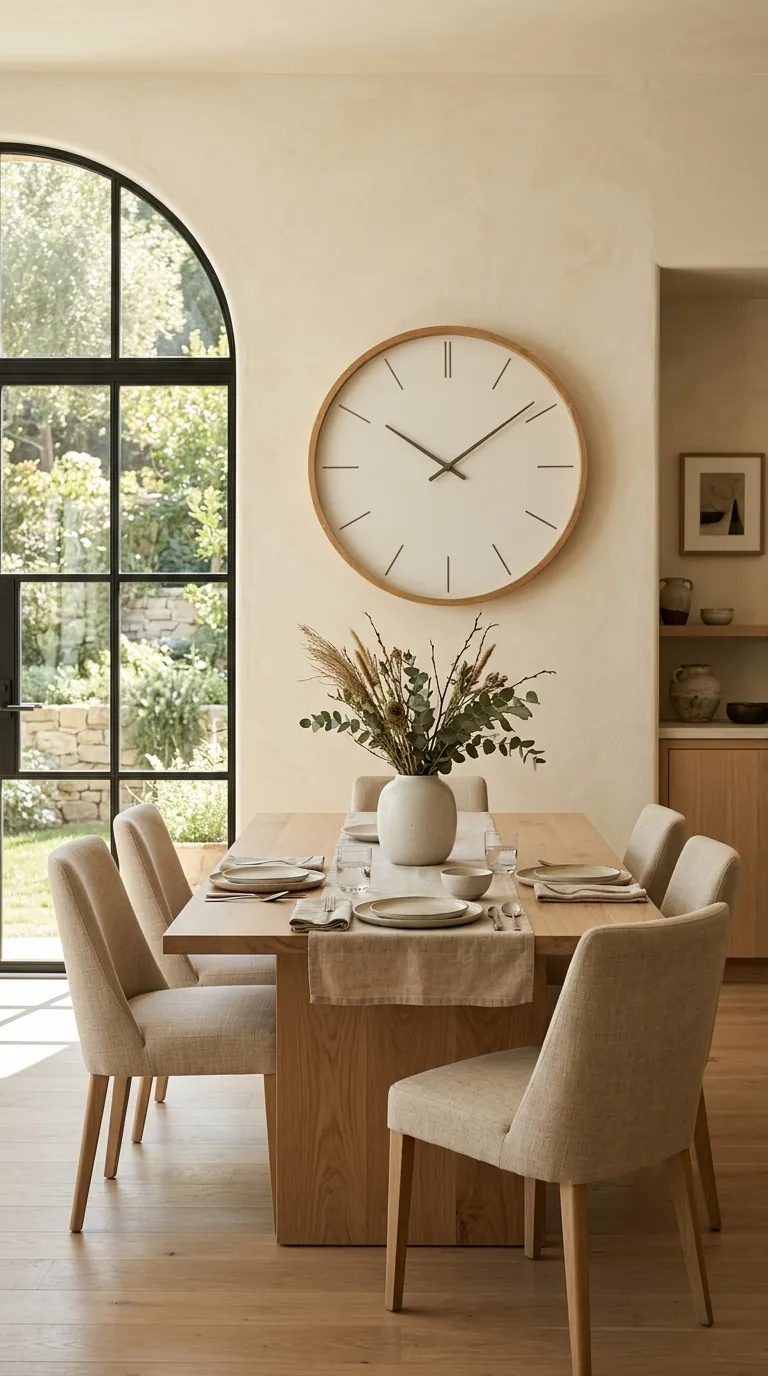
A beautiful clock can function as artwork while remaining practical.
Choose a design with materials that complement the room, such as aged metal, natural wood, or a simple plaster finish.
15. Create a Personal Quote Wall
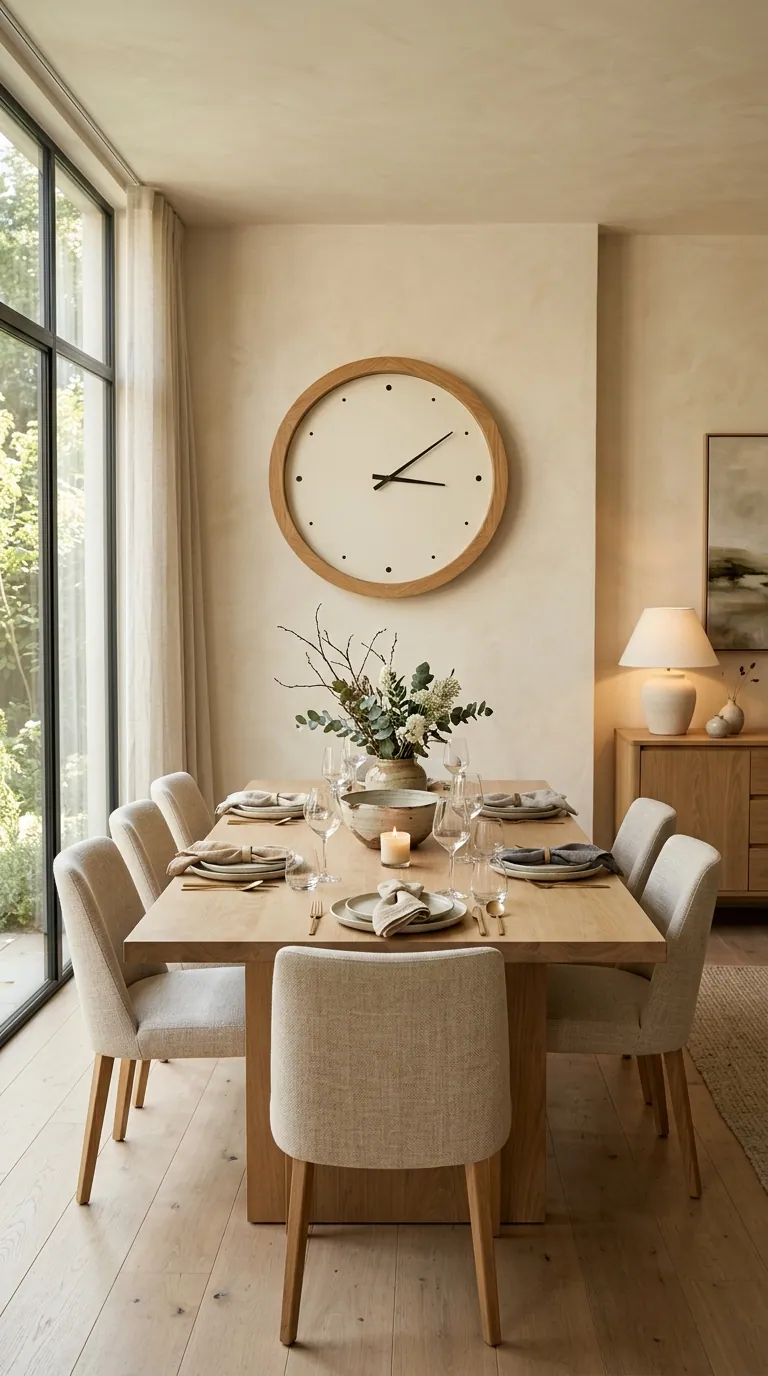
A favorite phrase, poem, or short line can make a room feel distinctly yours.
Rather than covering the wall with motivational typography, choose one meaningful sentence and display it simply.
16. Display Collected Objects
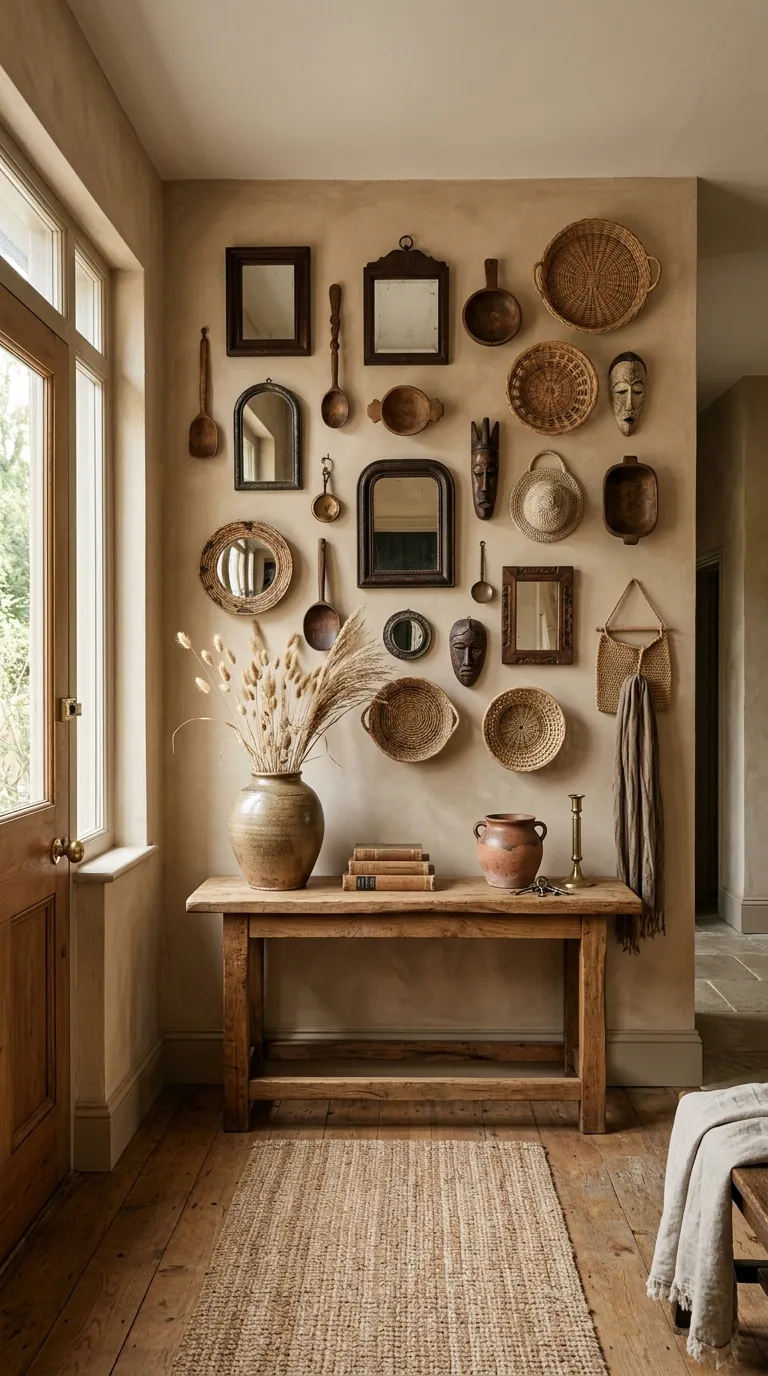
Some of the best wall decor comes from things that weren’t originally intended as decoration.
Vintage keys, woven baskets, small mirrors, wooden objects, antique tools, or handmade pieces can create a fascinating display when grouped thoughtfully.
17. Add a Large Round Mirror
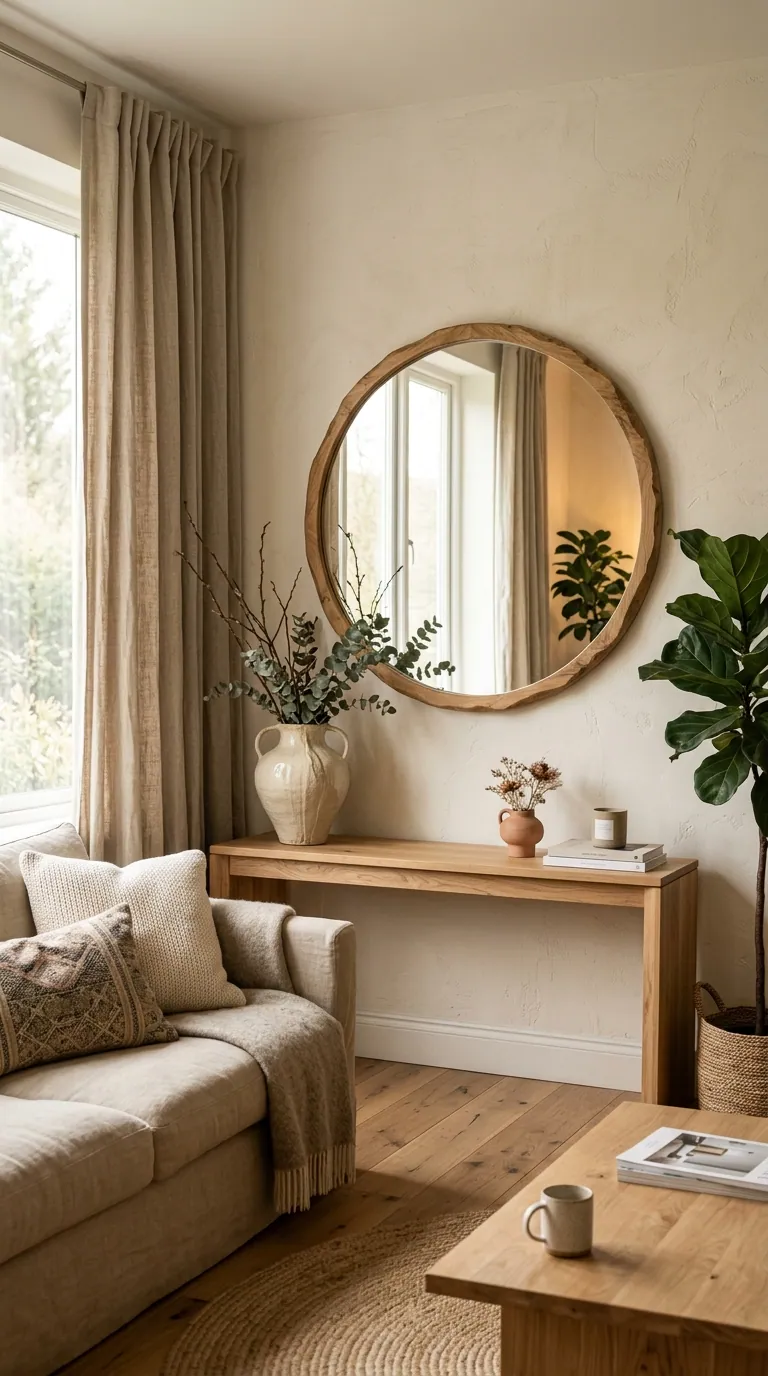
A large round mirror can soften the straight lines found in modern furniture while making a room feel brighter and more spacious.
Hang it above a console, fireplace, or sofa for an understated focal point.
18. Make a Small Art Nook
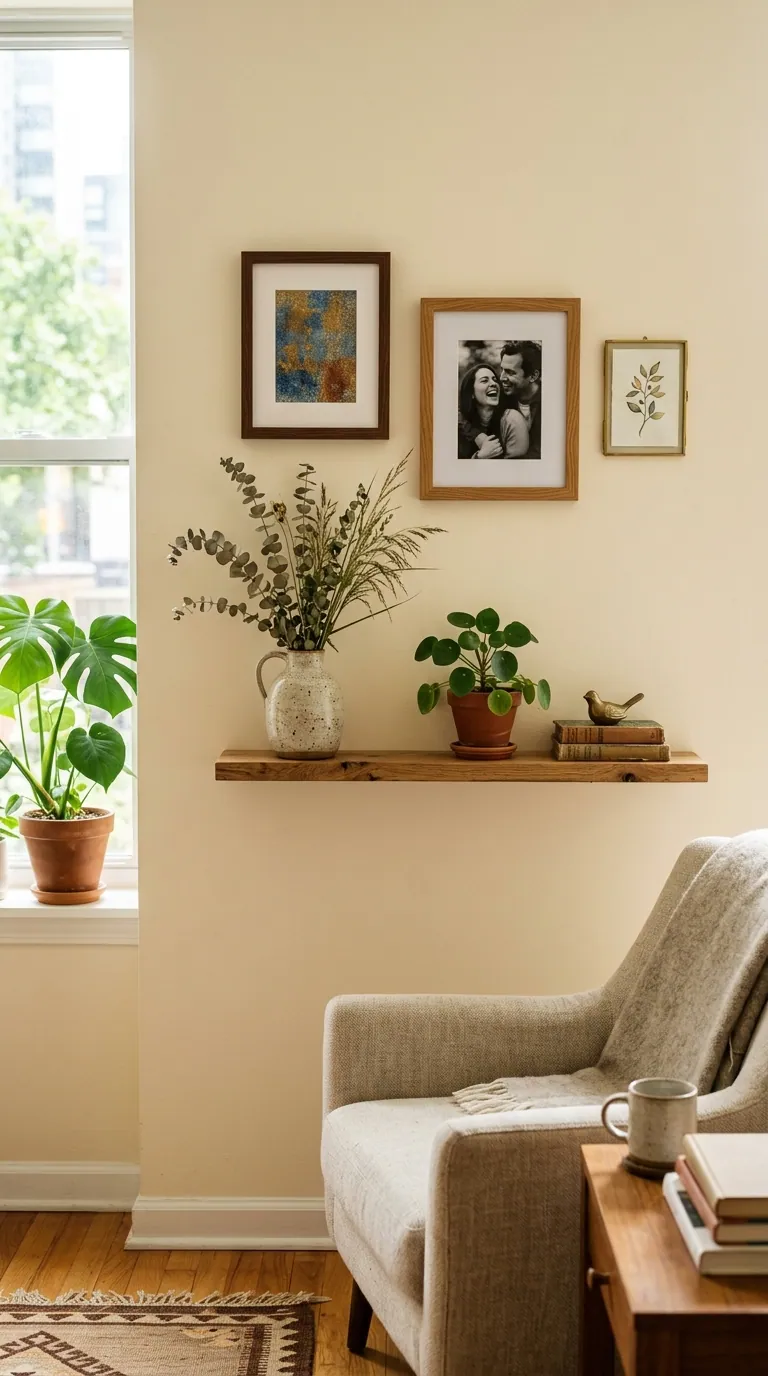
You don’t need an entire wall to create something personal. A small unused corner can become a miniature art display.
Pair a framed print with a photograph, a tiny shelf, and one meaningful object.
19. Use Wall-Mounted Plants
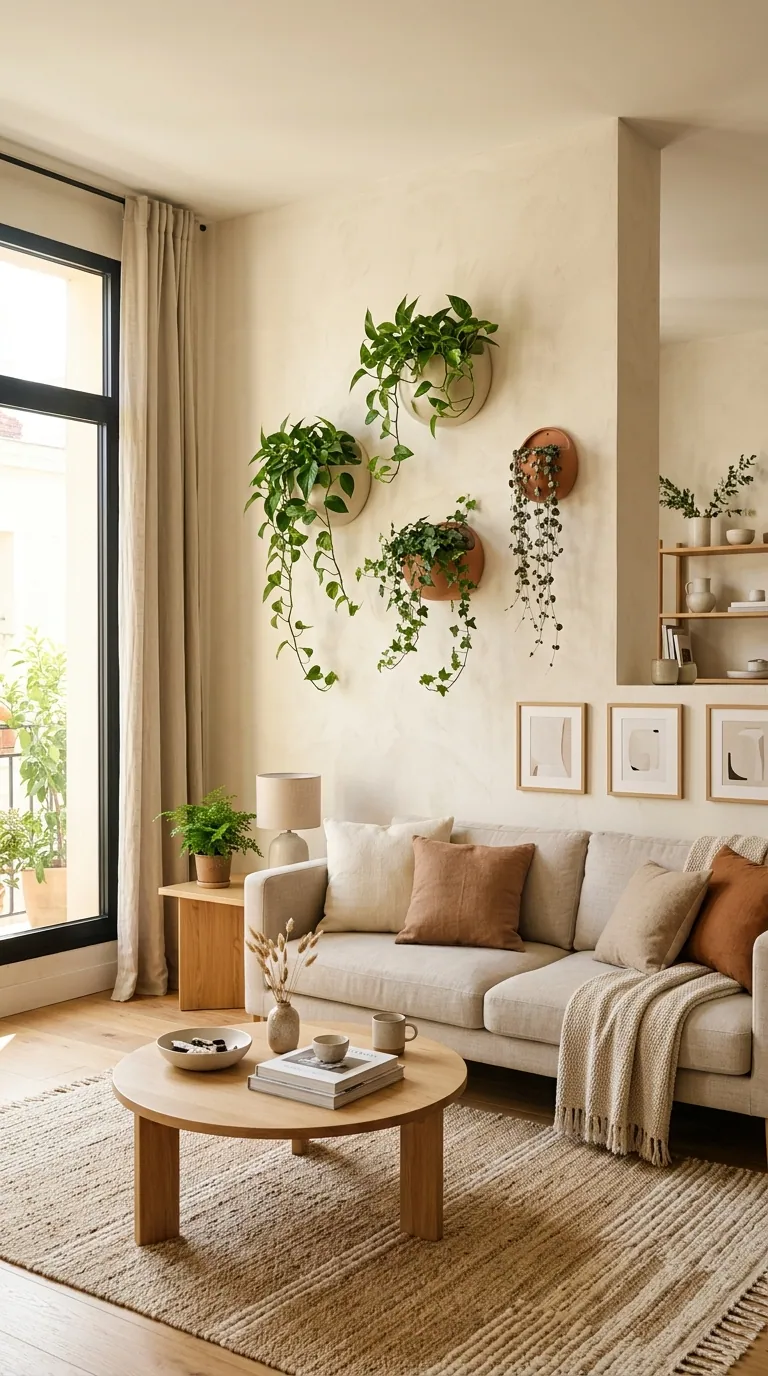
Plants can make a wall feel alive while adding natural color and texture.
Try hanging planters, mounted plant boxes, or simple trailing plants rather than covering the entire wall.
20. Create a Minimalist Photo Grid
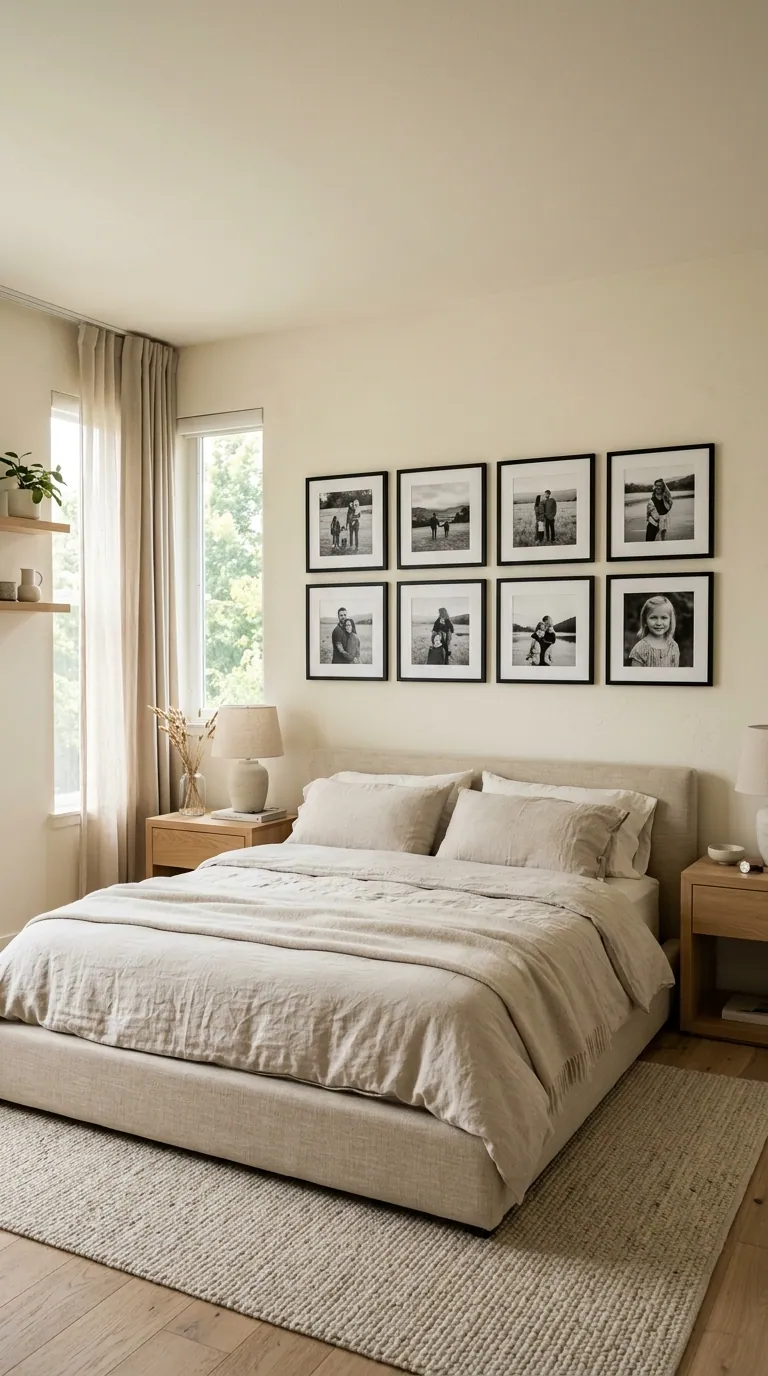
If you prefer a cleaner aesthetic, use a structured grid of photographs.
Choose images connected by a common visual quality, such as black-and-white photography, similar framing, or moments from the same period of your life.
21. Decorate Above the Sofa
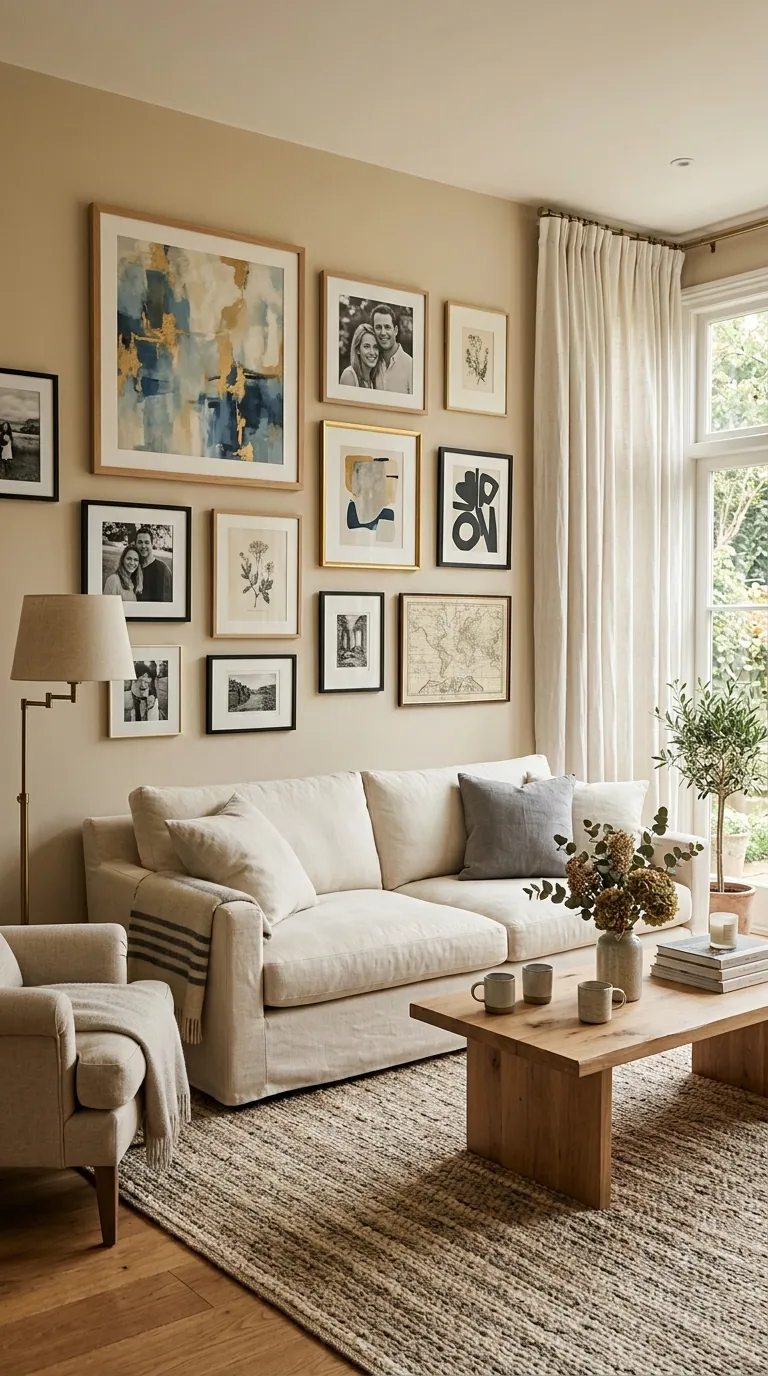
The wall above a sofa is one of the most visible areas in a living room, making it ideal for something personal.
Instead of automatically choosing one large painting, consider a balanced arrangement of artwork, photographs, and small objects.
22. Frame Something Unexpected
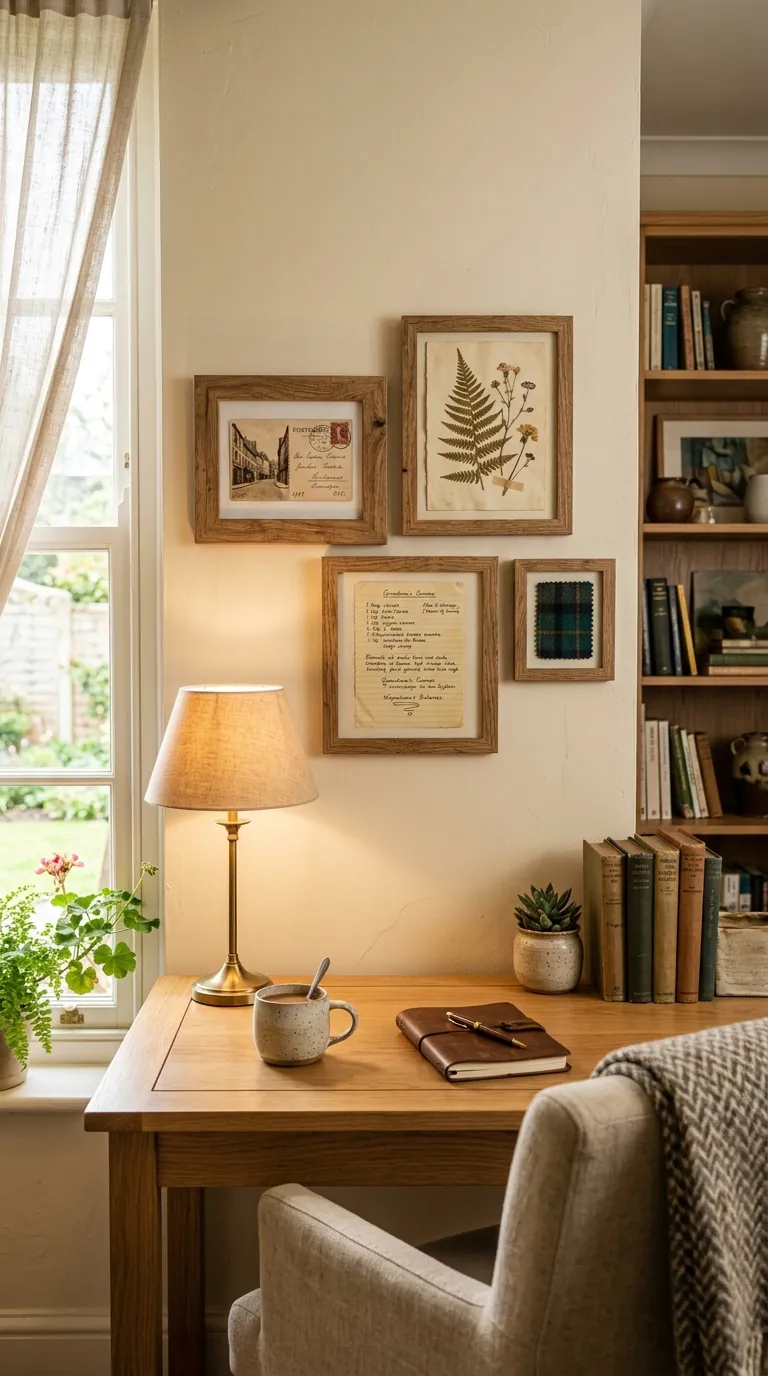
One of the easiest ways to make a home feel personal is to frame something that has meaning but wasn’t originally created as wall art.
A handwritten recipe, old letter, pressed flower, child’s drawing, fabric swatch, concert ticket, or vintage postcard can become a small piece of personal history.
23. Let the Wall Tell Your Story
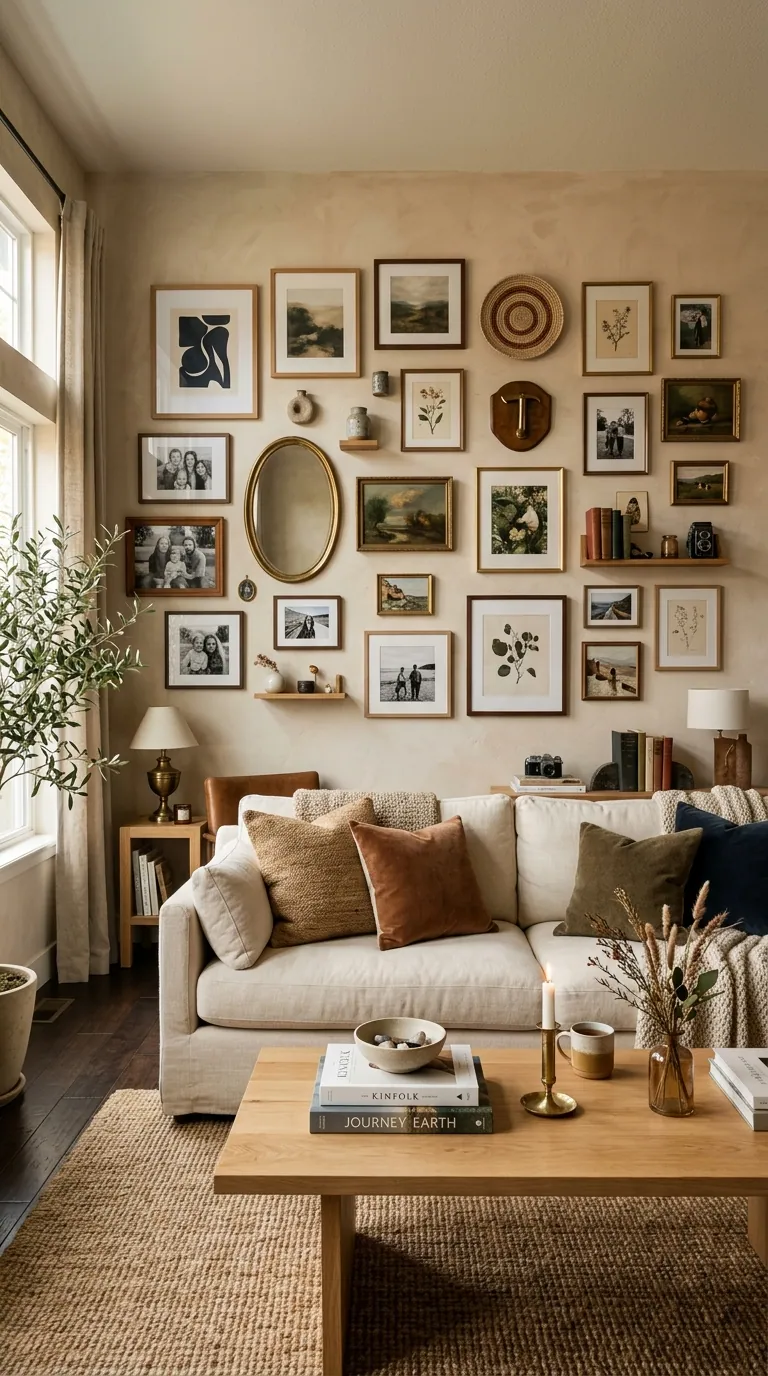
The most personal wall doesn’t necessarily follow one decorating formula.
Combine photographs, artwork, books, objects, textiles, and souvenirs that represent different parts of your life. The goal isn’t to create a perfect showroom wall—it’s to create one that would be difficult for anyone else to copy.
A home becomes personal when the things inside it have stories behind them.
How to Make Wall Decor Feel Personal
The biggest difference between a decorated wall and a personal wall is meaning.
Instead of buying everything at once, let your collection develop naturally. A photograph from a memorable trip, a piece of art discovered unexpectedly, or an object inherited from someone you love can carry far more visual weight than a wall filled with generic decorations.
Mix Personal and Decorative Pieces
Not everything needs a deep story. Mix meaningful pieces with objects chosen simply because you like their shape, color, or texture.
Don’t Make Everything Match
A little variation makes a wall feel collected. Try mixing wood, metal, fabric, paper, and ceramic rather than using one material throughout.
Give Important Pieces Space
If something matters to you, don’t bury it among dozens of other objects. Leaving breathing room around a meaningful photograph or artwork can make it more noticeable.
Think About the Rest of the Room
Wall decor should feel connected to the furniture and materials around it. Natural wood, linen, ceramics, woven textures, and warm neutral colors can help different pieces feel cohesive.
Let It Change
Your home doesn’t need to look finished forever. Rotate photographs, move artwork between rooms, and add new memories as your life changes.
Wall Decor Ideas for Different Rooms
Living Room
The living room is perfect for gallery walls, oversized artwork, large mirrors, and collected objects.
Bedroom
Keep bedroom walls softer and more personal with photographs, textiles, botanical artwork, and small memory shelves.
Hallway
Use the hallway as a gallery for photographs and smaller framed artwork.
Home Office
Display books, meaningful quotes, travel memories, and objects connected to your interests.
Dining Room
Large artwork, ceramic collections, decorative clocks, and sculptural pieces can create a strong focal point.
Frequently Asked Questions
How can I decorate my walls without making my home look cluttered?
Start with fewer pieces and give each one enough breathing room. Use a consistent color palette or repeat materials such as oak, black frames, or warm neutral tones to create visual cohesion.
How do I make wall decor look more expensive?
Focus on scale, spacing, and quality rather than quantity. One large artwork or mirror can often have more impact than many small inexpensive decorations.
What should I put on a blank living room wall?
A large artwork, gallery wall, oversized mirror, picture ledges, or a collection of meaningful objects are all strong options. Choose based on how much visual activity the rest of the room already has.
Can family photos look stylish?
Absolutely. Choose photographs with emotional meaning and display them using consistent framing. Black-and-white photographs are particularly easy to integrate into sophisticated interiors.
How many pieces should a gallery wall have?
There is no fixed number. Start with the wall size and the scale of your artwork. A small arrangement might need five or six pieces, while a larger wall can comfortably hold a dozen or more.
Should every frame match?
No. Matching frames create a clean and organized appearance, but combining wood, black, brass, or vintage frames can make a display feel more collected and personal.
Final Thoughts
The most memorable homes aren’t necessarily the ones with the most impressive decorations. They’re the ones where you can look around and recognize the people who live there.
A photograph can bring back an afternoon. A book can remind you of a different chapter of your life. A handmade object can carry the memory of where you found it. Even a simple piece of artwork can become meaningful because of the room where you first hung it.
So when decorating your walls, don’t ask only “What looks good here?”
Also ask “What feels like me?”
That’s where a house starts becoming a home.