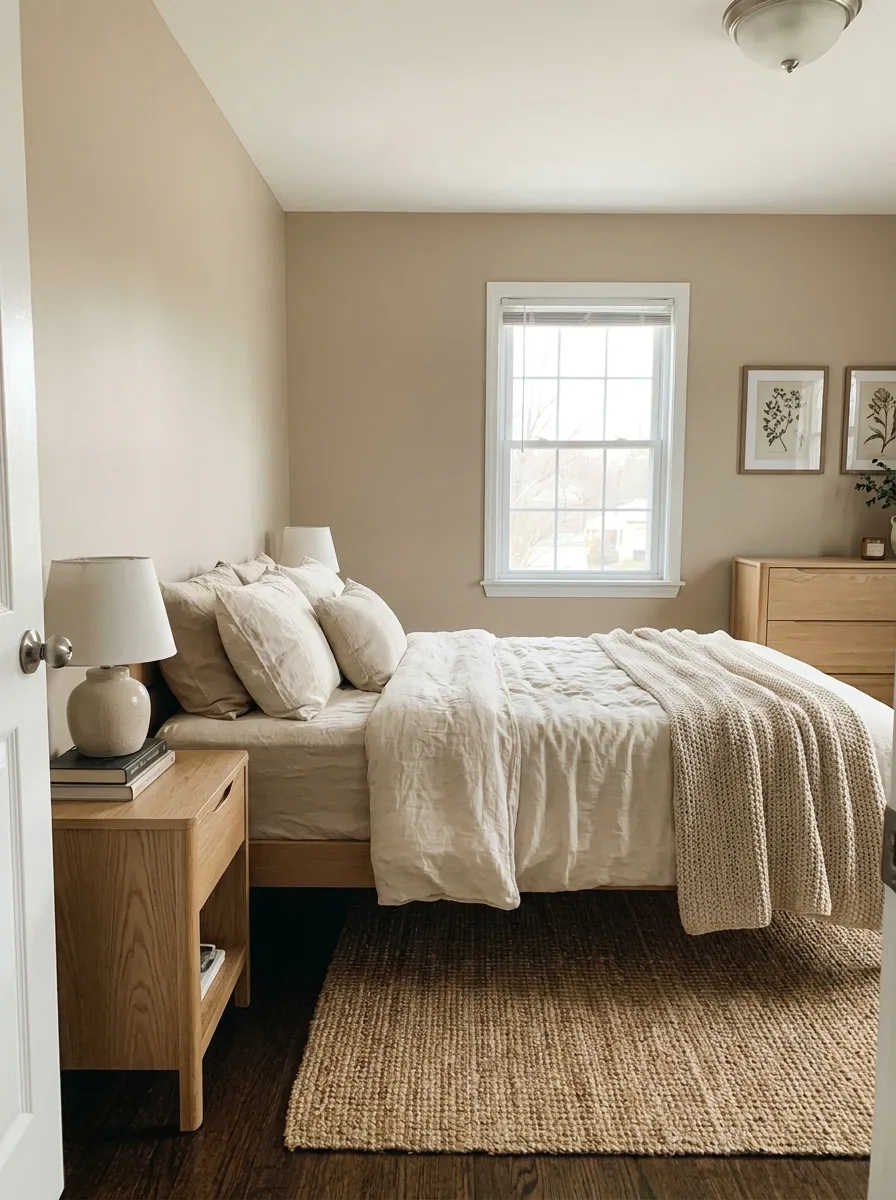
A cozy bedroom should feel like a place you naturally want to slow down. Soft bedding, warm lighting, comfortable textures, calming colors, and a few thoughtfully chosen details can completely change the atmosphere of a room.
You don’t need a huge bedroom or an expensive makeover to create that feeling. Sometimes the biggest difference comes from layering simple materials, improving the lighting, or making the bed the visual centerpiece of the room.
Whether you prefer warm neutrals, natural textures, modern simplicity, or a slightly rustic look, these 25+ cozy bedroom ideas can help you create a bedroom that feels comfortable, personal, and inviting.
1. Layer Warm Neutral Colors
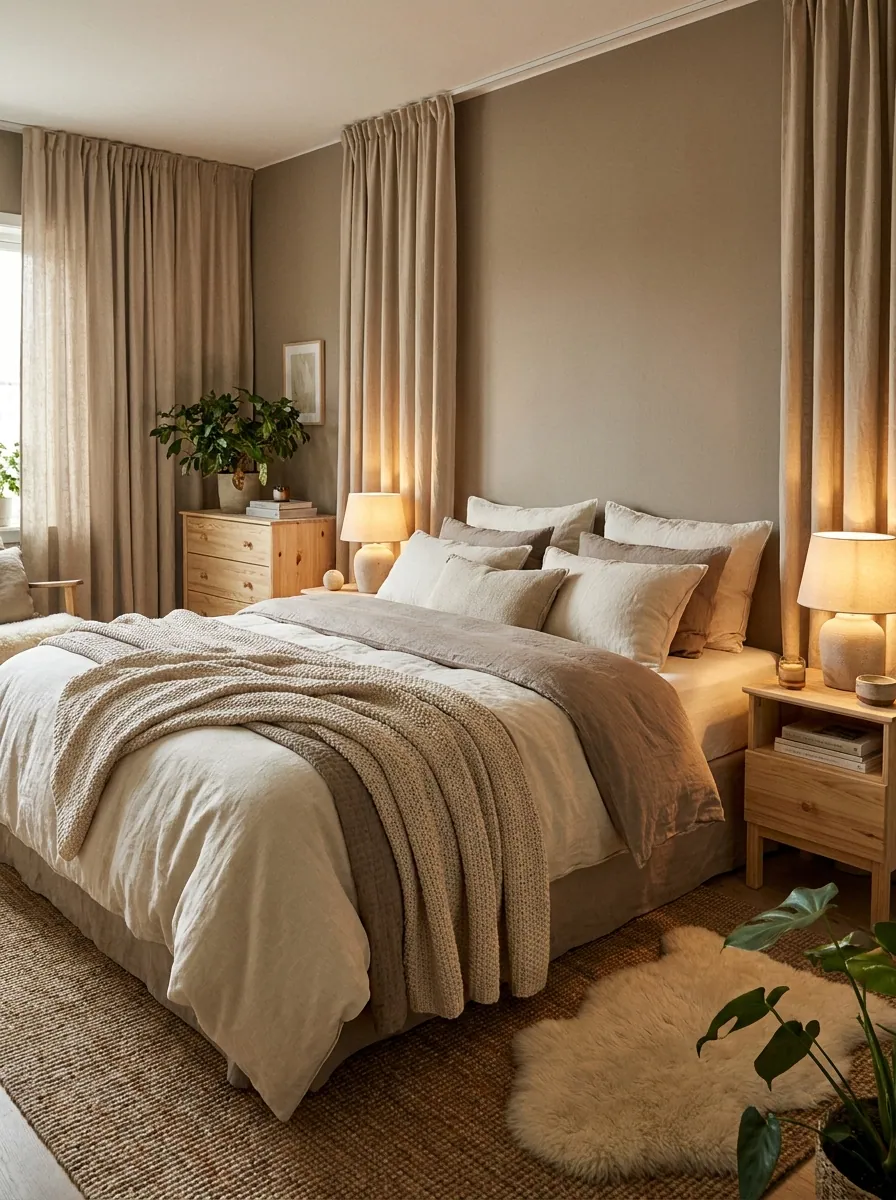
Warm neutrals are one of the easiest ways to make a bedroom feel comfortable. Instead of using a single beige shade throughout the room, combine several tones such as ivory, oatmeal, sand, taupe, and light brown.
The slight differences between these colors create depth without making the room feel visually busy. Use the lightest shade on larger surfaces such as walls and bedding, then introduce darker neutrals through cushions, throws, rugs, and furniture.
For an especially cozy result, avoid making every surface the exact same color. A bedroom feels much more layered when the shades are similar but not identical.
2. Make the Bed the Focal Point

The bed naturally becomes the main visual feature of most bedrooms, so give it enough attention to create an inviting first impression.
Start with comfortable-looking bedding and build layers using pillows, a duvet, and a throw blanket. You don’t need dozens of decorative pillows. A few different sizes and textures usually look more sophisticated.
An upholstered or wooden headboard can further strengthen the focal point. Keep the surrounding furniture relatively simple so the bed remains the star of the room.
3. Add Soft Bedside Lighting
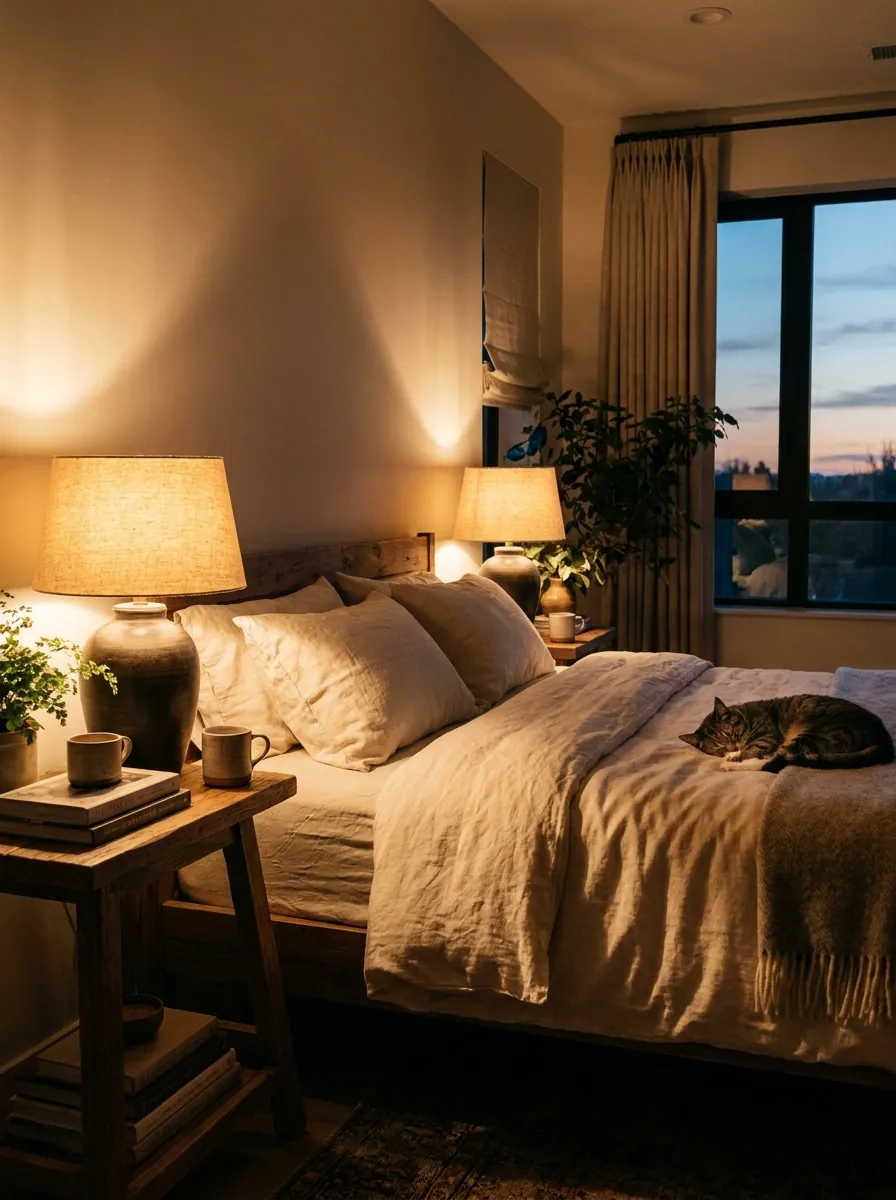
Lighting can completely change how a bedroom feels after sunset. Bright overhead lighting often makes a room feel functional rather than relaxing.
Instead, use bedside lamps, wall sconces, or small table lamps to create pools of warm light around the bed.
Choose lamps with shades that soften the light rather than exposing a bright bulb directly. Multiple small light sources can also make the room feel more layered than relying on one ceiling fixture.
4. Use Plenty of Soft Textures
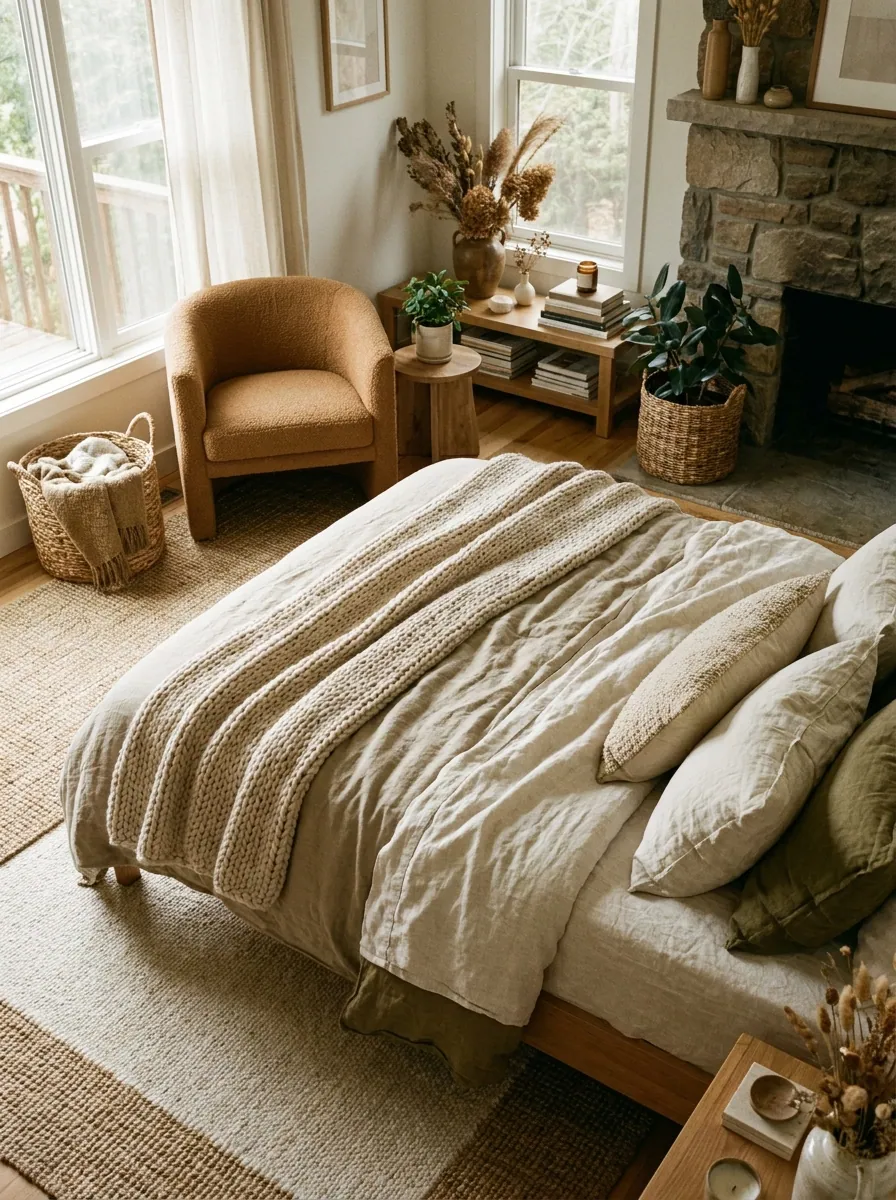
A cozy room is not just about color. Texture is what makes a neutral bedroom feel interesting and comfortable.
Mix materials such as linen, cotton, wool, boucle, wood, rattan, and woven fabrics. A knitted throw over smooth bedding, for example, creates an immediate contrast.
Try to distribute textures throughout the room rather than concentrating everything on the bed. A woven basket, textured rug, wooden stool, or fabric lampshade can add small layers of warmth.
5. Create a Calm Reading Corner
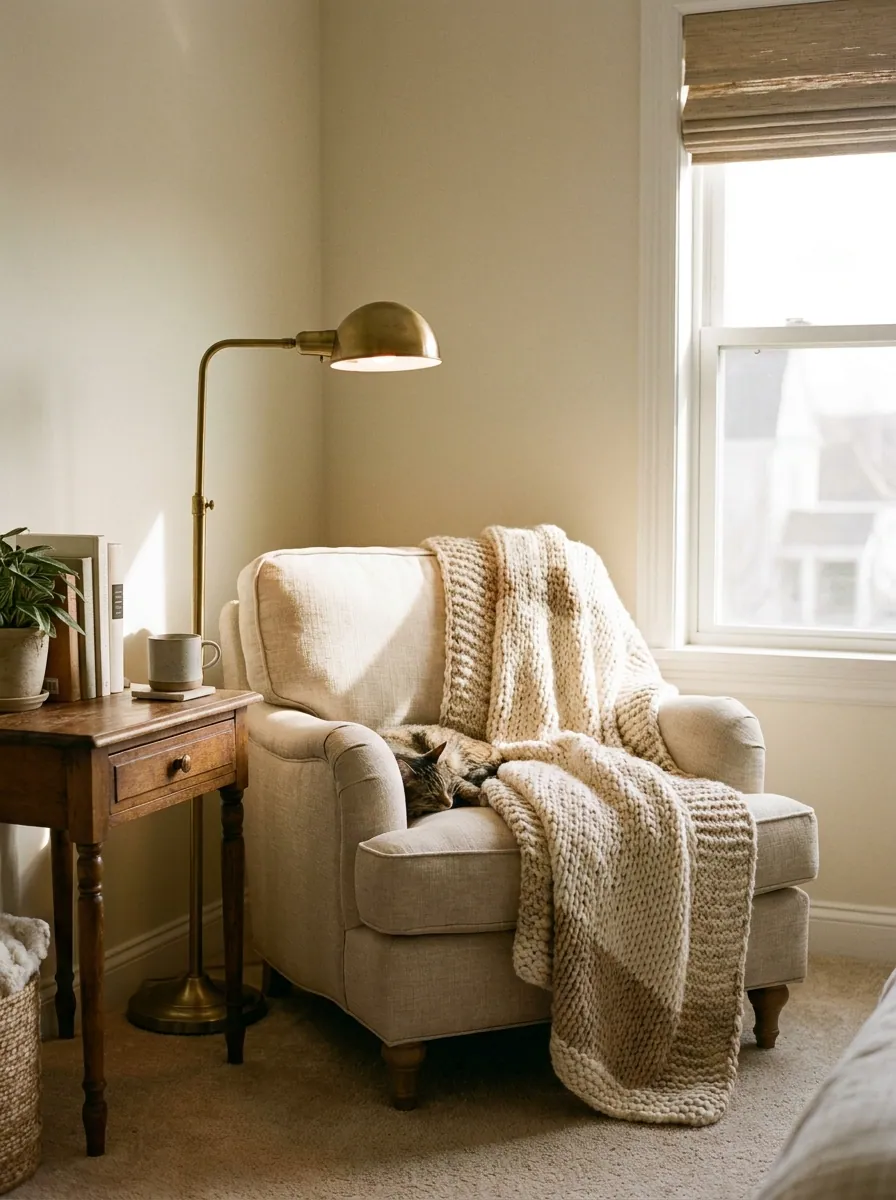
If you have even a small unused corner, turn it into a dedicated place for reading or relaxing.
A comfortable chair paired with a small side table and floor lamp is enough. You don’t need a large lounge chair or extensive furniture arrangement.
Keep the styling simple. One throw blanket, a small stack of books, and a plant can make the corner feel intentional without overwhelming the room.
6. Bring in Natural Wood
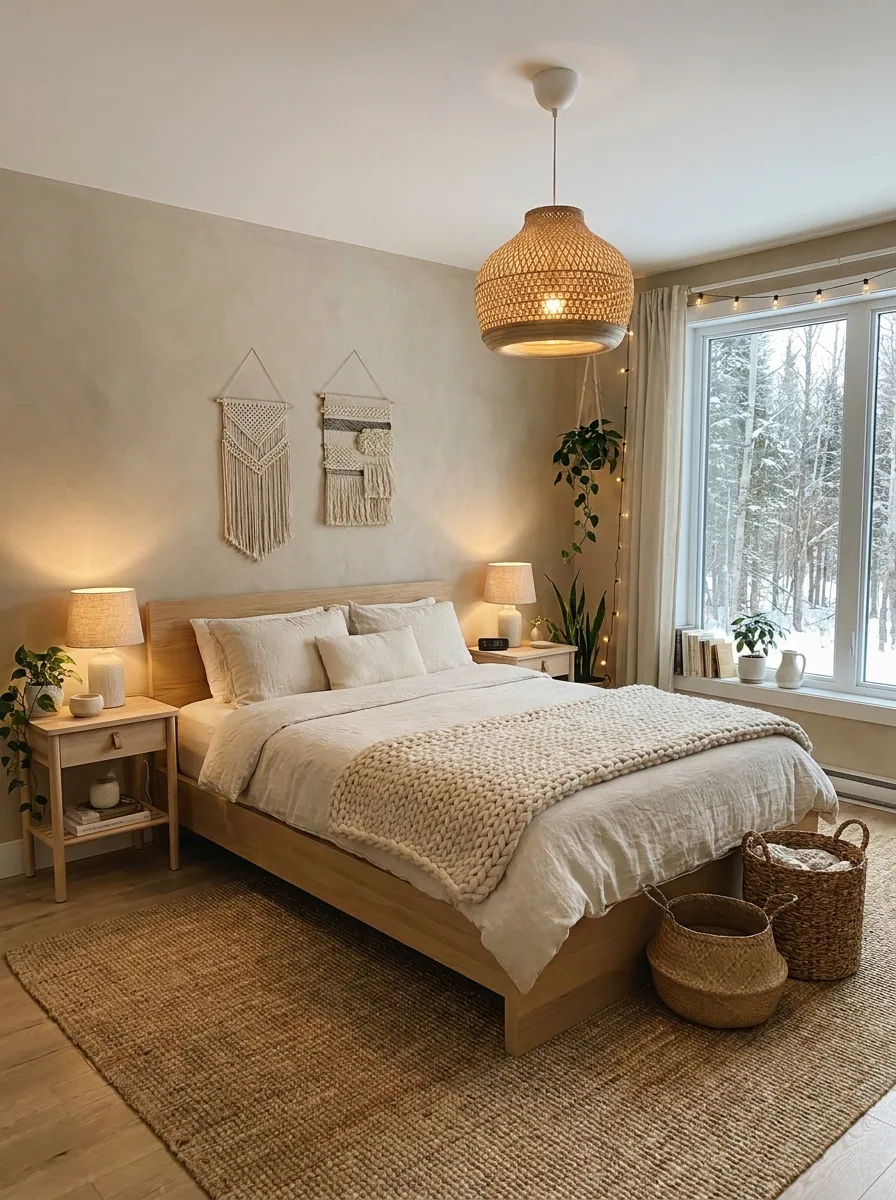
Natural wood brings warmth to bedrooms, especially when the rest of the palette is light and neutral.
Oak, pine, walnut, and other natural finishes can all work. Lighter wood creates an airy Scandinavian feel, while darker wood can give the room a richer and more traditional appearance.
You don’t need matching wooden furniture. Combining slightly different wood pieces can actually make the bedroom feel more relaxed and collected.
7. Add a Soft Area Rug
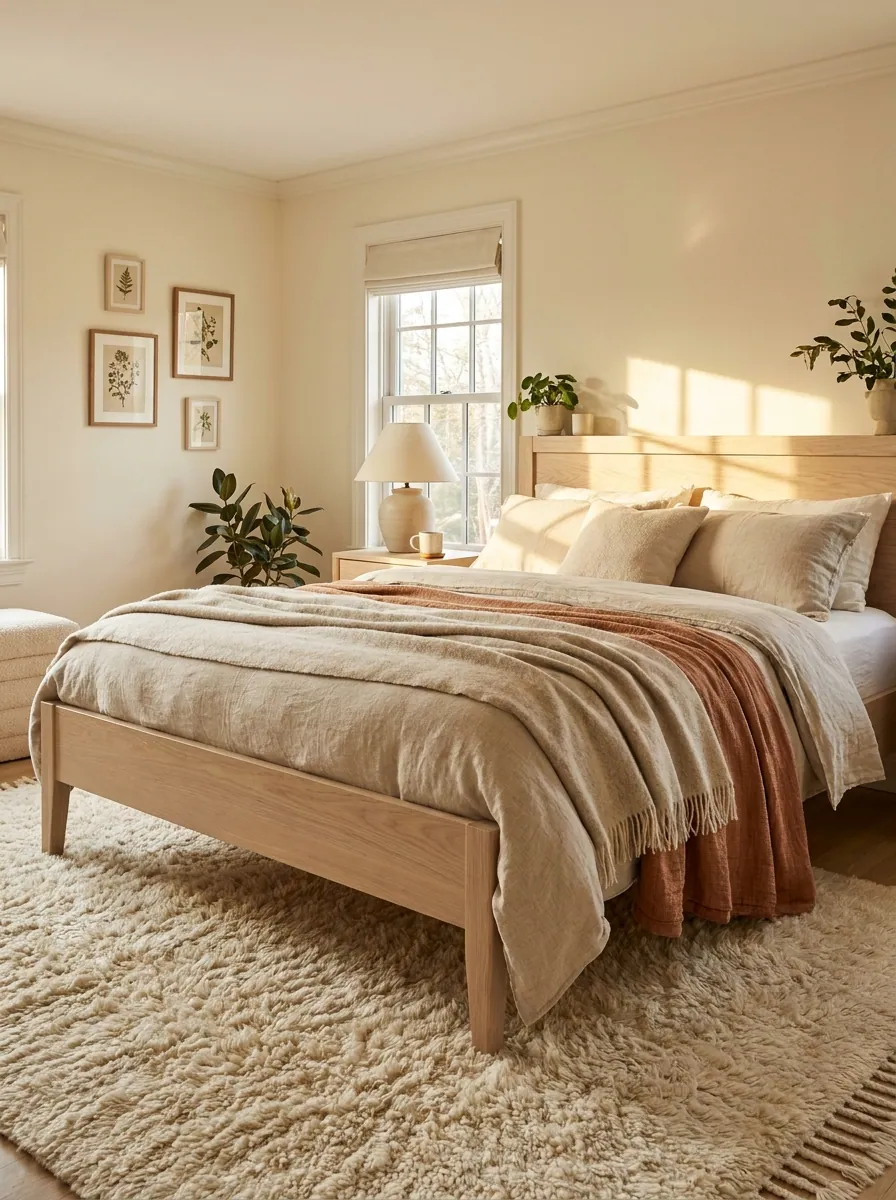
A rug can make a bedroom feel warmer both visually and physically.
For the most comfortable appearance, choose a rug large enough to extend beyond the sides of the bed. This creates a stronger connection between the bed and the surrounding furniture.
Neutral textured rugs are particularly versatile, but subtle patterns can also work if the rest of the room is fairly simple.
8. Use Linen Bedding
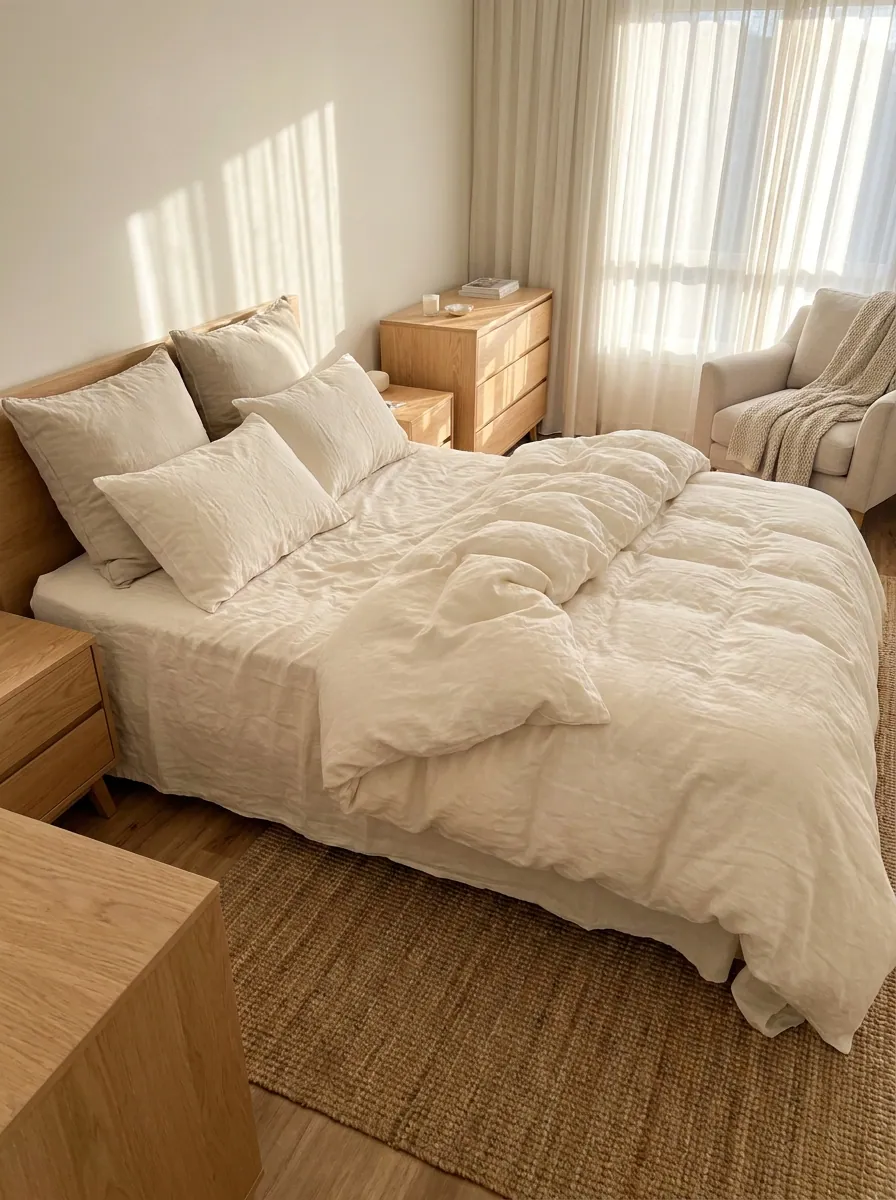
Linen bedding has a naturally relaxed appearance that works beautifully in cozy bedrooms.
Unlike perfectly pressed bedding, slightly rumpled linen creates a casual, lived-in feeling. Choose neutral colors if you want a calm appearance, or muted earthy shades for more personality.
Layering a linen duvet with cotton sheets and a textured blanket gives the bed enough visual interest without making it look overly styled.
9. Add Warm Earthy Accents
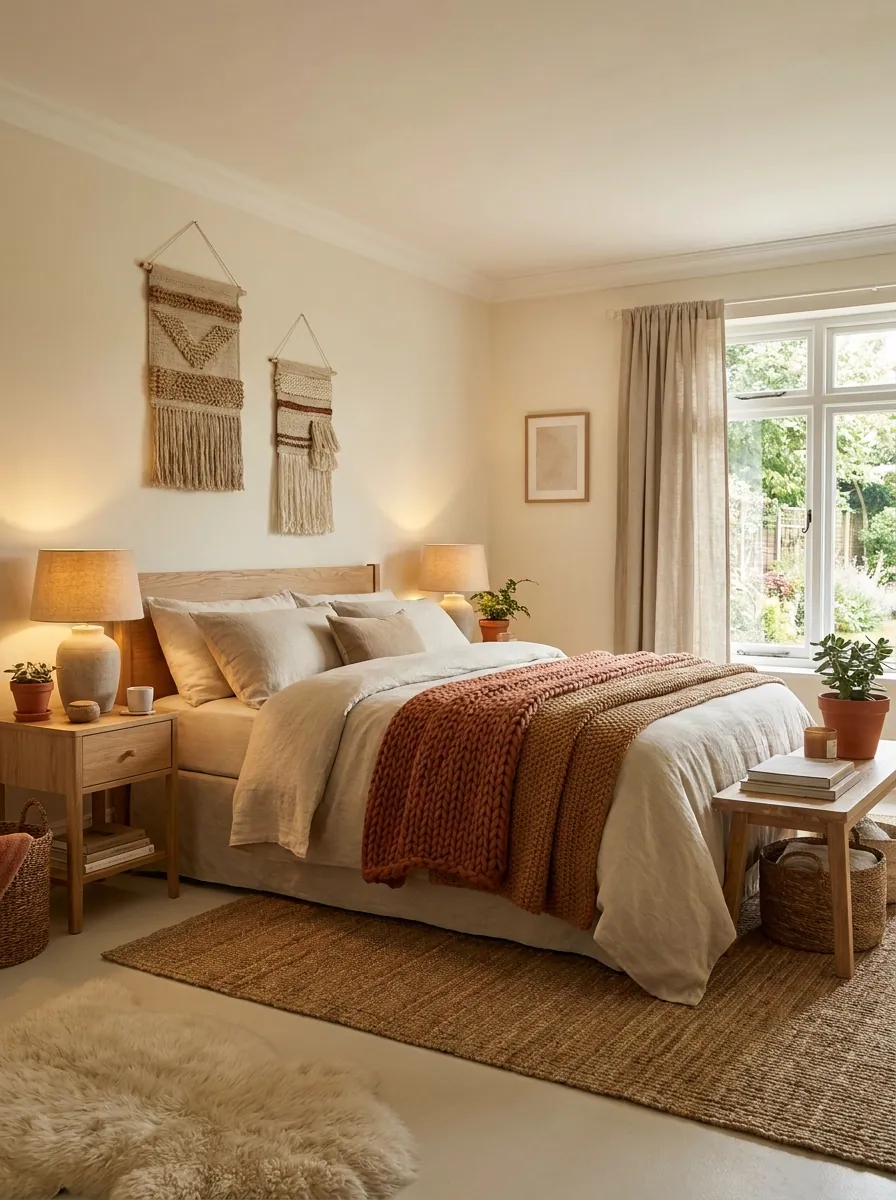
A completely neutral bedroom can sometimes feel flat. Small touches of terracotta, caramel, clay, muted olive, or warm brown can add personality.
You don’t need to repaint the entire room. Introduce these colors through cushions, artwork, blankets, ceramics, or small decorative objects.
Keep the stronger colors limited so the room remains peaceful rather than visually stimulating.
10. Decorate With Dried Branches
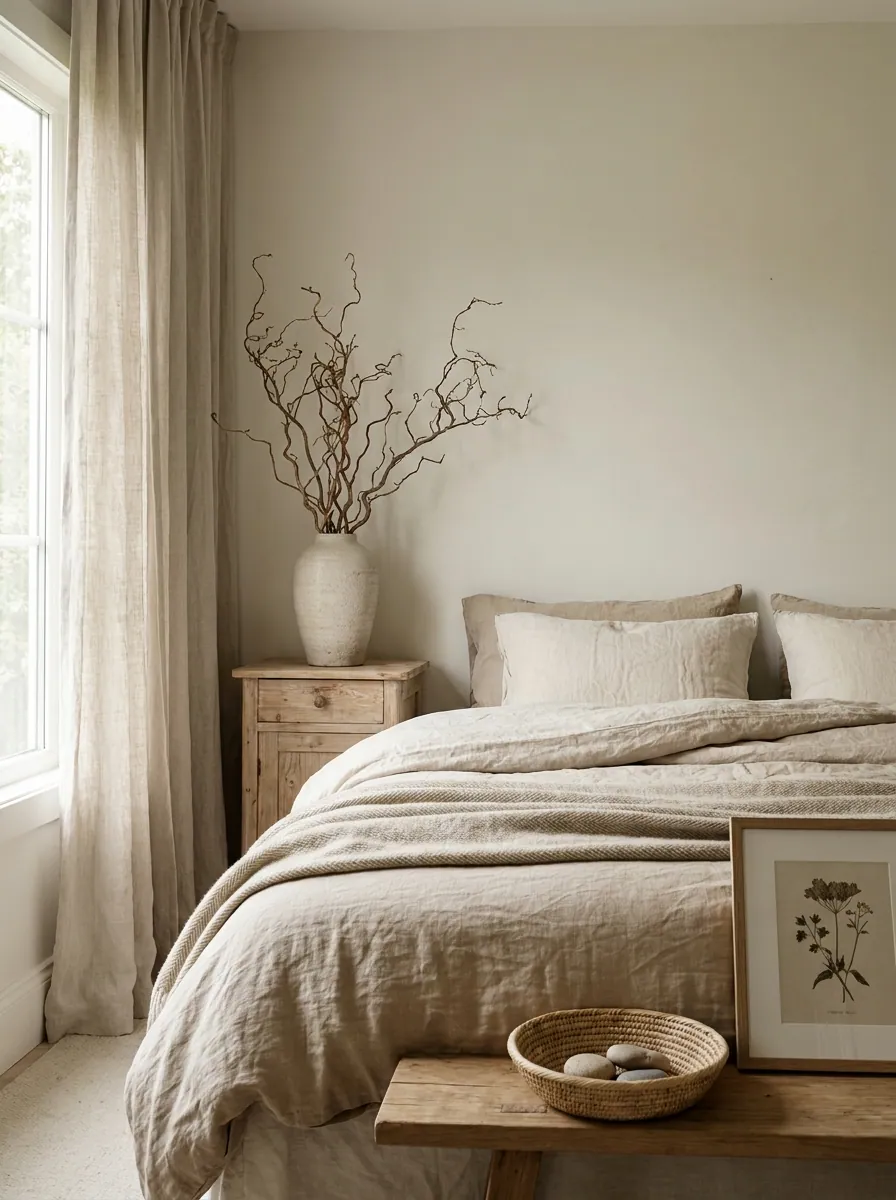
Natural decorative elements can add character without making a bedroom feel cluttered.
A simple vase filled with dried branches can create height and bring an organic shape into the room. Pampas grass, eucalyptus, olive branches, or other dried stems can work depending on your style.
Keep the arrangement understated. The goal is to add a natural accent rather than create a large decorative centerpiece.
11. Hang Curtains From Ceiling Height
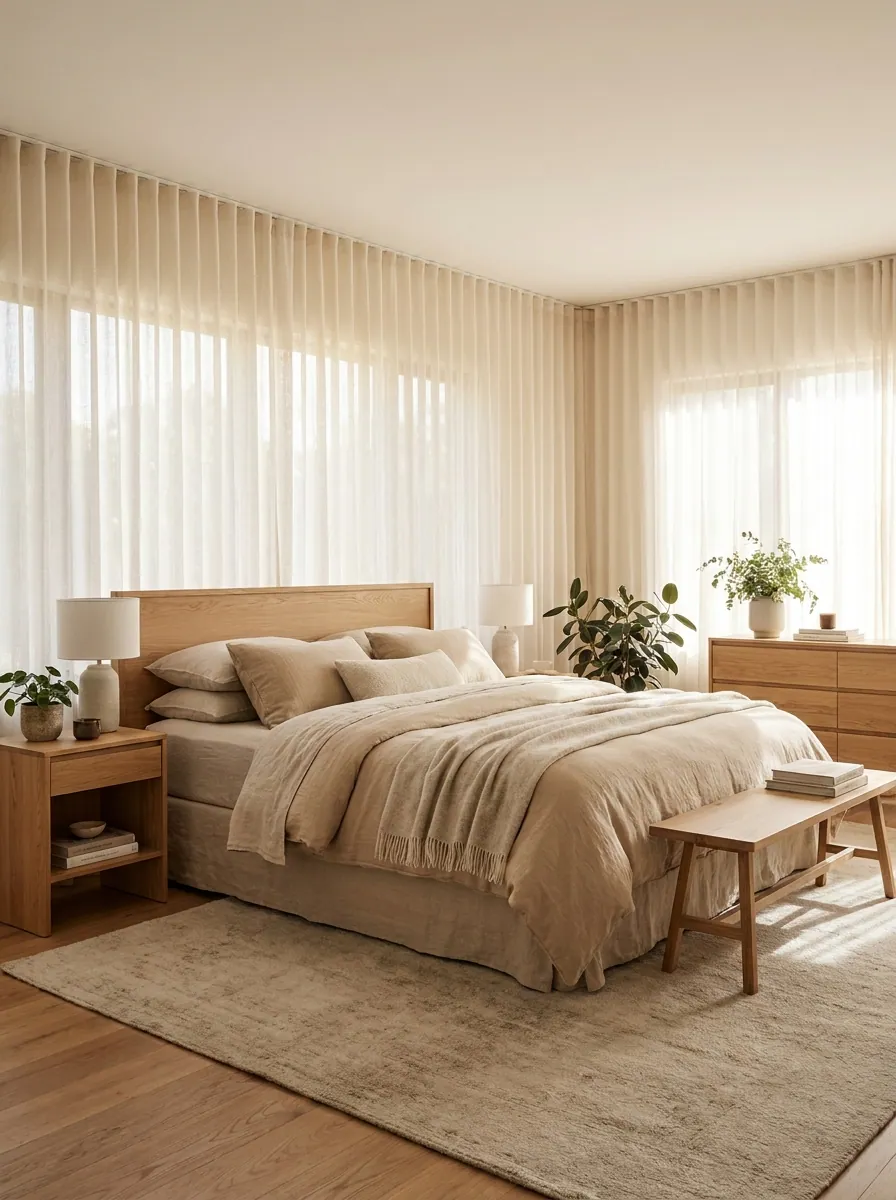
Curtains can influence the entire mood of a bedroom.
Hanging curtains closer to the ceiling and allowing them to fall all the way toward the floor can create a softer, more finished appearance.
Light-filtering fabrics work especially well because they allow daylight into the room while reducing harsh brightness. Cream, oatmeal, and warm white are easy choices for a calming bedroom.
12. Create a Cozy Accent Wall
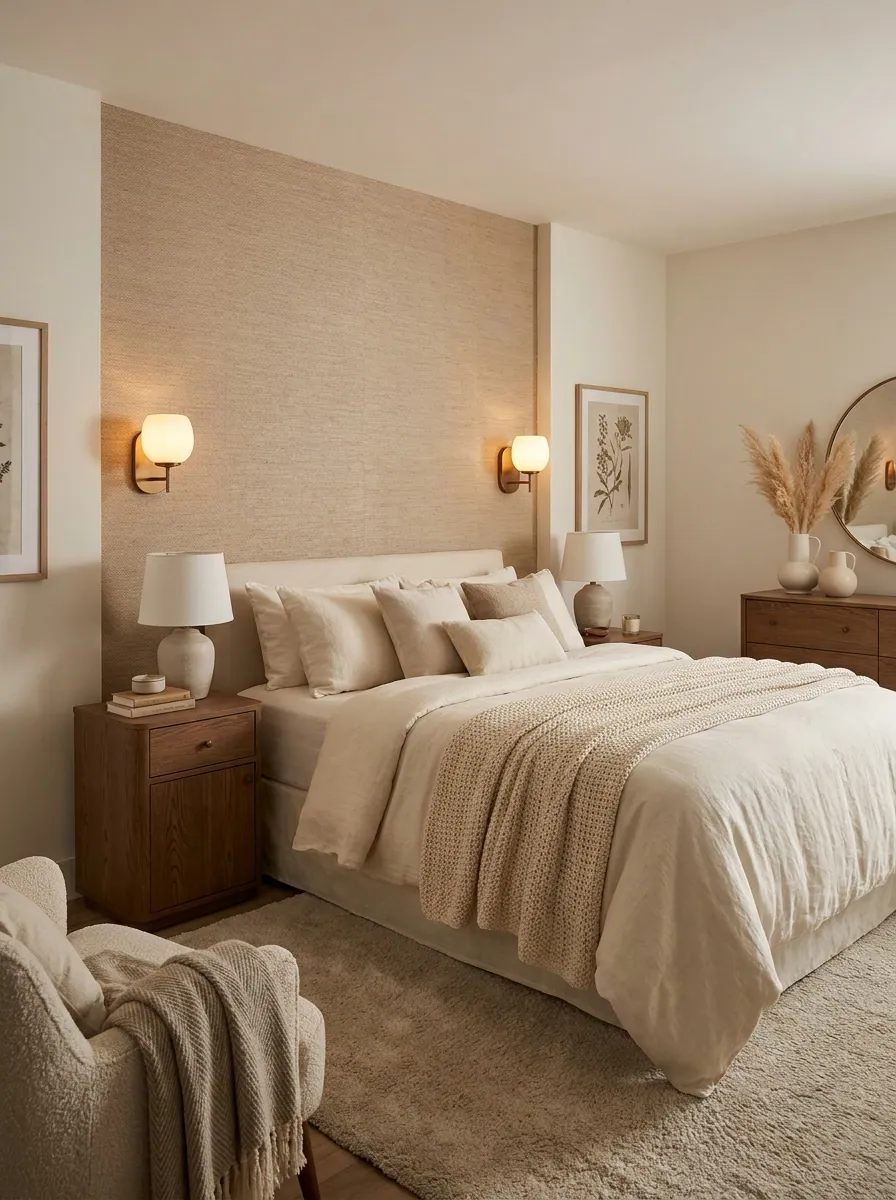
An accent wall can give the bedroom a stronger sense of identity without requiring a complete redesign.
Consider warm beige paint, muted clay, soft brown, textured wallpaper, or natural wood paneling.
The wall behind the bed is usually the best location because it naturally reinforces the room’s main focal point.
13. Use Wall Sconces Beside the Bed

Wall sconces are both decorative and practical. They free up space on the nightstand while providing focused lighting for reading.
Choose simple fixtures if your room already has several decorative elements. Brass, black, bronze, or natural-toned fixtures can each create a different look.
Position them carefully so they are comfortable to use from the bed without creating harsh glare.
14. Layer Different Pillow Textures

Pillows can make an otherwise ordinary bed look considerably more inviting.
Instead of choosing pillows that all look identical, combine different shapes, sizes, and fabrics. Smooth linen can sit beside chunky woven fabric or boucle.
Keep the colors related so the arrangement looks cohesive rather than chaotic.
15. Add a Wooden Bench at the Foot of the Bed
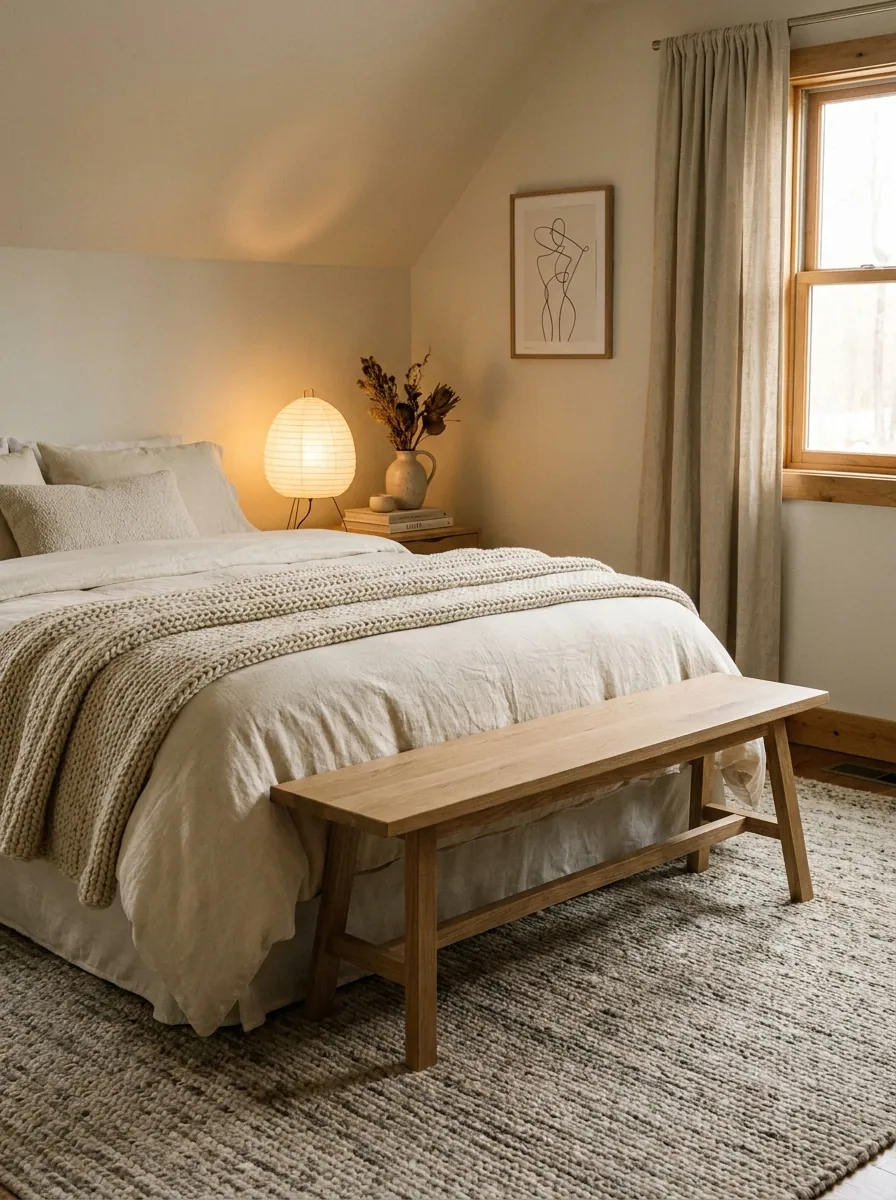
A bench at the foot of the bed can add both function and visual balance.
It provides a convenient place to sit, fold blankets, or temporarily place clothing. In smaller rooms, choose a slim design that doesn’t interfere with walking space.
Natural wood works particularly well in cozy bedrooms because it adds warmth without requiring additional color.
16. Style a Small Nightstand
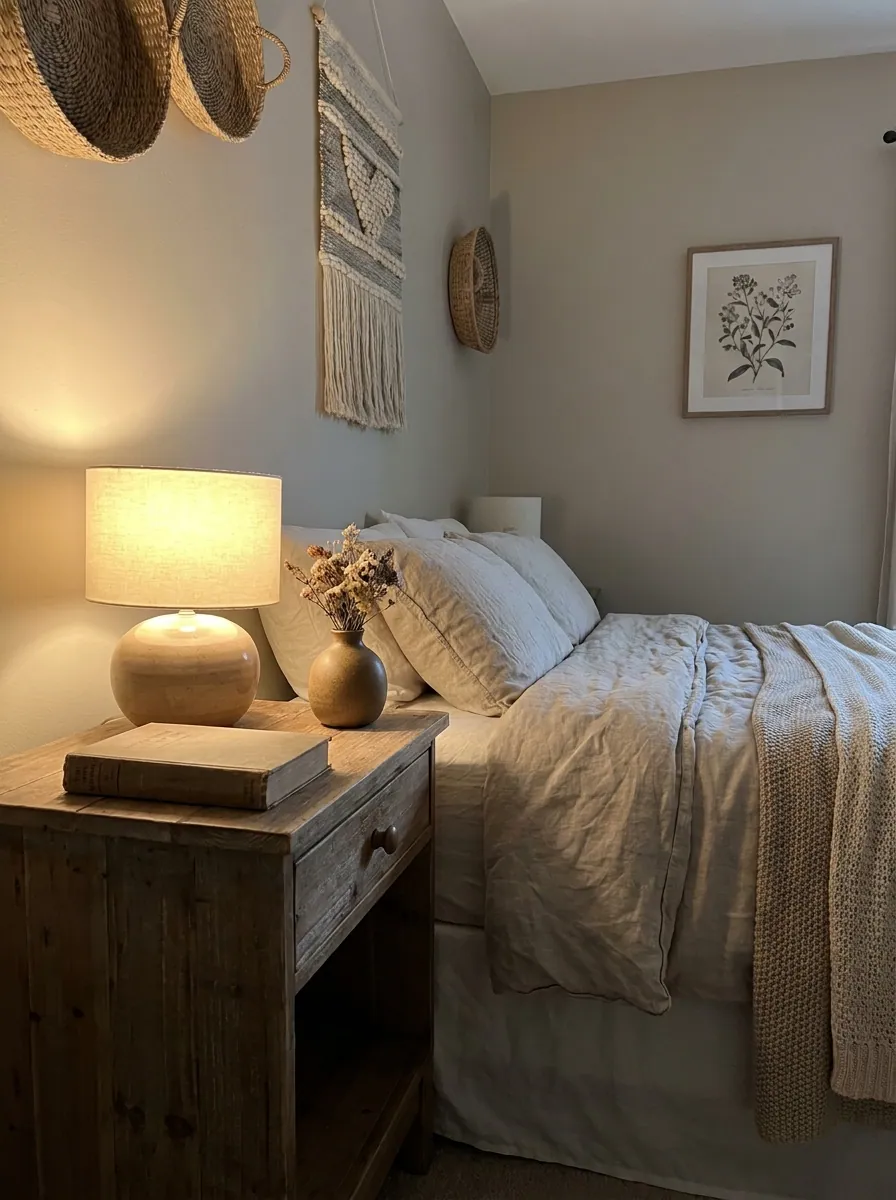
A cozy bedroom doesn’t need a nightstand covered in decorations.
Choose a few useful and attractive objects instead: a warm lamp, small vase, book, candle, or ceramic dish.
Leaving some empty space is important. A clear nightstand makes the entire bedroom feel calmer and more organized.
17. Add Woven Baskets
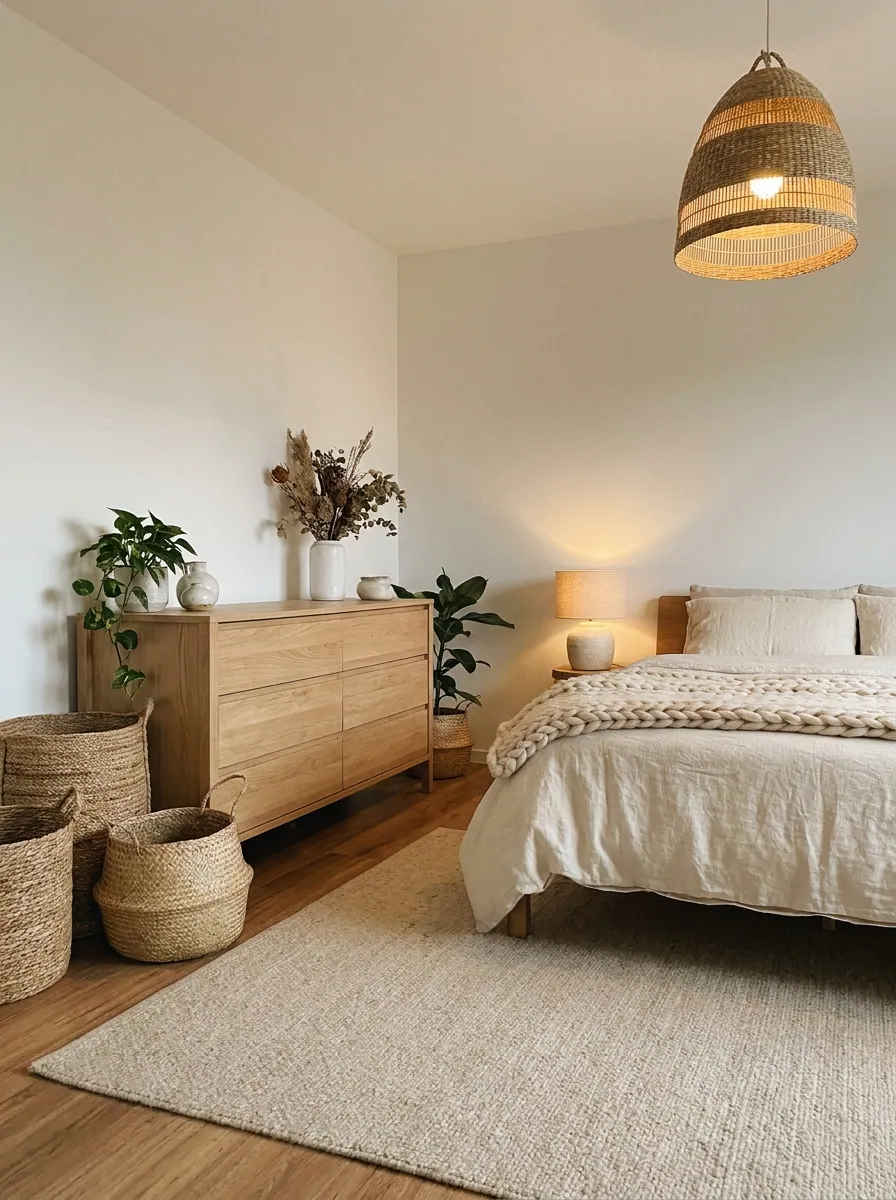
Woven baskets are an easy way to introduce texture while solving everyday storage problems.
Use them for extra blankets, pillows, laundry, books, or small accessories.
Place baskets underneath a bench, beside a dresser, or in an unused corner to keep the room organized without making storage look purely functional.
18. Create a Minimal Gallery Wall
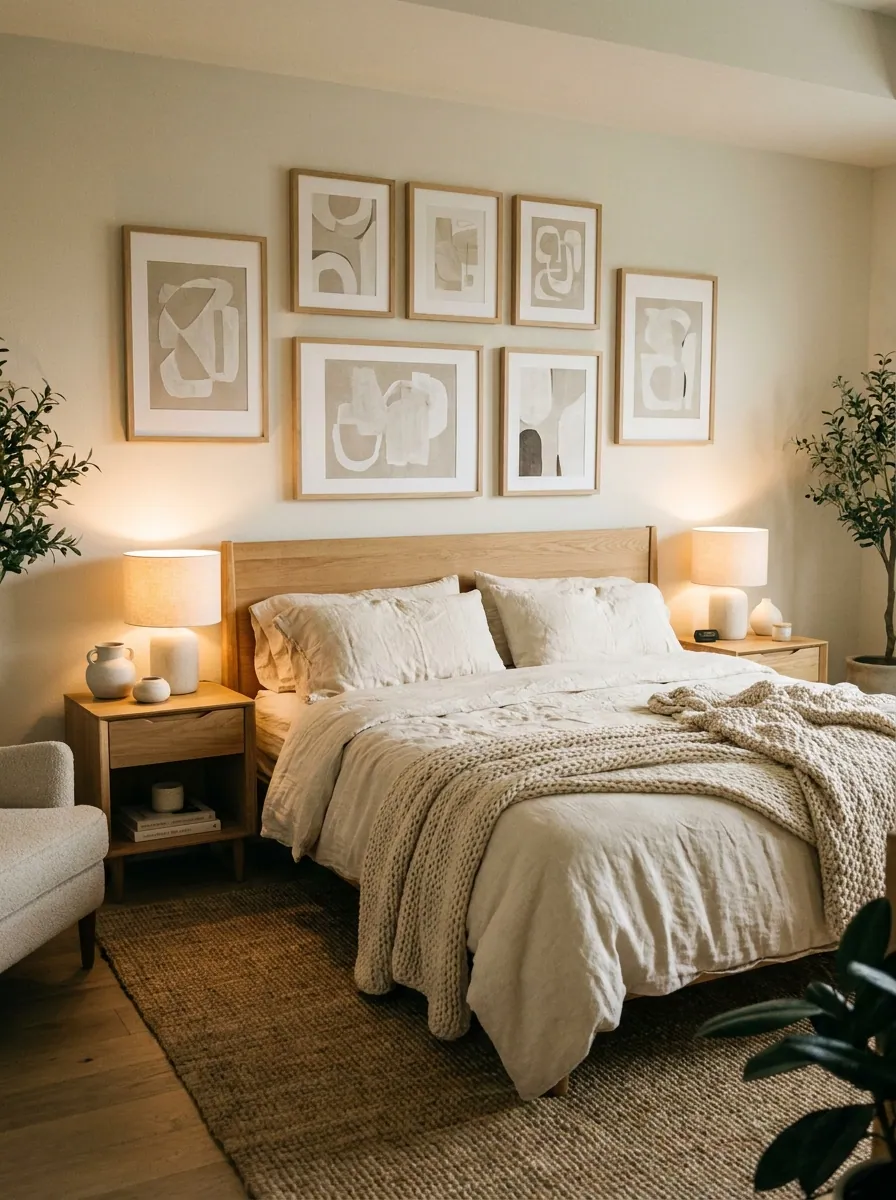
Artwork can make a bedroom feel much more personal.
For a calm atmosphere, choose artwork with simple abstract shapes, landscapes, botanical forms, or neutral tones. Keep the number of pieces limited and leave enough space between frames.
A small gallery wall above a dresser or beside the bed can work particularly well when you don’t want artwork directly above the headboard.
19. Add Greenery
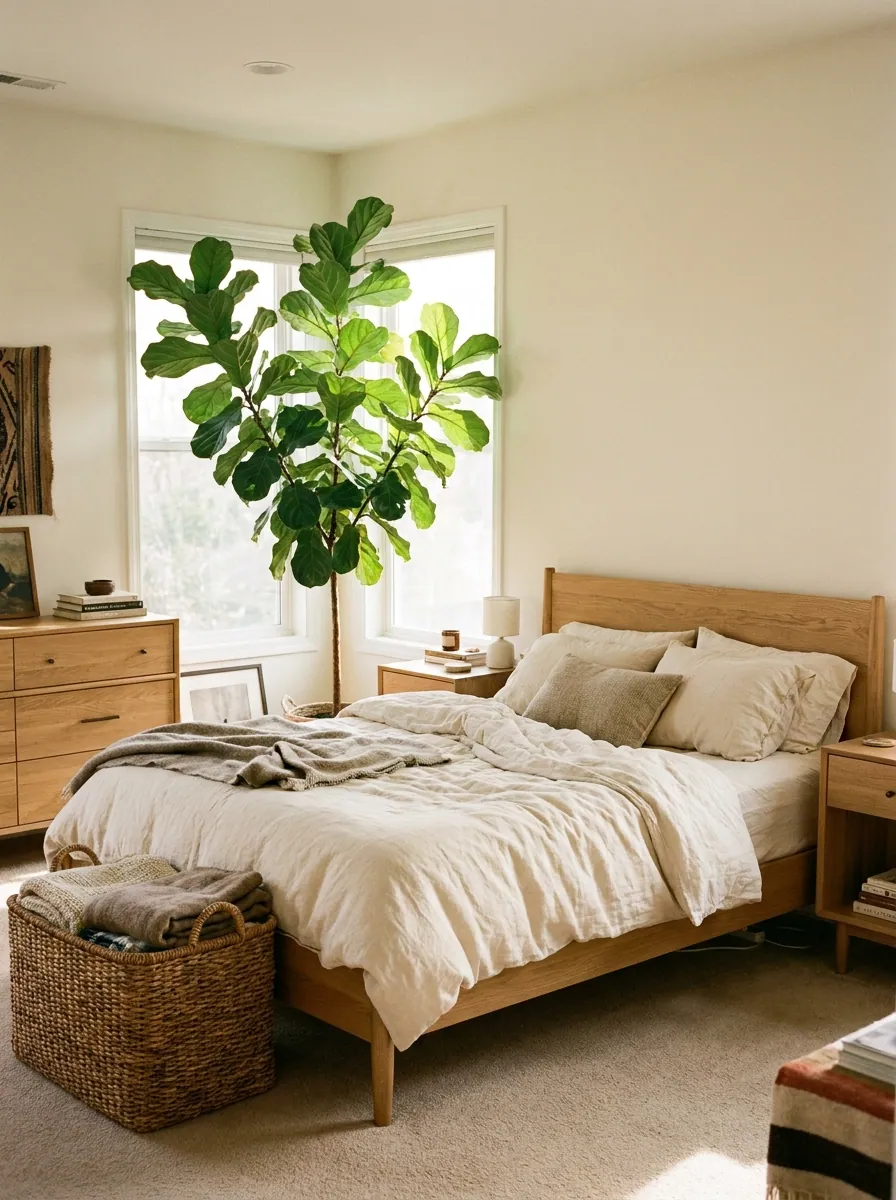
Plants can introduce a fresh natural element into an otherwise neutral bedroom.
One larger plant can create more impact than several tiny plants scattered around the room. Place it near a window where its light requirements can be met.
If maintaining plants isn’t practical, a simple branch arrangement or realistic faux greenery can provide a similar visual effect.
20. Use a Canopy or Draped Bed
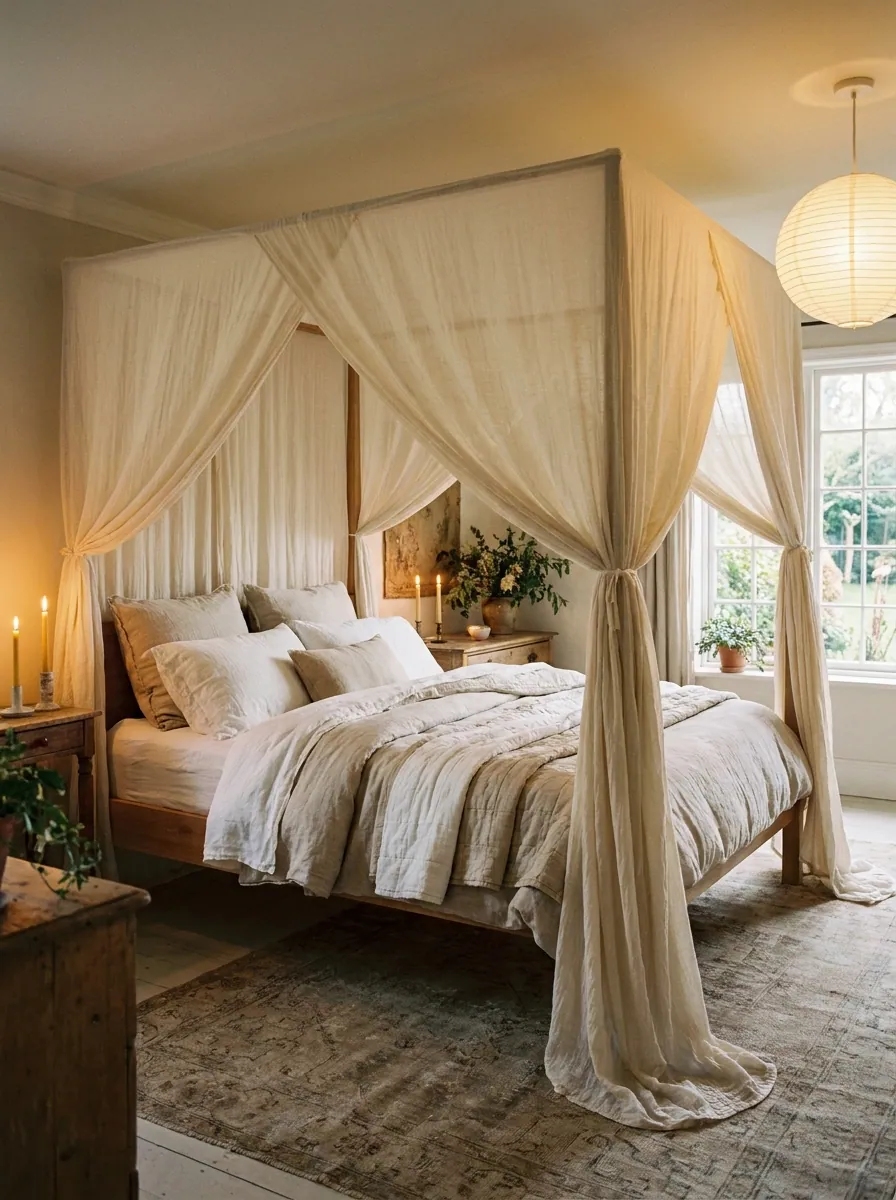
A canopy doesn’t have to look formal or traditional.
A simple wooden frame with lightweight fabric can create a softer, more intimate feeling around the bed. Keep the fabric loose and natural rather than overly elaborate.
This works particularly well in bedrooms where you want the bed to feel like a private retreat.
21. Introduce Vintage-Inspired Pieces
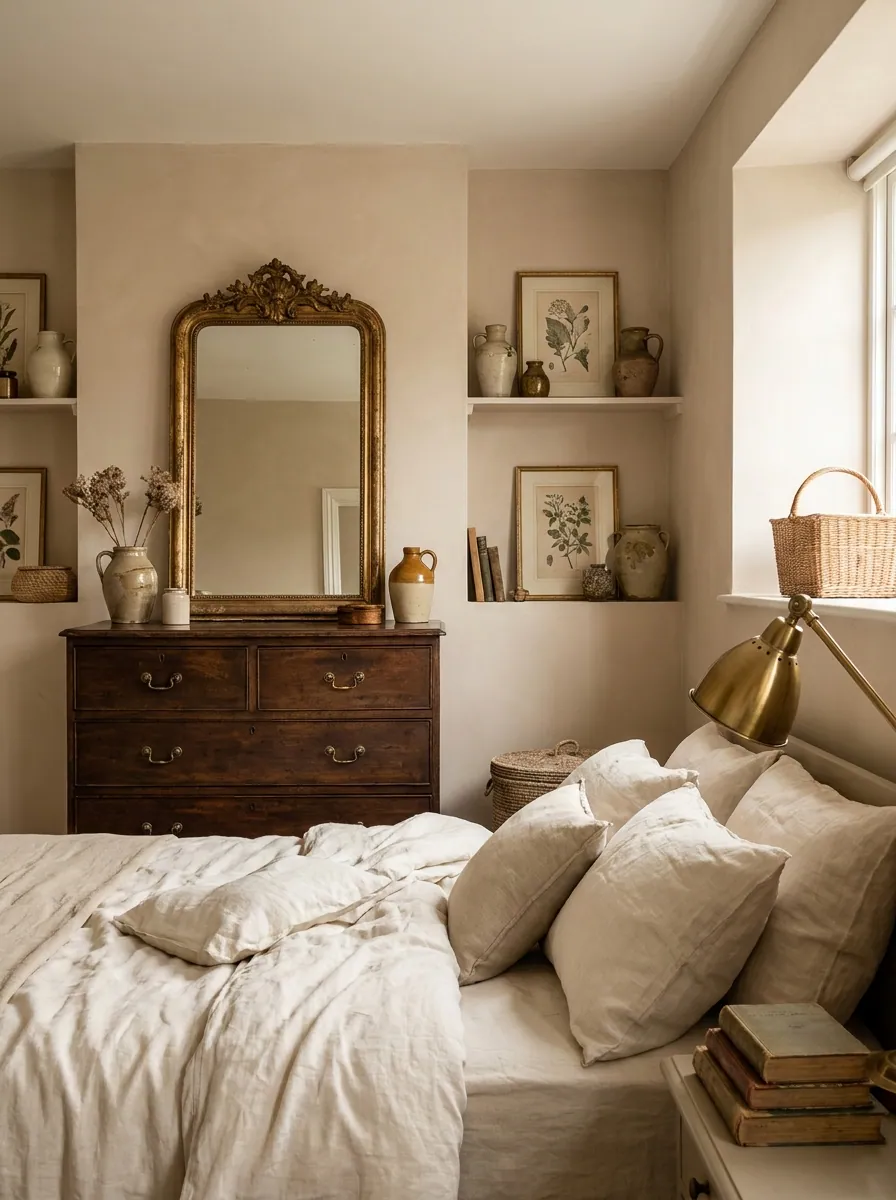
A few older-looking pieces can make a bedroom feel more personal and less like a showroom.
Try an antique-style mirror, vintage dresser, traditional lamp, old wooden stool, or framed artwork.
The key is balance. Mix one or two vintage-inspired pieces with simpler modern furniture so the room feels collected rather than themed.
22. Create a Dark and Moody Cozy Bedroom

Cozy bedrooms don’t always need to be bright.
Deep taupe, charcoal, muted brown, olive, or other darker tones can create a relaxing cocoon-like atmosphere.
If you use darker walls, balance them with lighter bedding and warm lighting so the room remains inviting rather than heavy.
23. Keep the Decor Intentionally Simple
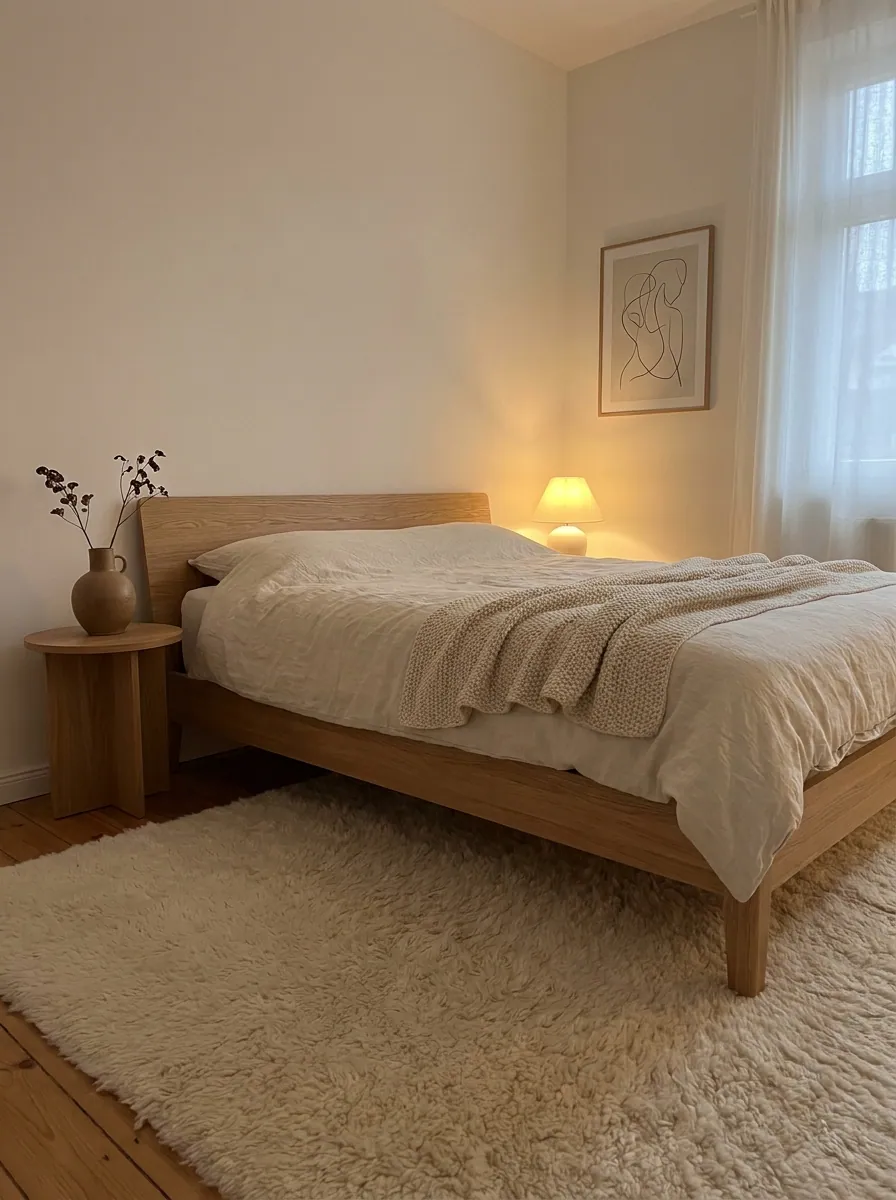
Sometimes the most comfortable bedroom is the one with the least visual noise.
Rather than filling every empty surface, choose a few pieces that genuinely contribute to the room.
Keep unnecessary objects off the floor and bedside surfaces. This allows the textures, lighting, bedding, and furniture to become the main design elements.
24. Add a Comfortable Throw Blanket
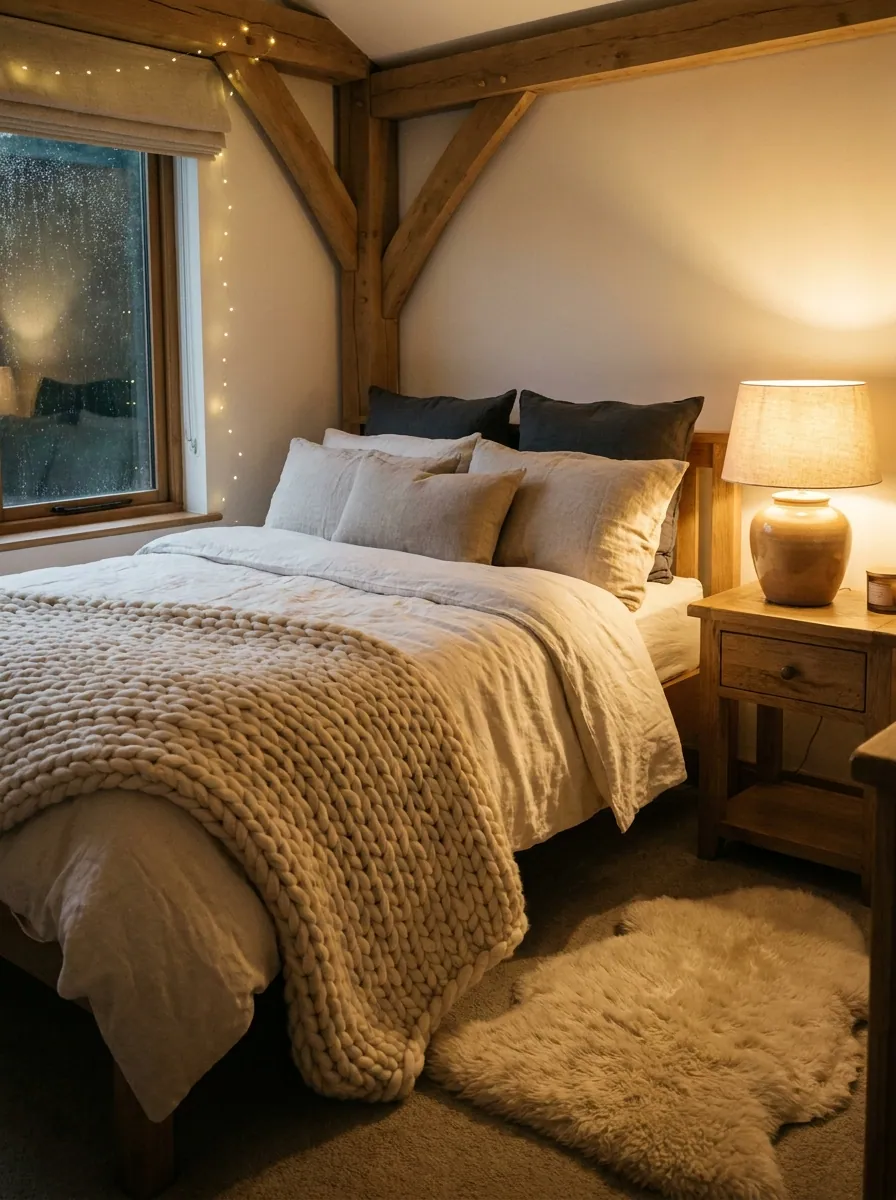
A throw blanket is one of the easiest ways to make a bed look warmer and more inviting.
Drape it casually across the lower portion of the bed instead of folding it perfectly. This creates the relaxed appearance associated with comfortable lived-in bedrooms.
Choose a texture that contrasts with your bedding for the strongest effect.
25. Use a Large Mirror

A large mirror can add both function and visual depth.
Place it where it can reflect natural light or an attractive part of the room. A rounded or organically shaped frame can soften a bedroom filled with straight furniture lines.
Avoid positioning the mirror where it reflects clutter or an unattractive view.
26. Build a Cohesive Cozy Bedroom
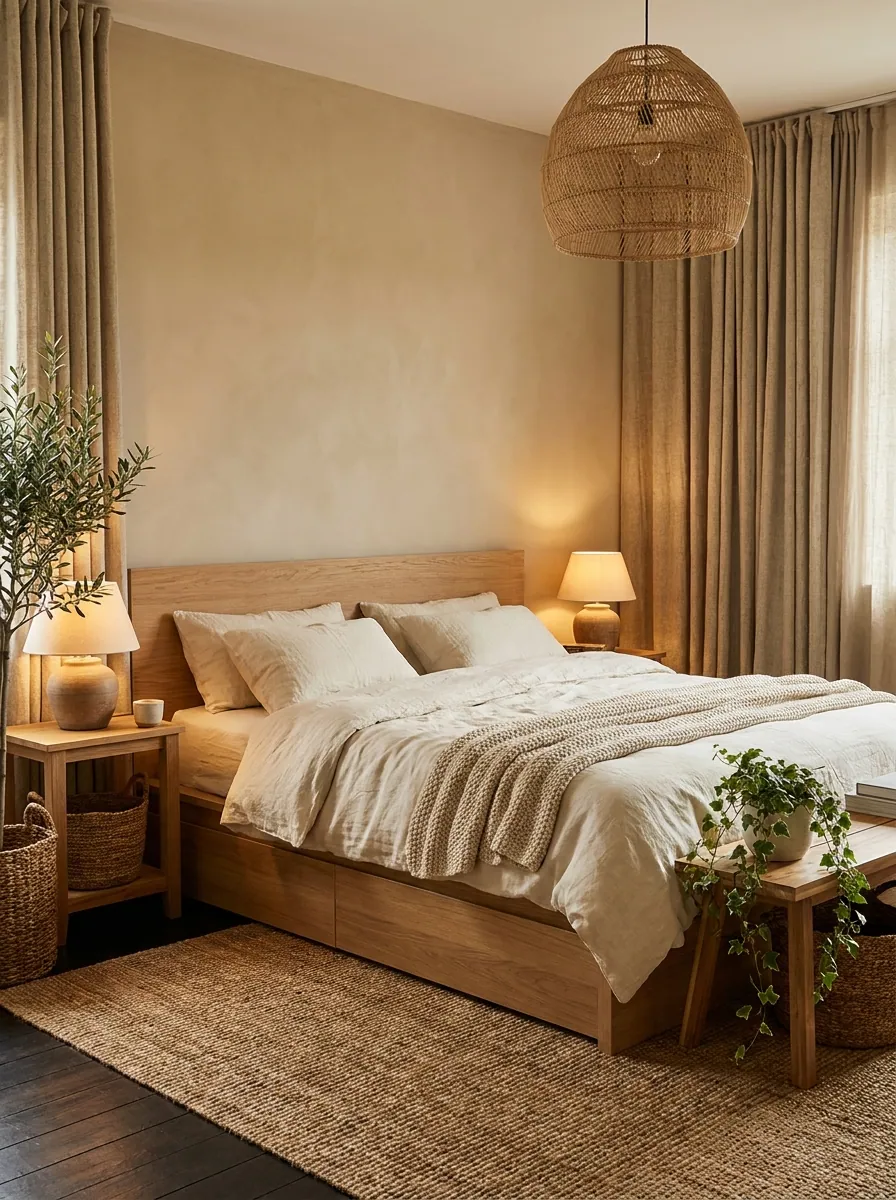
The most successful cozy bedrooms usually don’t depend on one particular decoration. Instead, several small choices work together.
A cohesive palette, comfortable bedding, layered textures, warm lighting, natural materials, and restrained accessories can create the feeling you’re after.
Before adding another decorative item, step back and look at the room as a whole. If the colors, materials, and proportions already work together, you may not need anything else.
How to Make a Bedroom Feel Cozier
Creating a cozy bedroom is mostly about layering rather than adding more stuff.
Start with the largest elements: the wall color, bed, curtains, rug, and major furniture. Once those feel cohesive, add smaller layers such as pillows, throws, lamps, artwork, baskets, and plants.
Think about the bedroom at different times of day too. A room that looks beautiful in bright daylight can feel completely different at night. Warm bedside lamps and softer accent lighting can make a huge difference after sunset.
Most importantly, don’t try to copy every cozy bedroom trend at once. Choose a few elements that fit your personal style and repeat their colors and materials throughout the room.
Cozy Bedroom Color Ideas
If you’re looking for colors that naturally create a warm atmosphere, consider:
- Cream and warm white — Soft, light-reflecting base tones that never feel harsh.
- Beige and oatmeal — Gentle, earthy mid-tones that ground the space.
- Taupe and soft brown — Adds architectural depth and tactile warmth.
- Terracotta and clay — Earthy sun-baked accents for pillows and ceramics.
- Muted olive green — A quiet botanical note that pairs effortlessly with oak.
- Warm gray — Contemporary and serene when balanced with warm wood.
- Dusty rose — Subtle softness that feels sophisticated rather than overly feminine.
- Caramel — Rich, honeyed warmth for leather or textile accents.
- Soft sage — Calming, restorative herb tone for walls or linen duvets.
- Deep chocolate brown — Dramatic grounding accent for frames, lamps, or small furniture.
A useful approach is to choose one main neutral, one secondary neutral, and one subtle accent color. This keeps the bedroom visually calm while still giving it personality.
Cozy Bedroom Lighting Ideas
Lighting deserves as much attention as furniture. Instead of relying entirely on an overhead light, create several smaller sources around the room:
- Bedside table lamps: Choose fabric or pleated shades that diffuse light warmly.
- Wall sconces: Ideal for freeing up nightstand space and directing light downward for reading.
- Floor lamps: Great for anchoring an armchair corner or illuminating a dark corner.
- Warm accent lights: Small cordless lamps or uplights placed on dressers or shelving.
- Natural daylight through sheer curtains: Maximizes soft morning light while diffusing glare.
The goal is to make the room feel softly illuminated rather than brightly lit from a single point.
Cozy Bedroom Decor on a Budget
You don’t need to replace all your furniture to make your bedroom cozier. Start with inexpensive changes that have a noticeable visual impact:
- Replace or layer your bedding: Even adding one textured waffle blanket or linen pillow sham transforms the bed.
- Add a textured throw: Drape a chunky knit or brushed wool blanket across the foot of the bed.
- Change harsh bulbs to warmer lighting: Switch to 2700K warm-temperature LED bulbs for an instant golden glow.
- Introduce one large rug: Adds immediate acoustic softness and foot warmth.
- Add curtains with more visual softness: Floor-to-ceiling drapery softens hard drywall lines.
- Rearrange existing furniture: Pull furniture away from crowded corners to improve room flow.
- Add a mirror: Positions across from a window to bounce gentle natural daylight.
- Bring in natural textures through baskets or wood: Inexpensive seagrass or rattan baskets solve storage and add warmth.
- Declutter bedside surfaces: Visual clarity is the foundation of mental rest.
- Add one or two meaningful decorative pieces: A vintage ceramic dish, a beloved book, or dried foliage.
Common Cozy Bedroom Decorating Mistakes
Using too many matching pieces
A bedroom where everything comes from the same collection can feel flat. Mix materials and finishes—such as an oak dresser with an upholstered bed—while keeping the overall palette consistent.
Relying only on beige
Neutral doesn’t have to mean one shade. Layer cream, oatmeal, taupe, brown, and natural wood to create depth without monotone boredom.
Using only overhead lighting
A bright ceiling fixture can destroy an otherwise cozy atmosphere. Add softer lighting closer to the bed and seating areas with warm 2700K bulbs.
Overdecorating
More accessories don’t automatically create more comfort. Too many objects can make the bedroom feel cluttered and hard to maintain.
Ignoring texture
Even a beautiful color palette can feel cold if everything has the same smooth finish. Mix linen, wool, wood, woven materials, cotton, and other tactile surfaces.
Frequently Asked Questions
How can I make my bedroom cozy without spending much money?
Start with textiles and lighting. Adding a soft throw, changing bedding, introducing a rug, and using warmer lamps can dramatically change the atmosphere without replacing major furniture.
What colors make a bedroom feel cozy?
Warm neutrals such as cream, beige, taupe, oatmeal, and brown are reliable choices. Muted earthy colors such as terracotta, olive, and clay can also add warmth.
How do I make a modern bedroom feel cozy?
Combine clean modern furniture with softer elements such as linen bedding, textured rugs, warm wood, woven accessories, and warm ambient lighting.
How many pillows should I put on the bed?
There is no fixed number. Use enough to create layers without making the bed difficult to use. A combination of sleeping pillows and two or three decorative cushions is usually optimal.
Does a rug make a bedroom cozier?
Yes. A properly sized rug adds softness, warmth, and visual definition around the bed. It also provides sound dampening, making hard flooring feel substantially quieter.
Final Thoughts
A cozy bedroom doesn’t have to be complicated. The feeling comes from the combination of comfortable textures, warm lighting, calming colors, natural materials, and thoughtful styling.
Start with the elements you use every day—the bed, lighting, curtains, and rug—and then gradually add personal details. Whether your style is minimalist, rustic, modern, or earthy, the goal is the same: create a bedroom that feels comfortable enough to truly relax in.