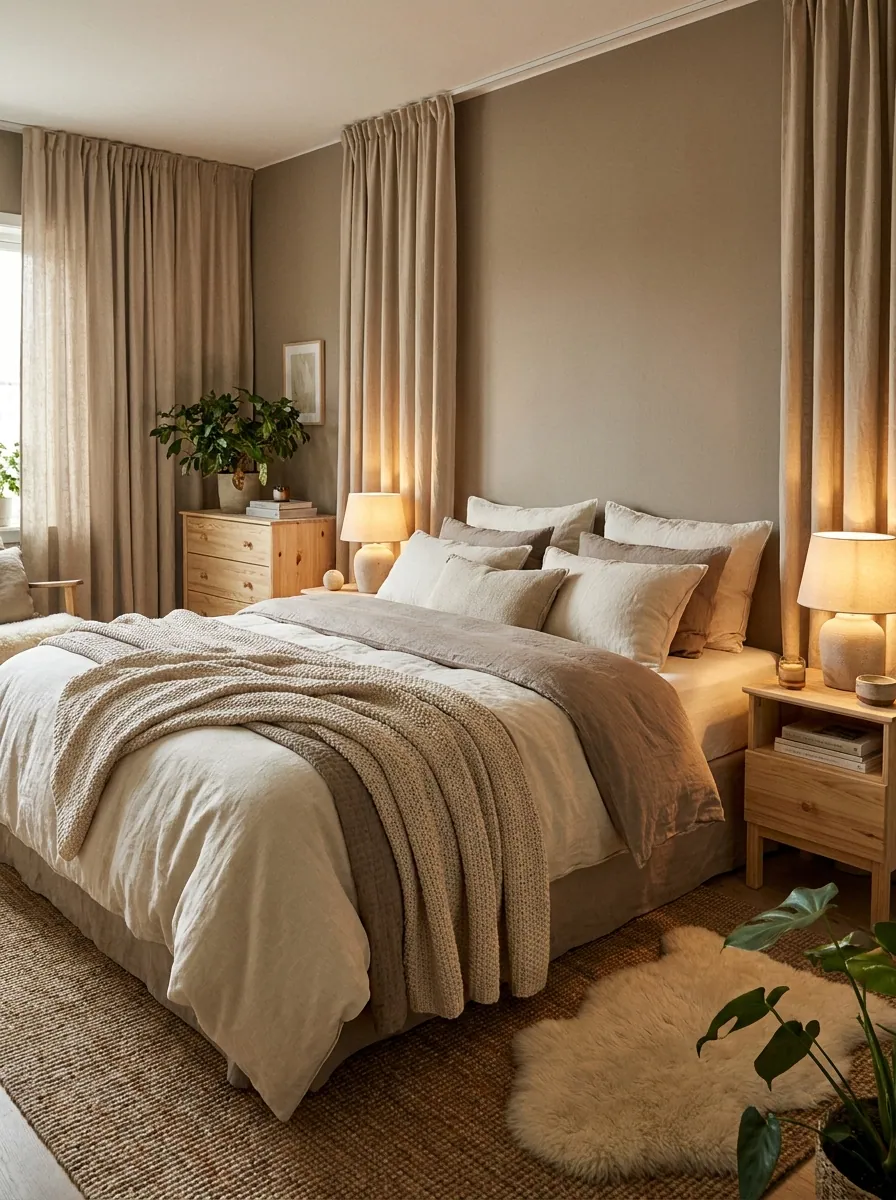
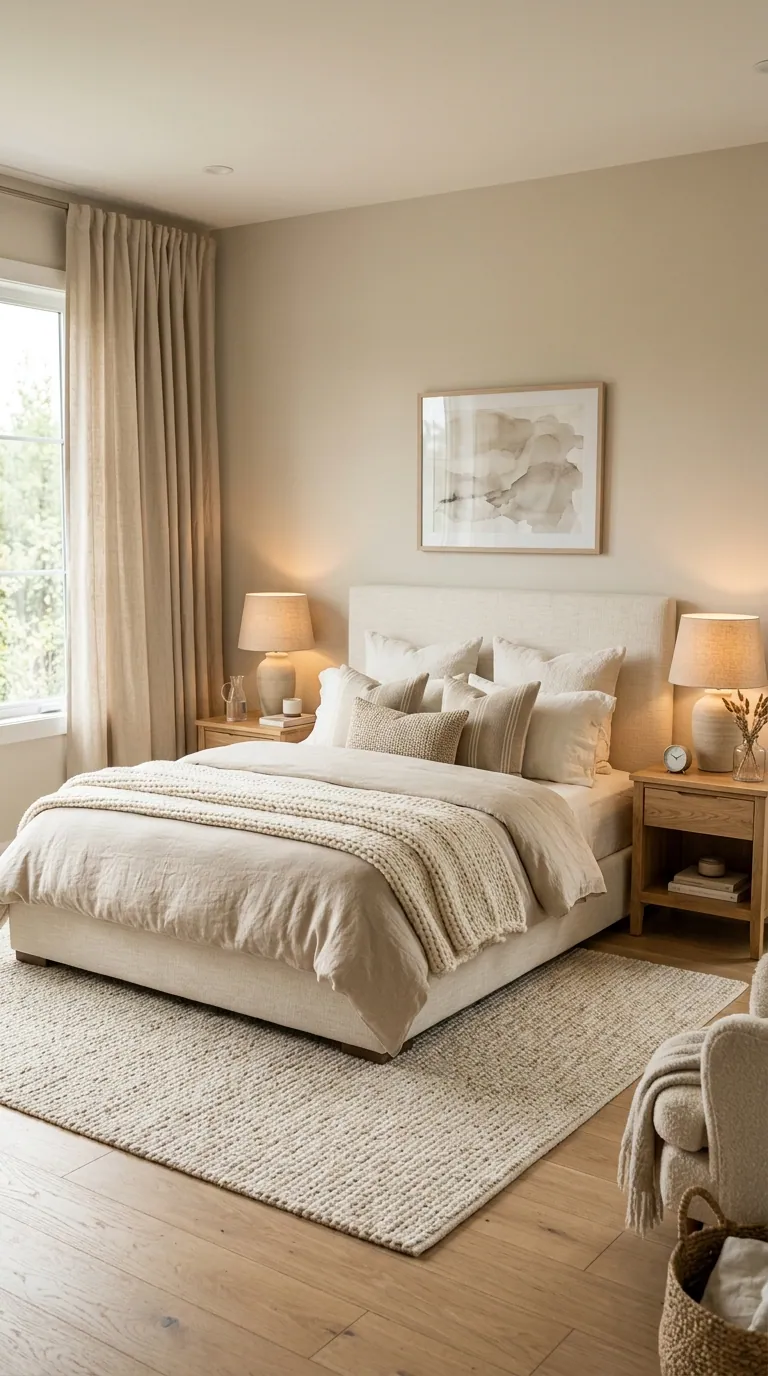
A small bedroom doesn’t have to feel cramped, boring, or impossible to decorate. In fact, with the right choices, a compact bedroom can feel more comfortable and intentional than a much larger space.
The secret is to work with the size of the room instead of fighting against it. Furniture needs to be properly scaled, storage should be planned carefully, and decorative elements should add personality without creating visual clutter. Even small changes—such as replacing a bulky nightstand with a floating shelf or adding a large mirror—can make a noticeable difference.
Color also plays an important role. Light and warm shades can help reflect natural light, while layered textures keep the room from feeling cold or empty. Meanwhile, vertical storage allows you to use wall space when floor space is limited.
Whether you’re decorating a tiny apartment bedroom, a guest room, a teenager’s room, or simply trying to make your existing bedroom work better, these small bedroom ideas can help you create a space that feels cozy, stylish, and functional.
1. Start With Warm Neutral Colors
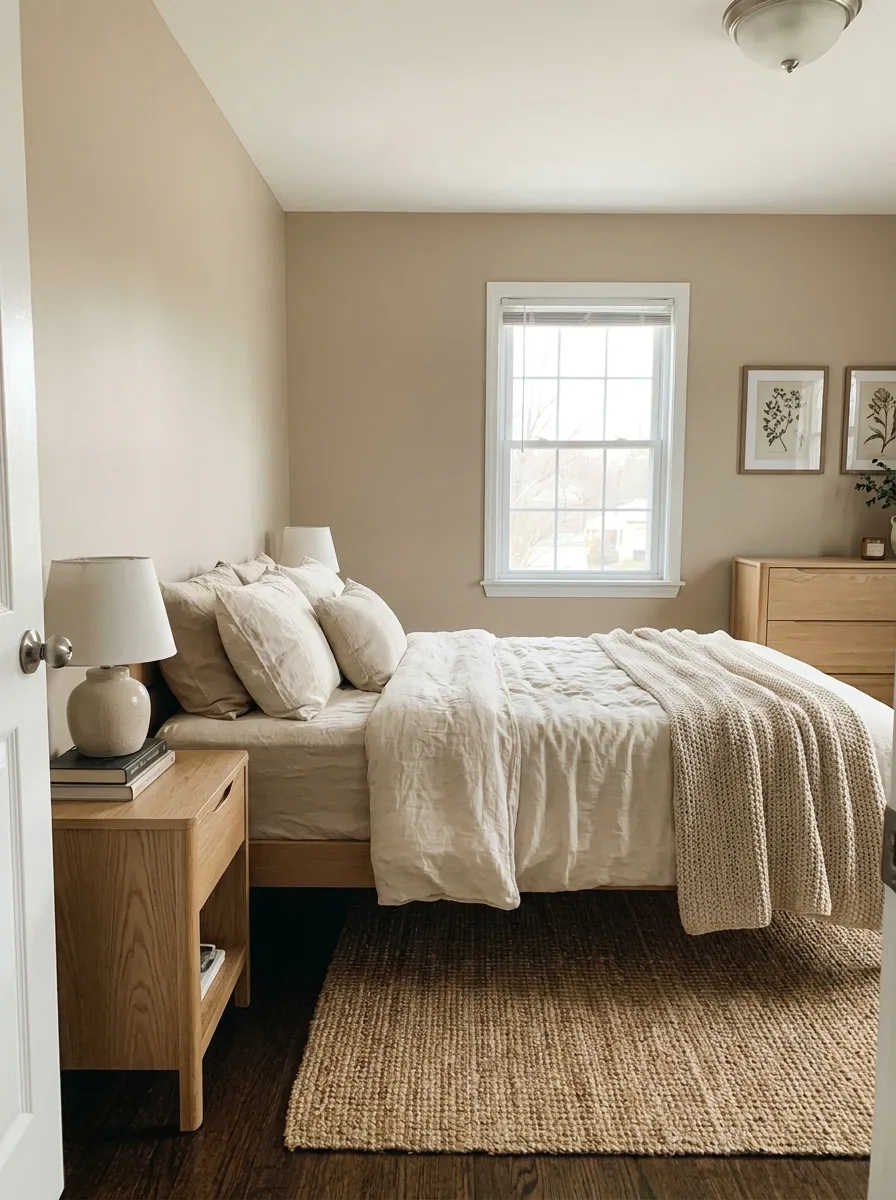
One of the easiest ways to make a small bedroom feel calm, bright, and visually spacious is to start with a warm neutral color palette. Instead of relying on stark white, consider softer shades such as cream, ivory, beige, warm white, taupe, and light brown.
The trick is not to make everything exactly the same color. A room made entirely of one beige shade can look flat. Instead, layer several related tones throughout the bedroom. For example, use warm white or soft cream on the walls, beige linen bedding, light oak furniture, and slightly darker taupe or brown accents.
Keep the larger surfaces lighter and introduce darker shades through smaller details such as cushions, picture frames, lamps, or decorative objects. This gives the room contrast without making it visually overwhelming.
If your bedroom receives little natural light, avoid using too much dark brown or deep beige. Lighter warm neutrals will generally make the space feel brighter.
Try this combination: warm white walls + cream bedding + beige curtains + light oak furniture + soft brown accents.
The result is a bedroom that feels cozy, cohesive, and spacious without looking sterile.
2. Make the Bed the Focal Point
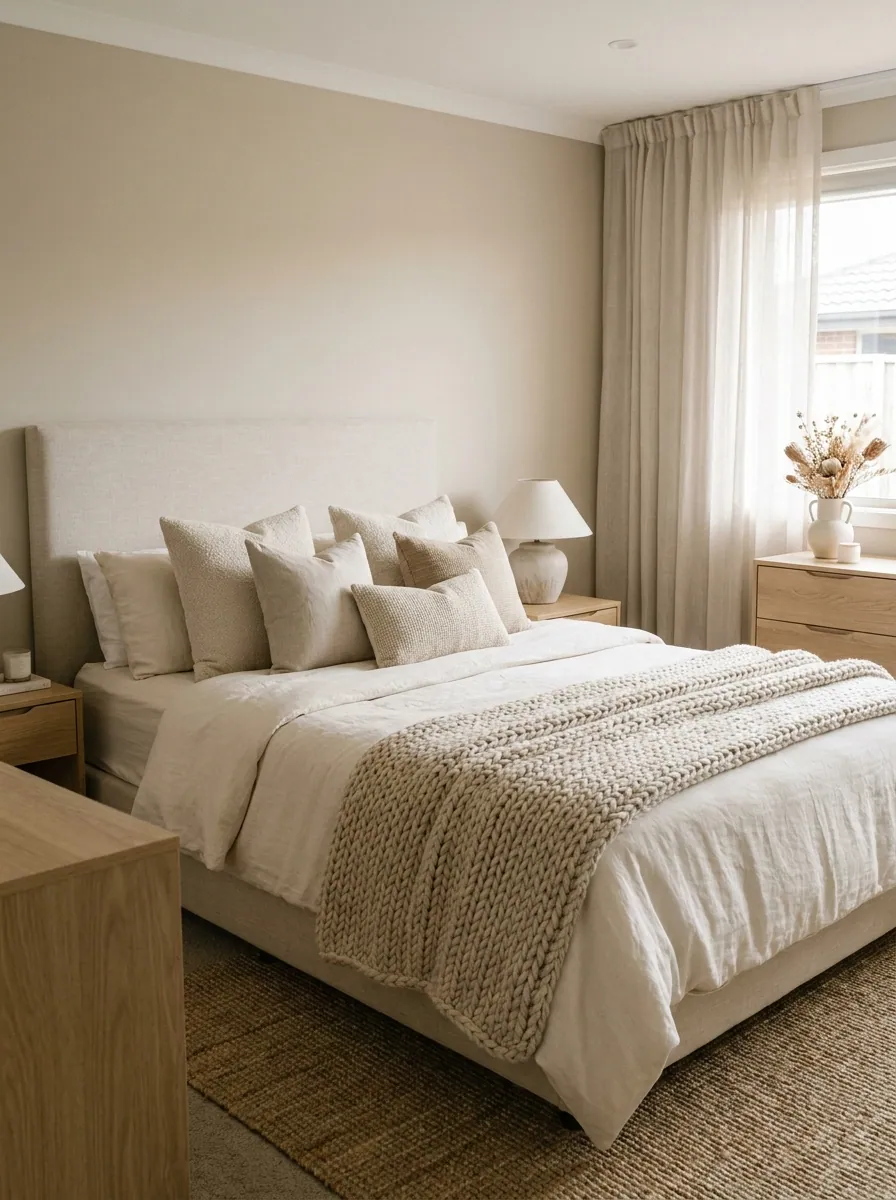
In a small bedroom, the bed will naturally take up a large portion of the room. Instead of trying to make it disappear, make it the feature that ties the entire space together.
Start with simple bedding in a neutral color, then add texture through a quilt, knitted throw, linen duvet, or a few carefully chosen pillows. You don’t need a huge collection of cushions. Two or three well-coordinated layers can make the bed look much more inviting.
The headboard can also make a difference. An upholstered headboard adds softness, while a simple wood headboard brings warmth without requiring additional decoration.
Try to keep the area immediately around the bed relatively simple. When the bed has too many competing elements around it, the room can feel crowded.
If you want to introduce color, use it through one small element such as a muted throw or decorative cushion rather than making the entire bed highly patterned.
The goal is to create a comfortable focal point that looks intentional without overwhelming the room.
3. Replace a Bulky Nightstand With a Floating One
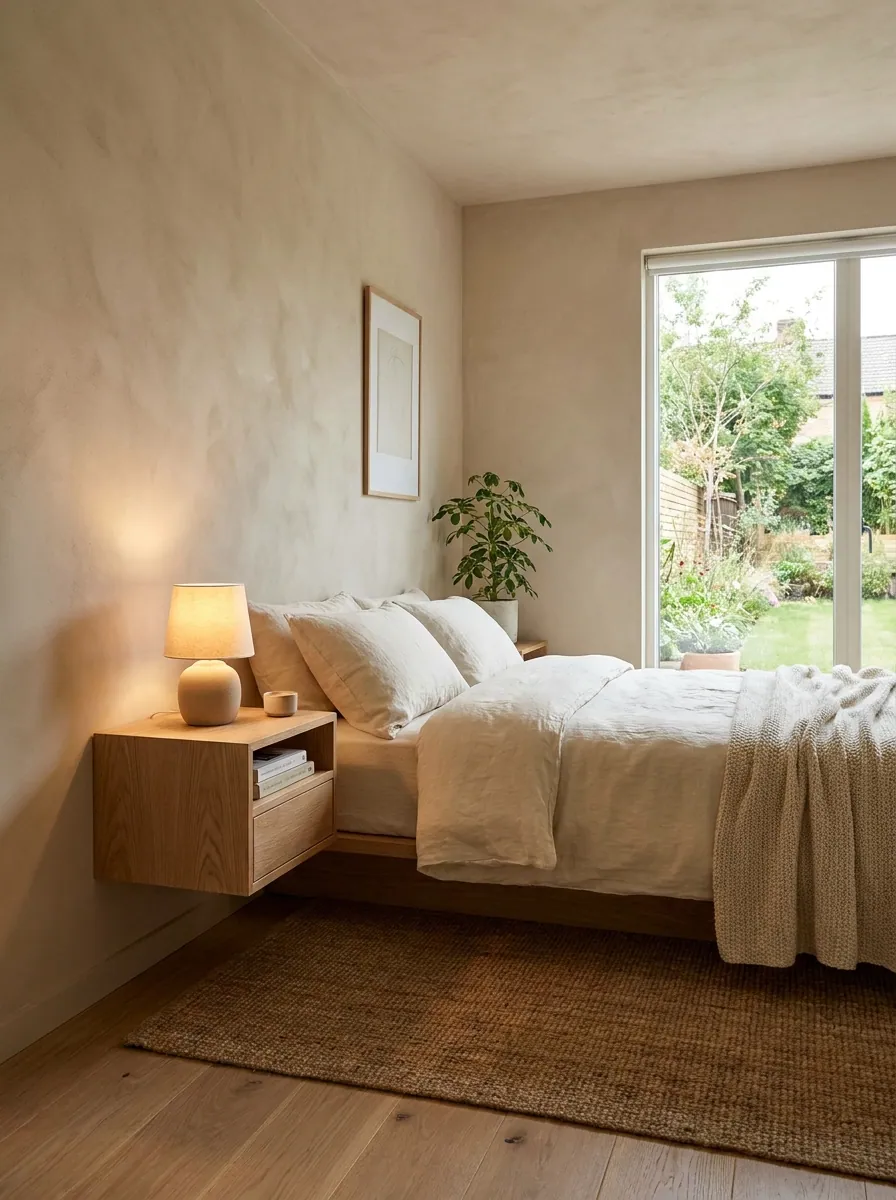
Traditional bedside tables can consume surprisingly valuable floor space. In a genuinely small bedroom, even a few extra inches can affect how easily you move around the bed.
A floating nightstand is a simple solution. A wall-mounted shelf or compact cabinet gives you somewhere to place a lamp, phone, book, or glass of water while keeping the floor underneath completely open.
This creates a lighter visual appearance and makes cleaning easier too.
For a warm bedroom aesthetic, natural oak works beautifully with cream and beige interiors. If you prefer a modern look, try a simple white or light-colored floating shelf.
Keep the surface intentionally minimal. A small lamp, one book, and a decorative object may be enough.
If you need more storage, choose a floating drawer unit rather than a basic shelf. This gives you hidden storage without introducing another large piece of furniture.
Small-space tip: If you have very little room beside the bed, measure the available wall space before choosing the nightstand. A compact solution that fits perfectly will look much better than a larger piece squeezed into the corner.
4. Take Advantage of Vertical Space
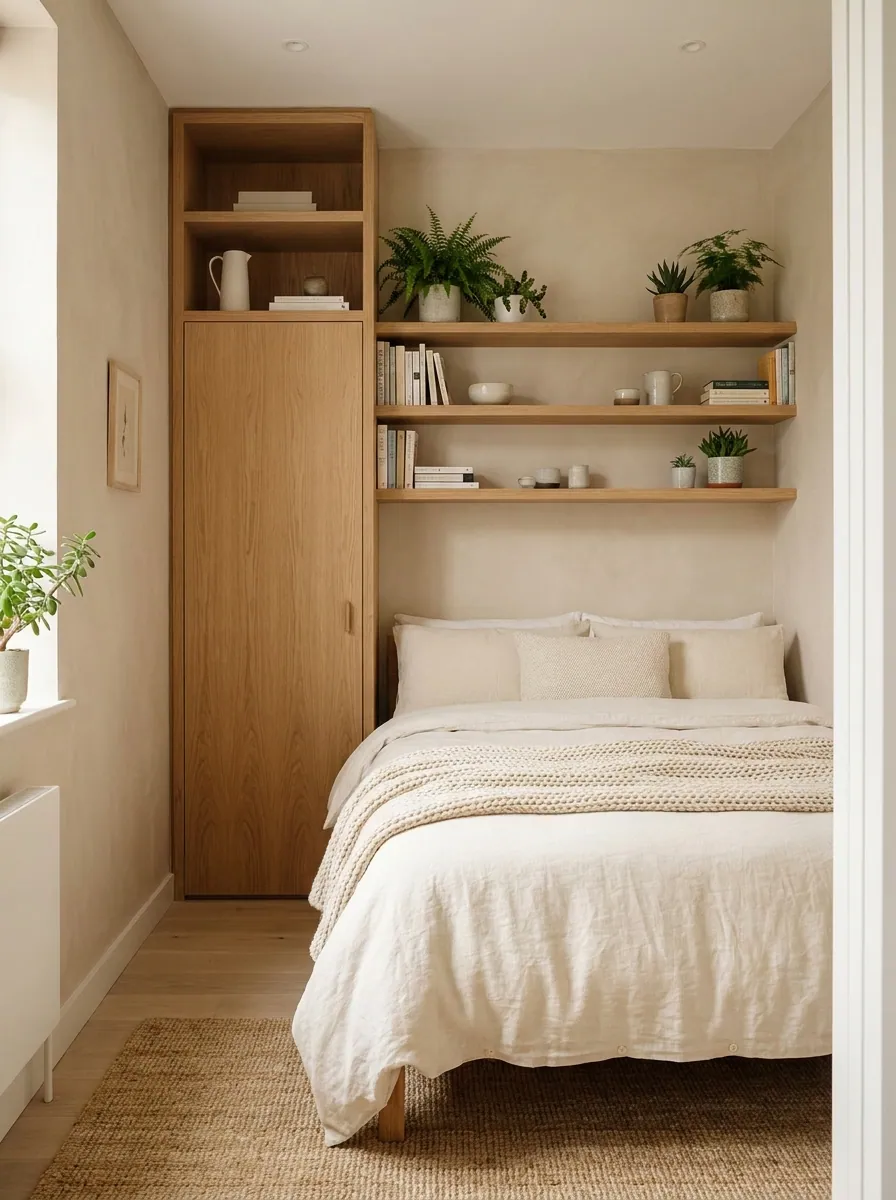
When you don’t have enough floor space, the walls become some of your most valuable storage real estate.
Instead of adding another wide cabinet, look for opportunities to build upward. Tall narrow bookcases, floating shelves, wall-mounted cabinets, hooks, and vertical storage units can provide useful space without taking over the room.
This is particularly useful for bedrooms where clothing and personal belongings quickly become difficult to organize.
However, vertical storage works best when it is kept organized. Open shelves filled with random objects can make a small room look busier rather than larger.
Use baskets or matching storage boxes to hide smaller items. Keep frequently used objects within easy reach and reserve higher shelves for things you don’t use every day.
You can also use the wall above a dresser or desk rather than leaving that vertical area completely unused. The important thing is to create useful storage without visually filling every available wall. Leave some empty wall space between shelves and furniture so the room still feels open.
5. Choose a Bed With Built-In Storage
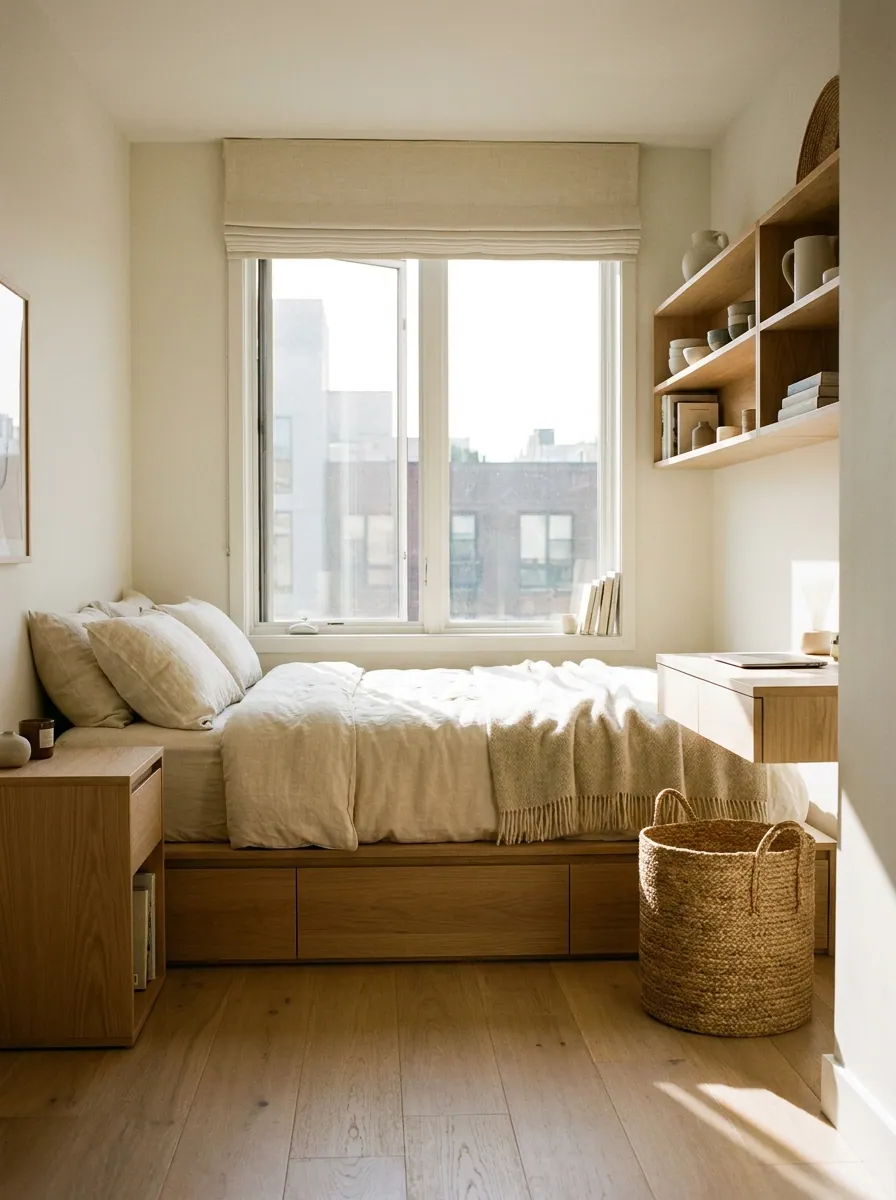
A storage bed is one of the most practical choices for a small bedroom because it gives you two functions in one piece of furniture.
Depending on the design, you can find beds with drawers along the sides, lift-up storage underneath, or built-in compartments around the headboard.
This hidden space can be used for extra blankets, seasonal clothing, shoes, spare pillows, or other items that don’t need to be accessible every day. The advantage is that you’re using space that would otherwise remain empty.
If you already have a standard bed, shallow storage boxes can provide a similar solution. Look for containers that slide completely underneath the frame and choose designs with lids to keep dust away.
Before buying a storage bed, check the available clearance around it. Drawers need enough room to open fully, so make sure nearby furniture won’t block them.
For an especially small bedroom, a simple storage bed combined with a floating nightstand can provide considerably more functionality without making the room feel overloaded.
6. Add a Large Mirror
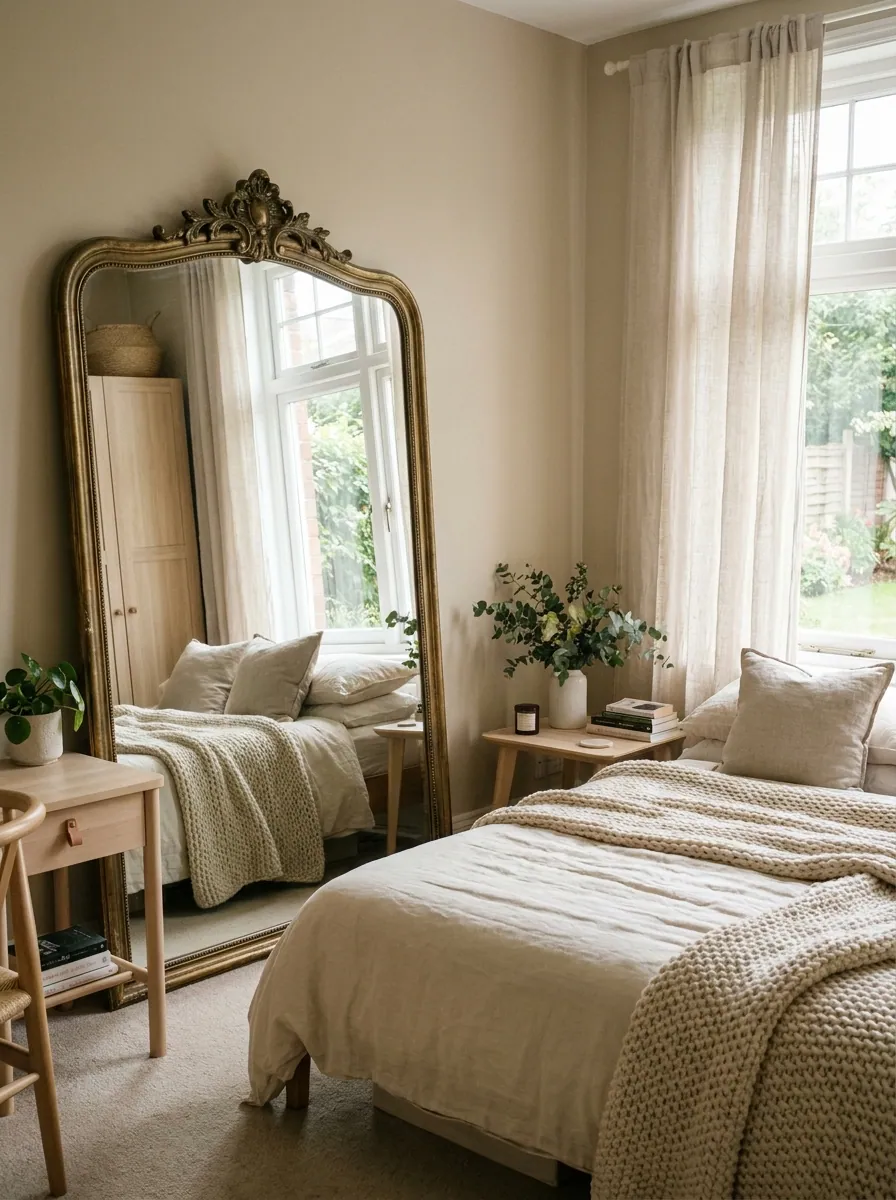
A large mirror can be one of the most effective decorative additions to a small bedroom.
Mirrors reflect light and create additional visual depth, which can make the room feel less enclosed. This is particularly useful in bedrooms with limited natural light.
A tall floor mirror can also draw the eye upward, emphasizing the height of the room. If you don’t have enough floor space for one, a large wall-mounted mirror can achieve a similar effect.
Think carefully about what the mirror will reflect. Positioning it opposite a window can help bounce natural light around the room, while placing it opposite a beautiful artwork or styled corner can make that feature more noticeable.
Choose a frame that works with the rest of your bedroom. Light wood works well with warm neutral interiors, while a simple black frame can add contrast to a minimalist space.
Avoid positioning the mirror where it reflects clutter, laundry, or an overly busy storage area. The reflection becomes part of the room’s visual design.
7. Layer Your Lighting
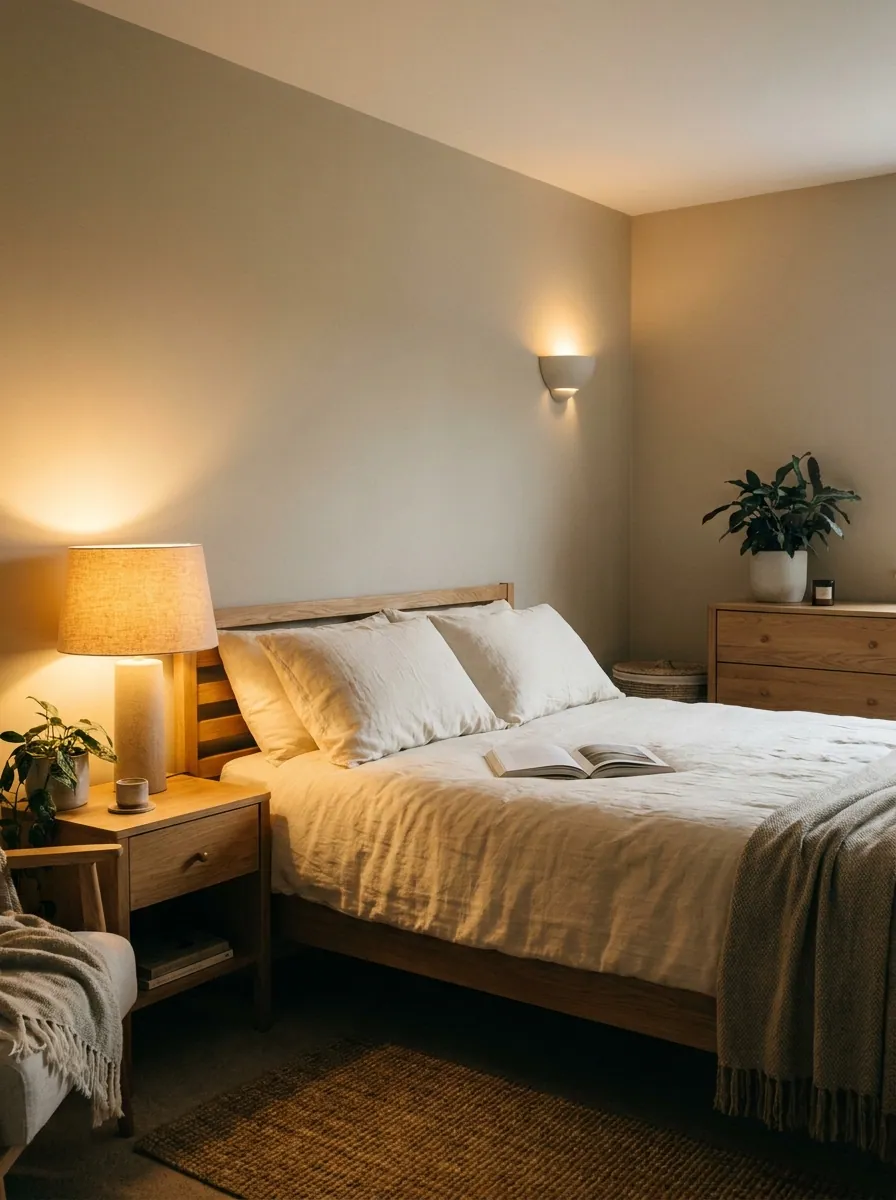
Lighting can completely change how a small bedroom feels.
A single overhead fixture often provides enough illumination to see the room, but it doesn’t necessarily create a warm or relaxing atmosphere. Instead, use several smaller sources of light.
A bedside lamp can provide comfortable reading light. Wall sconces are particularly useful when floor and surface space are limited. A small floor lamp can brighten a darker corner, while subtle accent lighting can add warmth in the evening.
Think about the different activities you perform in the bedroom. You may want brighter light when getting dressed and softer light when winding down at night. Warm-toned bulbs generally pair beautifully with cream, beige, taupe, and natural wood interiors.
Lighting should also be proportional to the room. A huge statement lamp can become visually overwhelming in a tiny bedroom.
Small bedroom formula: overhead light + bedside light + one additional ambient source.
This creates enough flexibility to make the bedroom feel practical during the day and cozy at night.
8. Choose Furniture That Fits the Scale of the Room
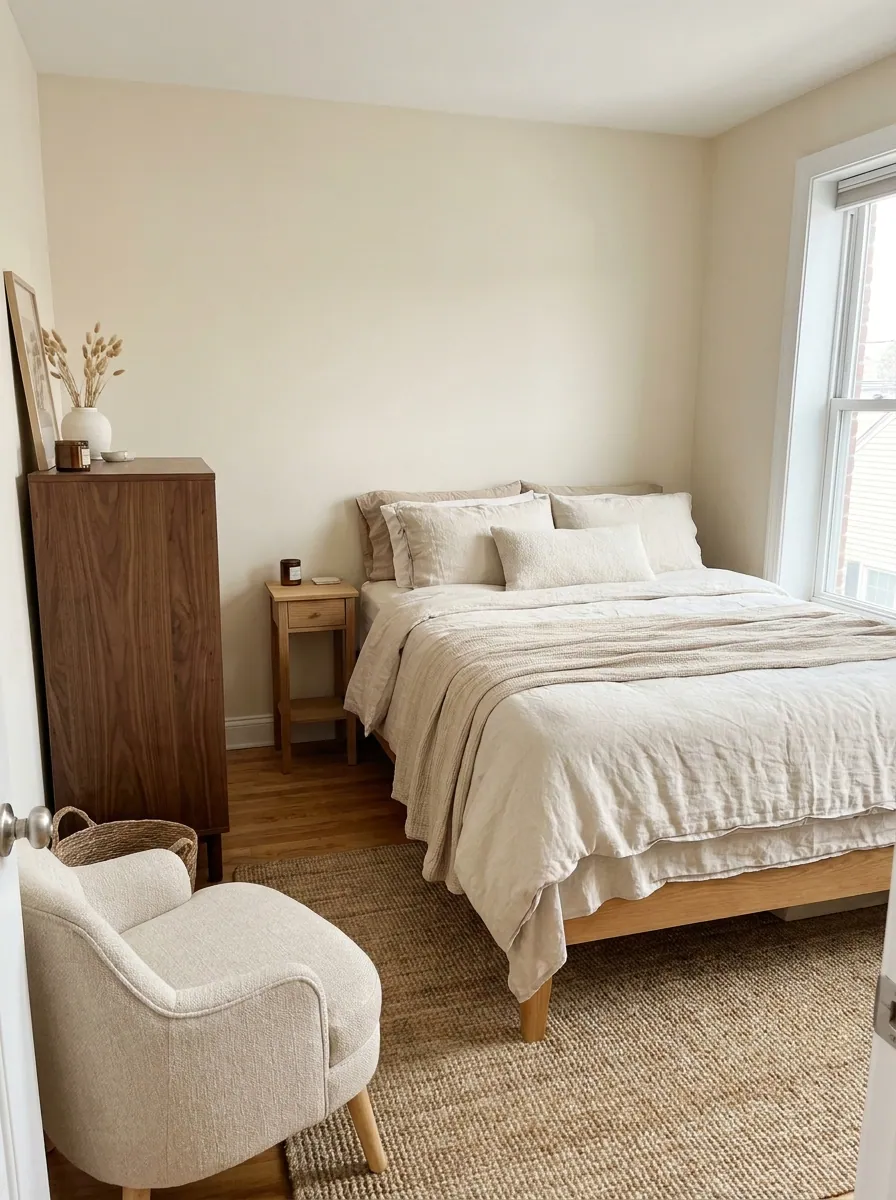
One of the biggest mistakes when decorating a small bedroom is choosing furniture based only on whether it technically fits.
A large bed might fit against the wall, but if it leaves almost no walking space, the room will still feel cramped. The same is true for oversized dressers, chairs, and nightstands.
Before purchasing anything, measure both the room and the furniture. Pay particular attention to the space needed to walk around the bed and open drawers or doors.
Furniture with slim profiles can make a noticeable difference. Pieces with visible legs can also create more visual openness because more of the floor remains visible.
If you need a dresser, consider a tall and narrow model rather than a wide one. If you need a nightstand, look for a compact design that provides only the storage you actually need.
The goal isn’t to fit the maximum amount of furniture into the bedroom. It’s to create a layout where everything fits comfortably and you can move around easily.
9. Keep Bedding Light and Layered
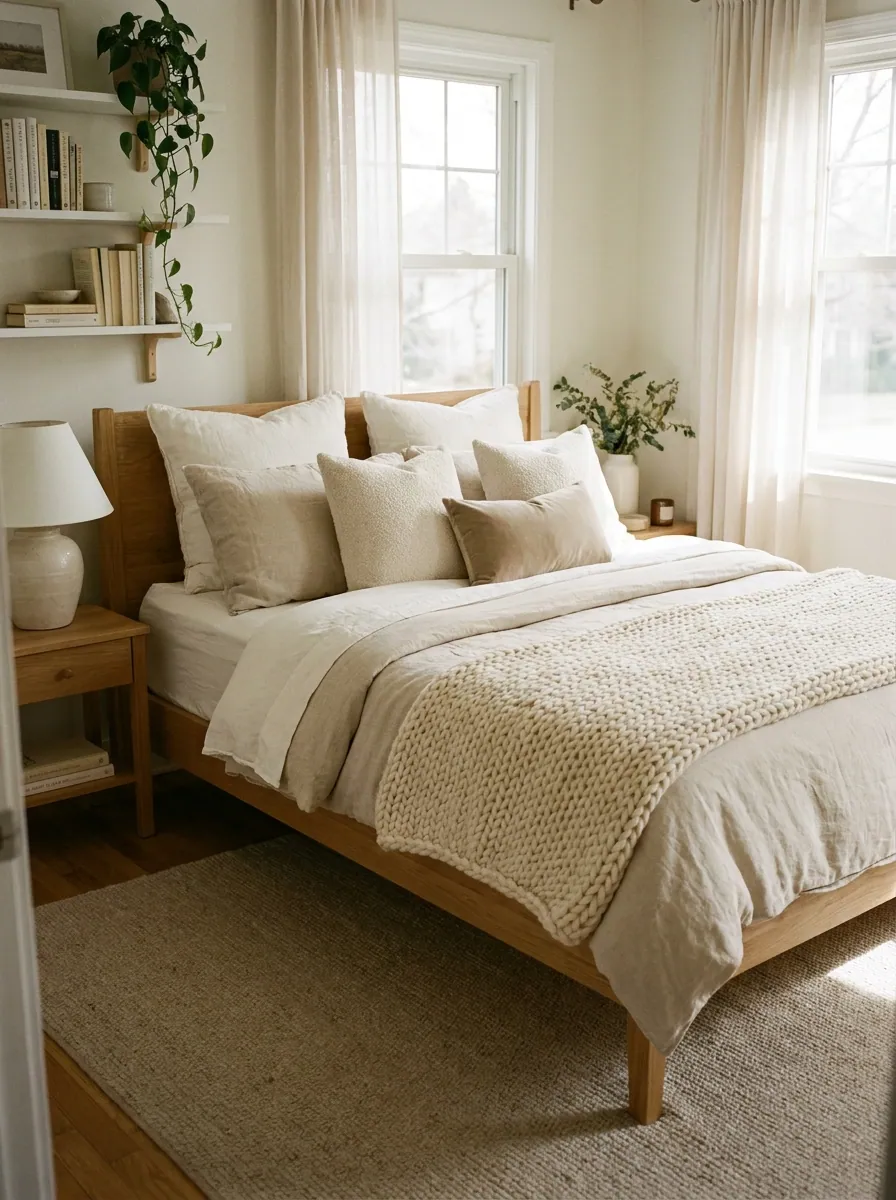
Because the bed is usually the largest object in a small bedroom, its color and texture can have a major effect on the overall appearance.
Lighter bedding in cream, ivory, beige, or soft gray can help the bed feel less visually heavy.
However, completely plain bedding can sometimes make a bedroom look unfinished. The solution is to create interest through layers rather than lots of patterns.
Try a simple duvet with a textured blanket folded at the bottom. Add a few pillows in complementary fabrics rather than using many different colors.
Linen is particularly useful for creating a relaxed bedroom aesthetic because its natural texture adds character without requiring bold patterns.
You can also introduce seasonal changes without replacing everything. A lightweight throw can work during warmer months, while a knitted blanket can add extra warmth during winter. Keeping the colors within the same family makes the room feel cohesive.
10. Create a Tiny Reading Nook
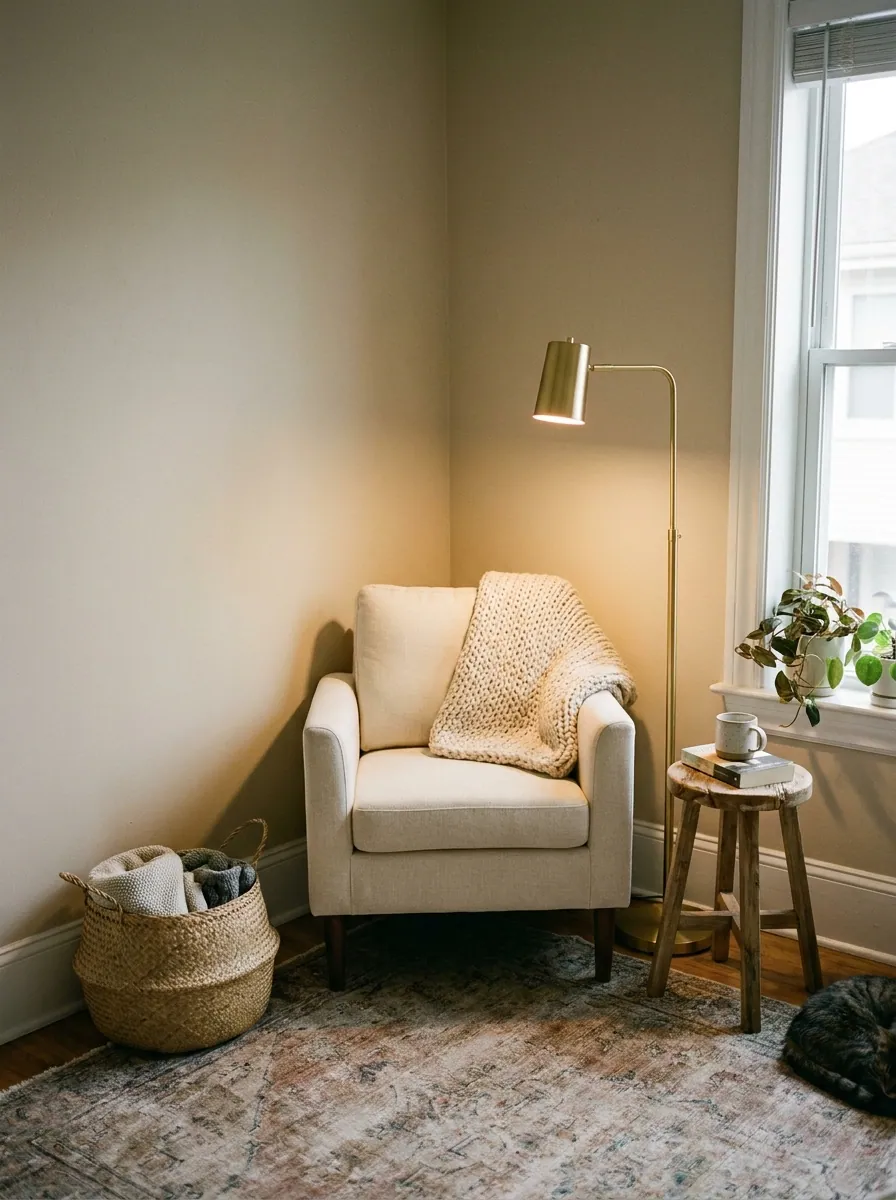
If you have an awkward corner that isn’t large enough for another piece of full-size furniture, turn it into a tiny reading nook.
You don’t need a large armchair or elaborate setup. A compact chair, small side table, and slim lamp can be enough.
Choose a chair with a relatively narrow footprint so that it doesn’t interfere with the bedroom’s main walking path. A small upholstered chair can add softness, while a wooden chair with a cushion can create a lighter appearance.
A small basket beside the chair can provide somewhere to store blankets or books.
The reading nook doesn’t necessarily have to be used exclusively for reading. It can become a place to put on shoes, relax for a few minutes, or simply give the bedroom another functional area.
If the room is extremely small, don’t force a reading nook into it. Maintaining comfortable movement around the bed should come first.
11. Install Floating Shelves
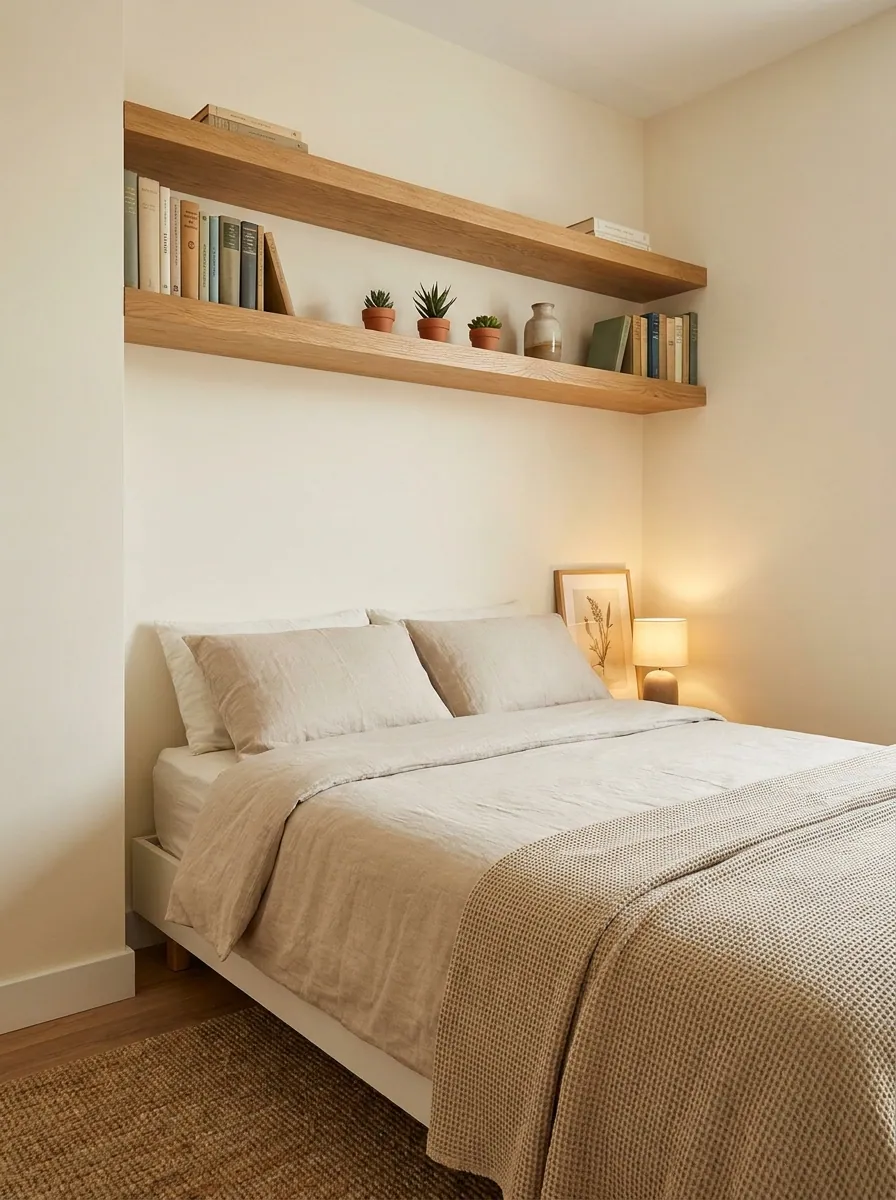
Floating shelves are a simple way to add storage and personality without introducing another piece of floor furniture.
They can hold books, plants, artwork, small ceramics, candles, or other decorative objects.
The key to making floating shelves work in a small bedroom is restraint. Filling every inch of shelf space can create the exact visual clutter you’re trying to avoid.
Instead, group a few objects together and leave intentional gaps between them. Vary the height of objects so the arrangement doesn’t look too uniform.
You can also use baskets or small boxes to hide practical items that aren’t particularly decorative. Natural wood shelves work especially well in warm neutral bedrooms. If you prefer a minimalist look, choose shelves that closely match the wall color.
Before installing shelves above the bed, make sure they are securely mounted and positioned at a safe height.
12. Hang Curtains Higher
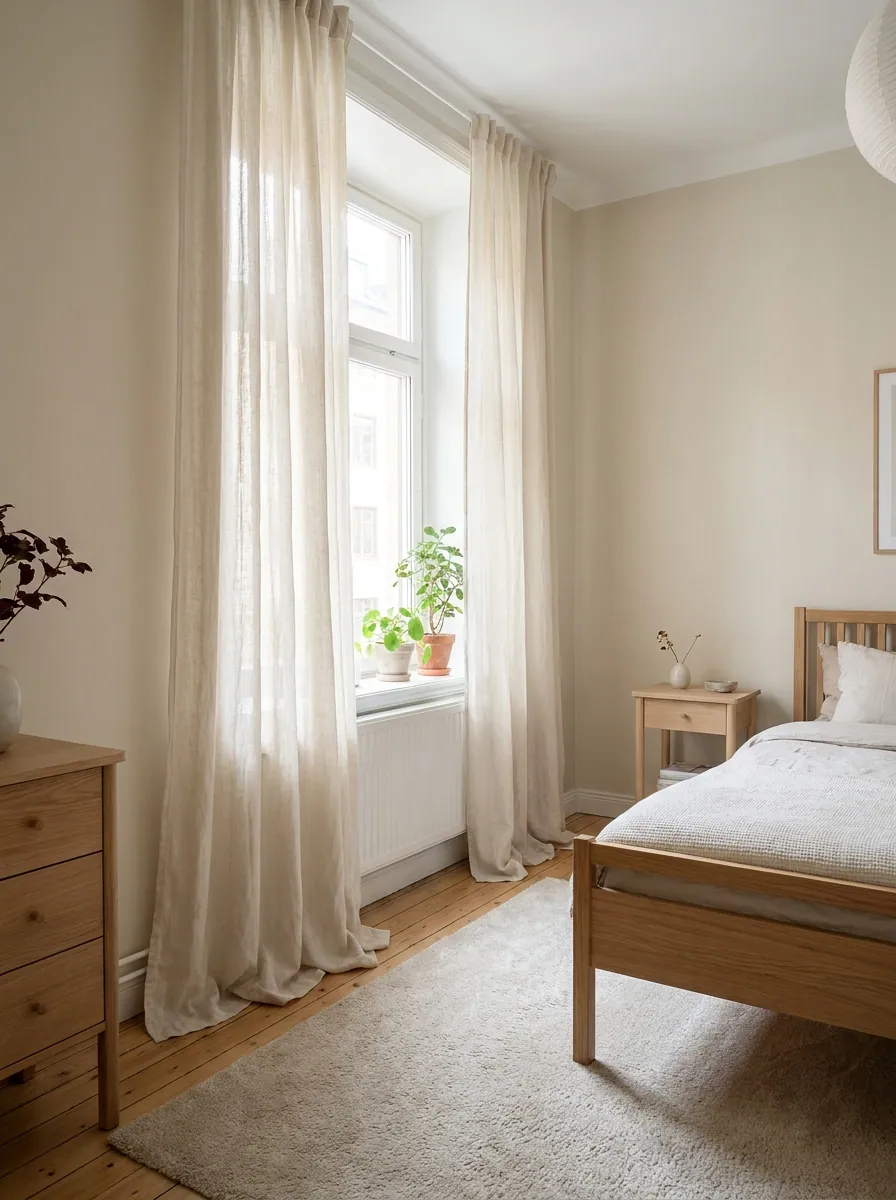
Window treatments can have a surprising effect on how large a small bedroom feels.
Instead of mounting the curtain rod directly above the window frame, consider placing it higher. Let the curtains extend close to the floor.
This creates a longer vertical line and draws attention upward, which can make the ceiling appear taller.
For a soft bedroom aesthetic, linen or lightweight cotton curtains in cream, ivory, or warm beige work beautifully. Avoid overly heavy curtains if the room is already dark. They can make the space feel more enclosed.
If privacy is a concern, combine lightweight curtains with a discreet blind or shade.
Keep the curtain design simple. In a small bedroom, large patterns can become visually dominant, particularly when the curtains occupy a significant section of the wall.
13. Create a Statement Wall Behind the Bed
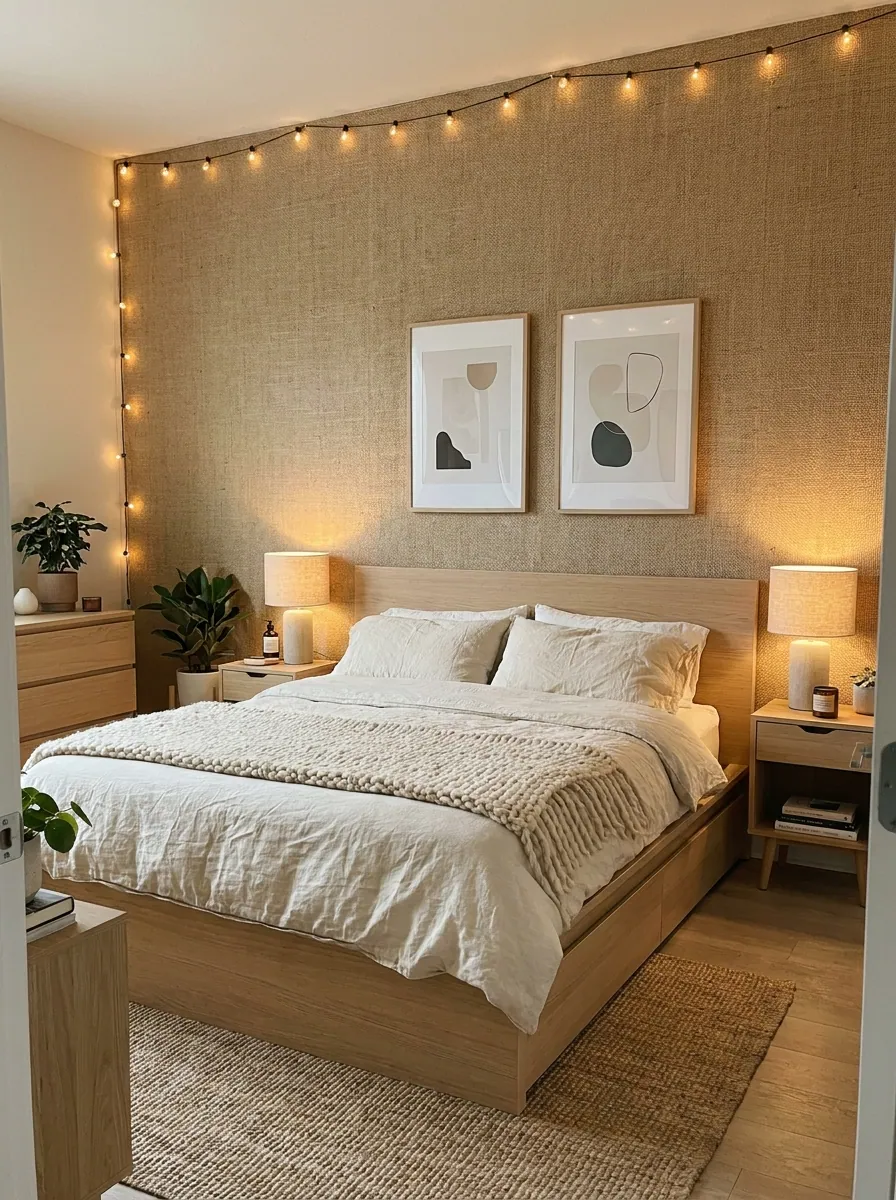
A small bedroom doesn’t need an interesting feature on every wall. Instead, choose one wall—usually the wall behind the bed—and make it the focal point.
There are several ways to do this without overwhelming the space. You could use subtle wallpaper, textured paint, vertical wood paneling, limewash-inspired finishes, or a carefully selected piece of artwork.
If you want the bedroom to remain calm, choose a color that is only slightly deeper than the other walls. For example, warm beige walls with a slightly darker taupe feature wall can create depth while keeping the overall palette cohesive.
A statement wall is also a useful way to add personality without adding furniture.
If you’re using artwork, avoid covering the entire wall with a complicated gallery arrangement unless the room has enough visual breathing room. The simpler the rest of the room, the more effective the feature wall will be.
14. Use Texture Instead of Clutter
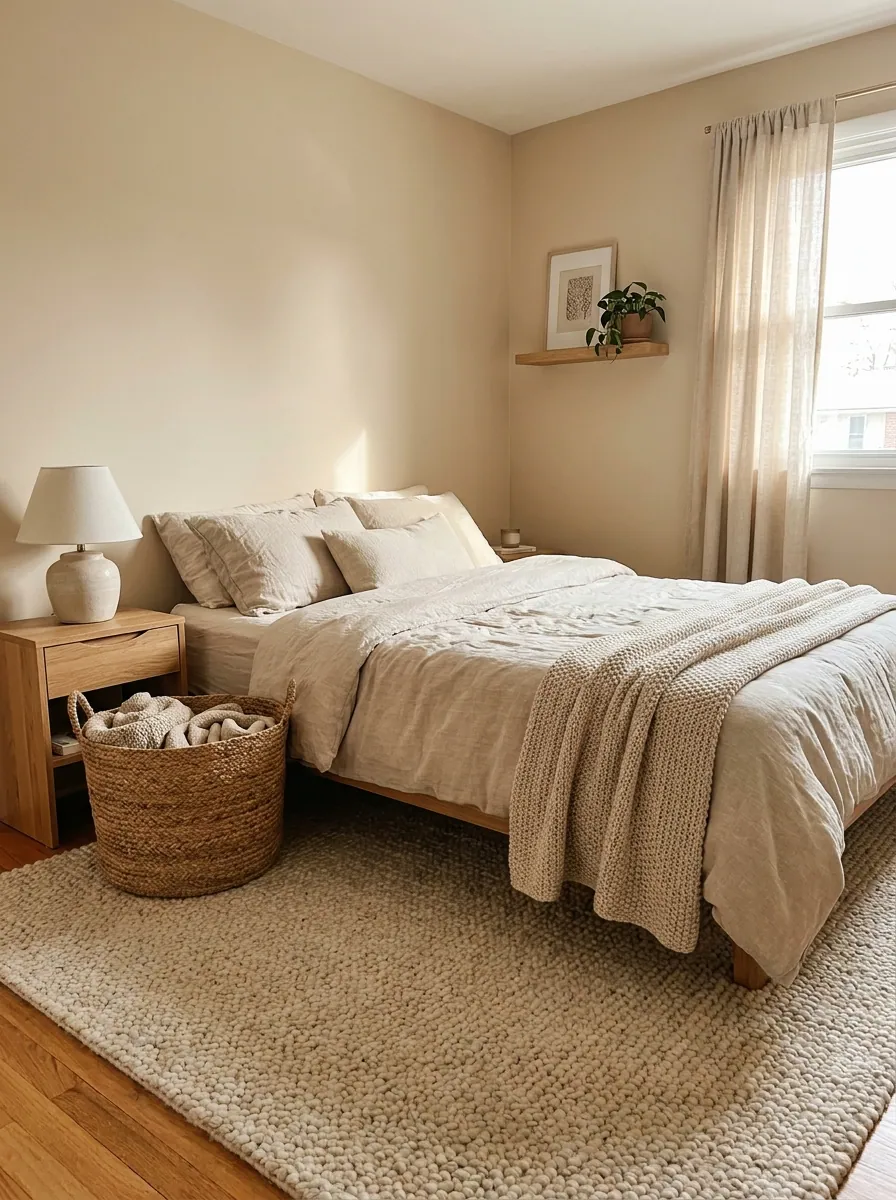
When a small bedroom feels plain, it’s tempting to solve the problem by adding more decorations. But more objects aren’t always the answer.
Instead, introduce texture.
A linen duvet, knitted blanket, woven basket, textured rug, natural wood furniture, and soft curtains can give the room visual depth without filling every surface.
Texture is especially effective in neutral bedrooms because it prevents cream and beige colors from looking flat.
Try combining materials that feel different from one another. Smooth painted walls can contrast with rough woven baskets. Crisp linen can work with soft knitted fabrics. Natural oak can add warmth to a room filled with soft textiles.
The best part is that texture doesn’t require much additional space. You can completely change the atmosphere of a bedroom simply by replacing a flat blanket with a textured one or adding a small woven basket.
This is one of the easiest ways to create a cozy bedroom aesthetic without creating clutter.
15. Make Use of Under-Bed Storage
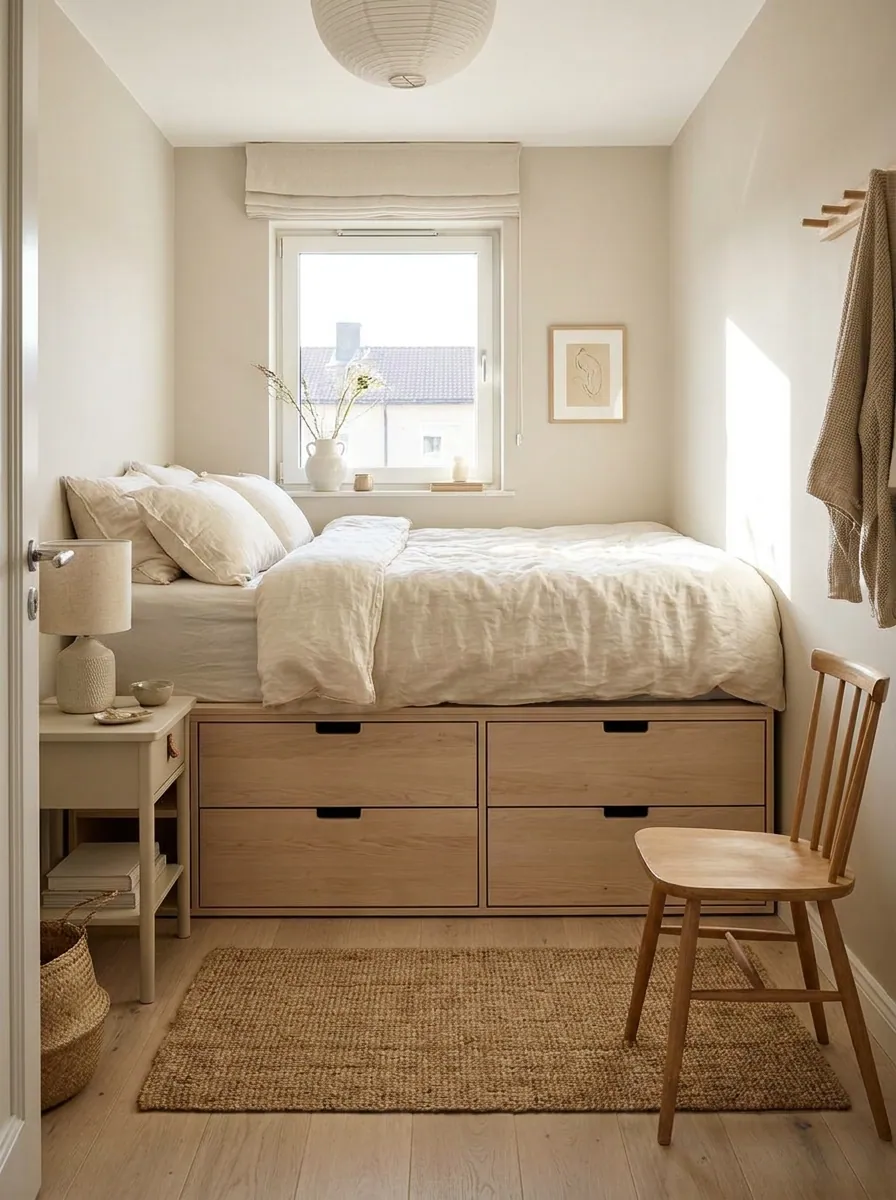
In a small bedroom, unused space is valuable—and the area beneath your bed is often one of the largest hidden storage opportunities.
Use shallow storage containers for things you don’t need every day, such as seasonal clothing, extra blankets, shoes, or spare bedding.
If you’re buying a new bed, consider a design with integrated drawers. If you already have a bed frame, choose containers that fit underneath it without blocking ventilation or damaging the floor.
Labeling storage boxes can make it easier to find things without pulling everything out.
Try to avoid using under-bed storage as a place to hide random clutter. Organize it by category so that the space remains genuinely useful. For a cleaner appearance, choose storage containers that are completely hidden beneath the bed.
The goal is to turn unused space into organized storage without making the bedroom look like it has more furniture.
16. Choose Multifunctional Furniture
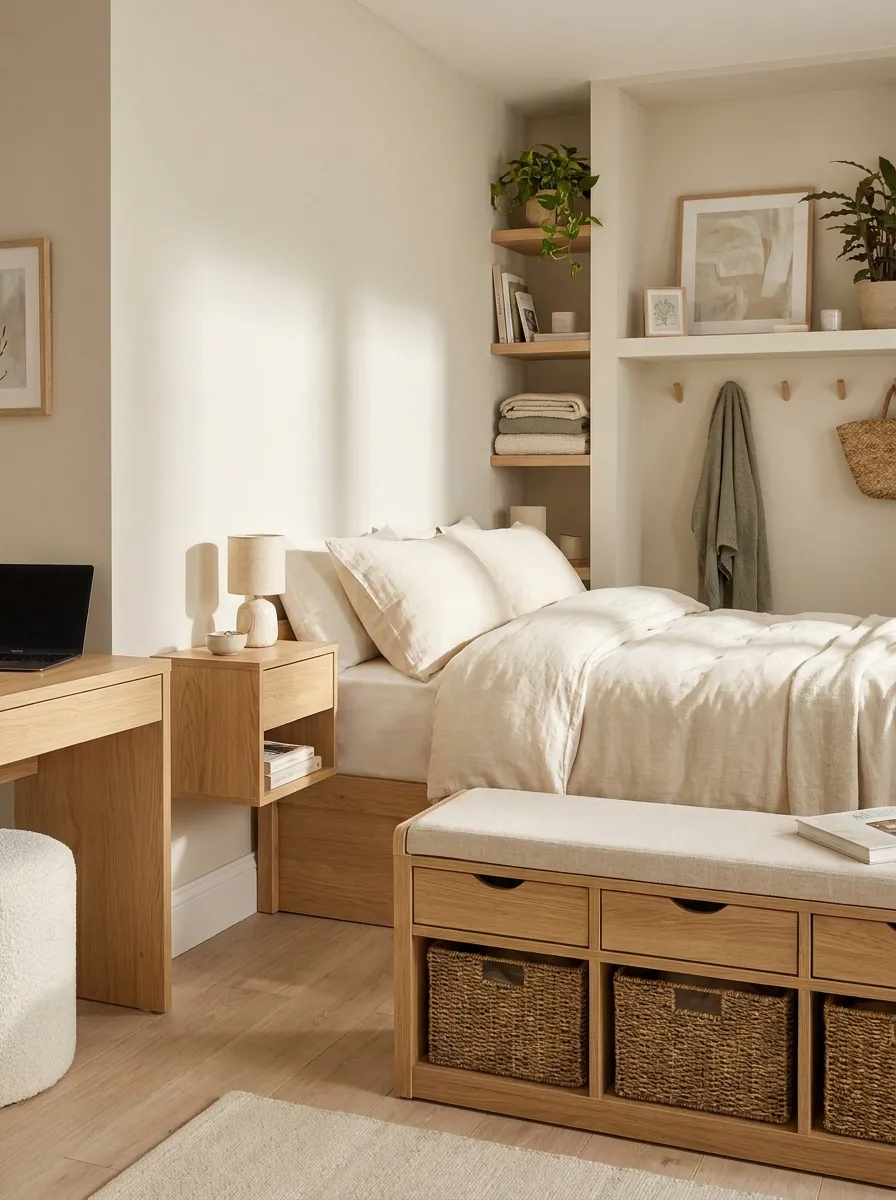
Multifunctional furniture can make a small bedroom significantly easier to use. Instead of adding separate pieces for every purpose, look for furniture that can perform two jobs.
A storage bench at the foot of the bed can provide seating while hiding blankets. A compact desk can double as a vanity. A floating shelf can serve as both storage and decoration.
The trick is to choose multifunctional furniture carefully. A piece should still be comfortable and practical in both roles. For example, a storage bench is useful only if it can actually be opened easily and doesn’t block the walking path.
Think about your daily routine before buying anything. If you rarely sit at a desk in your bedroom, there’s no reason to sacrifice valuable floor space for one. If you need somewhere to store extra bedding, a storage bench may be much more useful.
Good small-space design is about using less furniture more intelligently.
17. Keep the Layout Minimal
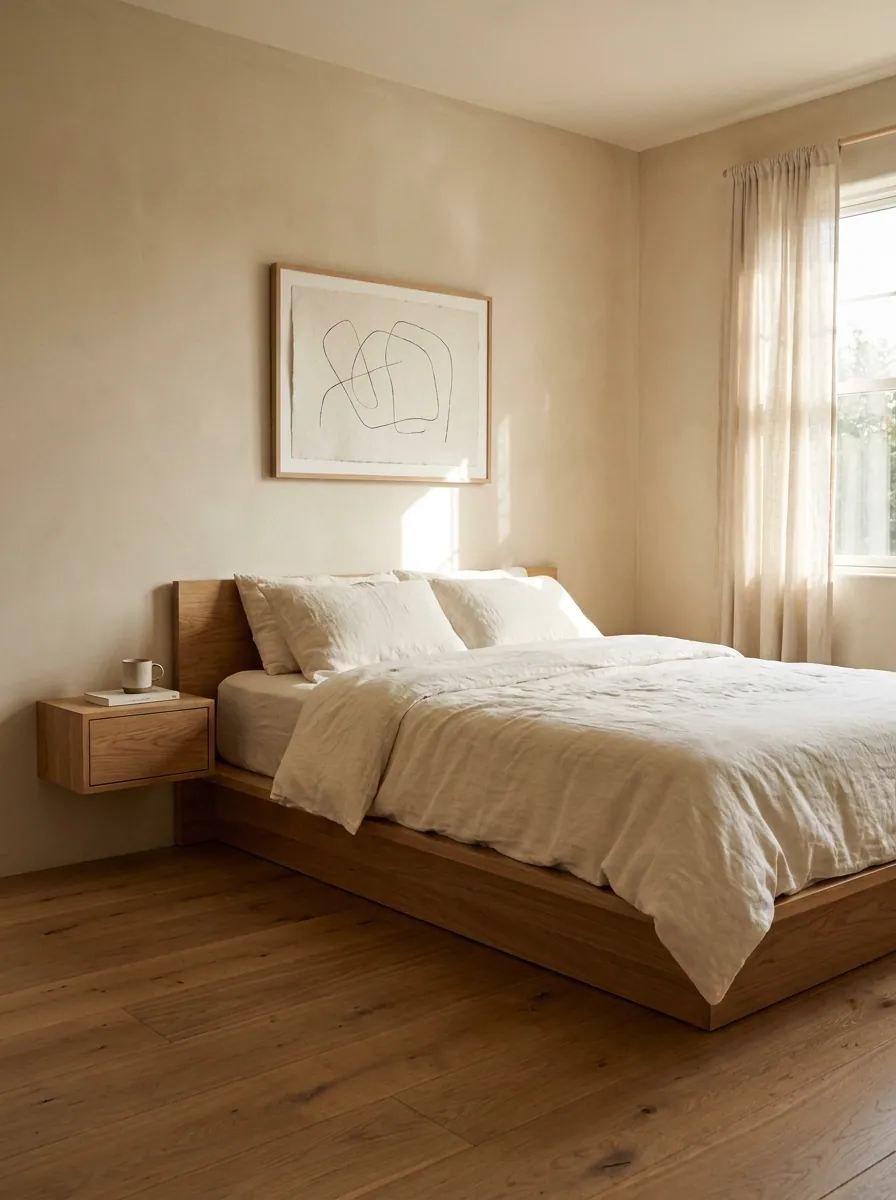
Sometimes the best small bedroom makeover is simply removing something.
A room can feel crowded even when every piece of furniture technically has a purpose. Look around and ask whether each item genuinely improves the room.
Start with the essentials: a comfortable bed, appropriate storage, lighting, and somewhere to keep your everyday necessities.
Then consider what can be removed, moved, or replaced with something smaller.
Avoid filling empty corners simply because they are empty. Negative space is an important part of interior design and can make the room feel more peaceful.
A minimalist bedroom doesn’t have to be completely empty or stark. You can still have artwork, plants, books, and decorative objects. The difference is that every element has a reason for being there.
In a small room, less visual competition often makes the space feel more luxurious.
18. Add a Small Plant
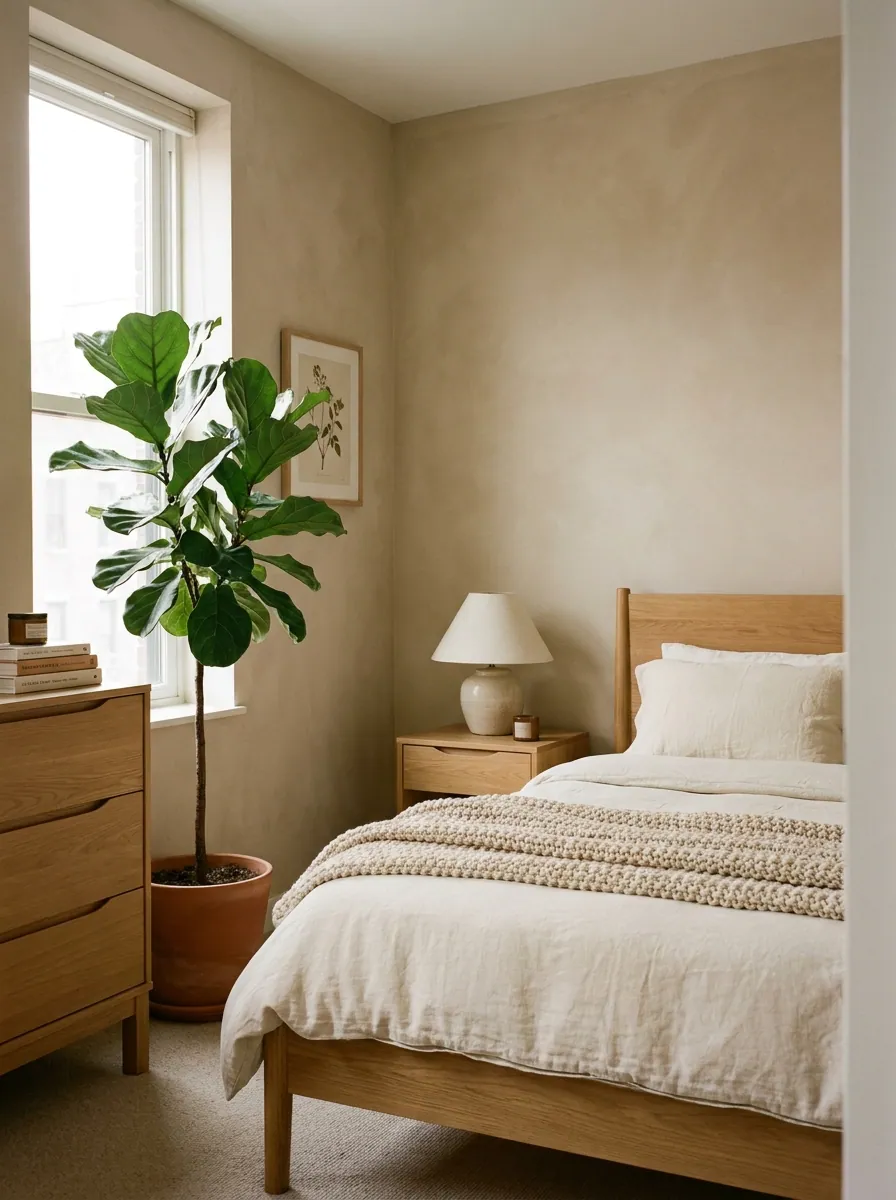
A little greenery can bring life into a neutral bedroom.
You don’t need a collection of plants. One thoughtfully positioned plant can be enough to add color and soften a room filled with cream, beige, and wood.
A small plant can sit on a floating shelf, dresser, or nightstand. If you have an unused corner, a taller plant can help fill the space without requiring another piece of furniture.
Choose the size carefully. A plant that is too large can make a small room feel even smaller. You should also consider the natural light available in your bedroom and choose a plant that can comfortably handle those conditions.
If maintaining real plants isn’t practical, a high-quality artificial plant can provide a similar visual effect.
The important thing is to treat greenery as an accent rather than allowing it to become another source of clutter.
19. Use a Small Rug
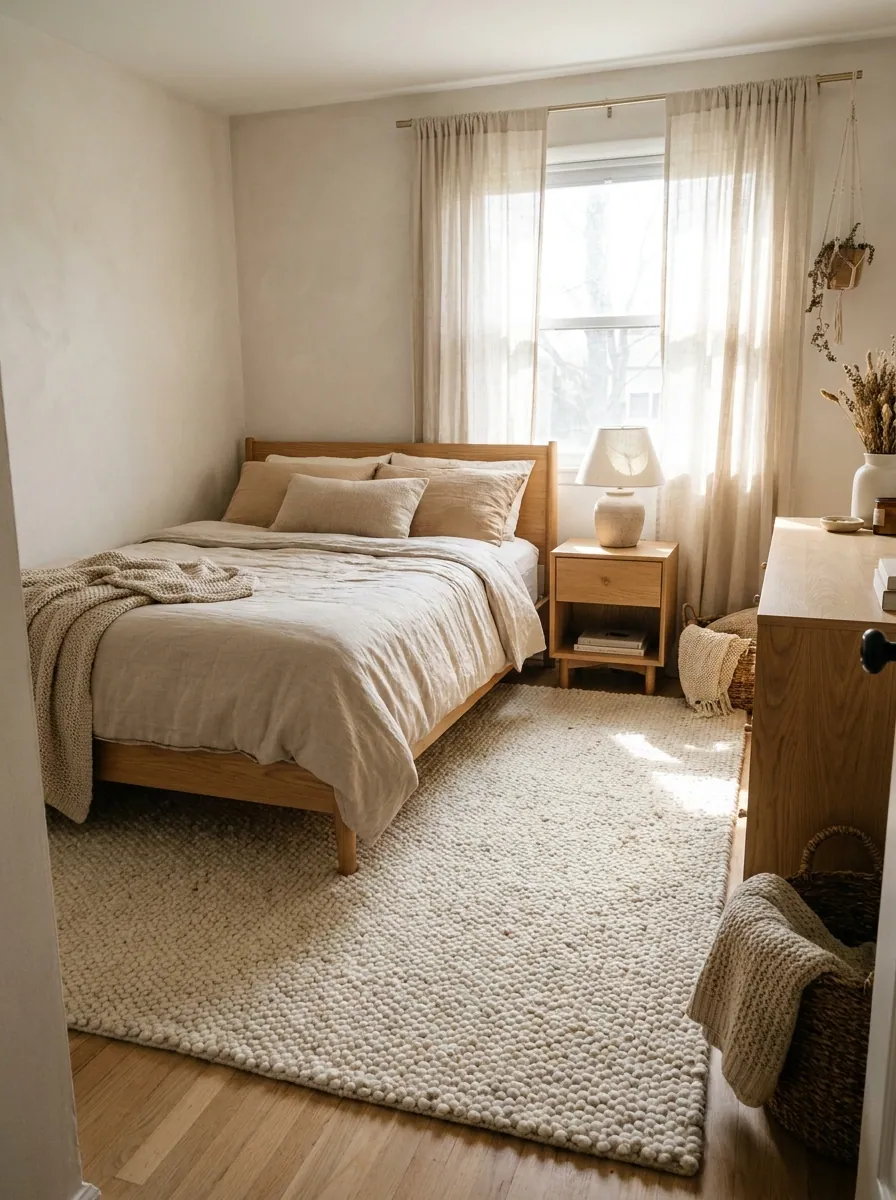
A rug can instantly make a bedroom feel warmer and more finished.
However, a small bedroom doesn’t necessarily need a huge rug that covers most of the floor.
A narrow runner beside the bed can provide softness where you actually need it. Another option is to position a smaller rug beneath the lower portion of the bed.
Choose a color that complements your existing palette rather than introducing a completely different shade. Cream, beige, taupe, and muted natural tones are particularly versatile.
Texture is often more important than pattern. A subtle woven or plush rug can add warmth without making the room visually busy.
If you have beautiful wood flooring, don’t cover all of it. Leaving some floor visible can actually help the bedroom feel more spacious.
20. Keep the Nightstand Clutter-Free
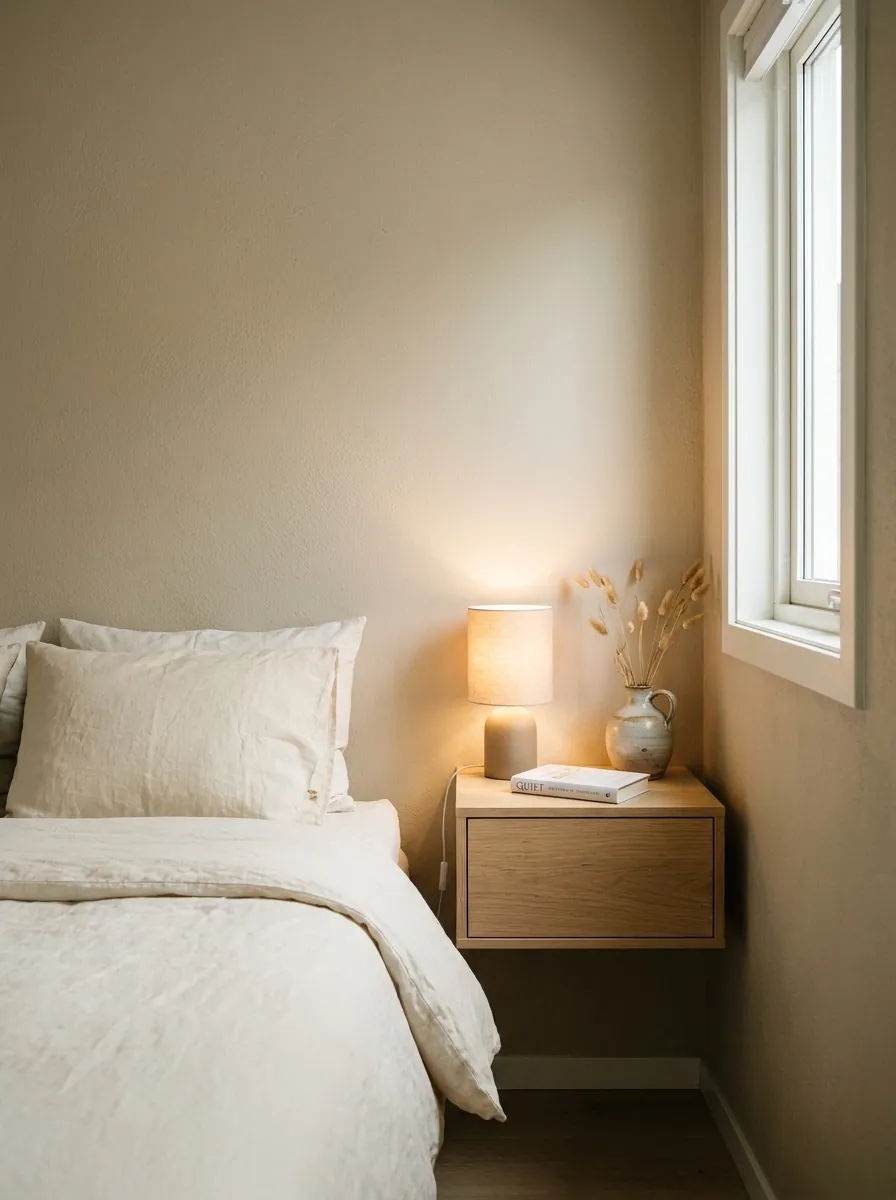
A messy nightstand can make even a beautifully decorated bedroom feel disorganized.
Because the nightstand is positioned directly beside the bed, clutter there is particularly noticeable.
Start by deciding what you genuinely need within arm’s reach at night. For many people, this might be a lamp, phone, book, glasses, or a small water bottle.
Keep decorative items to one or two pieces.
If you need more storage, choose a nightstand with a drawer rather than allowing the surface to become a storage area.
A floating nightstand can be particularly helpful because it forces you to keep the surface intentional while freeing the floor underneath. A clean bedside area doesn’t just improve the appearance of the room. It can also make the bedroom feel calmer and easier to maintain.
21. Mix Complementary Textures
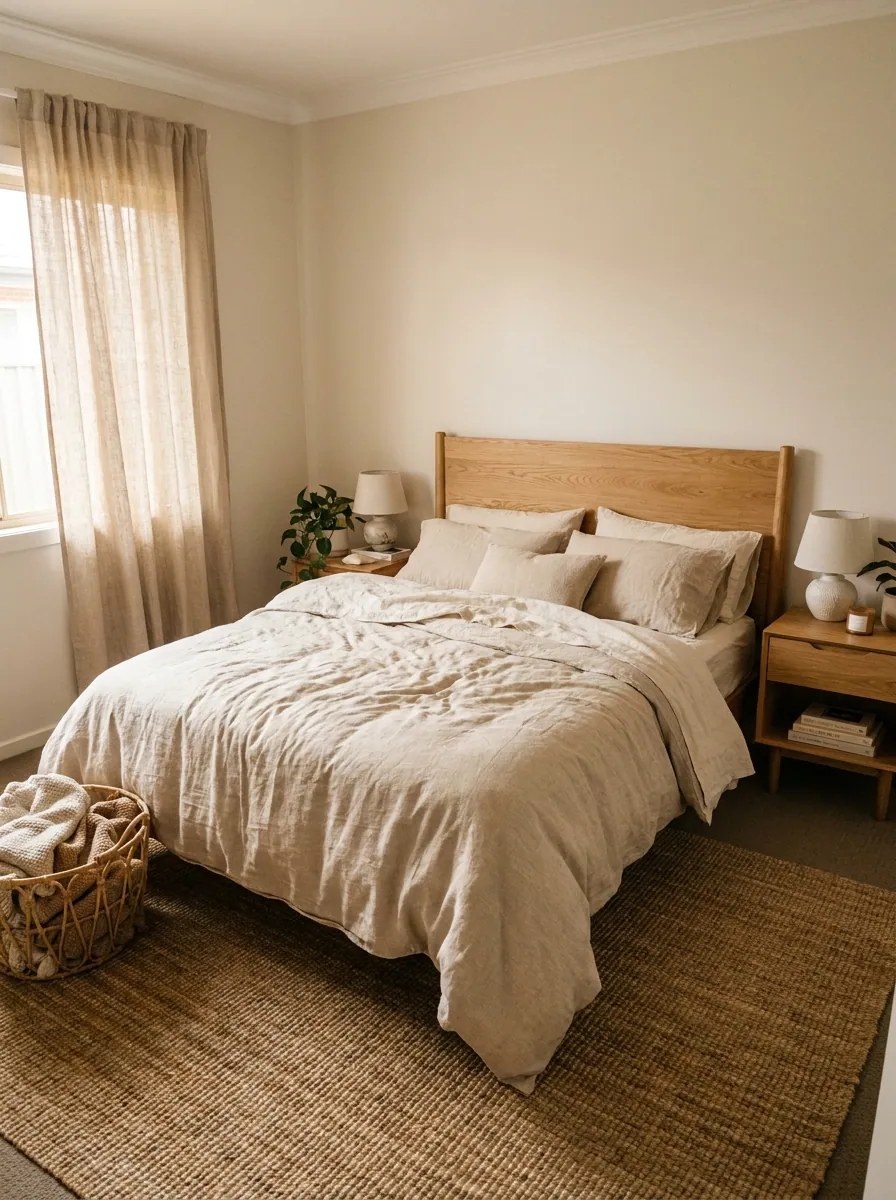
Your bedroom furniture doesn’t need to come from the same collection to look cohesive. Instead, connect different pieces through complementary materials and colors.
For example, natural oak furniture can work beautifully with linen bedding, a woven basket, a textured rug, and soft cotton curtains.
The key is repetition. If you use natural wood in one area, introduce another natural material somewhere else. If your bedding is warm beige, repeat a similar tone in the rug or curtains.
This creates a sense of consistency without making the room look overly coordinated.
Try to balance smooth and rough surfaces. A smooth wooden nightstand can contrast with a chunky knitted throw. A soft upholstered headboard can work with a woven rug. These subtle differences give a small bedroom character without requiring additional decorative objects.
22. Decorate Above the Bed
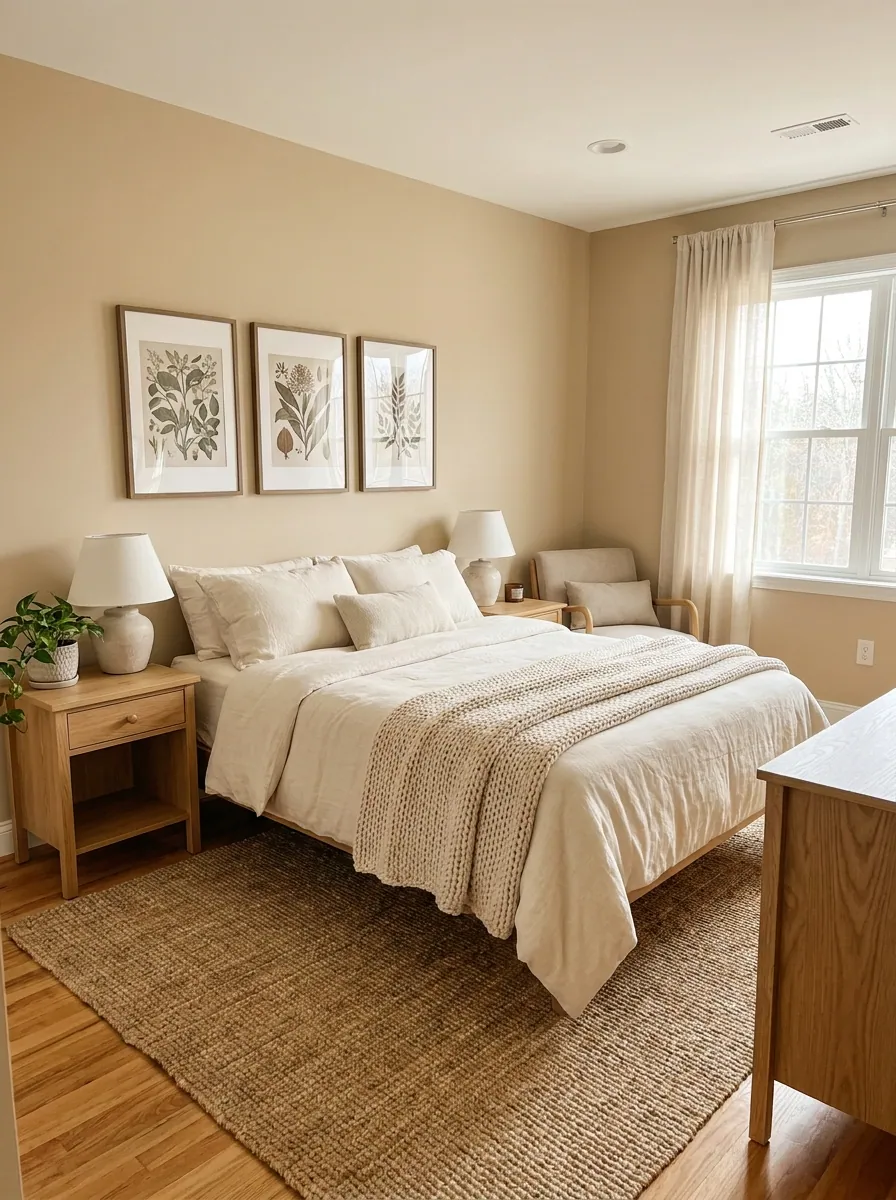
The wall above the bed is valuable decorating space because it allows you to add personality without using any floor space.
One large piece of artwork can create a strong focal point. Alternatively, use two or three smaller coordinated frames.
Botanical prints, abstract artwork, simple photography, and minimalist illustrations can work particularly well in neutral bedrooms.
Keep the artwork connected to the room’s existing colors. If the bedroom uses cream, beige, and brown, choose artwork that includes similar tones.
Avoid making the arrangement too complicated. In a small room, a simple composition can often look more sophisticated than a crowded gallery wall.
If you’re renting, lightweight frames or removable hanging solutions may allow you to personalize the space without making permanent changes.
23. Choose a Narrow Dresser
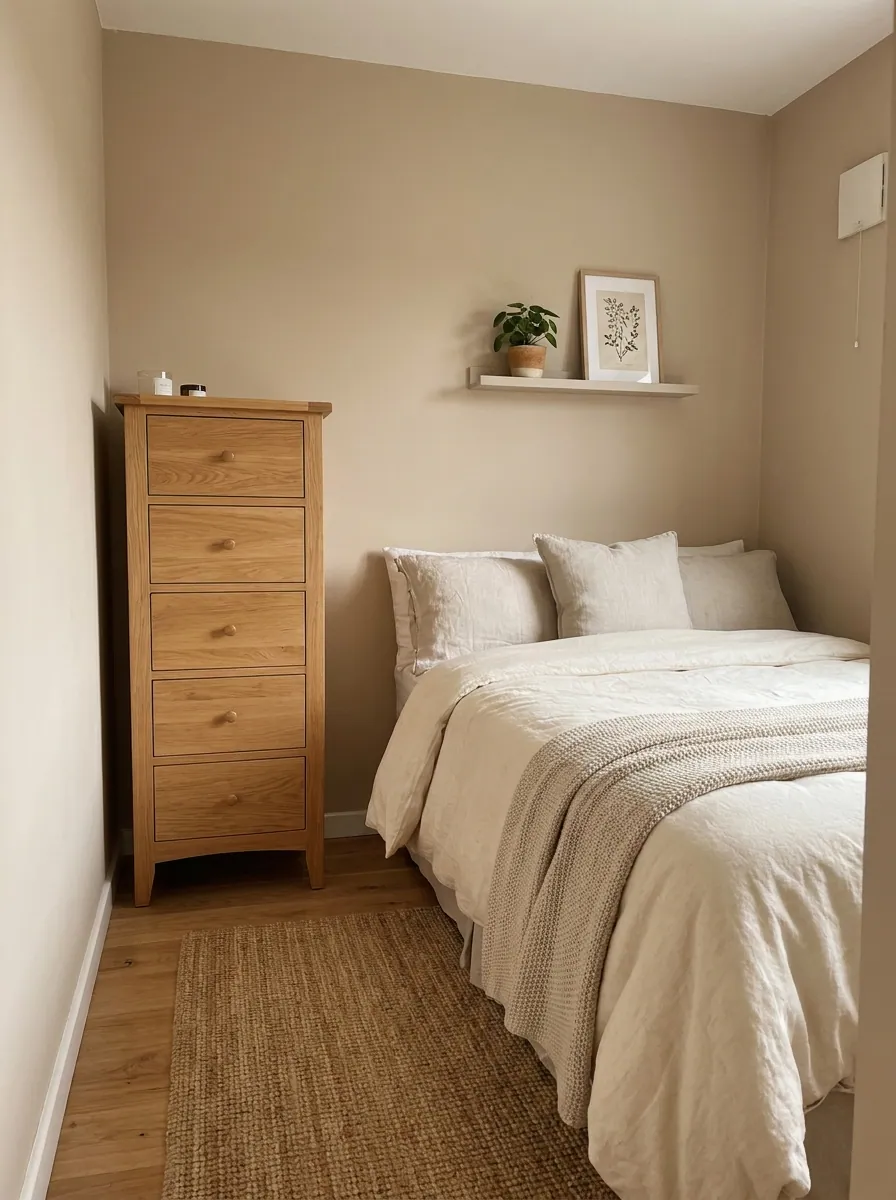
When you need more clothing storage, think vertically.
A tall narrow dresser can provide useful storage while taking up less horizontal floor space than a wide dresser.
This is particularly useful in bedrooms where there isn’t enough wall width for a large chest of drawers.
Choose a design with enough drawers for your needs but avoid going unnecessarily large. The purpose is to solve a storage problem, not create another obstacle.
You can also use the top of the dresser for a mirror, small lamp, or a few decorative objects. Keep that surface relatively clear. A dresser covered with items can make the room feel more crowded.
Light oak, warm white, or soft beige furniture works particularly well with neutral bedroom palettes.
24. Turn an Awkward Corner Into a Cozy Spot
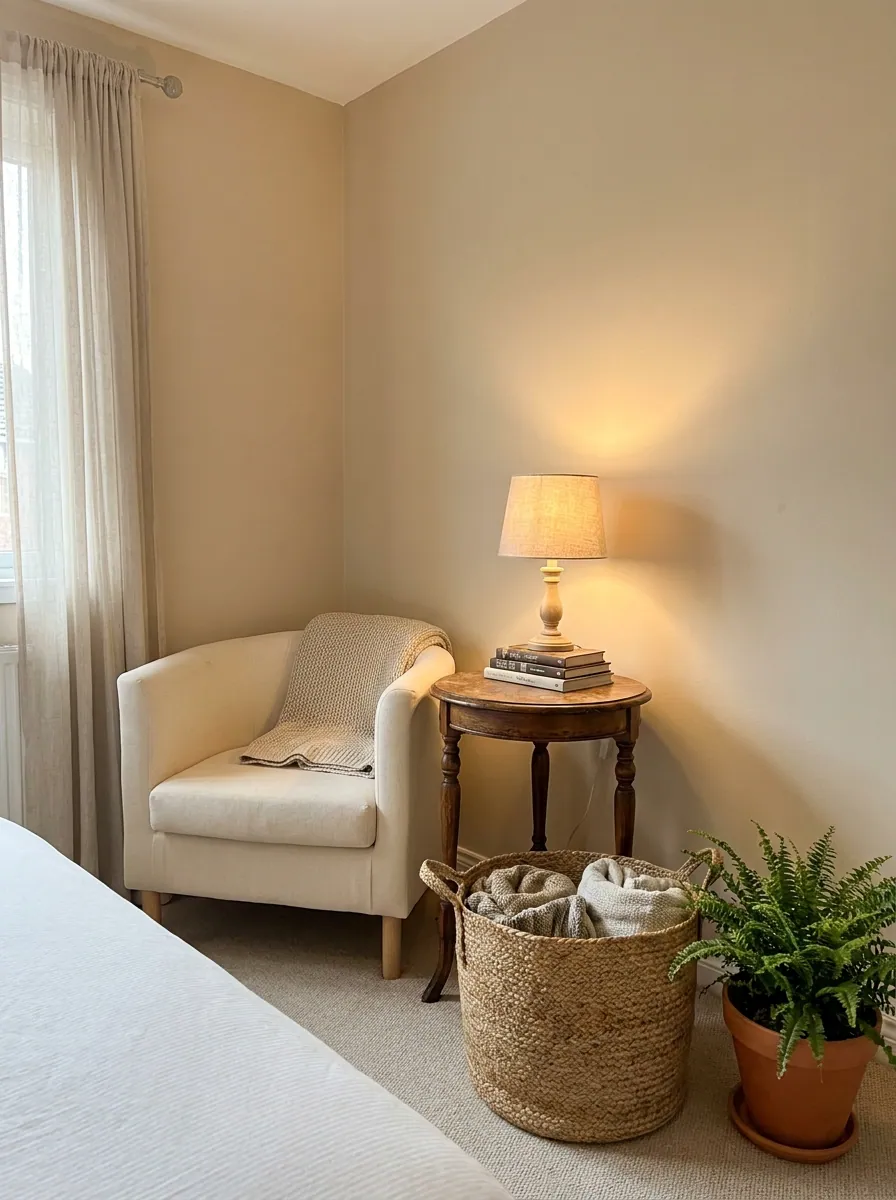
Almost every small bedroom has a corner that seems difficult to use. Instead of automatically filling it with furniture, first consider what the room actually needs.
If you need additional seating, a compact chair can transform the corner into a useful spot. If you need storage, a narrow shelving unit may make more sense. If you simply want to make the room feel warmer, a plant and small lamp might be enough.
An awkward corner doesn’t need a complicated design. Sometimes a single well-chosen object looks more intentional than several small decorations.
Keep the scale of everything proportional to the room and make sure the corner doesn’t interfere with your walking path.
25. Keep Some Floor Visible
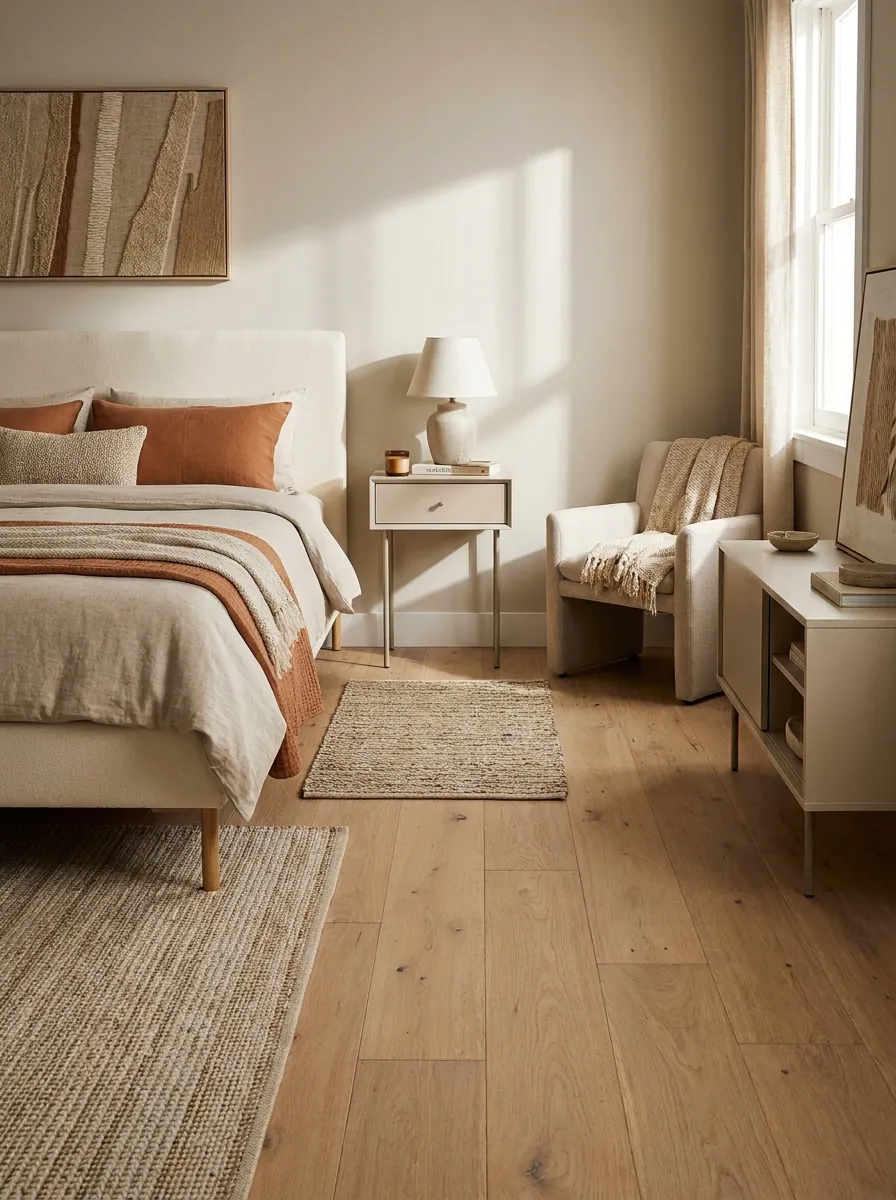
Visible floor space can make a surprisingly big difference in a small bedroom.
When furniture covers almost every available area, the room can feel much more crowded than it actually is.
Whenever possible, choose furniture with slim legs or raised bases. This allows more of the flooring to remain visible and creates a lighter visual appearance.
Don’t place furniture in corners simply because there is space for it. Instead, prioritize comfortable walking paths around the bed and between important areas.
If you’re choosing between two similar pieces of furniture, the one with a smaller footprint and more visible floor underneath may be the better choice.
A small bedroom doesn’t necessarily need more floor space—it needs better use of the floor space it already has.
26. Create a Consistent Color Story
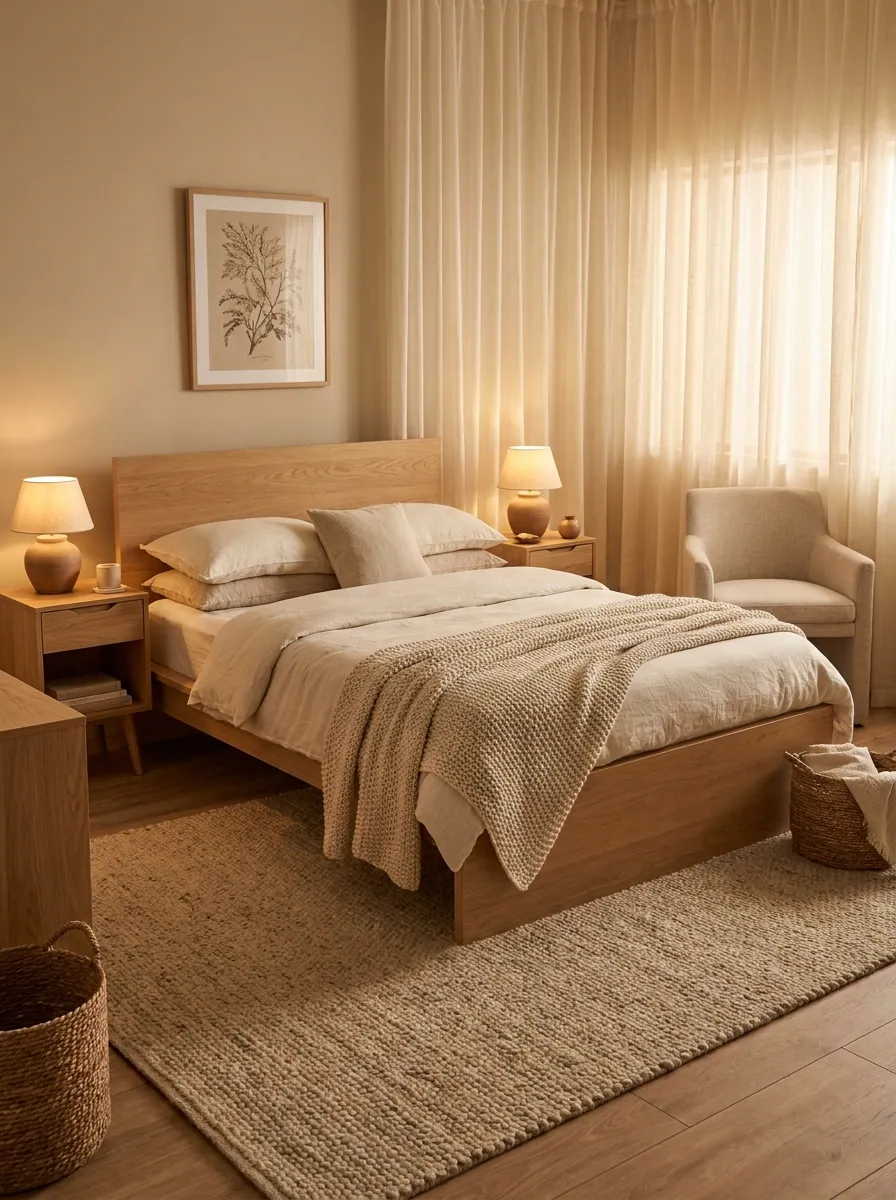
The final step is bringing everything together.
A consistent color story can make even a collection of different furniture and accessories feel intentional.
Choose two or three main colors and repeat them throughout the bedroom.
For example, cream + beige + natural oak creates a warm and timeless look. Warm white + taupe + soft brown creates a slightly richer atmosphere, while sage green + cream + light oak introduces a subtle touch of color.
Use your main colors on the largest surfaces and save stronger shades for smaller accents.
This doesn’t mean everything has to match perfectly. In fact, a little variation can make the room feel more natural. The goal is simply to prevent every object from competing for attention.
When your colors work together, the bedroom feels more cohesive, peaceful, and thoughtfully designed.
How to Make a Small Bedroom Feel Bigger
Decorating a small bedroom isn’t about making it look like a large bedroom. Instead, the goal is to make the existing space feel comfortable, functional, and visually open.
Start by looking at what currently makes the room feel cramped:
- If furniture blocks walking paths, replace oversized pieces with smaller alternatives.
- If the room feels dark, introduce lighter colors, mirrors, and layered lighting.
- If clutter is the problem, look for hidden storage opportunities underneath the bed or upward on the walls.
You can also create more visual breathing room by keeping surfaces relatively clear and avoiding unnecessary furniture.
One useful rule: Ask yourself three questions before adding anything:
- Does it serve a purpose?
- Does it fit the scale of the room?
- Does it contribute to the overall look?
If the answer to all three is yes, it is probably worth keeping.
Small Bedroom Color Ideas
Color is one of the easiest ways to establish the mood of your bedroom:
- Cream + Beige + Natural Oak: A warm and timeless combination that works especially well for a cozy bedroom aesthetic.
- Warm White + Soft Gray + Wood: A brighter palette that works beautifully in rooms with good natural light.
- Taupe + Cream + Warm Brown: A richer combination for a bedroom that feels sophisticated and grounded.
- Sage Green + Cream + Light Oak: A subtle way to introduce color without losing the calm atmosphere of a neutral bedroom.
- Dusty Rose + Beige + Warm White: A softer palette that can create a gentle and inviting bedroom.
- Beige + Black + Natural Wood: For a slightly more modern look, introduce small black accents through lighting, frames, handles, or decorative objects.
Small Bedroom Storage Ideas
Storage is often the biggest challenge in a compact bedroom. Fortunately, you don’t have to rely entirely on a large wardrobe.
Consider combining several smaller solutions:
- Under-bed storage for seasonal items and spare bedding
- Floating shelves for books and decorative pieces
- Tall narrow dressers for clothing
- Wall hooks for bags, robes, or accessories
- Storage benches for blankets
- Floating nightstands for bedside essentials
- Baskets for smaller items
- Vertical cabinets for maximizing wall space
The best storage system is one that makes everyday items easy to access while keeping less frequently used belongings hidden.
Small Bedroom Layout Tips
The layout of your bedroom matters just as much as the furniture you choose.
- Start by positioning the bed where it allows the easiest movement around the room.
- Place your largest storage piece next.
- Add smaller furniture such as the nightstand, chair, desk, or lamp once those two anchors are positioned.
Try to maintain clear paths rather than squeezing furniture into every available corner. If your bedroom is extremely narrow, consider whether the bed needs to be centered. In some layouts, positioning it slightly differently can create more useful space.
Before moving heavy furniture, sketch the room on paper or use a simple floor-planning tool. Measure everything first. A few minutes of planning can save you from buying furniture that doesn’t work with the room.
How to Decorate a Small Bedroom on a Budget
You don’t need a complete furniture makeover to transform a small bedroom. Start with the changes that have the biggest visual impact:
- Fresh bedding can immediately change the appearance of the room.
- A warm bedside lamp can improve the atmosphere.
- New curtains hung high can make the ceiling appear taller.
- A small rug can add softness.
You can also reorganize what you already own: remove unnecessary items from surfaces and closets, rearrange artwork, move furniture to improve walking space, and replace bulky decorative pieces with smaller ones.
If you do buy something new, prioritize pieces that solve a real problem. For example, a floating shelf that provides storage is more useful than another decorative object that has nowhere to go.
A successful small-bedroom makeover isn’t necessarily expensive. It’s about making small changes that improve both the appearance and function of the room.
Common Small Bedroom Decorating Mistakes
Even with beautiful furniture and accessories, certain choices can make a small bedroom feel more cramped:
- Using Furniture That Is Too Large: Always measure before buying. A large dresser may provide more storage, but it can leave you with almost no usable floor space.
- Filling Every Empty Corner: Empty space isn’t necessarily wasted space. Some breathing room helps the bedroom feel calmer.
- Using Too Many Colors: A restrained color palette creates visual continuity. Too many contrasting colors can make a small room feel fragmented.
- Overloading Open Shelves: Open shelving can quickly become cluttered. Display only items that genuinely contribute to the room.
- Blocking Natural Light: Avoid placing tall furniture directly in front of windows unless absolutely necessary.
- Relying on One Light Source: Layered lighting creates a warmer and more flexible bedroom.
- Buying Decorative Pieces Before Solving Storage: A beautiful bedroom still needs to function. Solve practical problems first, then decorate.
Frequently Asked Questions
How can I make a small bedroom look cozy?
Use warm lighting, layered bedding, natural materials, soft rugs, curtains, and a cohesive color palette. Texture is particularly useful because it adds warmth without requiring lots of decorative objects.
What colors make a small bedroom look bigger?
Warm white, cream, beige, ivory, and soft gray can help a small bedroom feel brighter and more open. Using similar colors across walls, curtains, and bedding can also create visual continuity.
How do I maximize space in a small bedroom?
Use vertical storage, under-bed storage, floating furniture, multifunctional pieces, and appropriately scaled furniture. Most importantly, preserve clear walking paths.
Should a small bedroom have a large mirror?
A large mirror can work very well in a small bedroom because it reflects light and adds visual depth. Position it carefully so it reflects a bright or attractive part of the room.
How can I decorate a small bedroom without making it cluttered?
Focus on quality rather than quantity. Choose a few useful and attractive pieces, keep surfaces organized, and introduce interest through texture rather than excessive decoration.
How do I make a small bedroom feel luxurious?
You don’t need expensive furniture. A cohesive neutral palette, quality-looking bedding, warm layered lighting, natural textures, simple artwork, and uncluttered surfaces can create a more sophisticated appearance.
What furniture is best for a small bedroom?
Look for compact, multifunctional, floating, narrow, or storage-focused furniture. A storage bed, floating nightstand, tall dresser, and slim seating can be especially useful.
Final Thoughts
A small bedroom doesn’t need to feel cramped just because it has limited square footage. The best small bedroom ideas focus on making the room work harder without filling it with more things.
Use warm neutral colors to create a calm foundation. Choose furniture that actually fits the room. Take advantage of vertical and hidden storage. Add mirrors and layered lighting to improve the sense of space, and use linen, wood, rugs, and woven materials to bring in warmth.
Most importantly, don’t feel pressured to fill every empty corner. A little breathing room can be just as valuable as another piece of furniture. A small bedroom doesn’t need more stuff. It needs better choices.
With thoughtful storage, appropriately scaled furniture, warm lighting, and a consistent design style, even a tiny bedroom can become a space that feels cozy, organized, stylish, and genuinely comfortable.