
A dining room doesn’t need to be formal or elaborate to feel special. In many homes, the dining table becomes one of the most used surfaces in the house—from quick breakfasts and weekday dinners to coffee with friends, homework, celebrations, and long conversations.
The best dining room ideas balance beauty with everyday practicality. A comfortable table, good lighting, useful storage, and a few thoughtful decorative details can completely change how the room feels without requiring a major renovation.
Warm materials are especially effective in dining spaces. Natural wood, linen, woven textures, ceramics, soft rugs, and warm lighting create an atmosphere that feels inviting rather than overly designed.
Whether you have a dedicated dining room, a compact dining corner, or an open-plan space connected to the kitchen, these ideas can help you create a dining area that feels beautiful enough for guests and comfortable enough for everyday life.
1. Choose a Warm Natural Wood Dining Table
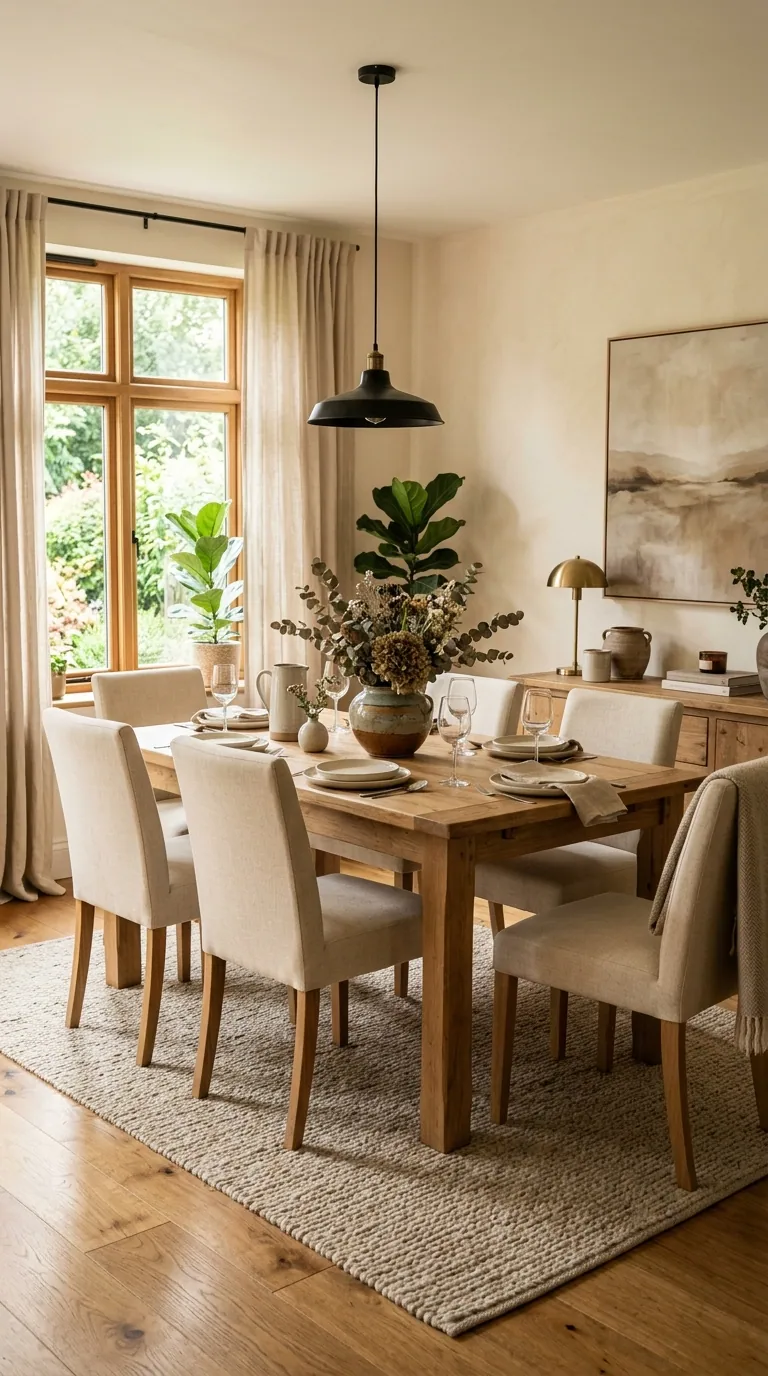
The dining table is usually the visual anchor of the room, so choosing one with warmth and character can make a surprisingly large difference.
Natural oak, walnut, or other softly finished woods add texture without making the room feel overly rustic.
Keep the rest of the room relatively calm so the table can become the foundation for the design.
2. Hang a Statement Dining Pendant
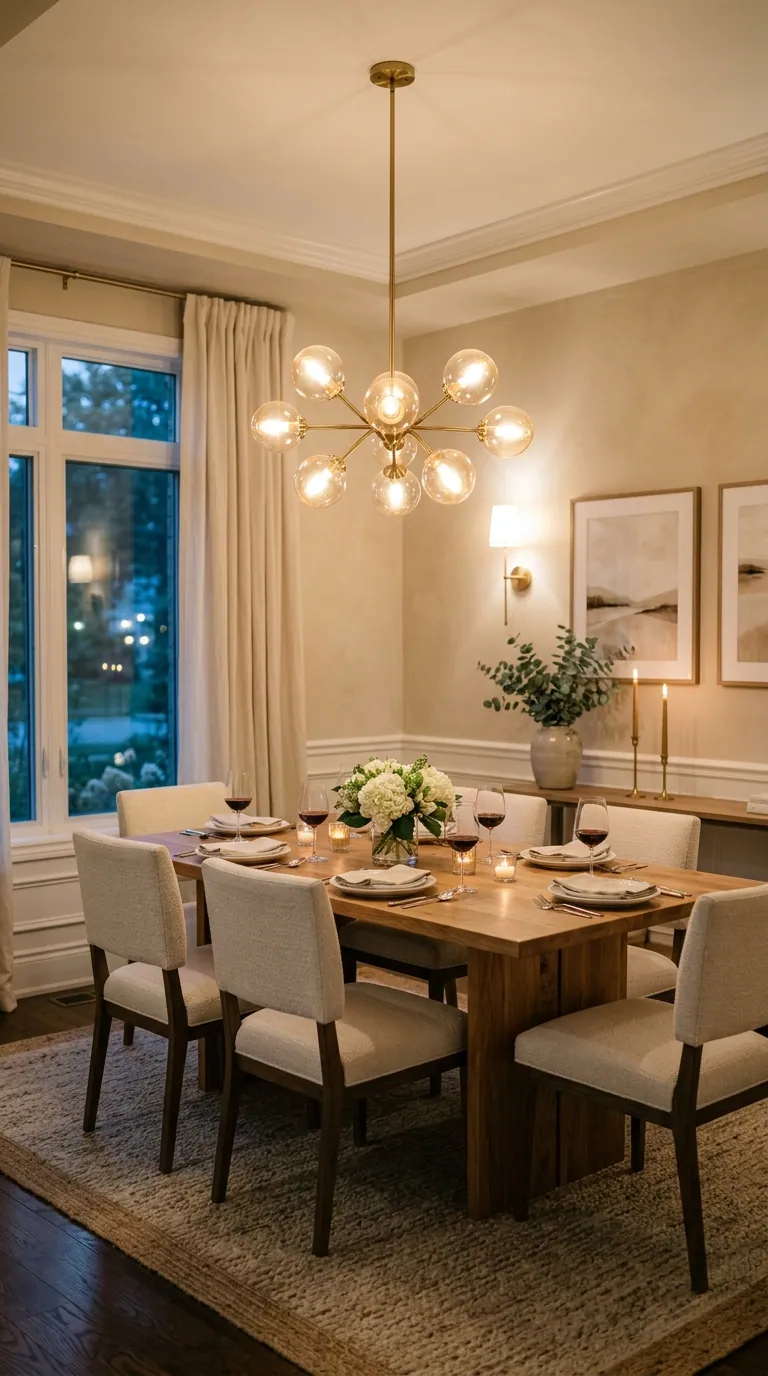
Lighting above the dining table is one of the easiest ways to make the room feel intentional.
A sculptural pendant can act almost like artwork while also providing practical illumination.
Choose a fixture that is proportional to the table rather than simply selecting the largest statement light available.
3. Create a Cozy Dining Room With an Area Rug
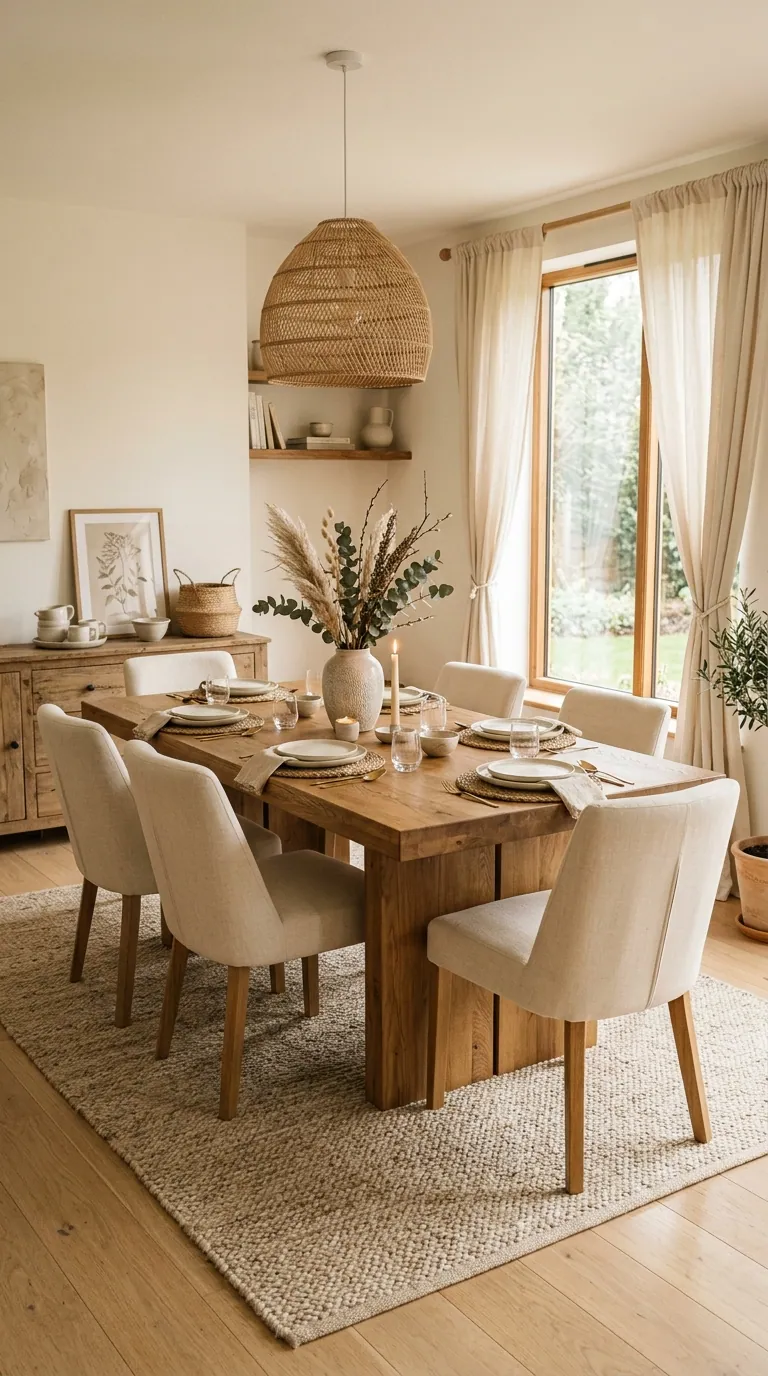
A rug helps define the dining area, particularly in an open-plan home.
Choose one large enough that chairs remain on the rug when pulled away from the table. This makes the room feel more cohesive and prevents the furniture from looking disconnected.
A subtle textured or patterned rug can also introduce warmth without overwhelming the space.
4. Mix Dining Chairs for a Collected Look
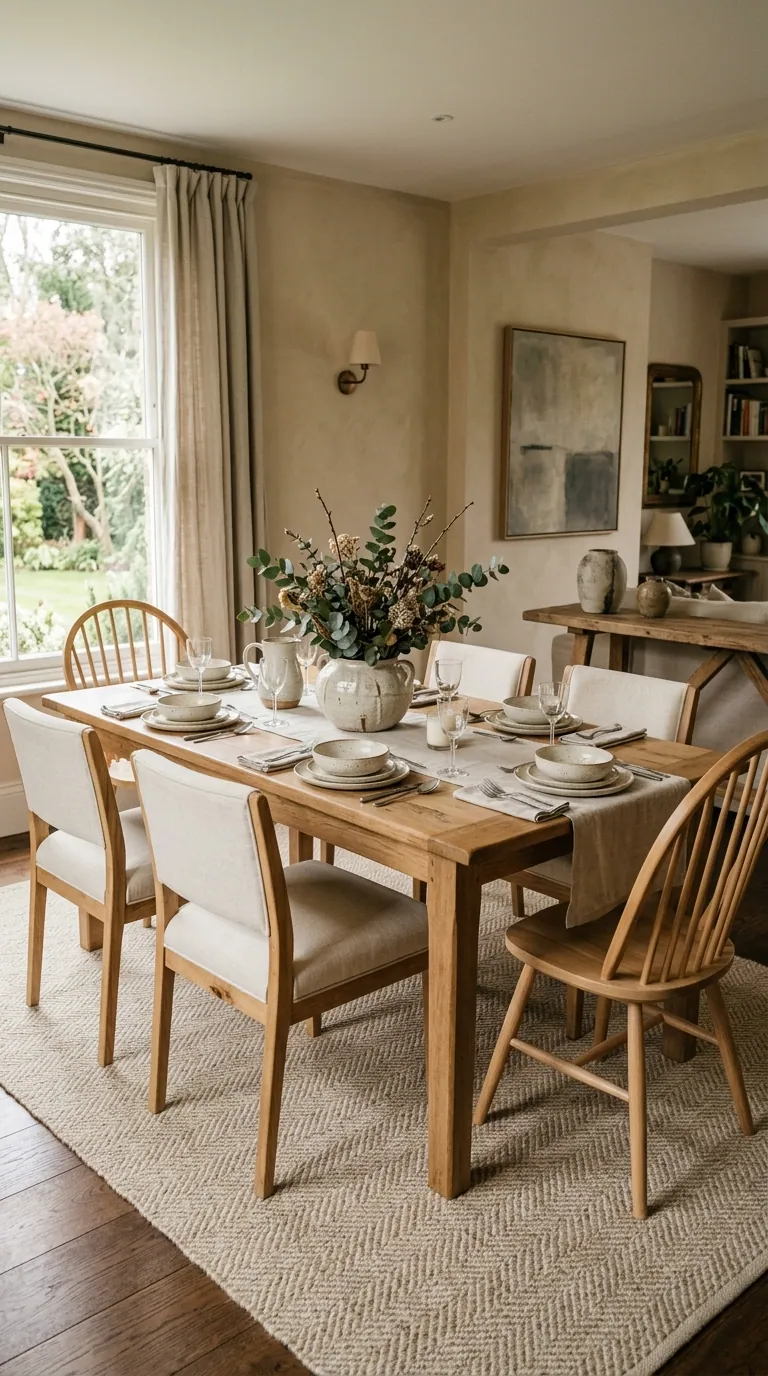
Dining chairs don’t always need to come as a perfectly matching set.
Combining complementary styles can make a dining room feel more collected and personal.
Keep one element consistent—such as color, material, or silhouette—so the chairs still feel connected.
5. Use a Bench for Flexible Seating
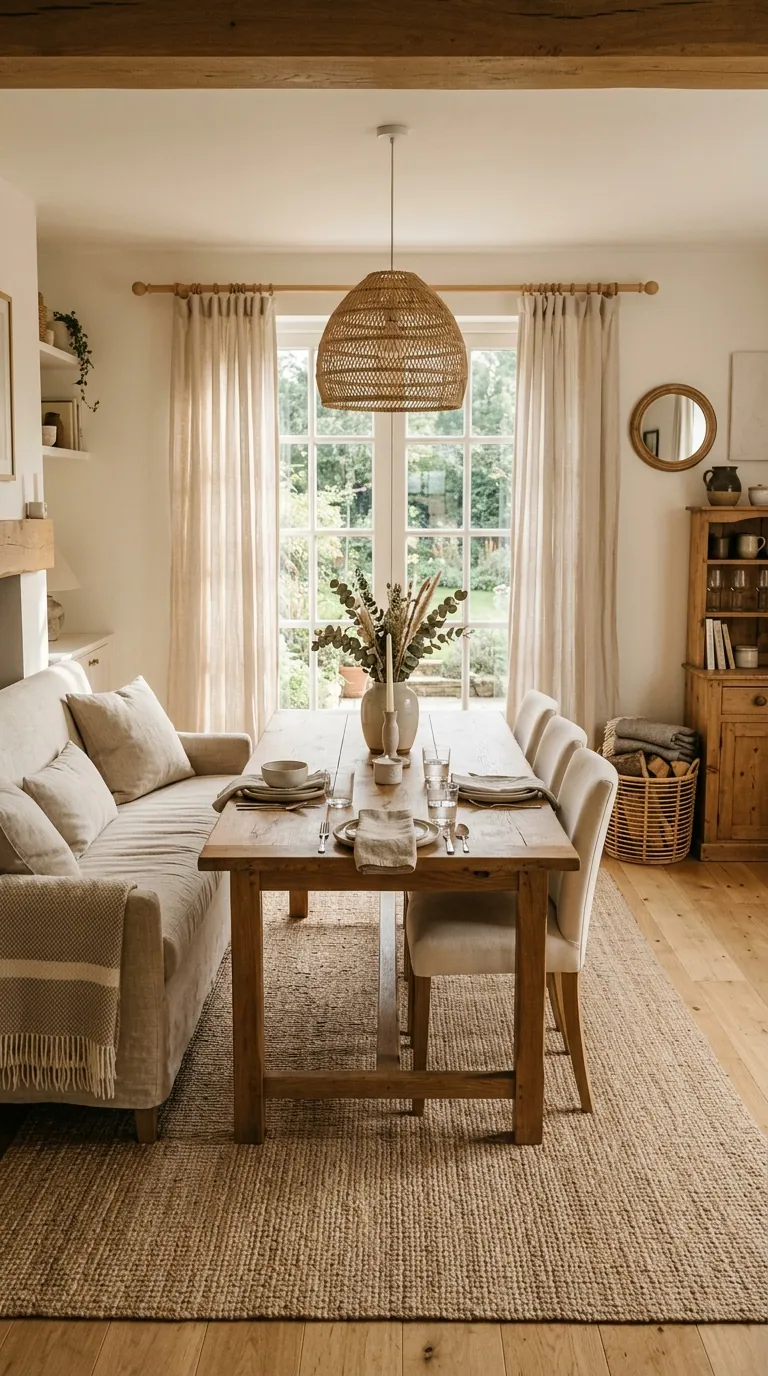
A dining bench is both practical and visually softer than a row of individual chairs.
It can accommodate extra guests when necessary and can make a smaller dining space feel less crowded.
An upholstered bench also introduces another opportunity to add texture through linen, boucle, or cotton.
6. Style the Table With a Simple Centerpiece
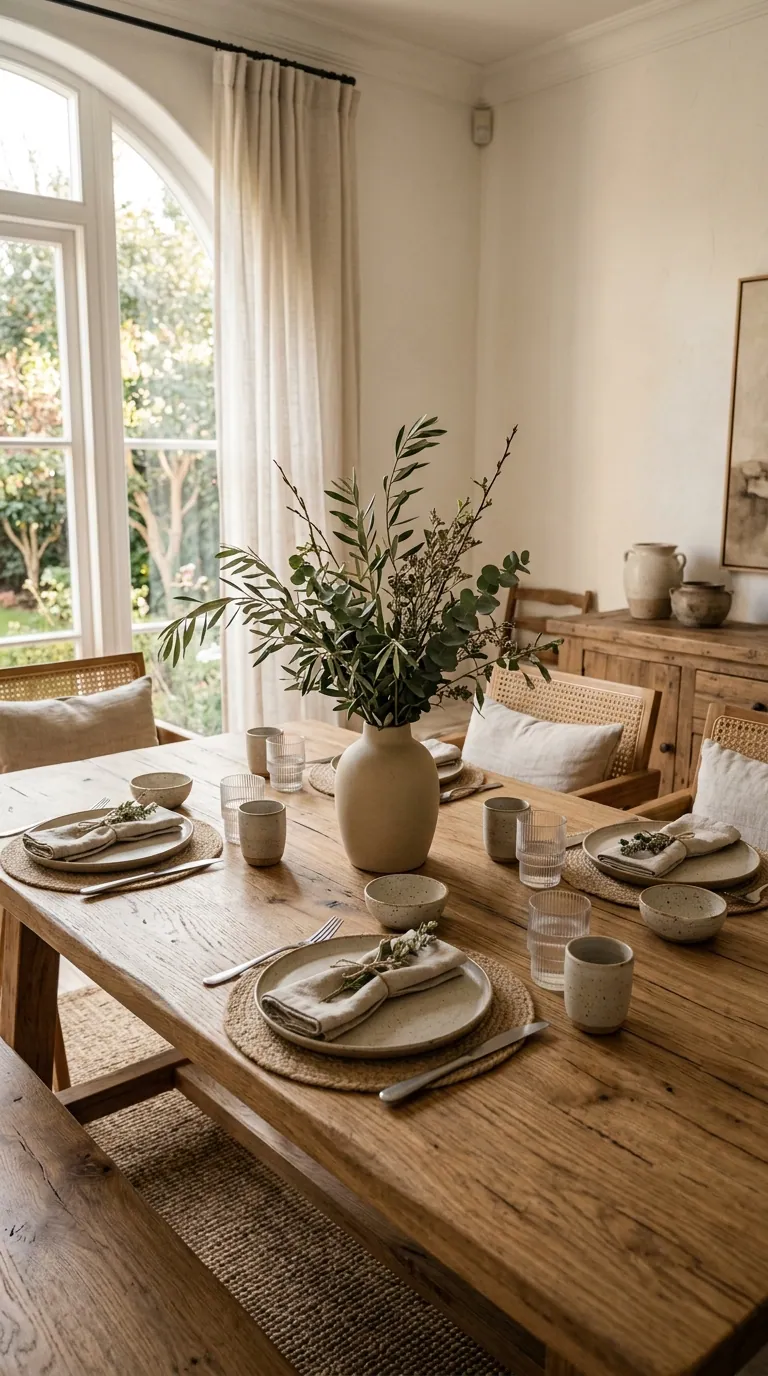
A dining table doesn’t need a complicated centerpiece.
A single ceramic vase, a low bowl, seasonal branches, or a few candles can create enough visual interest.
Keep the centerpiece low enough that people can comfortably see across the table.
7. Add a Slim Dining Room Sideboard
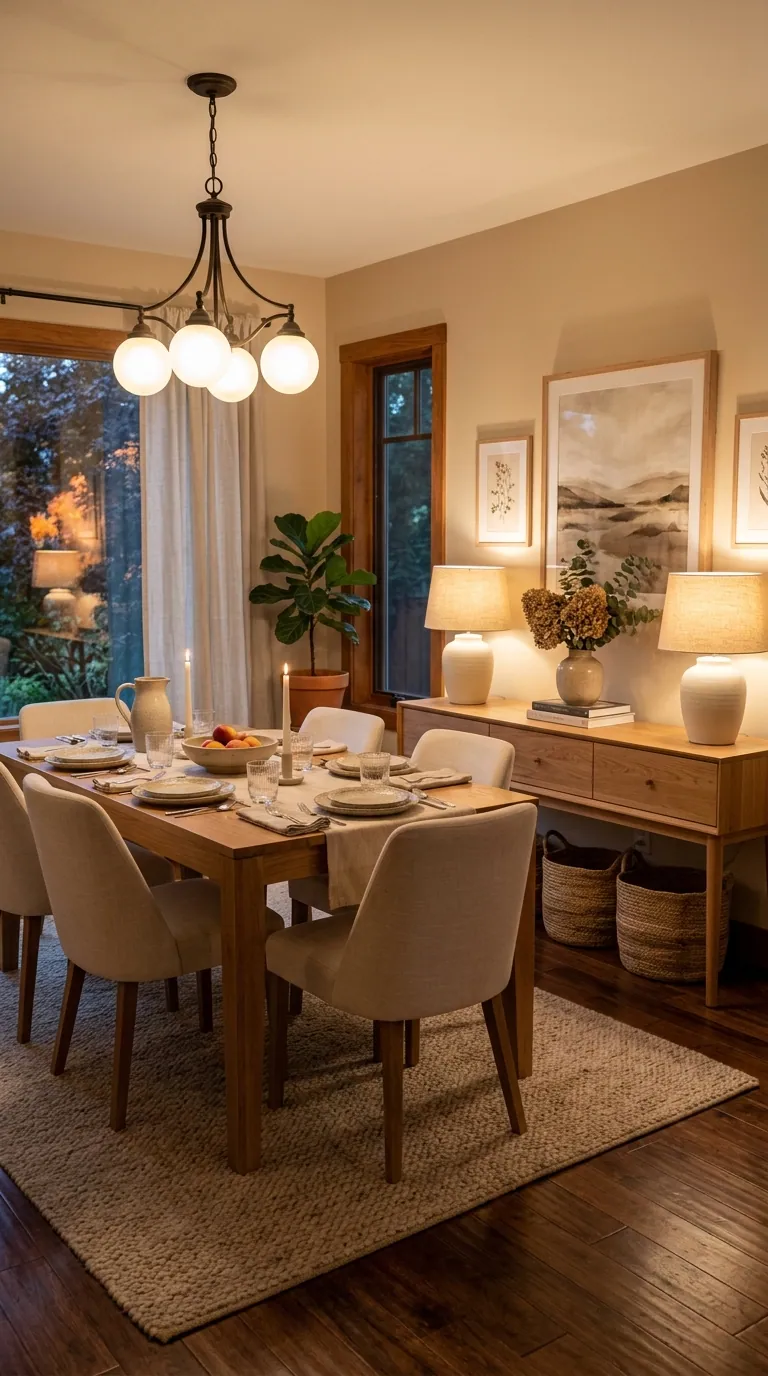
A sideboard can add both storage and visual balance to a dining room.
Use it to store serving dishes, table linens, glassware, or other dining essentials.
The top can remain lightly styled with artwork, ceramics, a lamp, or a small collection of objects.
8. Create a Dining Gallery Wall
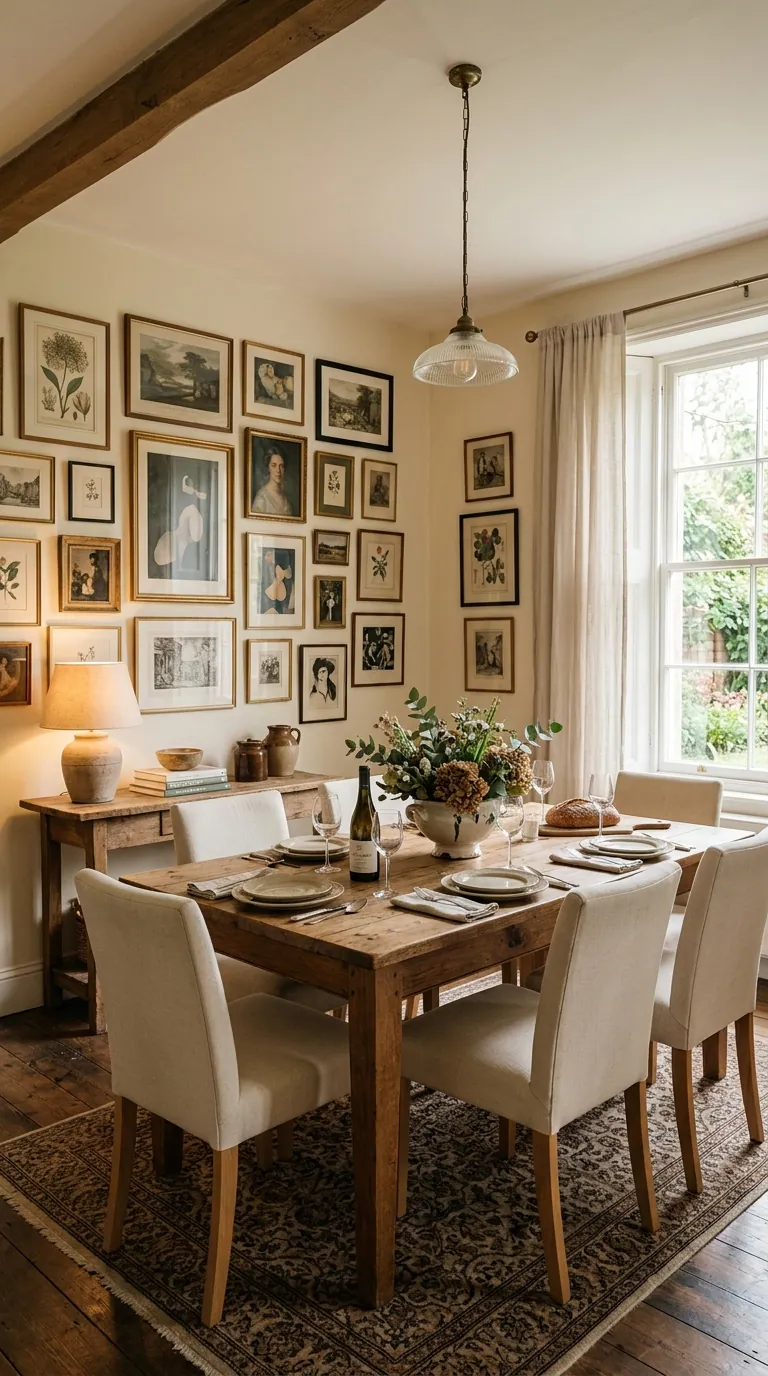
Artwork can make a dining room feel considerably more personal.
Instead of choosing perfectly coordinated prints, combine pieces that share a similar color palette or mood.
Vintage artwork, botanical prints, abstract pieces, and small framed sketches can all work beautifully together.
9. Use Warm Neutral Colors
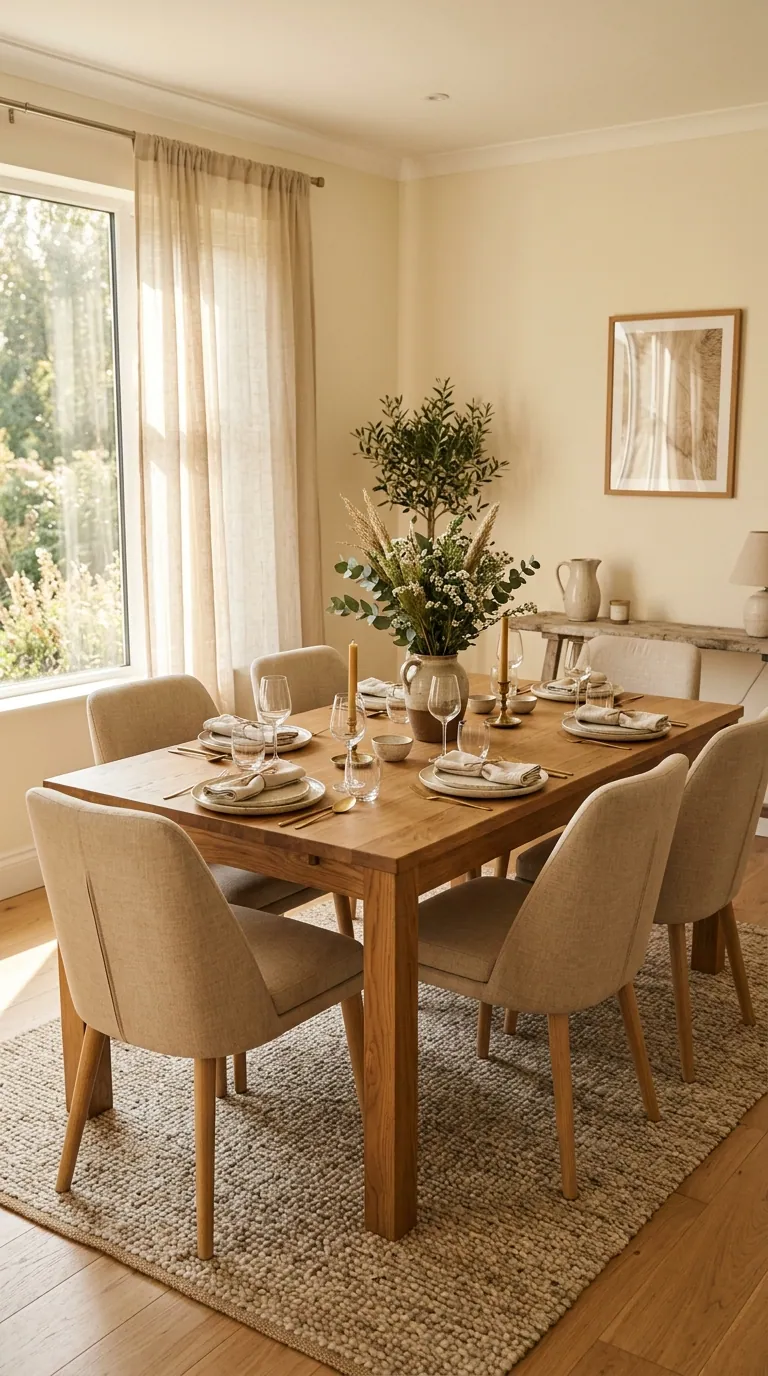
Warm neutrals create an easy foundation for a dining room.
Cream, beige, taupe, soft brown, and warm white can make the room feel welcoming without becoming visually heavy.
Add contrast through darker wood, artwork, metal accents, or natural greenery.
10. Bring in Rich Walnut Tones
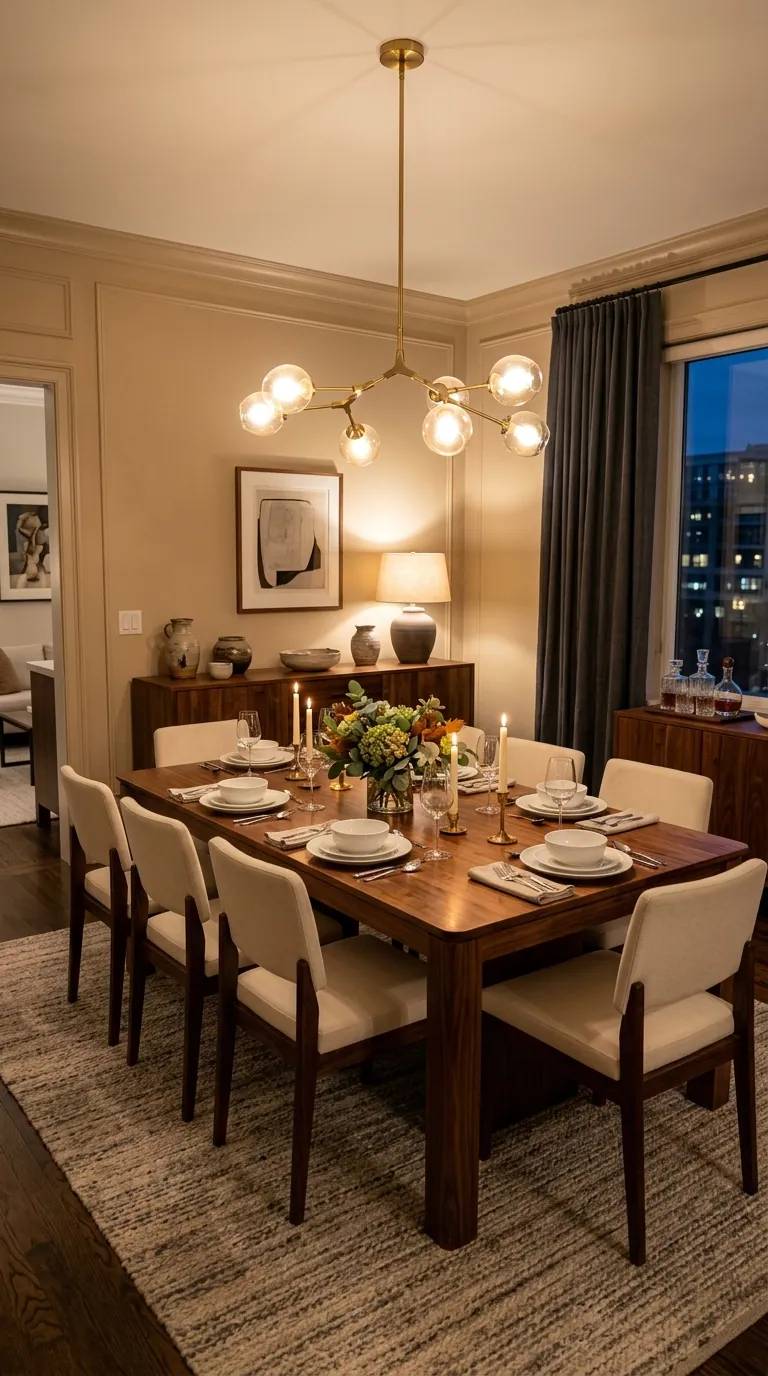
If a lighter dining room feels too pale, walnut can introduce depth.
Dark wood works particularly well with cream upholstery and warm neutral walls.
Balance the darker furniture with lighter textiles and plenty of ambient light.
11. Add Linen Dining Textiles
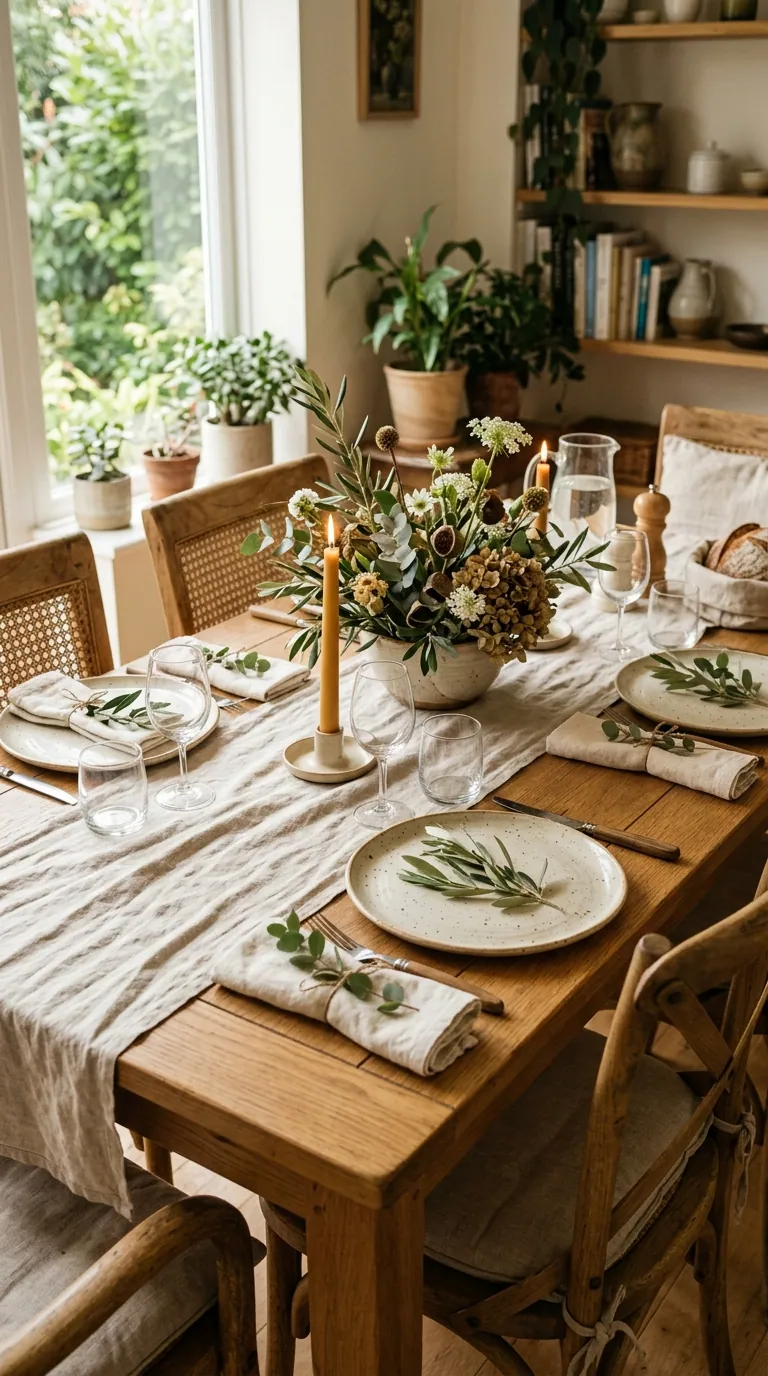
Textiles can make a dining room feel much less formal.
A linen runner, cloth napkins, or upholstered chairs can introduce softness without requiring major changes.
Choose naturally textured fabrics rather than overly shiny or formal materials for a relaxed everyday look.
12. Make a Small Dining Corner Feel Intentional
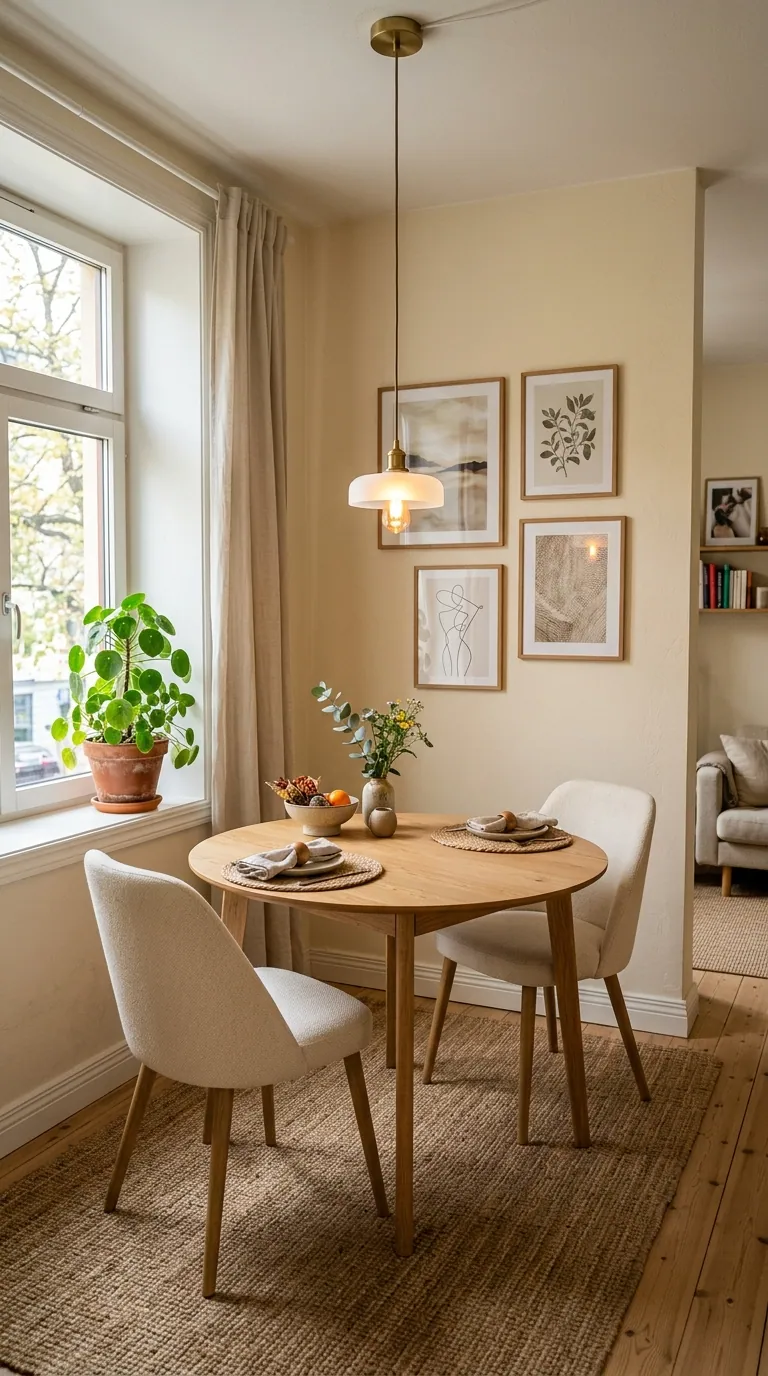
A small dining area doesn’t need to imitate a large formal dining room.
A round table can improve circulation while making the space feel more conversational.
Use the wall above the table for artwork or a mirror and keep surrounding furniture slim.
13. Choose a Round Dining Table
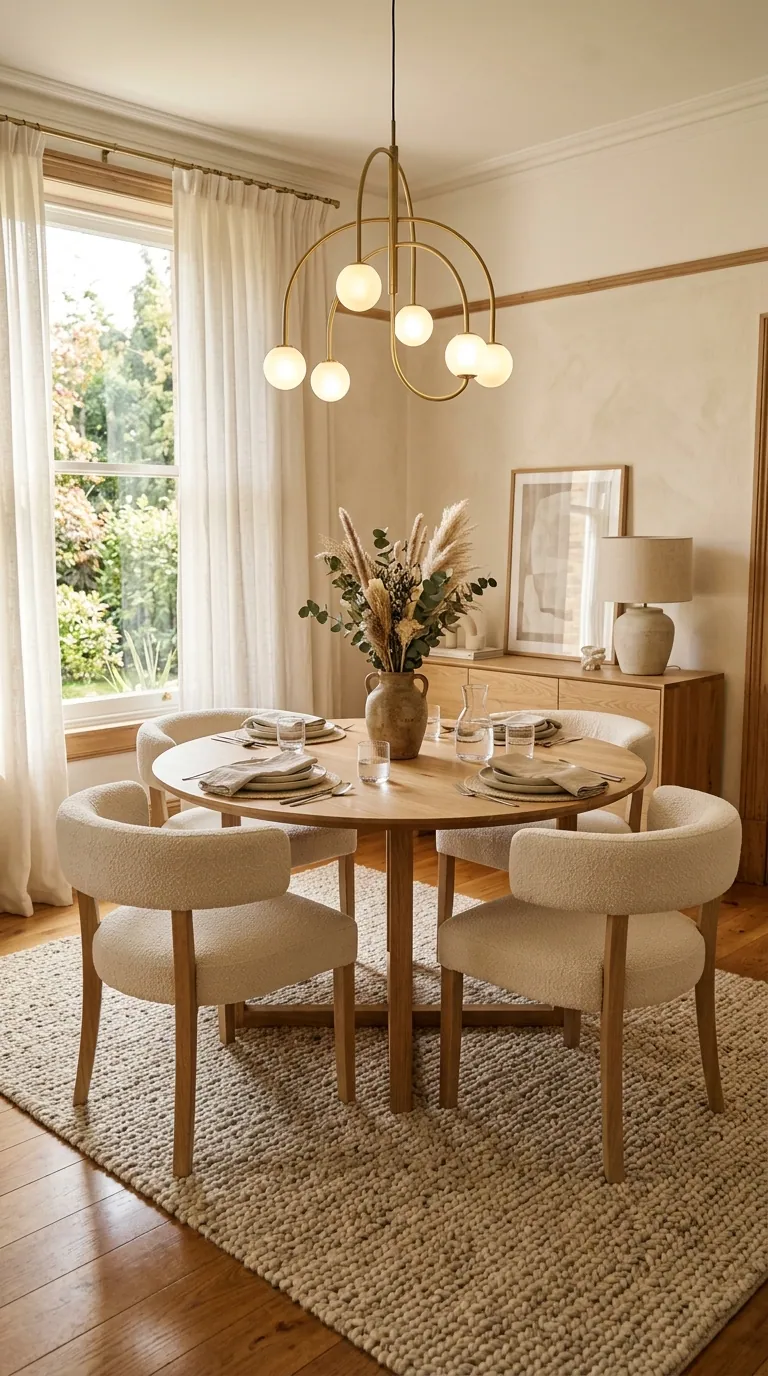
Round tables are especially useful in smaller rooms because they eliminate sharp corners and improve movement around the furniture.
They also naturally encourage conversation because everyone faces toward the center.
Pairing a round table with curved chairs can create an especially soft and cohesive look.
14. Add a Mirror to Reflect Light
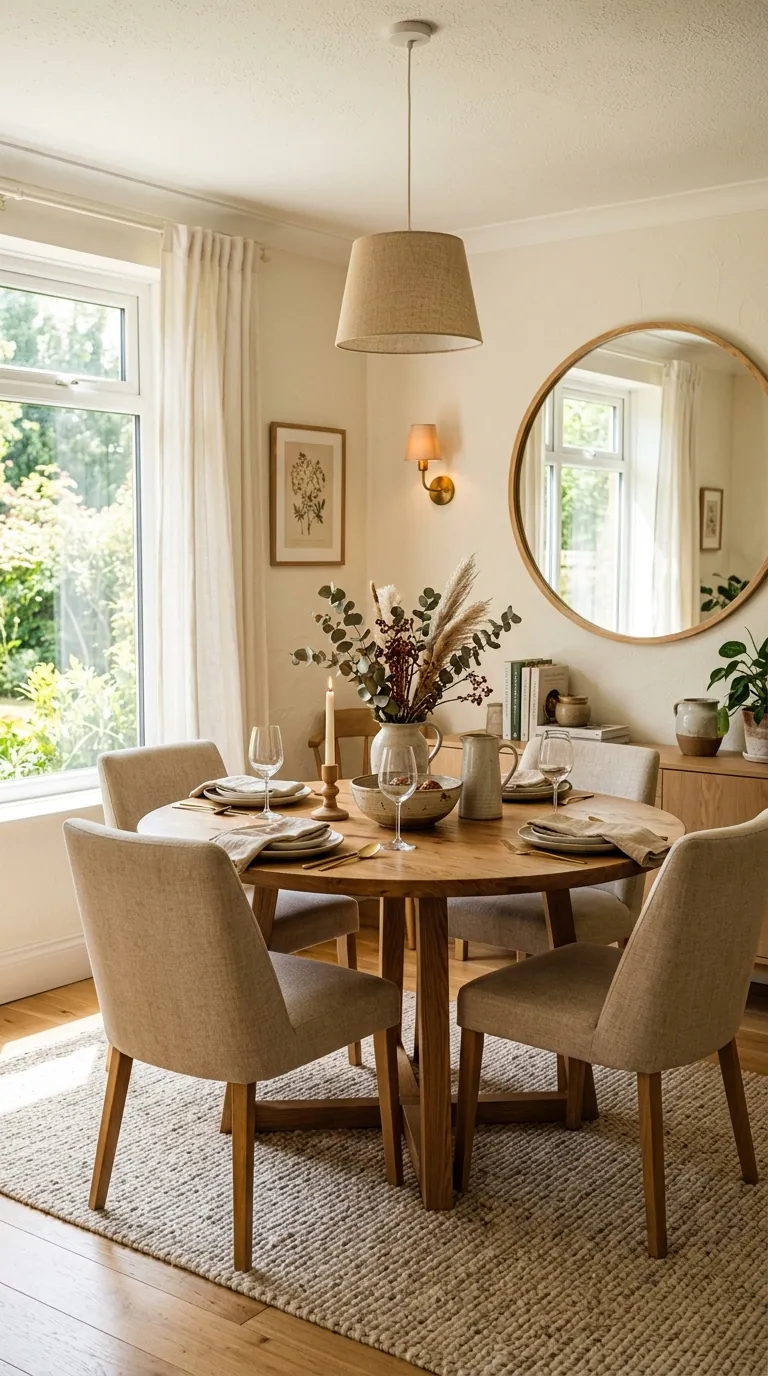
A mirror can make a dining room feel brighter and more spacious.
Place it where it can reflect natural light or an attractive part of the room.
A rounded or organically shaped frame can also soften a room dominated by rectangular furniture.
15. Create a Moody Dining Room
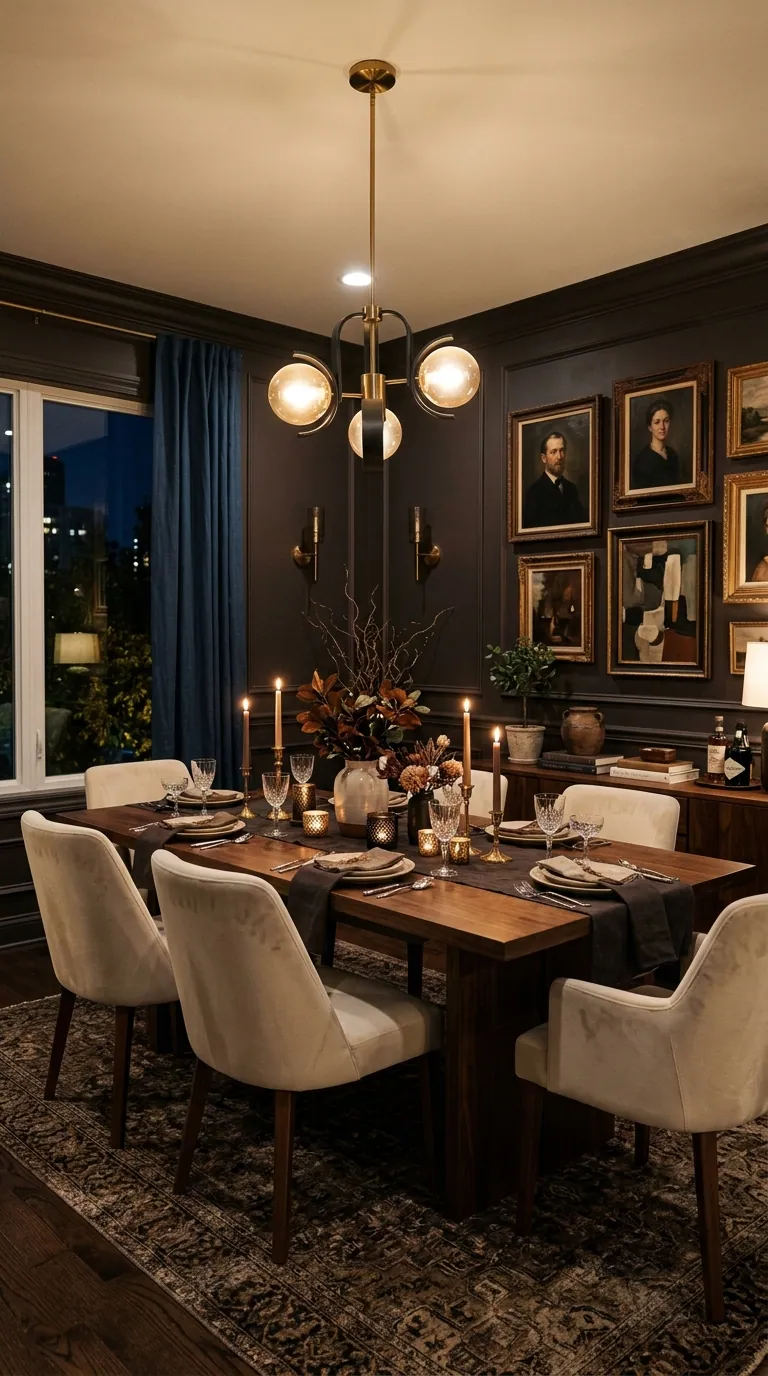
A darker dining room can feel intimate and dramatic, especially in the evening.
Deep brown, muted blue, olive, or charcoal can work beautifully when paired with warm lighting and lighter furniture.
The goal isn’t darkness everywhere—use contrast to keep the room comfortable.
16. Add Natural Greenery
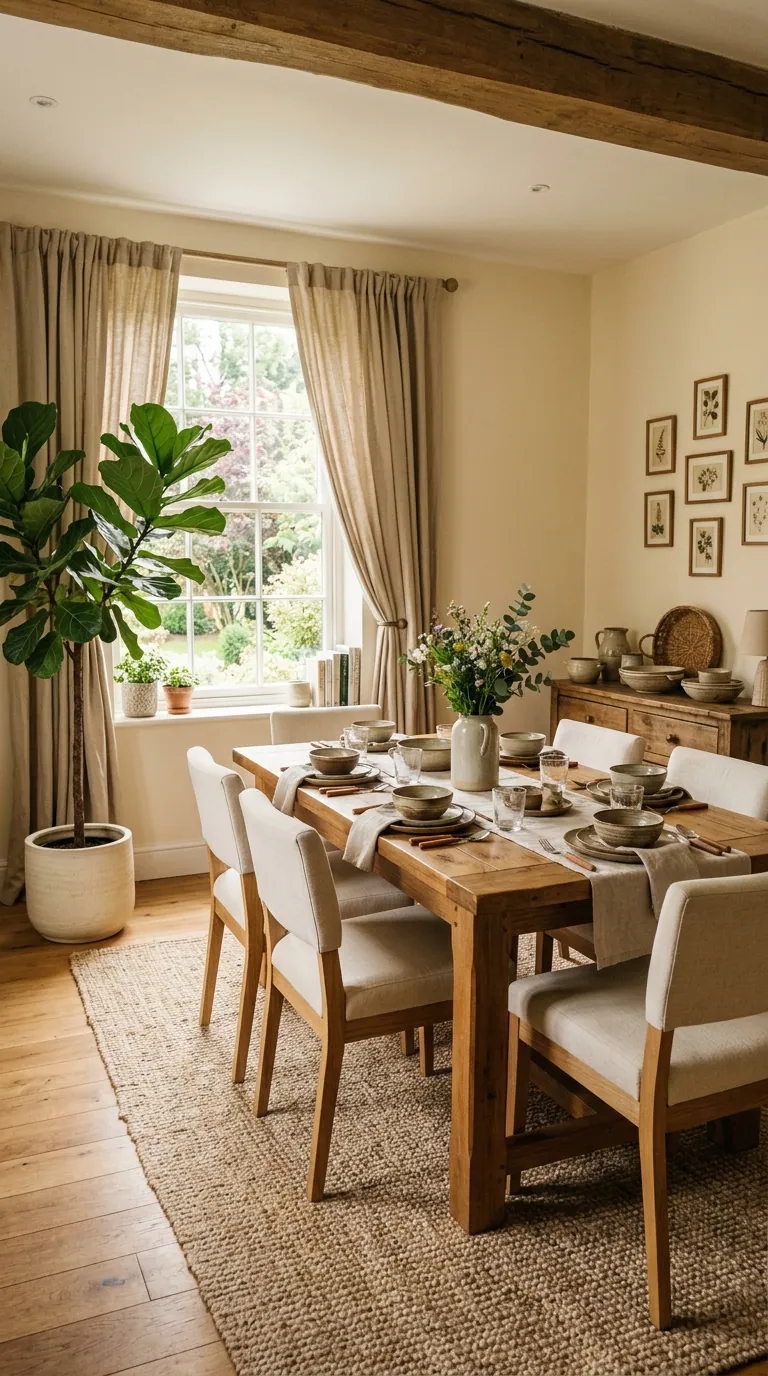
Plants bring softness and movement into dining spaces.
A larger floor plant can fill an empty corner, while smaller branches or greenery can work as a table centerpiece.
Choose greenery that suits the natural light available in your room.
17. Create a Cozy Breakfast Nook
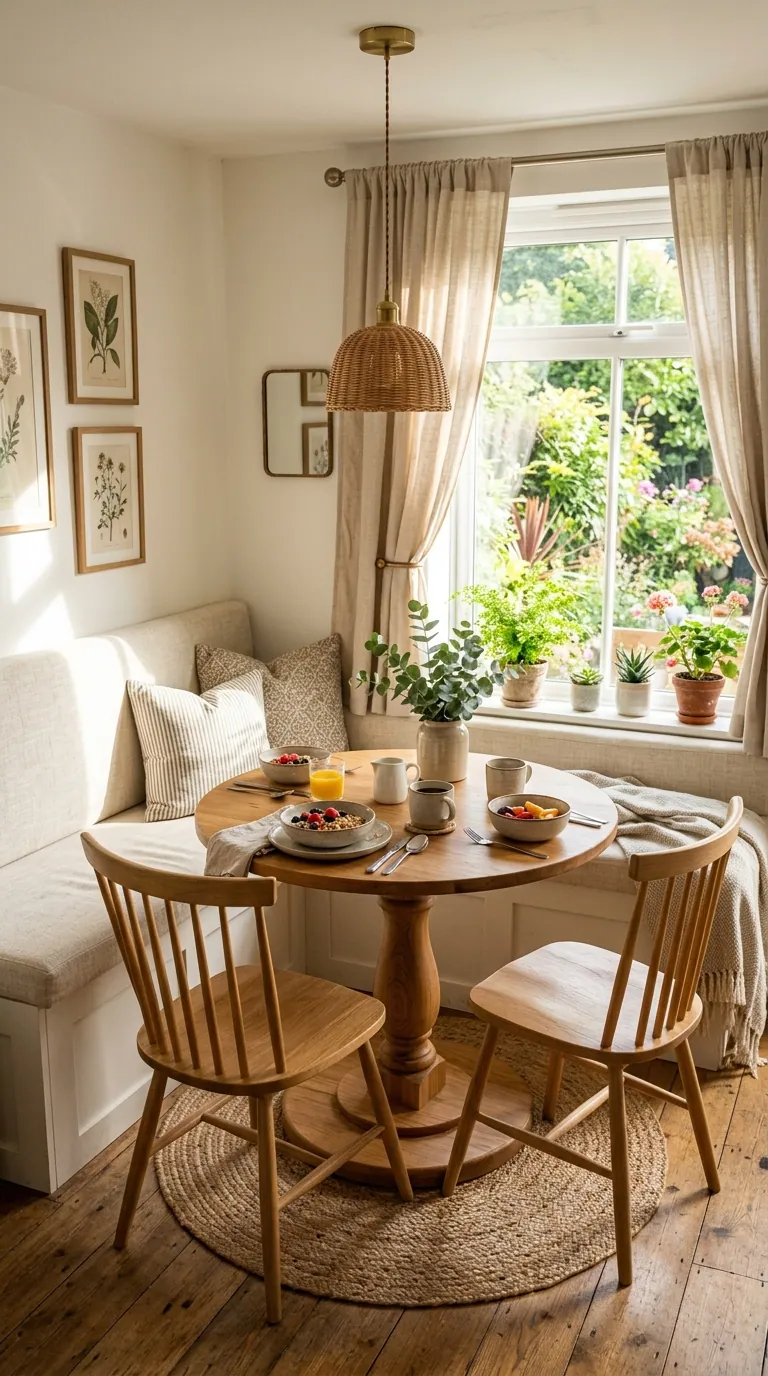
A breakfast nook can make even a small corner feel useful.
Built-in seating provides an efficient way to use wall space while creating a naturally cozy atmosphere.
Add cushions and washable textiles so the area remains comfortable for everyday use.
18. Use a Built-In Dining Bench
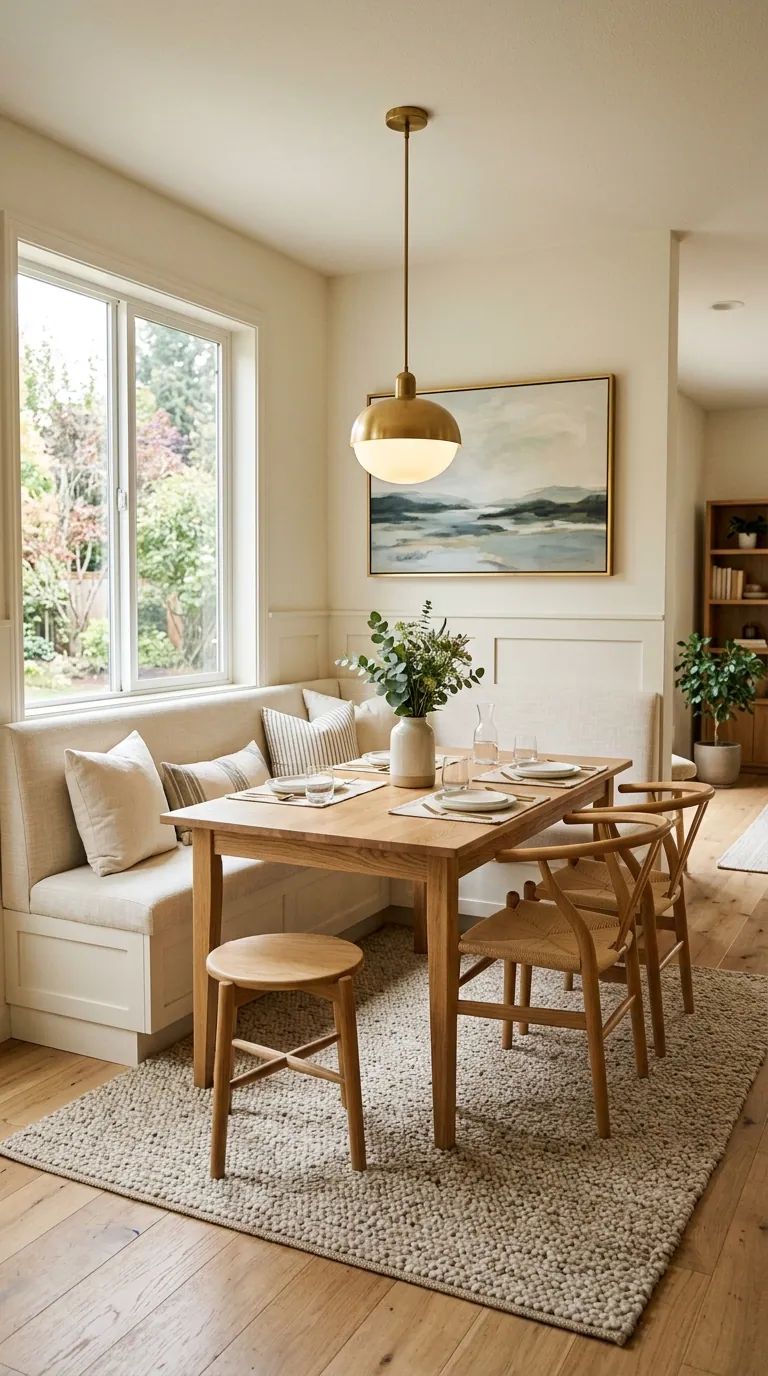
A built-in banquette can transform an awkward wall into one of the most useful areas in the room.
It can also provide hidden storage underneath the seating.
Keep the upholstery durable and easy to maintain if the space is used every day.
19. Display Beautiful Dinnerware
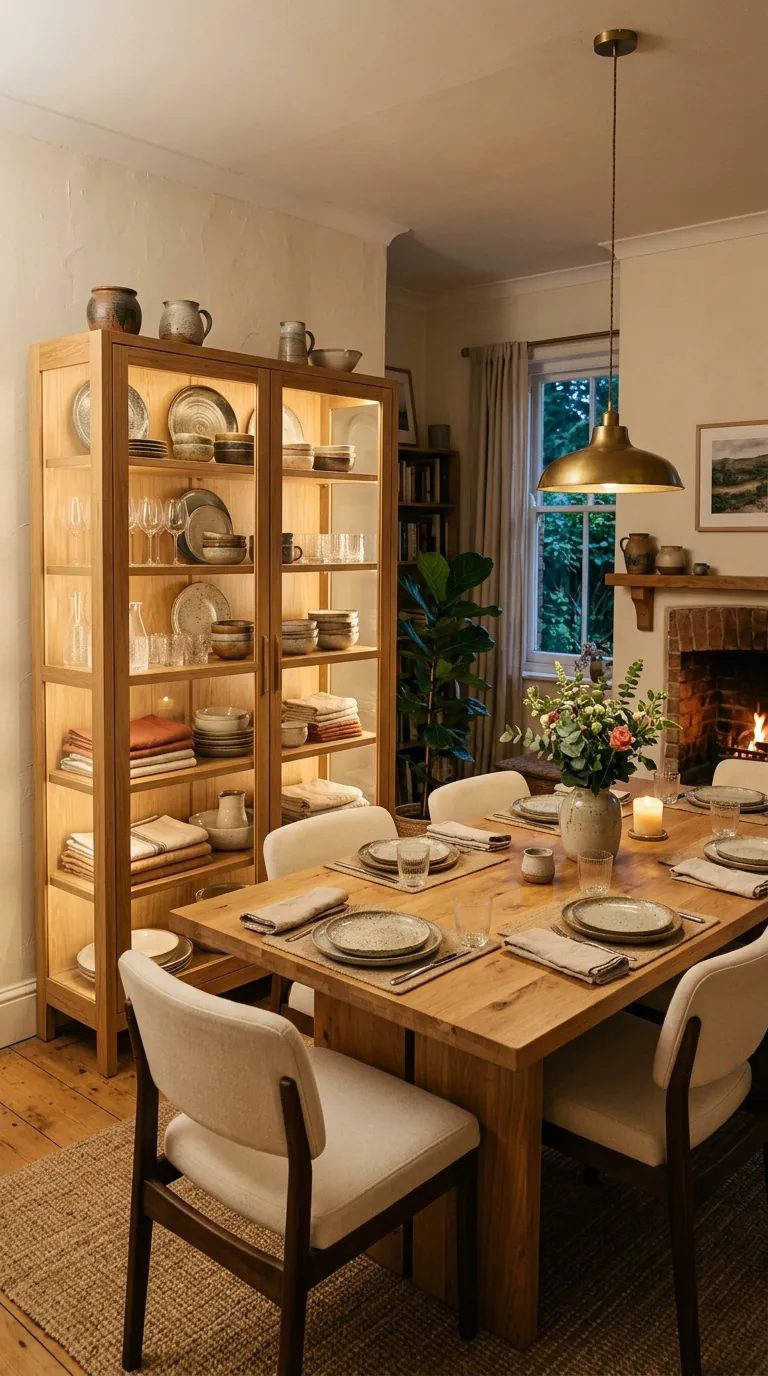
Dinnerware doesn’t always need to disappear behind closed doors.
If you have ceramics or glassware you genuinely love, displaying a small collection can give the room personality.
A glass-front cabinet is particularly useful because it combines visual display with protected storage.
20. Introduce Vintage Pieces
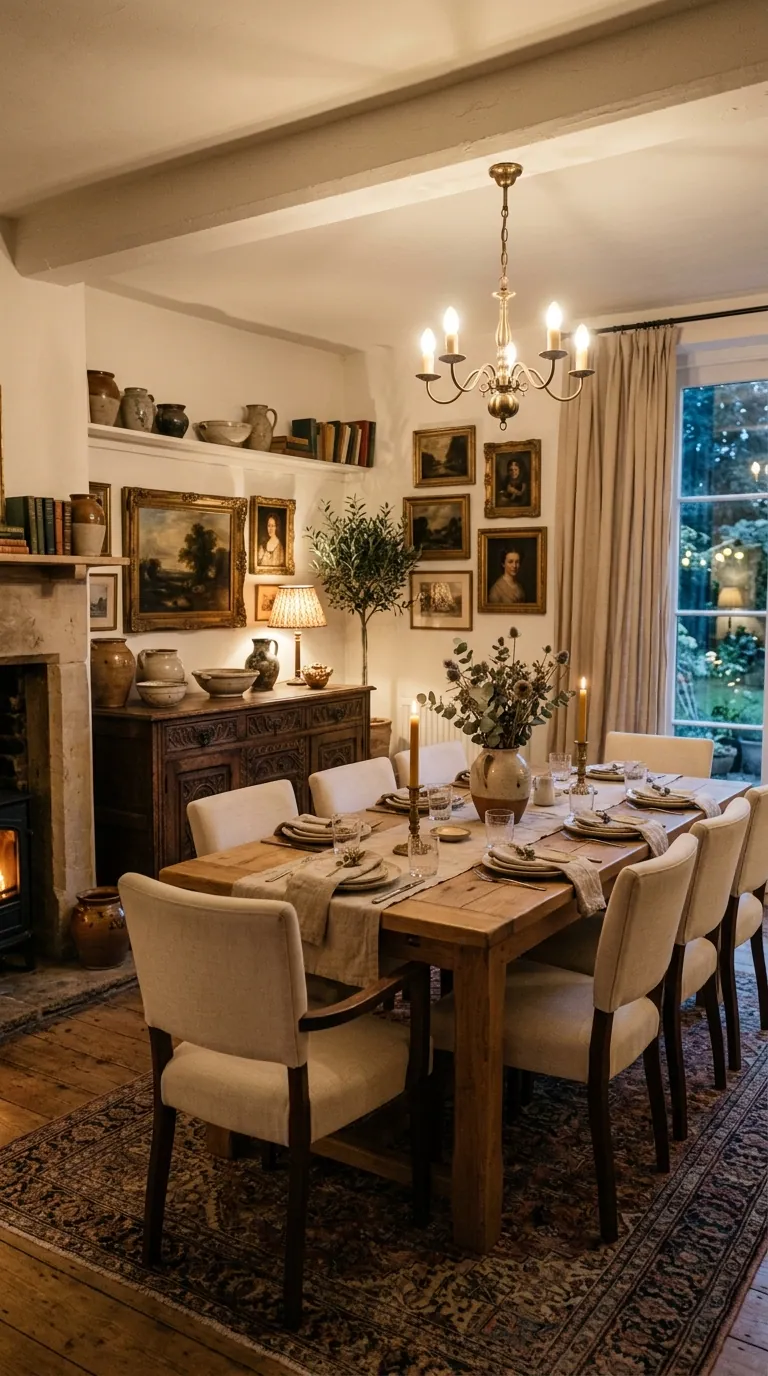
One vintage piece can prevent a dining room from feeling too coordinated.
An older sideboard, antique mirror, vintage artwork, or traditional chair can add history and character.
Mix it with simpler contemporary pieces so the room feels collected rather than themed.
21. Use a Soft Accent Color
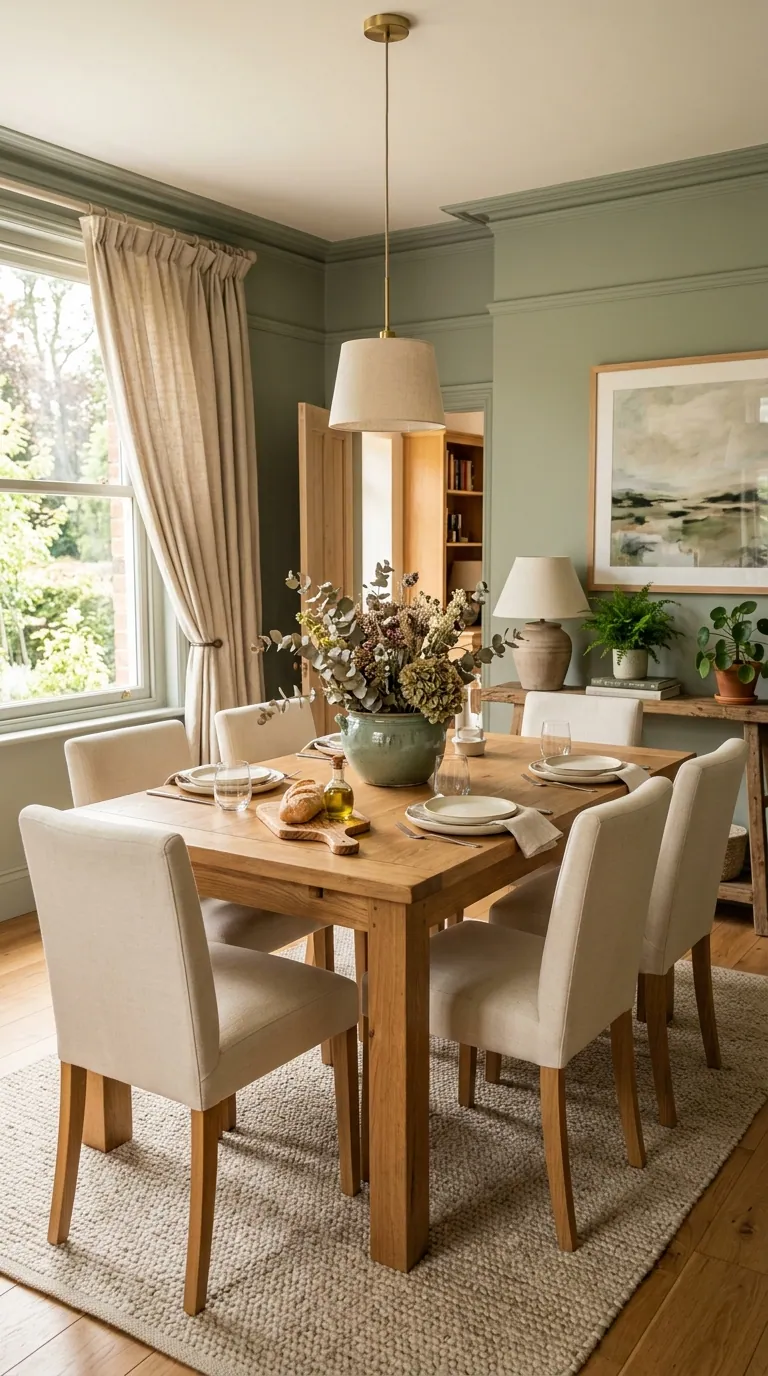
A dining room can be a great place to introduce color.
Muted sage, dusty blue, warm terracotta, soft olive, or muted brown can create depth without overwhelming the room.
If you’re hesitant about painting the walls, introduce color through chairs, artwork, curtains, or table textiles instead.
22. Add a Sculptural Chair
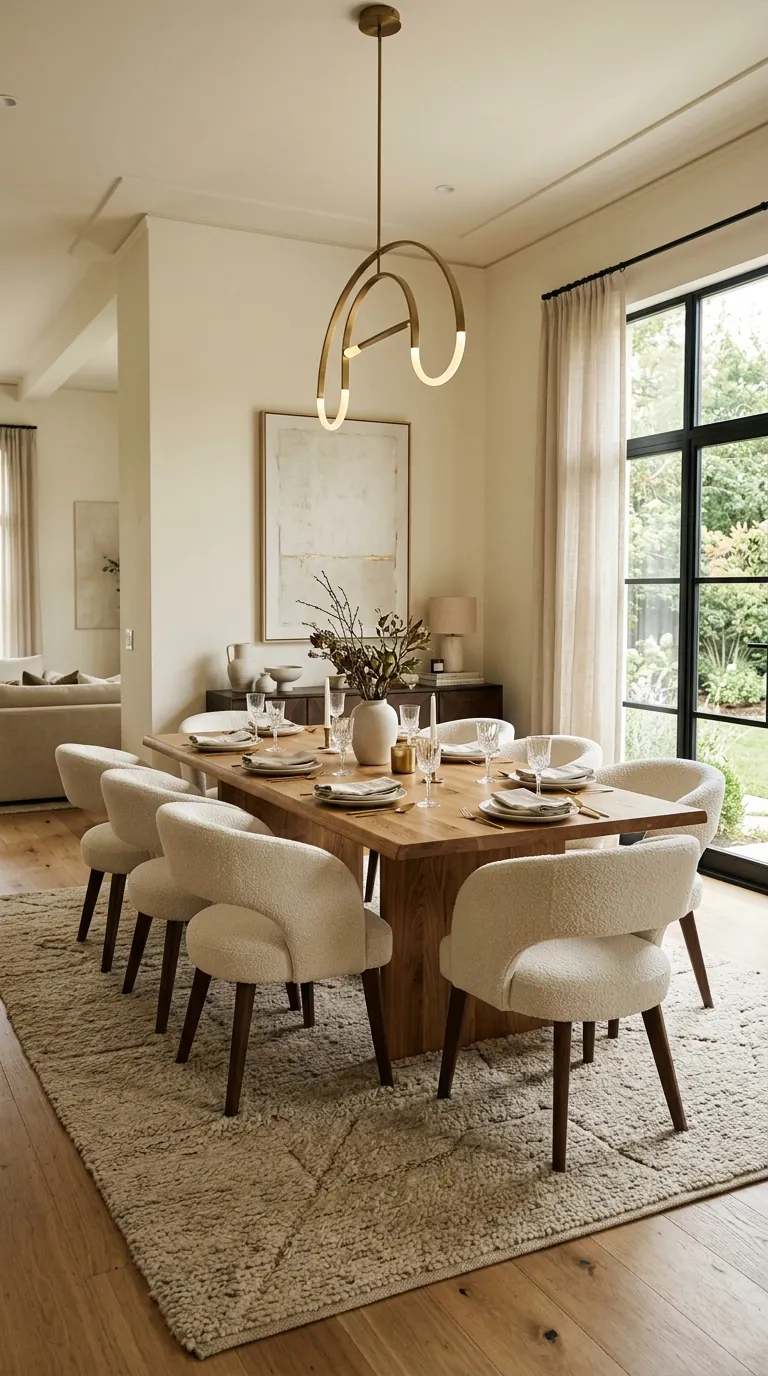
Dining chairs can be more than purely functional.
A beautifully shaped chair can become one of the strongest visual elements in the room.
Look for curved backs, textured upholstery, or interesting wooden silhouettes that remain comfortable for longer meals.
23. Connect the Dining Room to the Kitchen
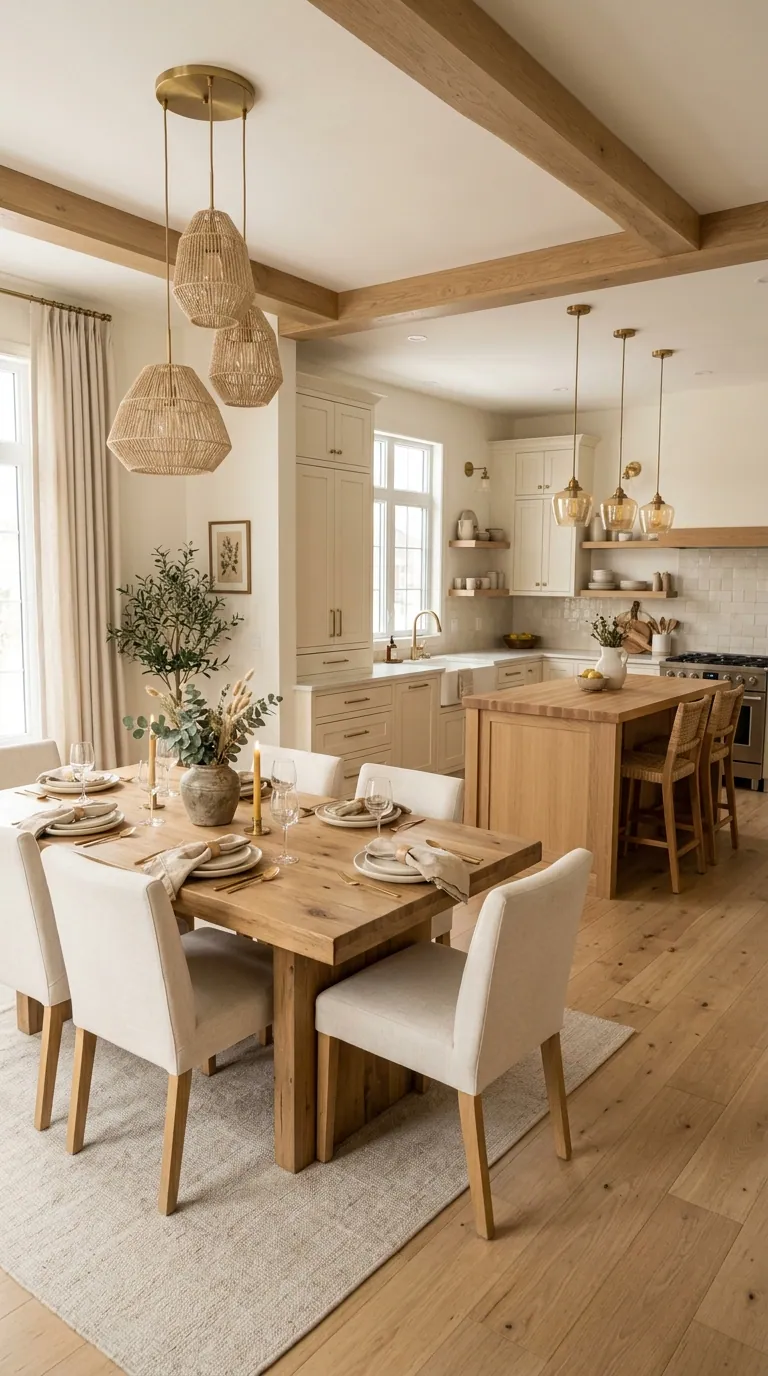
In open-plan homes, the dining area should feel connected to the kitchen without becoming visually identical.
Repeating materials is an easy way to create that connection.
For example, natural oak cabinetry can be echoed through the dining table or chairs.
24. Layer the Dining Room Lighting
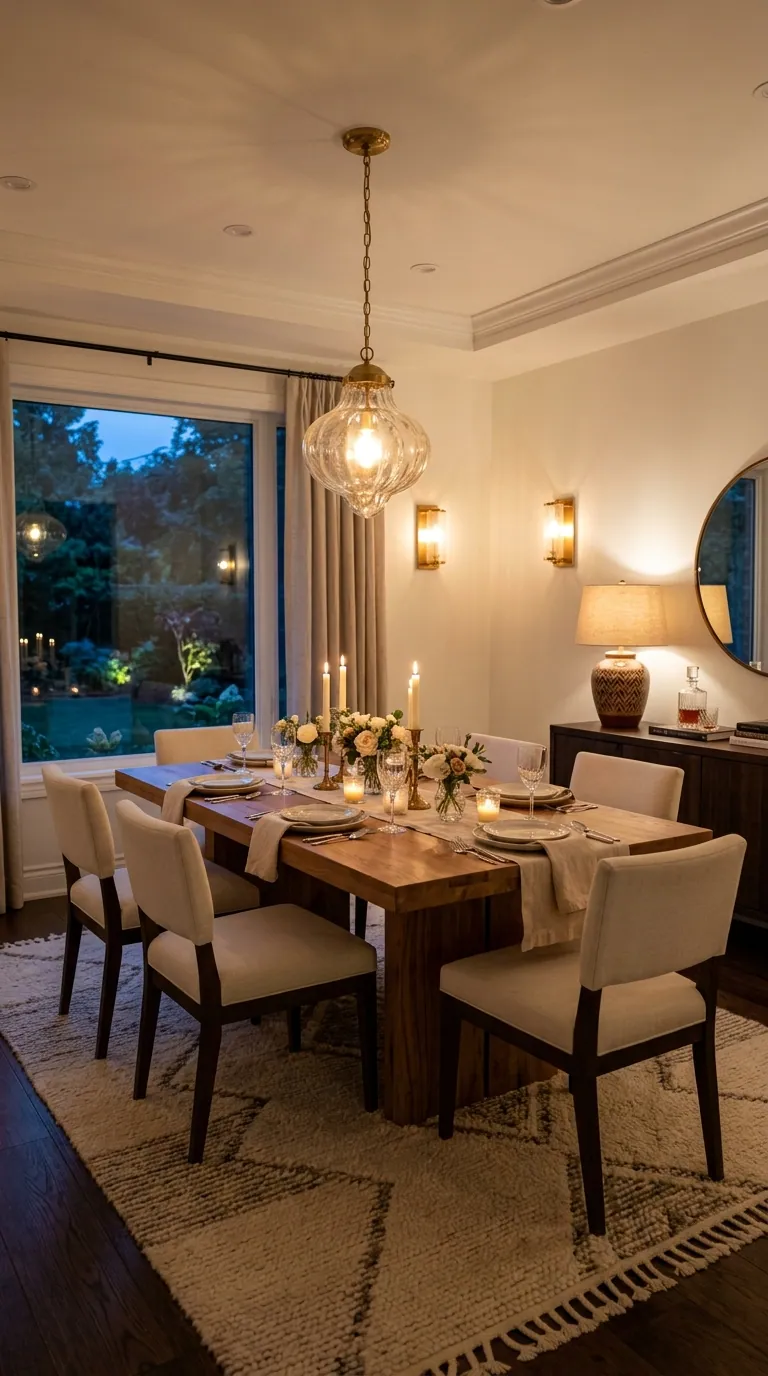
One overhead light rarely creates the best atmosphere.
Combine the main pendant with wall sconces, a small lamp on a sideboard, or candles for a softer evening environment.
Multiple light sources allow the room to change throughout the day.
25. Create a Minimal Japandi Dining Room
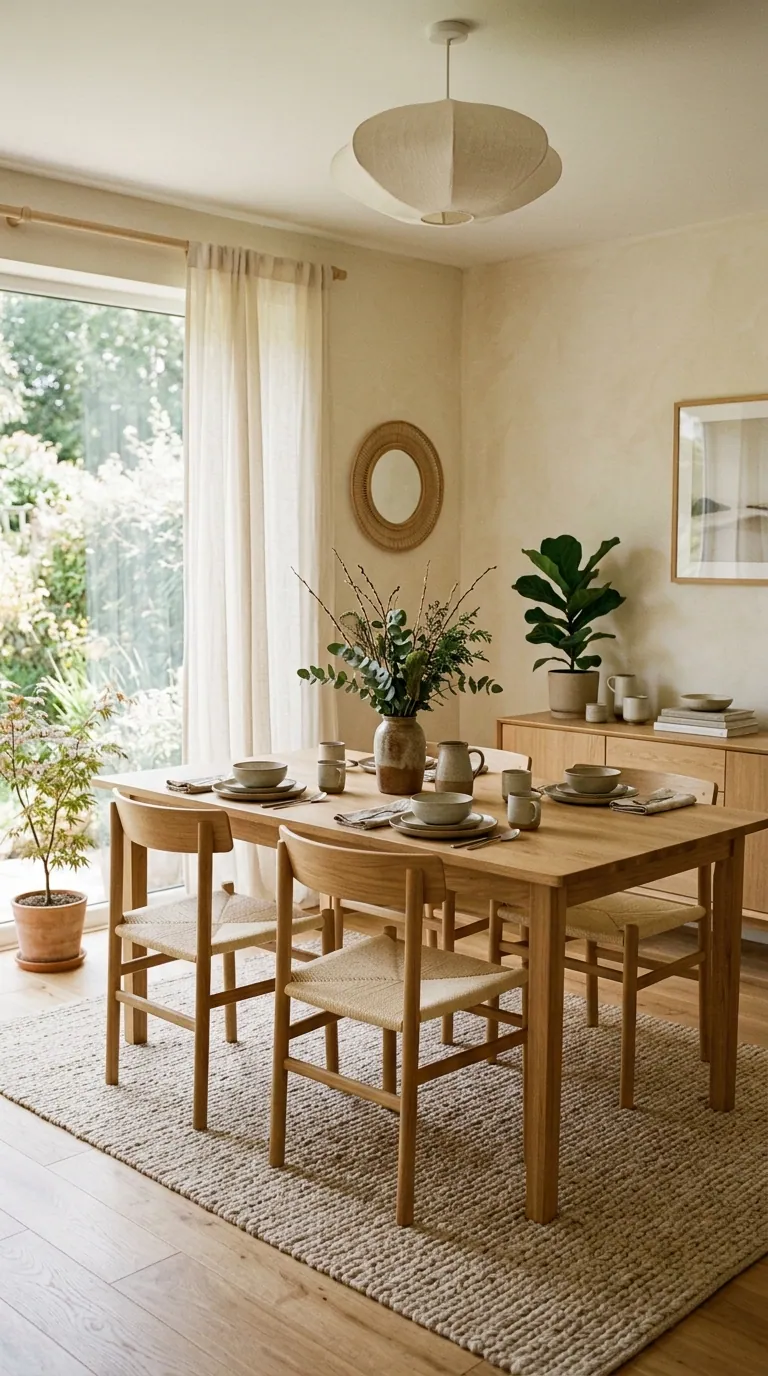
Japandi-inspired dining spaces work well because they combine simplicity with warmth.
Natural wood, restrained colors, organic materials, and uncluttered surfaces create a calm atmosphere.
Don’t interpret minimalism as having nothing in the room. Focus instead on choosing fewer pieces that serve a clear purpose.
26. Add a Dining Room Bar Cabinet
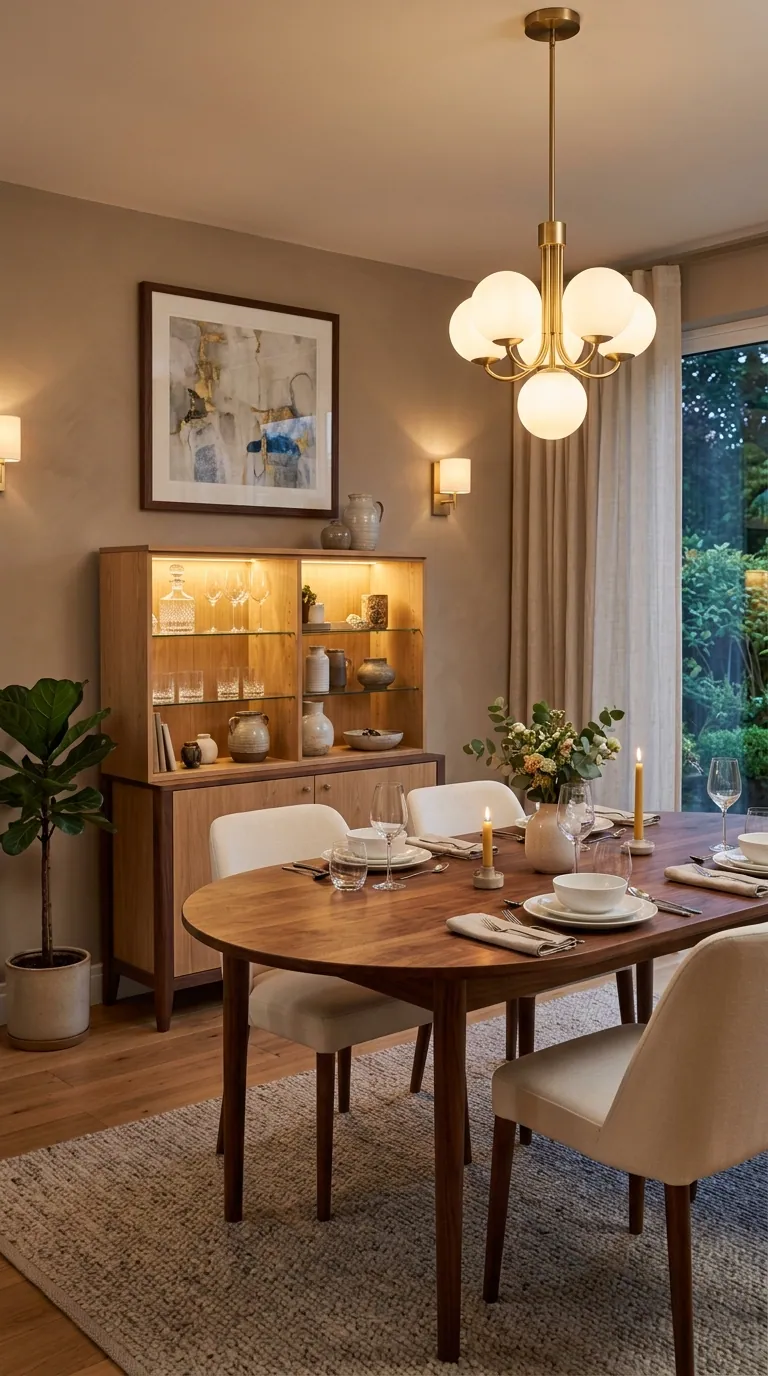
A small cabinet can give a dining room additional function without taking over the space.
Use it for glassware, serving pieces, linens, or other entertaining essentials.
Choose a piece that looks like furniture rather than obvious storage to keep the room refined.
27. Create a Dining Room That Feels Collected
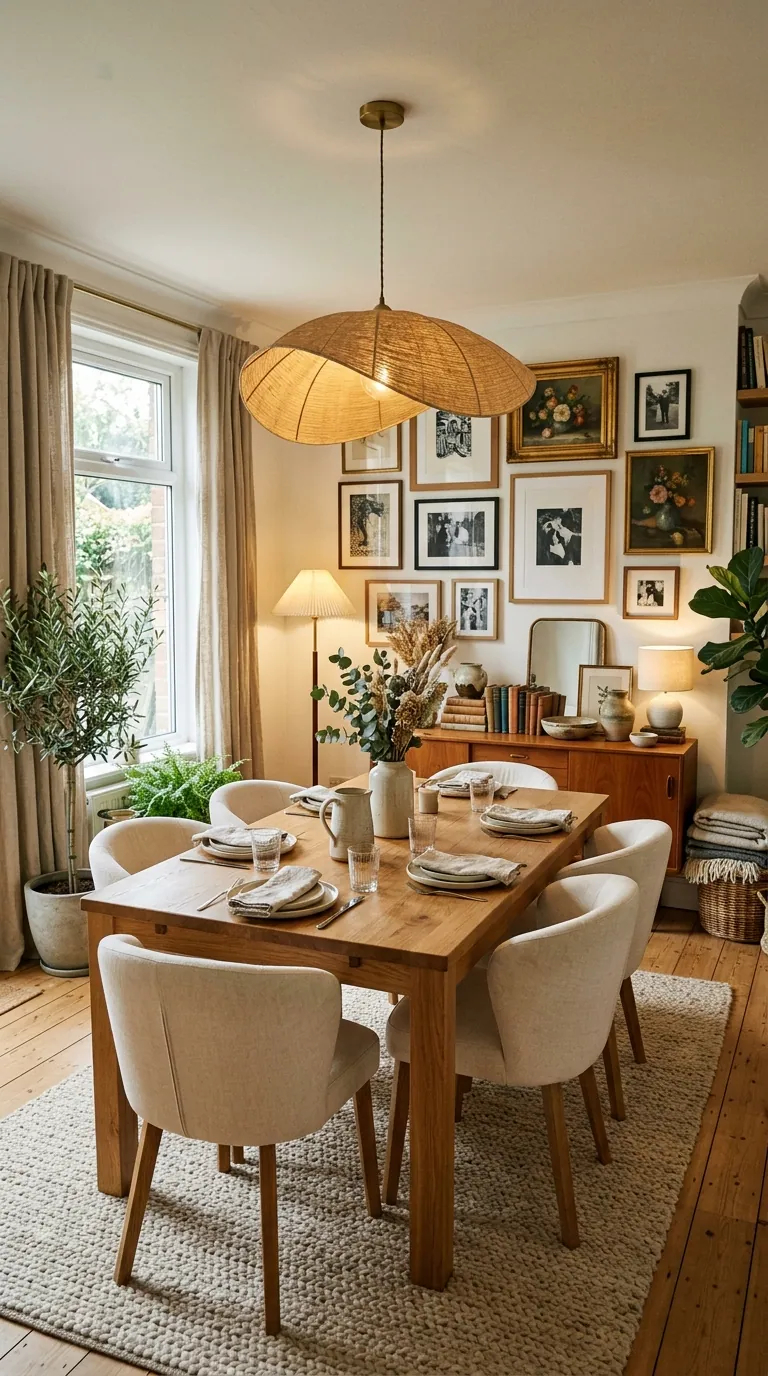
The most inviting dining rooms rarely look as though everything was purchased at the same time.
Mix natural materials, vintage finds, modern lighting, handmade ceramics, artwork, and comfortable textiles.
The result should feel like a room that has developed naturally over time rather than a perfectly matched furniture set.
How to Make a Dining Room Feel Cozy Without Making It Formal
A dining room becomes cozy through texture, lighting, proportion, and comfort more than expensive furniture.
Start with a comfortable table and chairs. Then introduce a rug, curtains, soft upholstery, warm lighting, and natural materials.
Don’t underestimate small details either. A ceramic vase, linen napkins, a few candles, artwork, or a bowl of seasonal fruit can make the table feel welcoming.
The goal is to create a room where people actually want to stay after dinner.
Dining Room Ideas by Style
Warm Modern
Use natural oak, cream upholstery, simple silhouettes, warm lighting, and restrained decoration.
Organic Modern
Combine wood, stone, linen, woven materials, greenery, and handmade ceramics.
Japandi
Keep the palette quiet and focus on natural materials, clean shapes, and intentional simplicity.
Collected Vintage
Mix antique or vintage pieces with contemporary furniture and modern lighting.
Moody
Use deeper wall colors, dark wood, warm metals, artwork, and layered evening lighting.
Minimalist
Choose fewer, better pieces and let natural materials provide most of the visual interest.
Easy Dining Room Updates on a Budget
You don’t need to replace your entire dining set to change the room.
A few high-impact changes include:
- Replacing the dining light fixture with a warm sculptural pendant.
- Adding a large rug to anchor the dining zone and soften hard floors.
- Changing table linens to relaxed linen runners and cloth napkins.
- Introducing a large plant or sculptural olive branch in a heavy pot.
- Adding artwork or framing vintage sketches.
- Styling the table with ceramics and low organic bowls.
- Painting one wall or applying a warm lime-wash or neutral tone.
- Adding a mirror to reflect daylight into darker corners.
- Changing chair cushions or recovering dining seats.
- Bringing in a vintage sideboard or cabinet for collected character.
Even one substantial change can shift the entire atmosphere.
How to Choose the Right Dining Room Rug
The rug should be large enough to accommodate both the table and chairs.
A common mistake is choosing a rug that only sits underneath the table while the chair legs fall outside it.
When chairs are pulled back, they should ideally remain on the rug. This makes the arrangement feel intentional and also makes moving the chairs more comfortable.
For everyday dining rooms, choose a durable material that can handle regular use and occasional spills. Flatweave wool, low-pile wool, or performance fiber rugs in warm oatmeal or beige are timeless and practical.
Dining Room Mistakes to Avoid
Choosing a table that’s too large
A beautiful table becomes frustrating if there isn’t enough space to comfortably move around it. Allow at least 36 to 42 inches between the table edge and the wall or surrounding furniture.
Using only overhead lighting
One harsh ceiling fixture can make the entire room feel flat. Always combine overhead pendants with soft sconces, lamps, or dimmable bulbs.
Choosing a rug that’s too small
The rug should visually connect the whole dining arrangement rather than floating like an island under the table.
Overdecorating the table
Leave enough usable space for actual meals. Centerpieces should be low and easy to move when serving food.
Matching everything perfectly
A little contrast often gives a dining room much more character than buying an identical showroom dining suite.
Ignoring comfort
Beautiful chairs aren’t useful if nobody wants to sit in them for more than ten minutes. Test seat depth and cushion support.
Frequently Asked Questions
How can I make my dining room look more expensive?
Focus on proportion, lighting, natural materials, and fewer high-quality-looking decorative elements. A good pendant, large rug, artwork, and natural wood furniture can make a room feel considerably more refined.
What color is best for a dining room?
Warm neutrals are versatile, but muted greens, earthy browns, soft blues, and deeper moody colors can also work beautifully depending on the atmosphere you want.
What should I put on my dining table?
Keep it simple. A ceramic vase, low bowl, branches, candles, or a small collection of objects can create a finished look without taking over the table.
Should a dining rug be under the table?
Yes, if possible. A properly sized rug should extend beyond the table enough that chairs remain on it when pulled out.
How do I decorate a small dining room?
Choose appropriately scaled furniture, consider a round table, use wall space for artwork or mirrors, and avoid filling the room with unnecessary furniture.
Final Thoughts
A beautiful dining room isn’t necessarily the most formal one.
The spaces that feel most inviting usually combine practical furniture with warm materials, comfortable seating, thoughtful lighting, and personal details.
Start with the pieces that matter most—the table, chairs, and lighting. Then layer in texture, artwork, greenery, storage, and small decorative details.
Whether your dining area is large or tucked into the corner of a kitchen, the goal is the same:
Create a space that makes people want to sit down, stay awhile, and enjoy being together.

