
A living room has to do a lot. It can be where you relax after a long day, watch a movie, read, entertain friends, or simply spend time with family. That is why the best living rooms are not just attractive—they are comfortable and easy to live in.
You do not need a huge room or expensive furniture to create that feeling. Good proportions, comfortable seating, useful lighting, and a few well-chosen decorative pieces can make an ordinary living room feel considerably more intentional.
The trick is to build the room in layers. Start with the main furniture and layout, then add a rug, lighting, artwork, curtains, and smaller objects. Each layer should have a purpose rather than simply filling an empty surface.
These 27 living room ideas focus on creating spaces that feel warm, balanced, personal, and practical enough for everyday life.
1. Comfortable Neutral Sofa
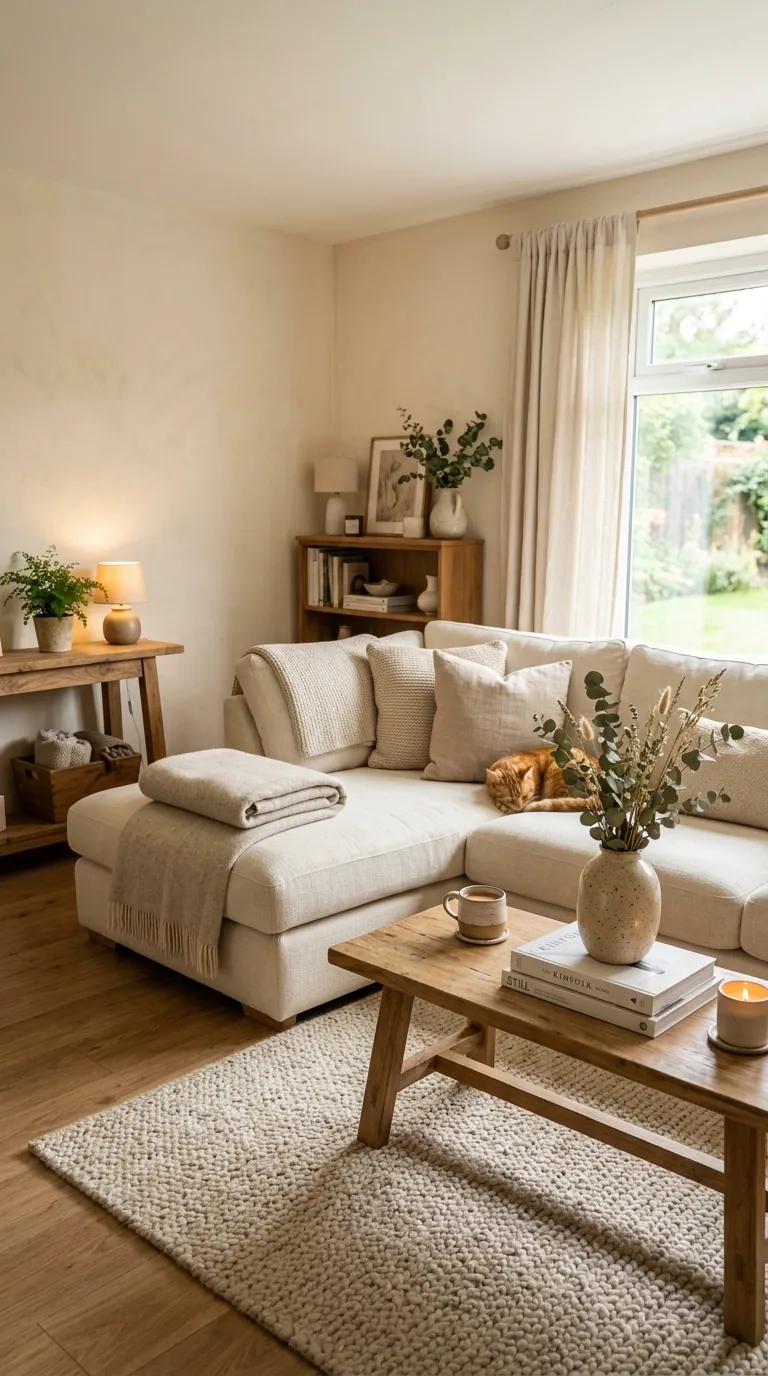
A comfortable sofa should be the starting point of the living room.
Choose a shape that actually works for how you use the room. Deep seating can feel wonderful for relaxing, while a slightly slimmer sofa may work better in a smaller space.
Keep the upholstery neutral if you want flexibility with cushions, throws, artwork, and seasonal accents.
2. Conversation-Friendly Layout
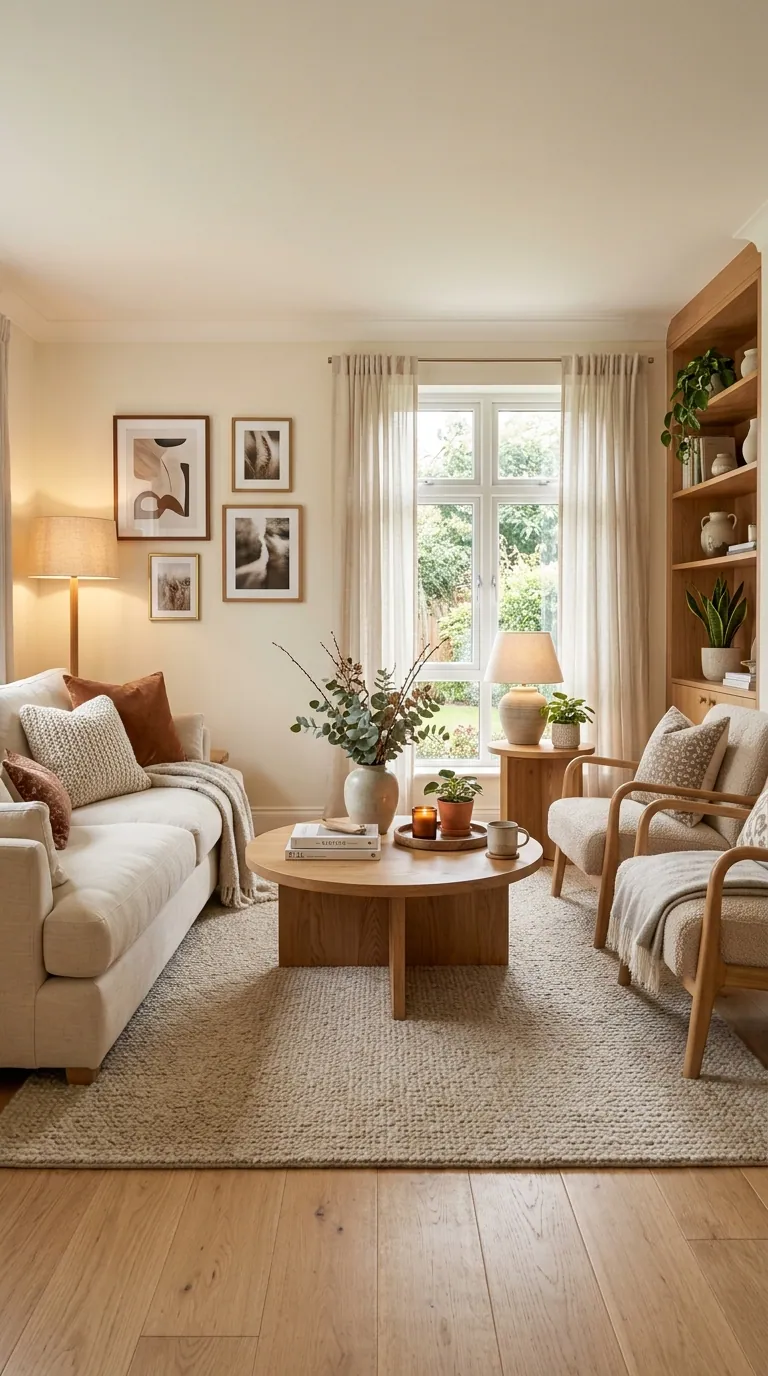
A living room should not always be arranged around the television.
If you regularly talk with family or guests, position seating so people can comfortably see one another. Even a slight adjustment can make the room feel much more social.
3. Round Coffee Table
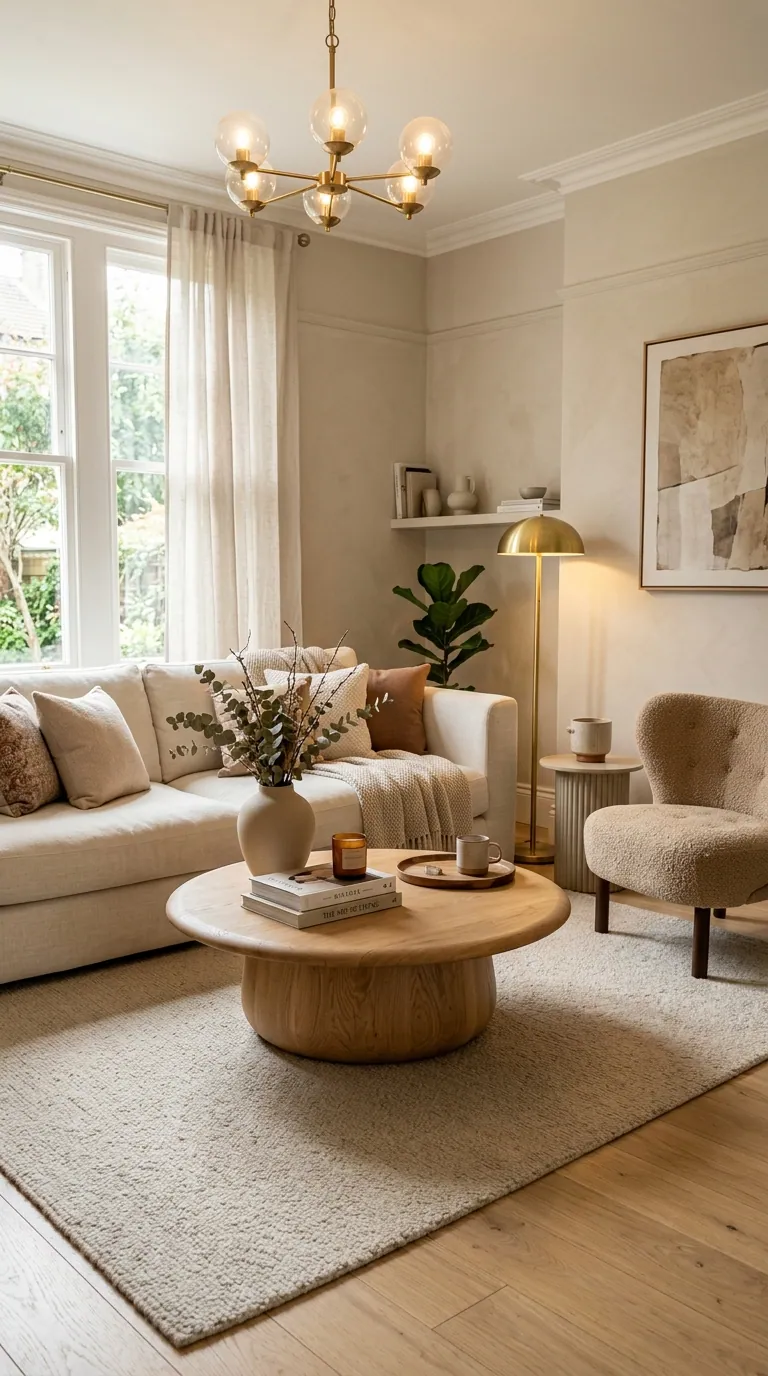
A round coffee table can soften a room filled with rectangular furniture.
It is particularly useful in smaller living rooms because there are no sharp corners interrupting the visual flow around the seating area.
4. Large Grounding Rug
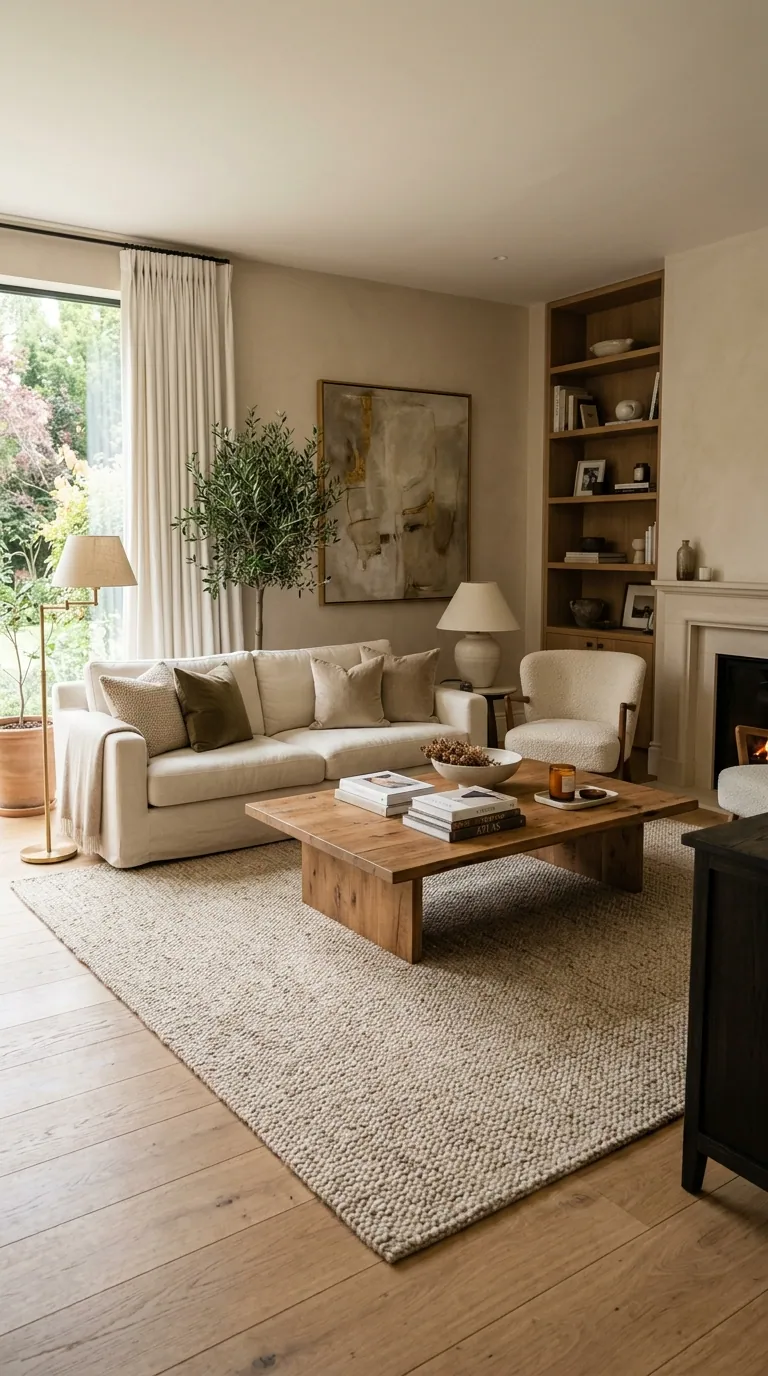
A properly sized rug helps connect separate pieces of furniture.
Whenever possible, allow at least the front legs of the major seating pieces to sit on the rug. This creates a more cohesive arrangement than placing a tiny rug underneath only the coffee table.
5. Warm Layered Lighting
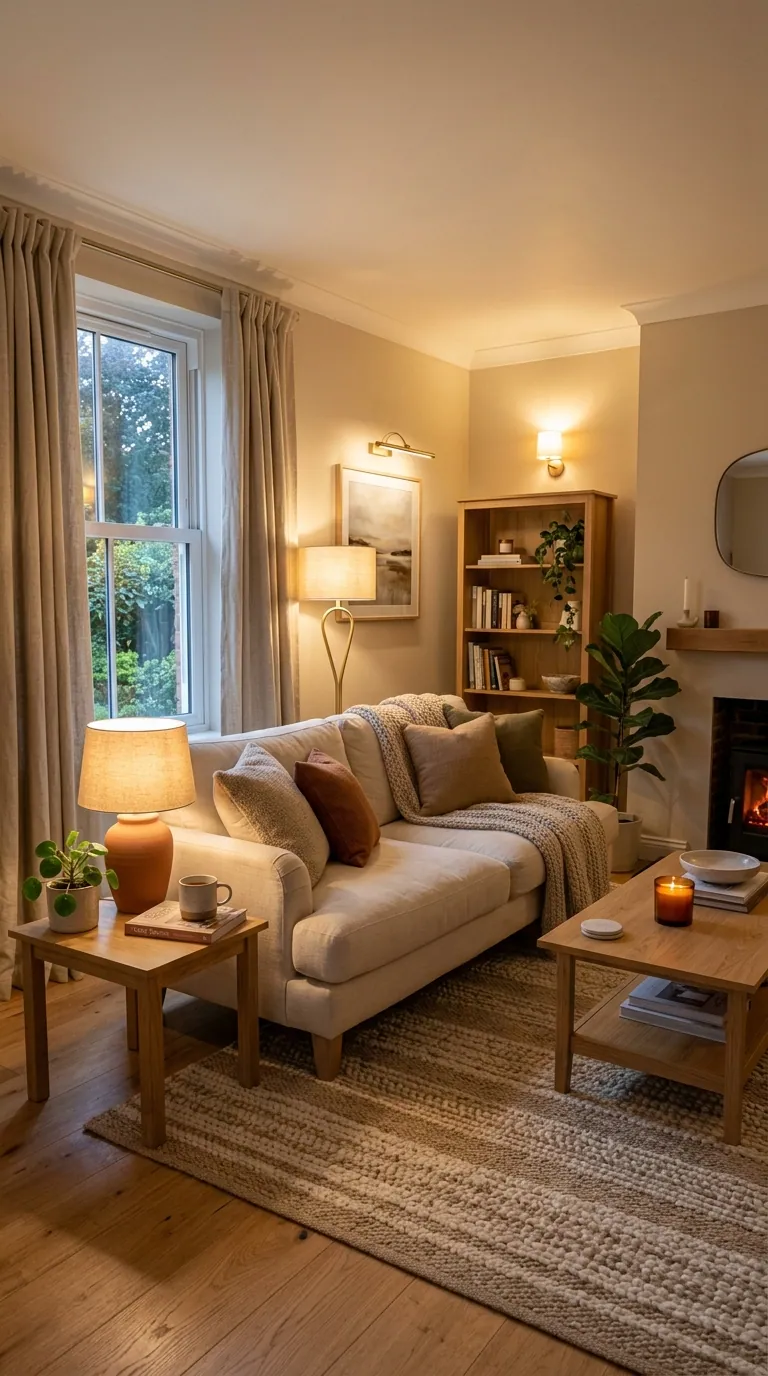
Lighting should come from more than one place.
Combine a ceiling fixture with a floor lamp and table lamp where possible. Different heights create a softer atmosphere and allow you to change the mood throughout the day.
6. Natural Wood Coffee Table
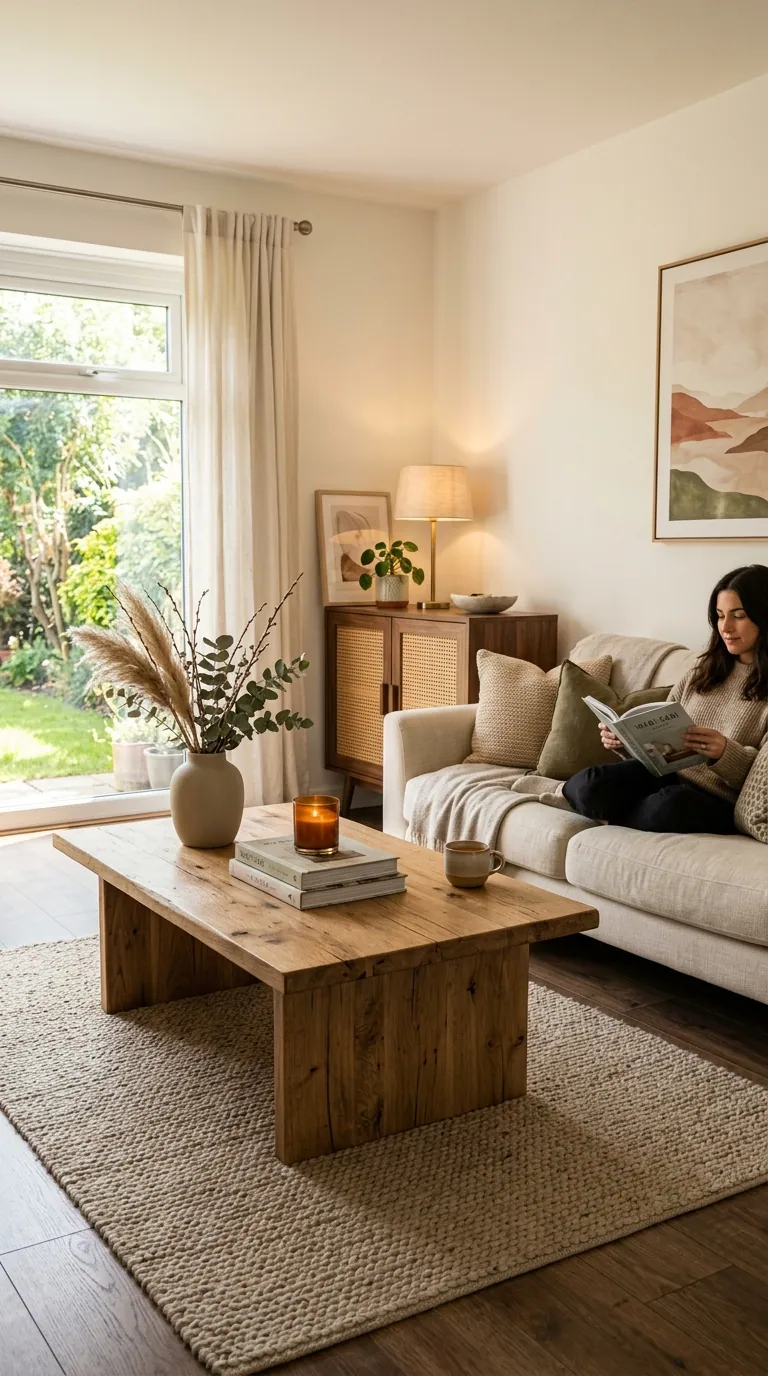
Natural wood gives a neutral living room visual warmth.
A substantial oak or walnut coffee table can also become an anchor for the seating arrangement without requiring a complicated centerpiece.
7. Cozy Reading Corner
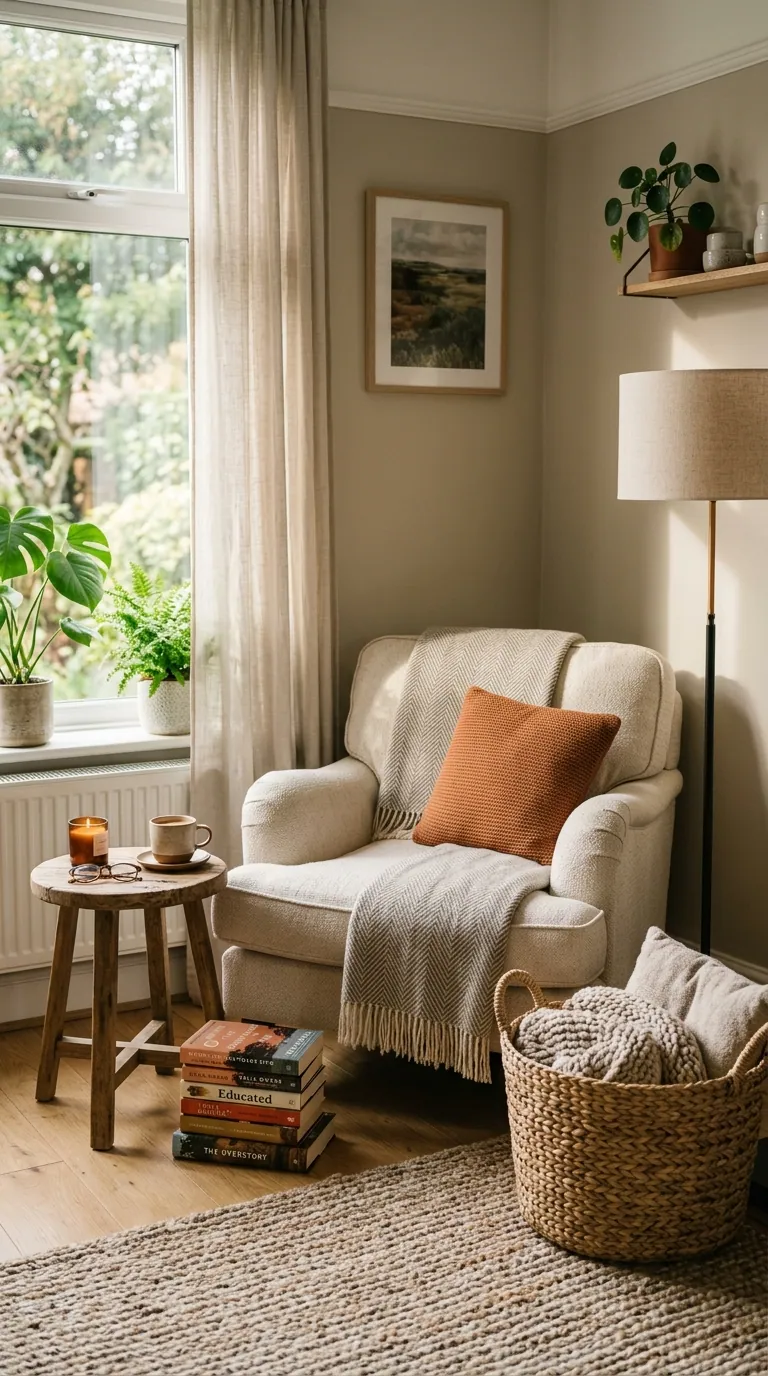
An unused corner does not have to remain empty.
A comfortable chair and good reading lamp can create a useful secondary zone while making the entire room feel more complete.
8. Styled Media Wall
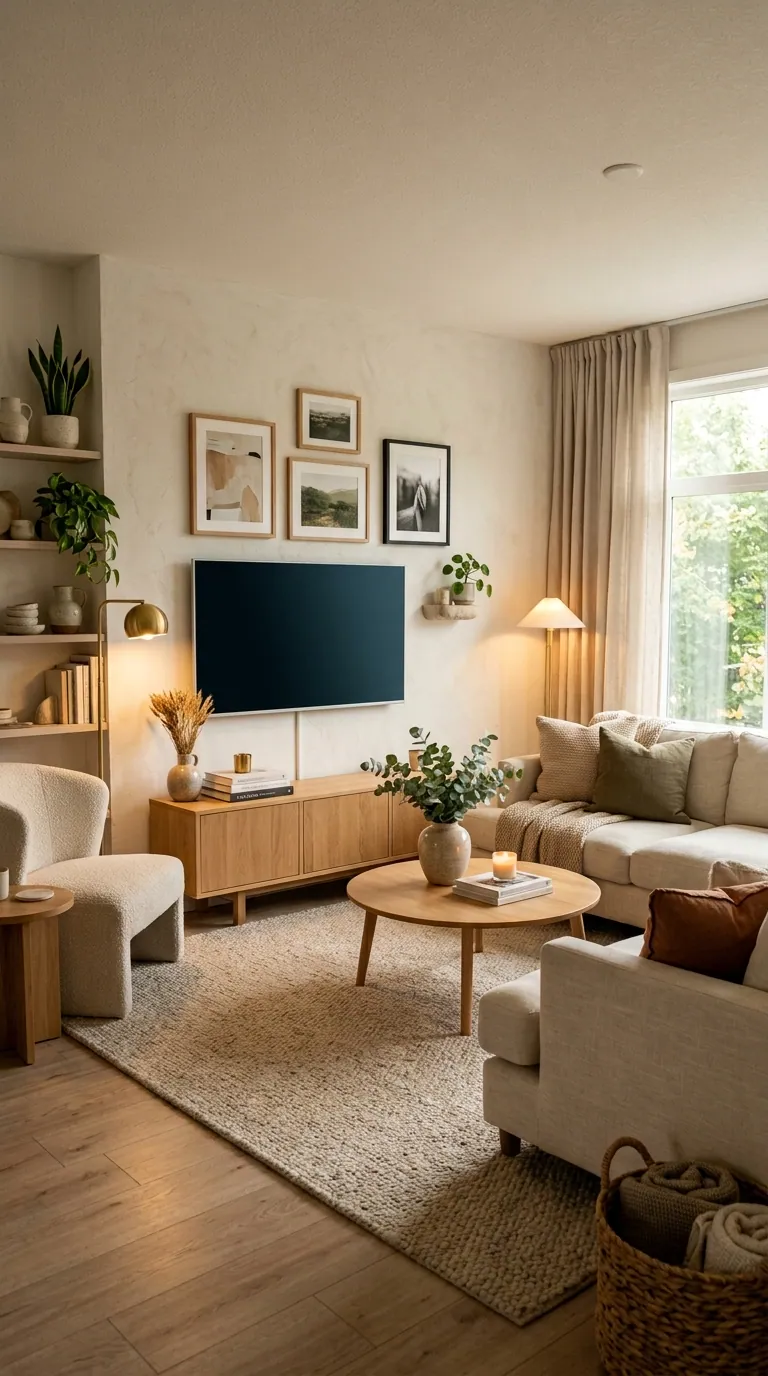
Televisions can easily become the strongest visual element in a living room.
A low cabinet, surrounding artwork, and restrained styling can help integrate the television into the room rather than making it feel like the entire design revolves around it.
9. Floor-to-Ceiling Curtains
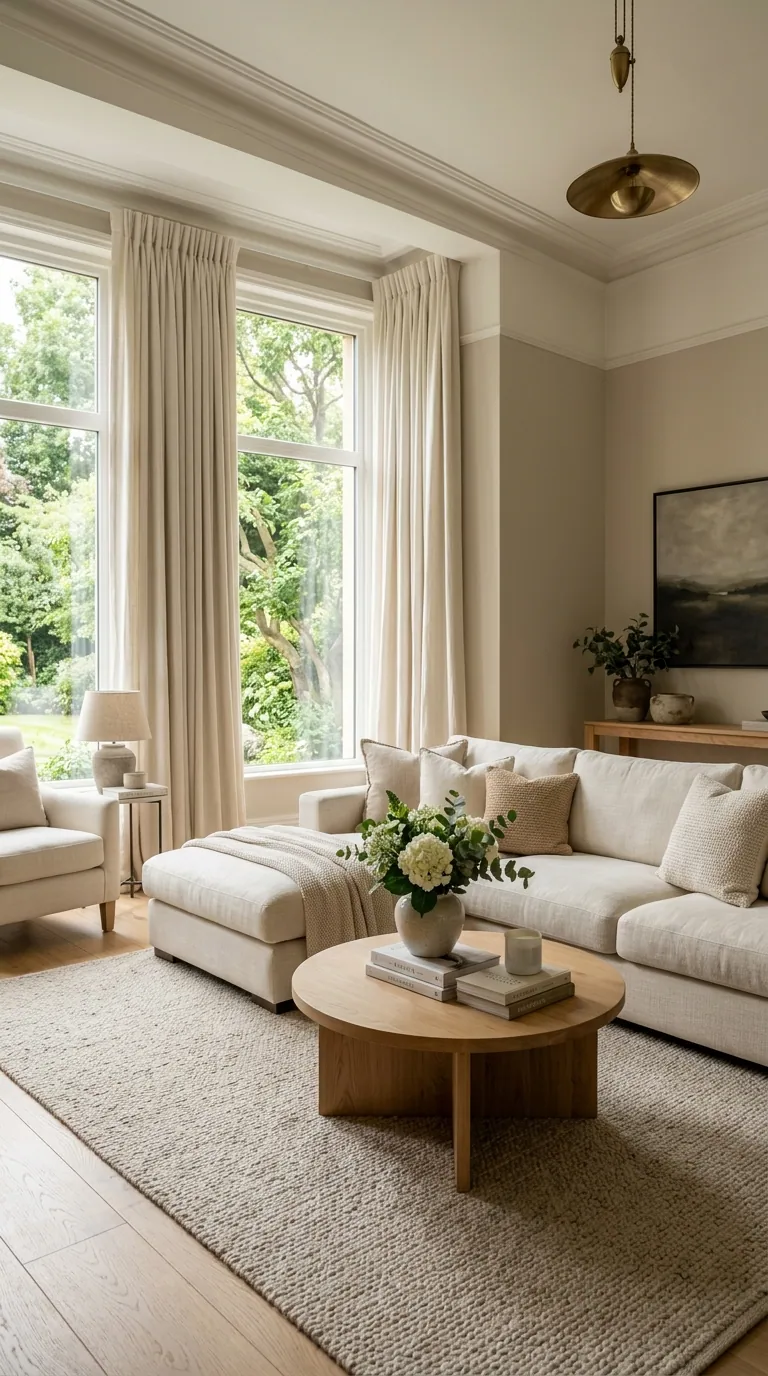
Long curtains can make windows feel larger and ceilings appear taller.
Hang them high and allow the fabric to fall close to the floor for a polished appearance.
10. Collected Artwork
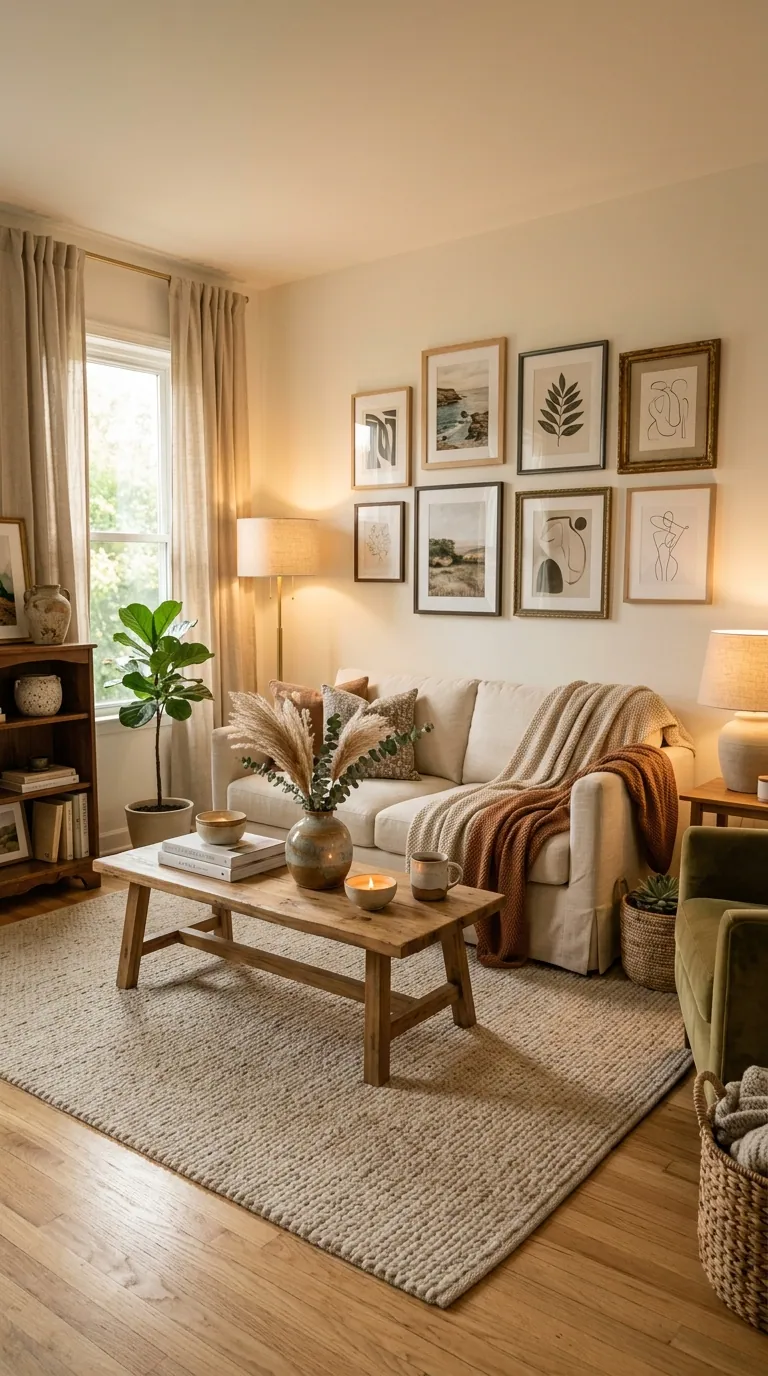
Artwork gives the living room personality.
Instead of buying everything as one matching set, collect pieces that share a loose color palette. This creates a more natural, lived-in appearance.
11. Accent Chair
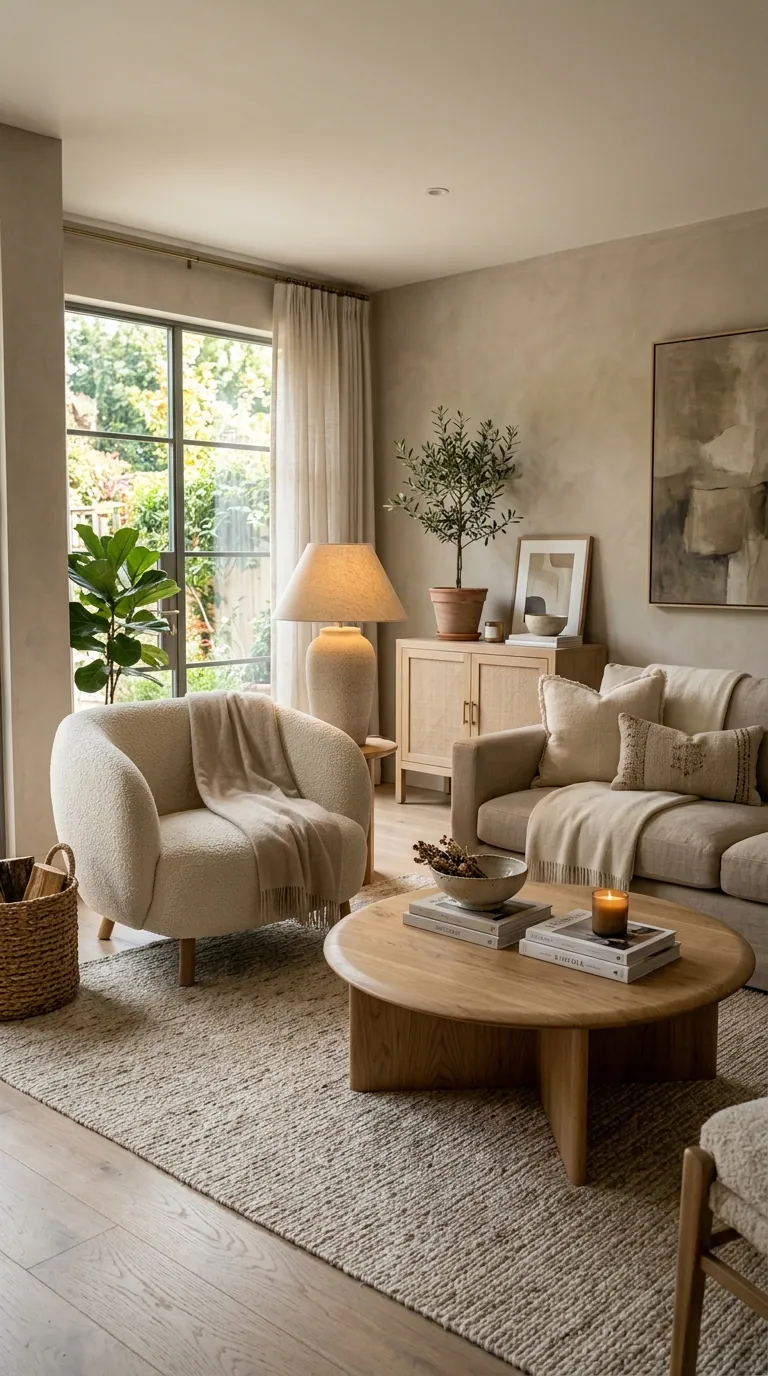
An accent chair can add another comfortable seat without making the room feel visually heavy.
Look for a shape that contrasts gently with the sofa—curved beside straight, for example.
12. Warm Brown Furniture
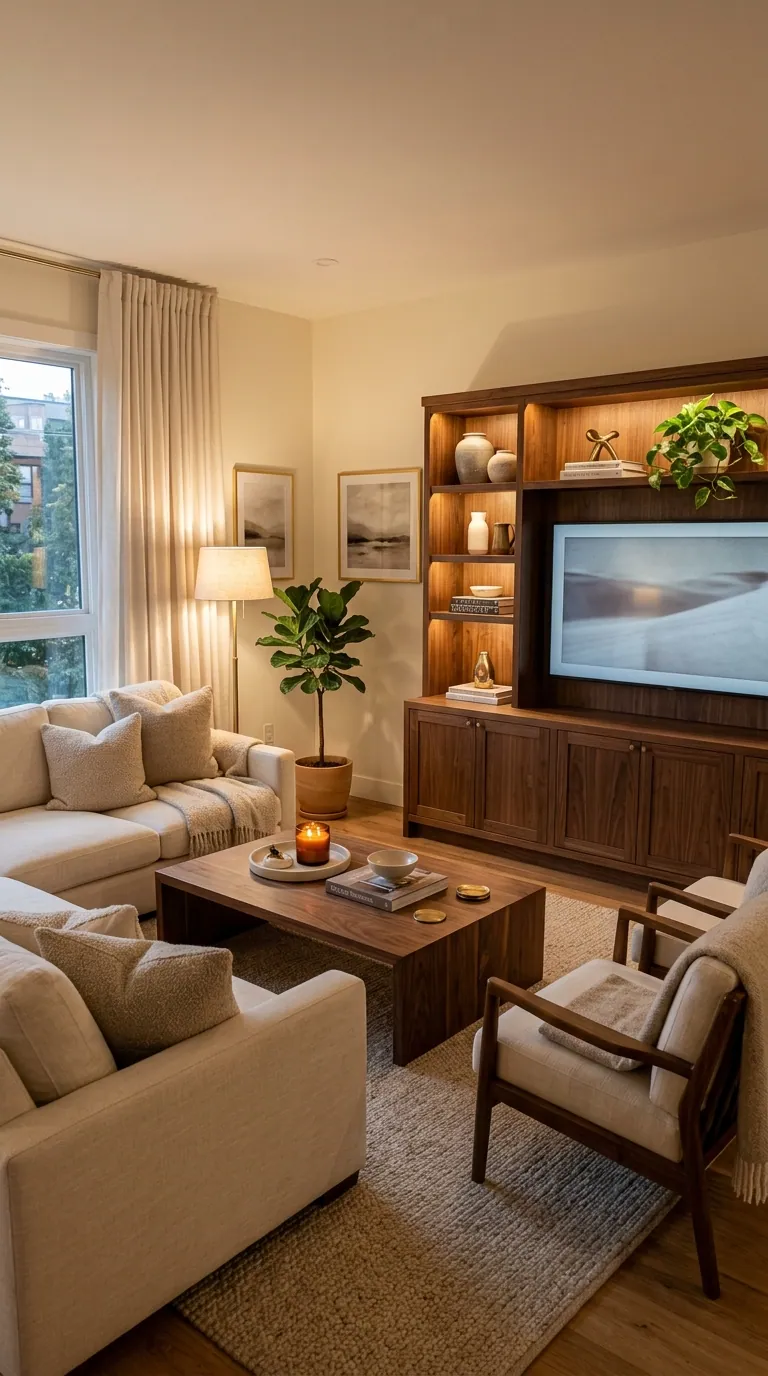
Brown wood adds depth to lighter living rooms.
Walnut furniture works particularly well with cream upholstery because the contrast is noticeable without becoming harsh.
13. Small Living Room With Open Circulation
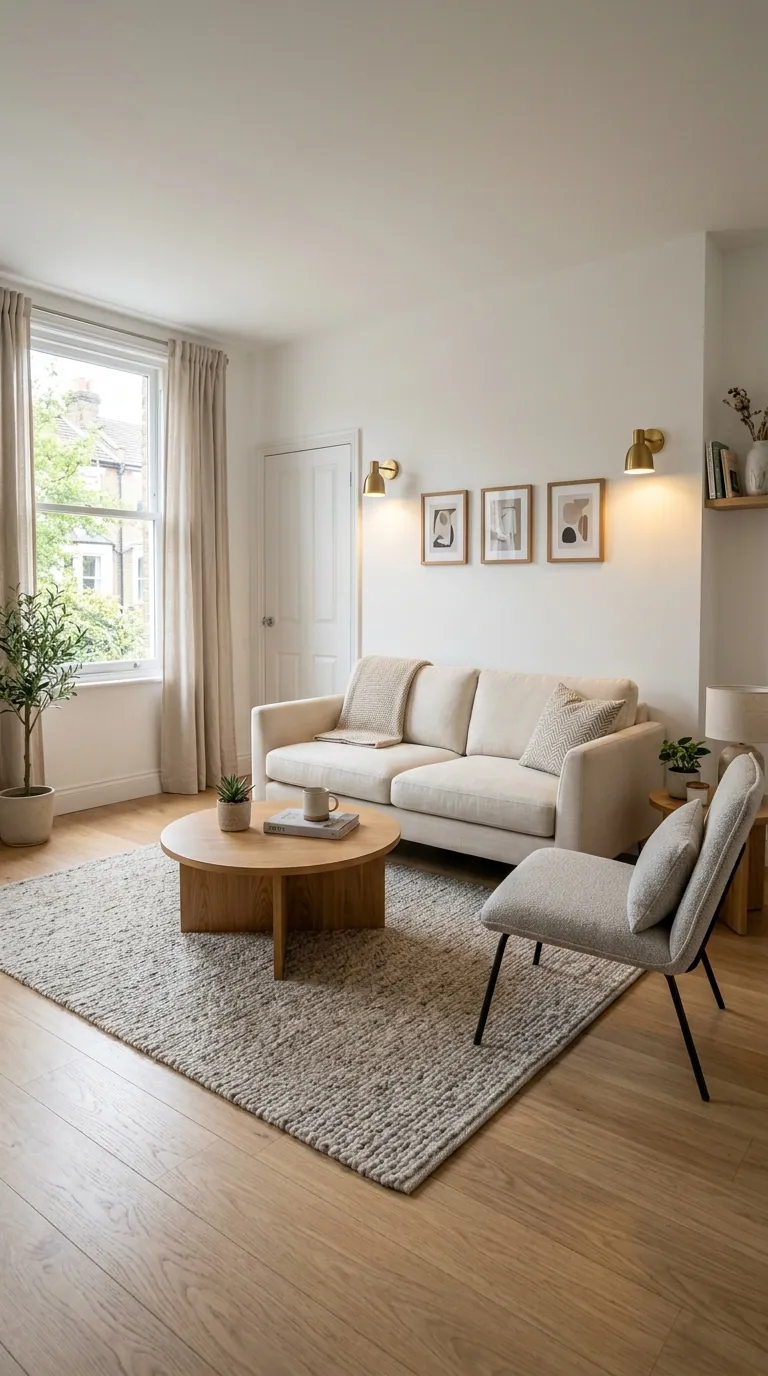
In a small living room, empty floor space is valuable.
Avoid pushing too many pieces into the room. Choose fewer, appropriately scaled pieces and keep the main walking paths clear.
14. Built-In Storage
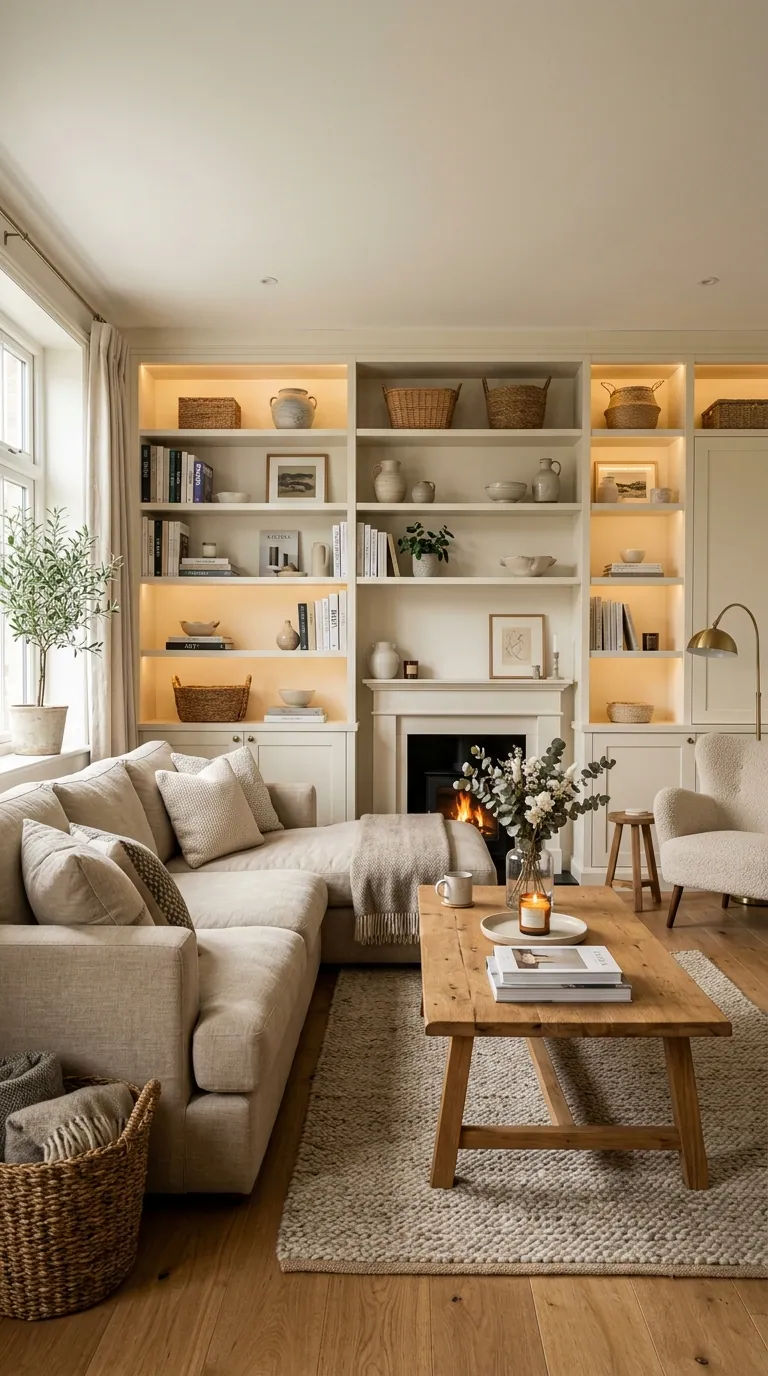
Built-in storage can make a living room look calmer because everyday items have somewhere to go.
Use closed cabinets for clutter and open shelves for objects that deserve to be displayed.
15. Soft Green Accents
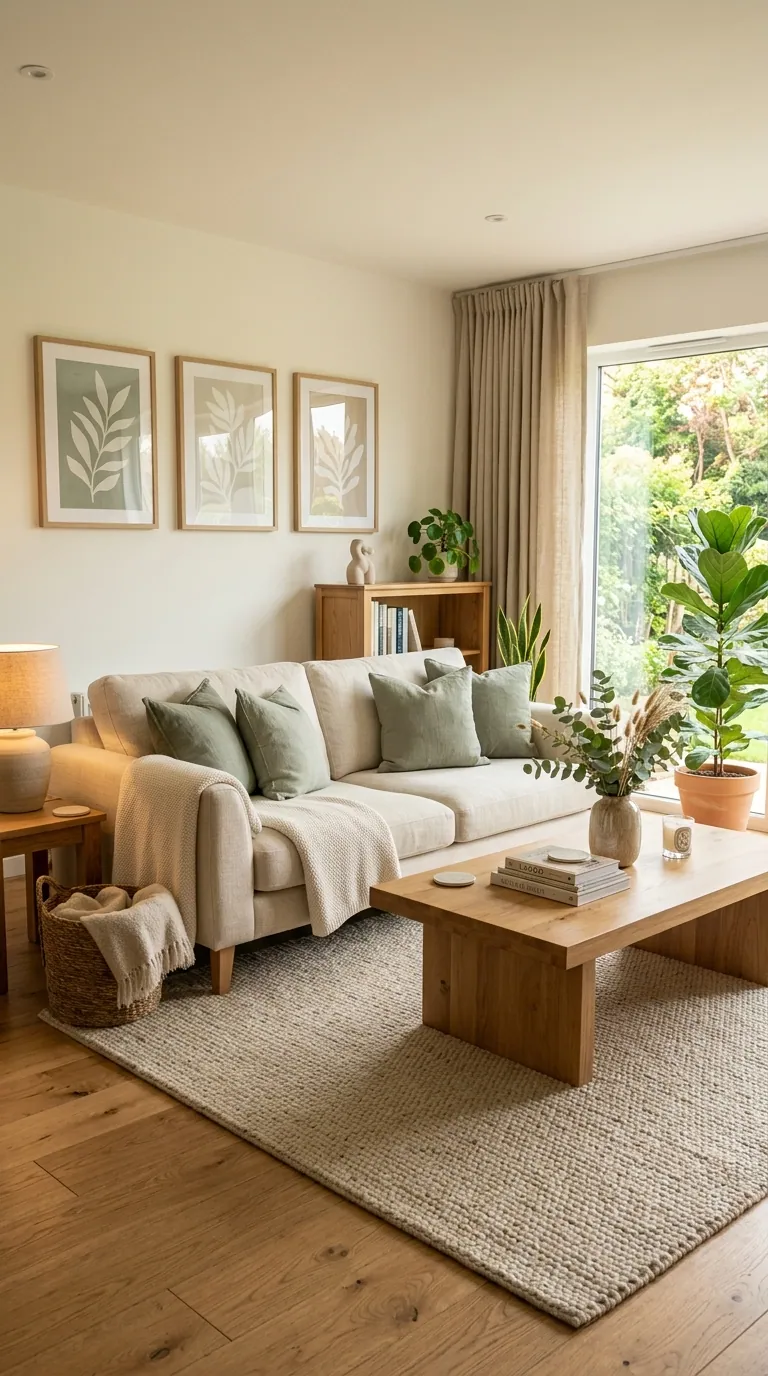
Green can bring color into a neutral living room without overwhelming it.
Muted sage or olive tones pair naturally with cream, beige, brown, and natural wood.
16. Styled Coffee Table
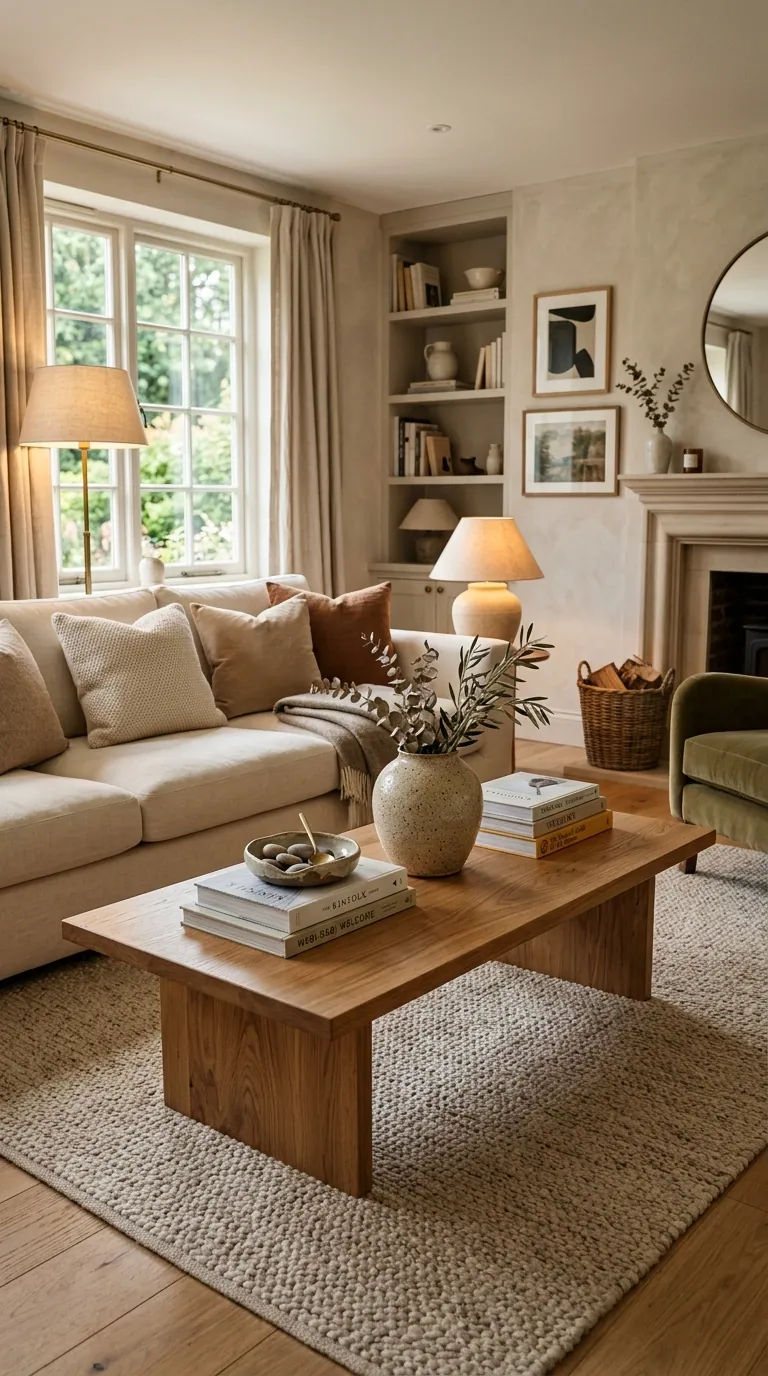
A coffee table should still have room to be used.
Use a few objects with different heights rather than covering the entire surface. Books, a bowl, and one ceramic piece can be enough.
17. Console Behind the Sofa
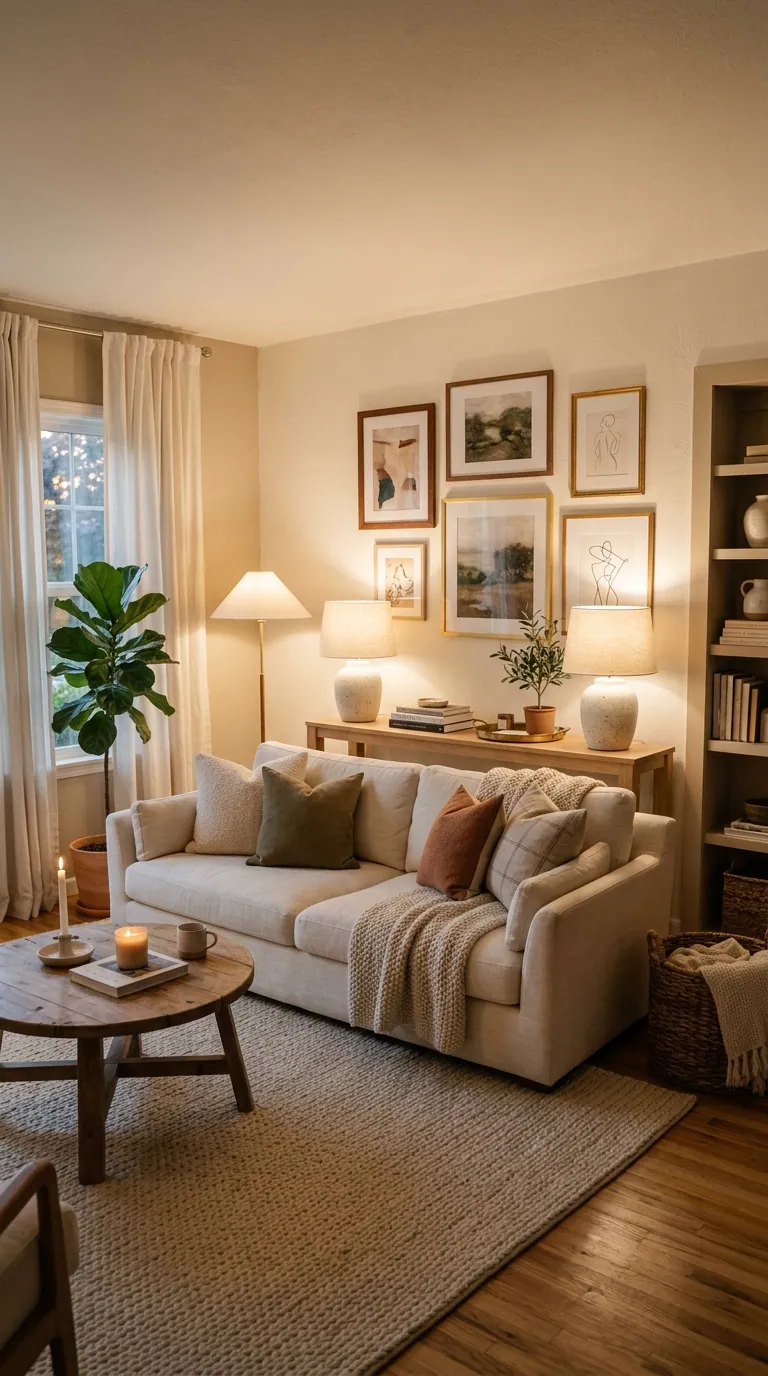
If the sofa floats away from the wall, a narrow console behind it can make the arrangement feel intentional.
Use the surface for lamps, books, or a few decorative objects while keeping enough clearance for movement.
18. Soft Curved Furniture
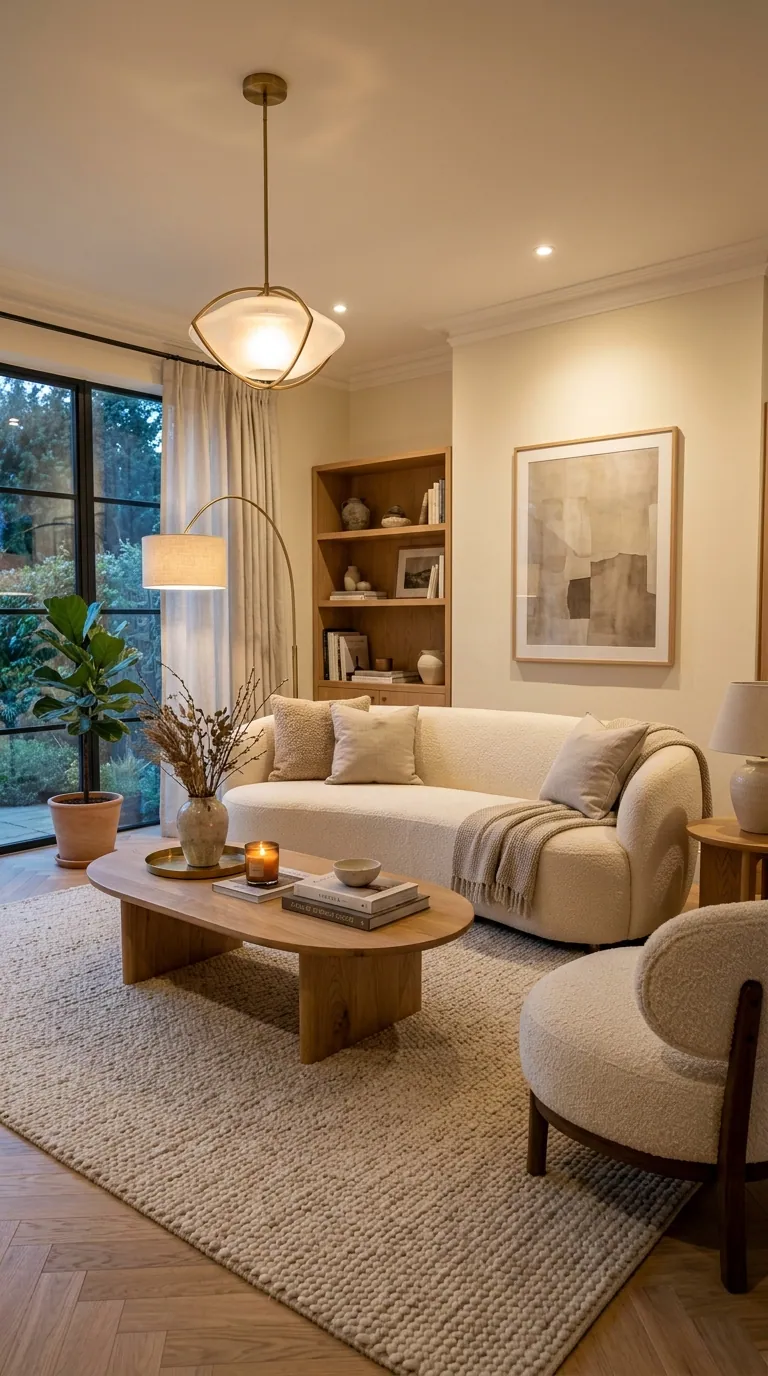
Curved furniture can make a living room feel softer and more relaxed.
You do not need every piece to be curved. One curved sofa or chair can provide enough contrast against more traditional rectangular furniture.
19. Woven Storage
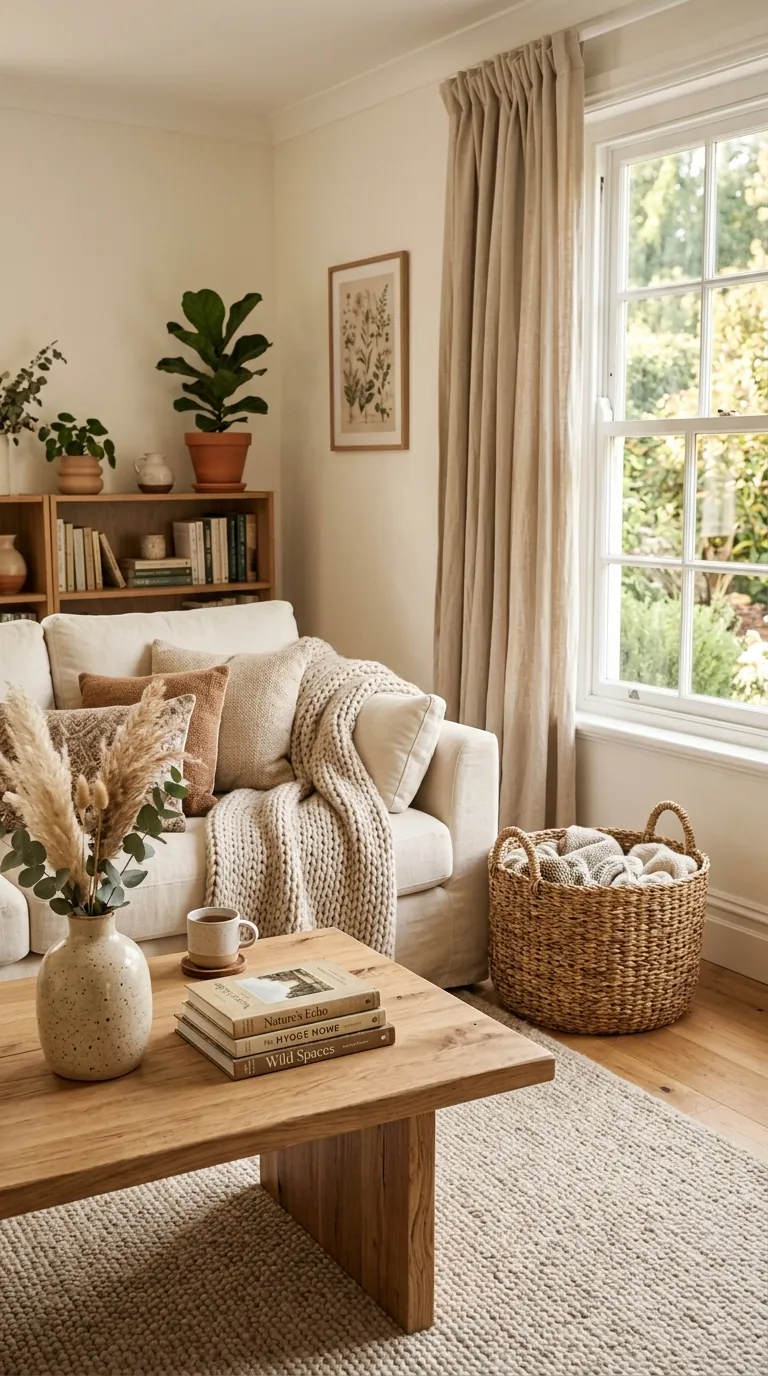
Woven baskets are useful for hiding blankets, magazines, toys, and other everyday items.
They also add texture, making them more attractive than many purely functional storage solutions.
20. Statement Floor Lamp
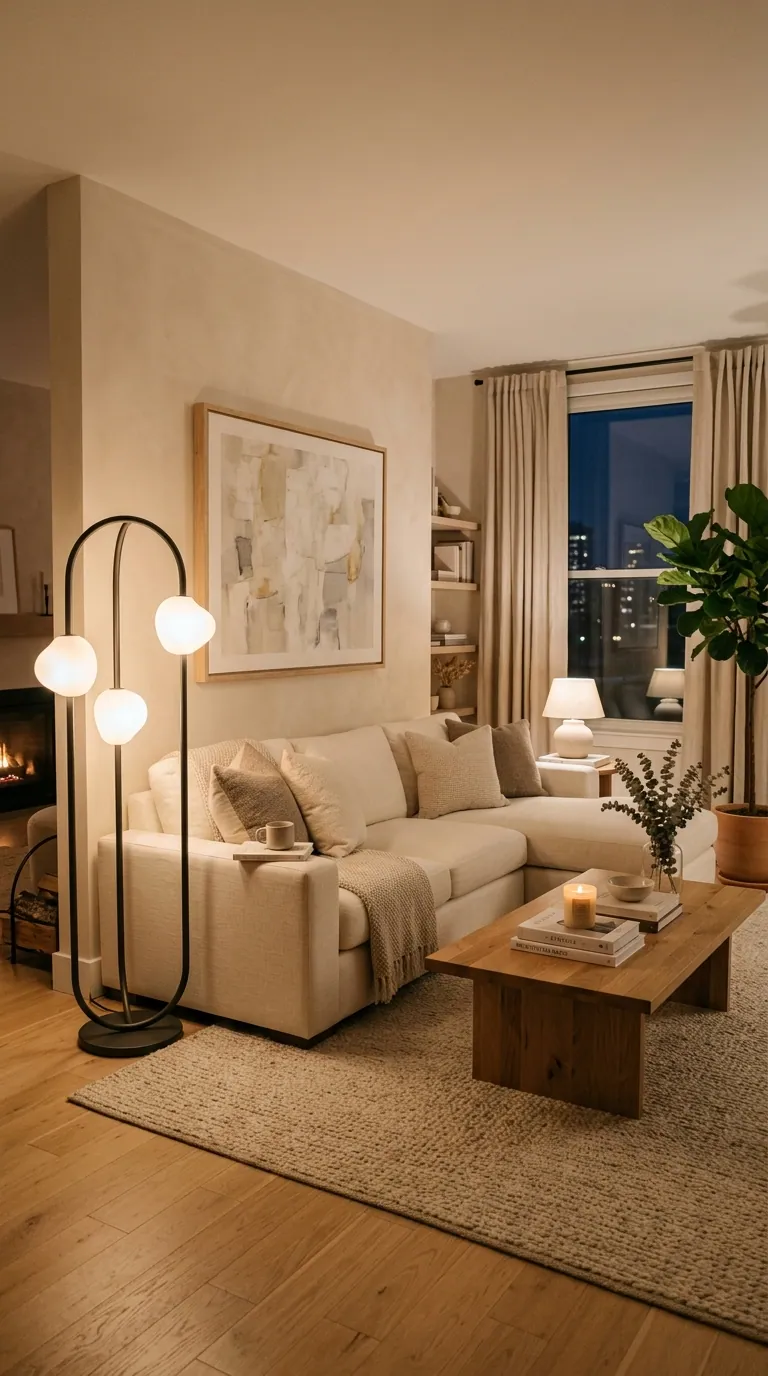
A floor lamp can fill an empty corner while improving the room’s lighting.
Choose a sculptural shape if the rest of the room is simple, allowing the lamp to function as both lighting and decor.
21. Vintage Living Room Piece
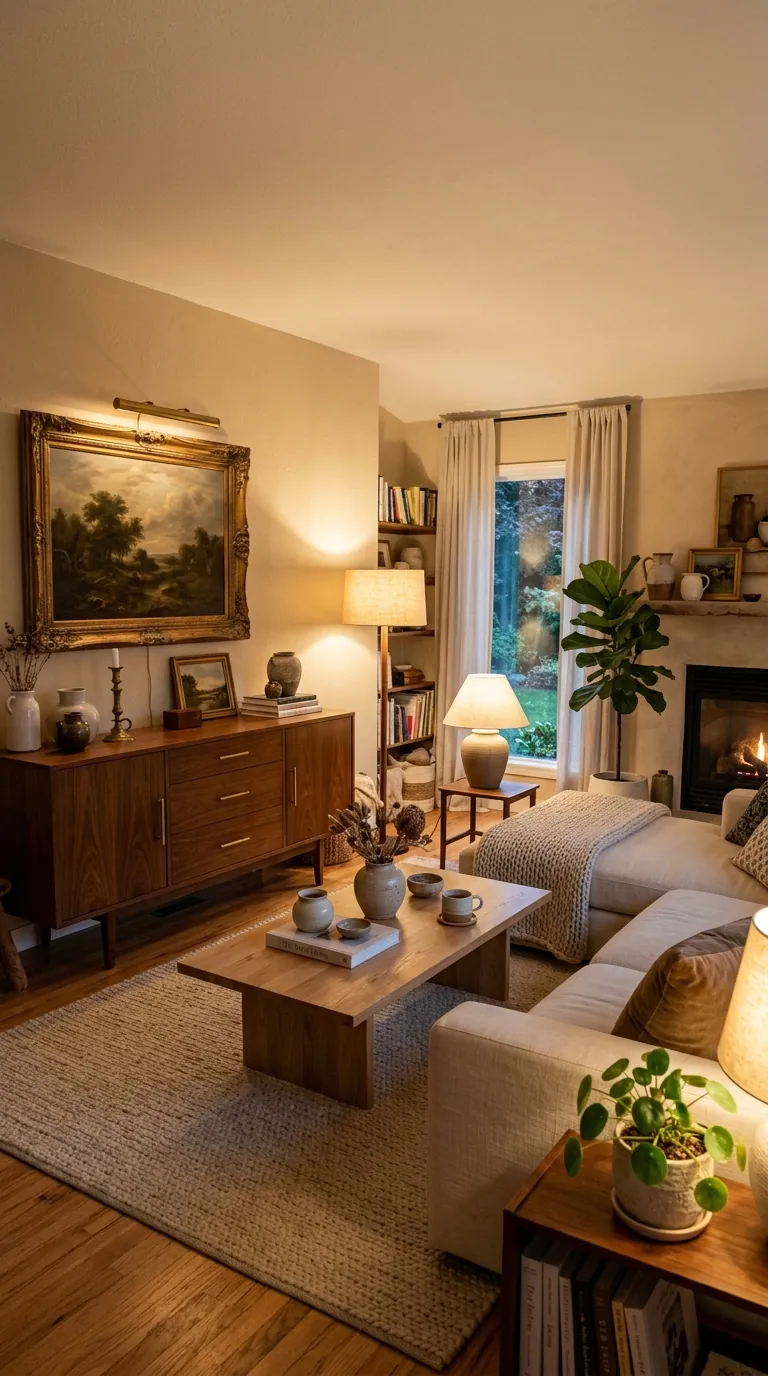
Mixing old and new can make a living room feel much more personal.
A vintage cabinet, chair, lamp, or artwork can provide character without requiring the entire room to follow a traditional style.
22. Balanced Bookshelf Styling
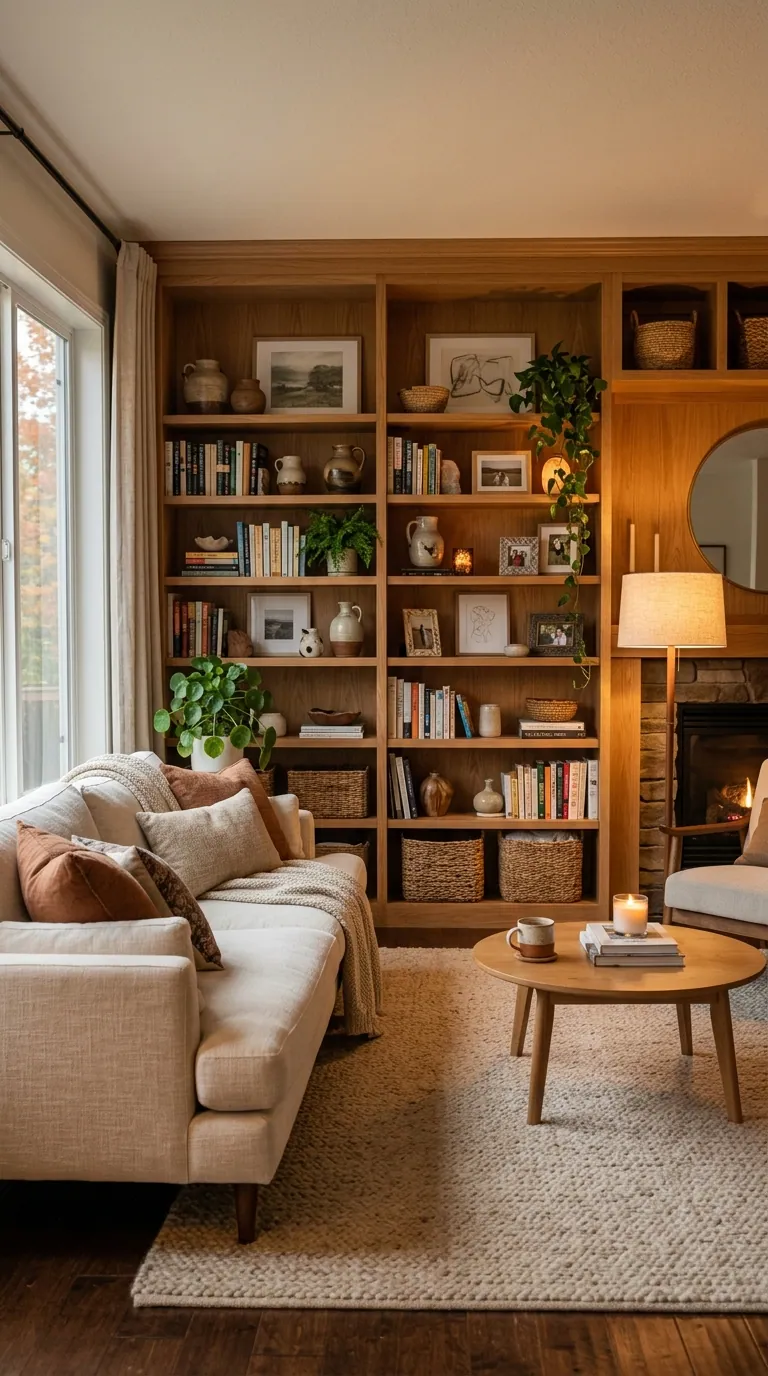
Open shelving works best when there is a balance between objects and empty space.
Mix horizontal stacks of books with vertical books, ceramics, artwork, and baskets. Avoid filling every shelf completely.
23. Cozy Evening Living Room
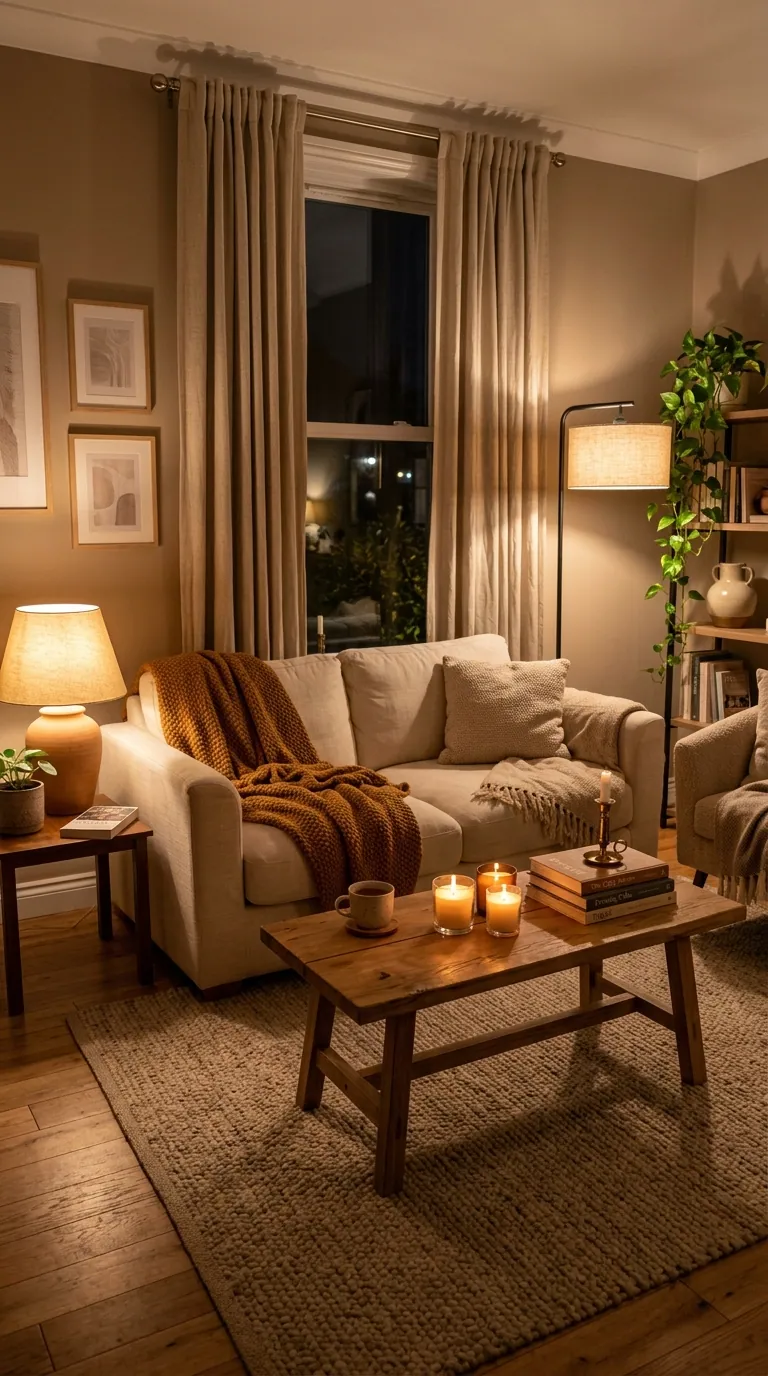
A living room can look completely different after sunset.
Warm bulbs, lamps, and a few candles can create an intimate atmosphere that overhead lighting alone cannot achieve.
24. Personal Decor
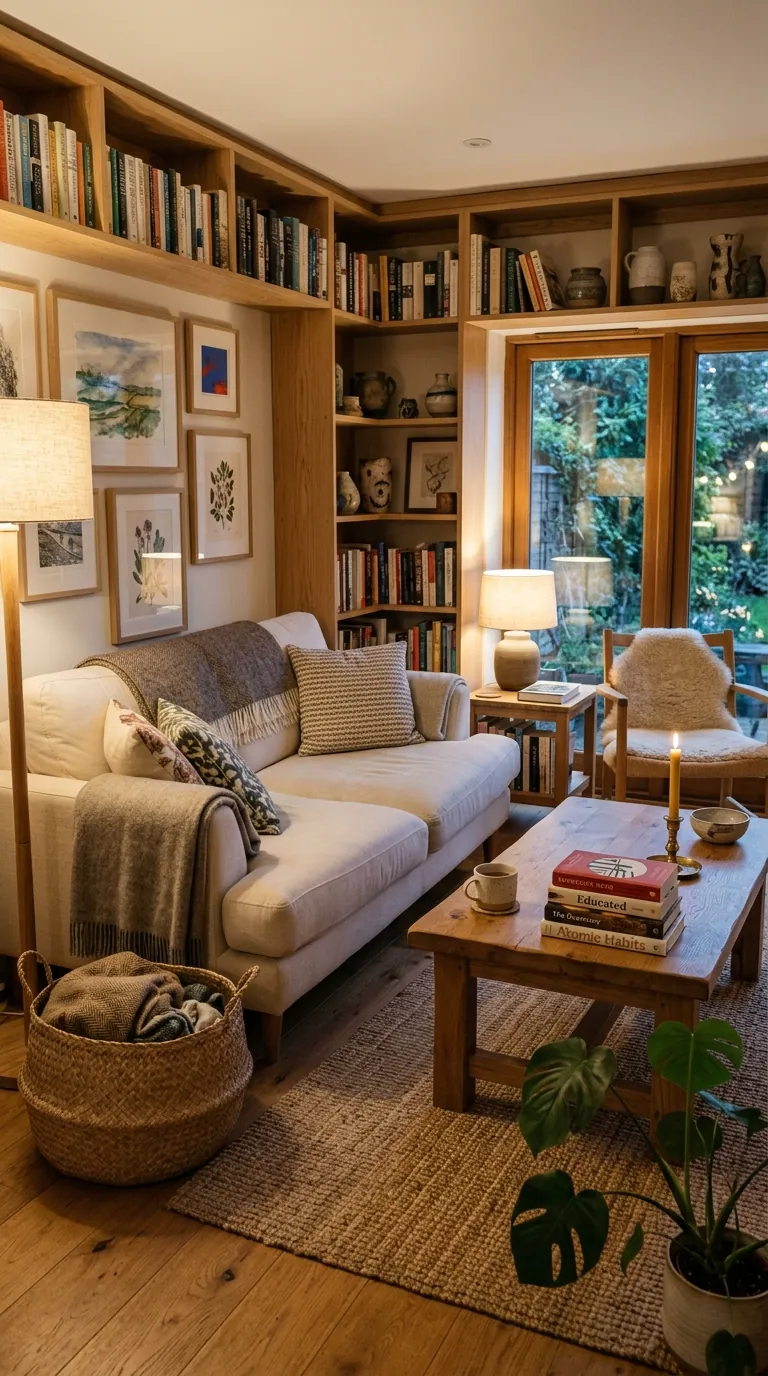
The room should contain more than objects chosen simply because they are decorative.
Books, artwork, photographs, ceramics, and meaningful pieces can make the living room feel connected to the people who actually live there.
25. Comfortable Family Living Room
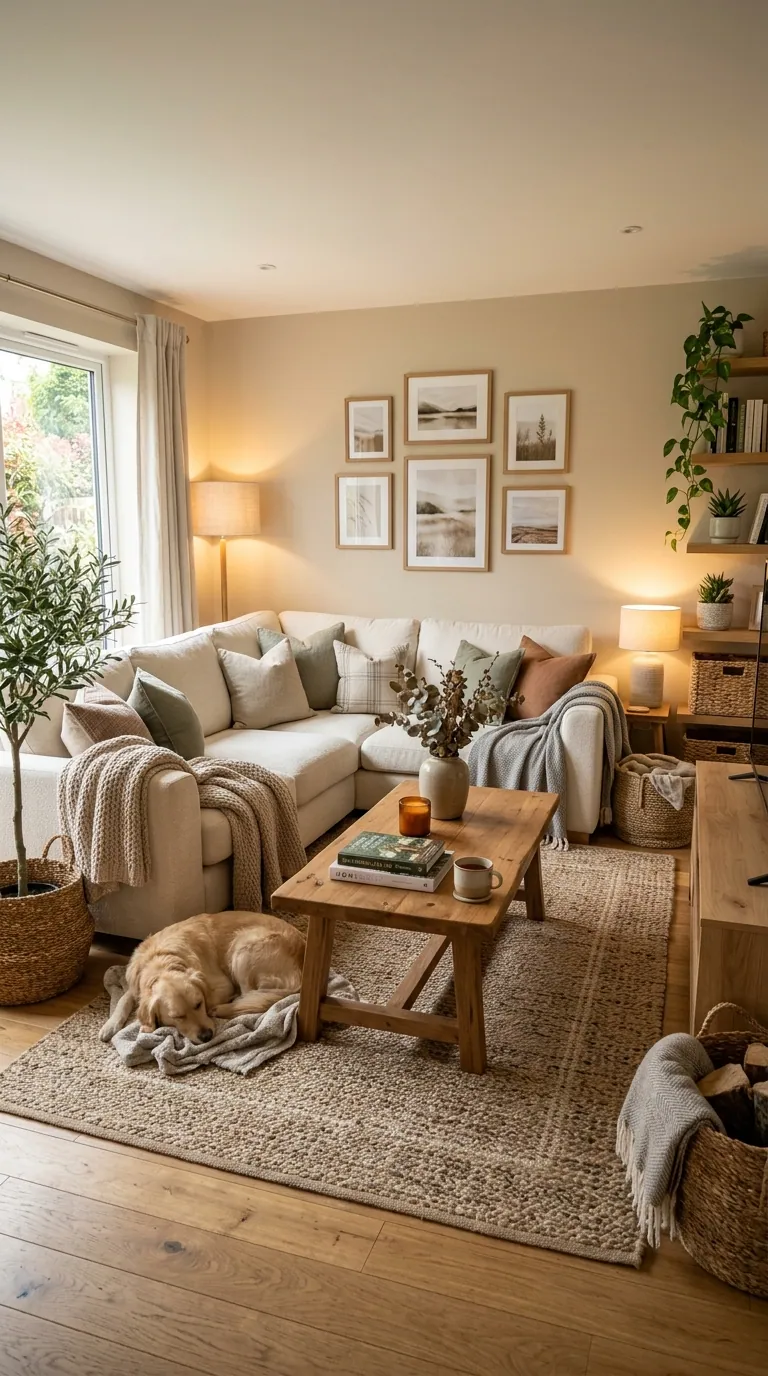
A family living room needs to prioritize comfort and durability.
Choose washable or hard-wearing fabrics where practical, provide easy-access storage, and avoid furniture arrangements that make everyday movement difficult.
26. Calm Minimal Living Room
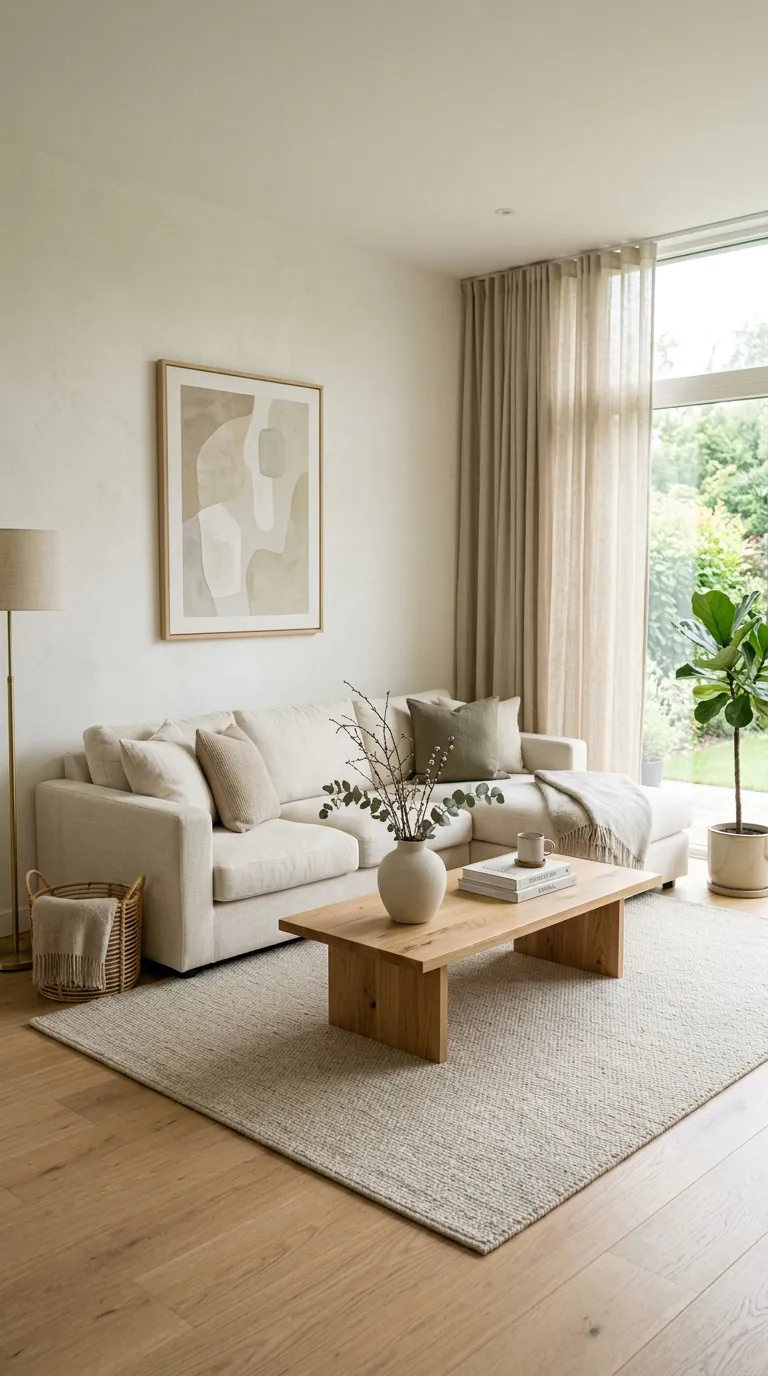
Minimalism works particularly well when every piece has enough room around it.
Rather than removing everything, keep the furniture and objects you genuinely need and give them space to breathe.
27. Complete Collected Living Room
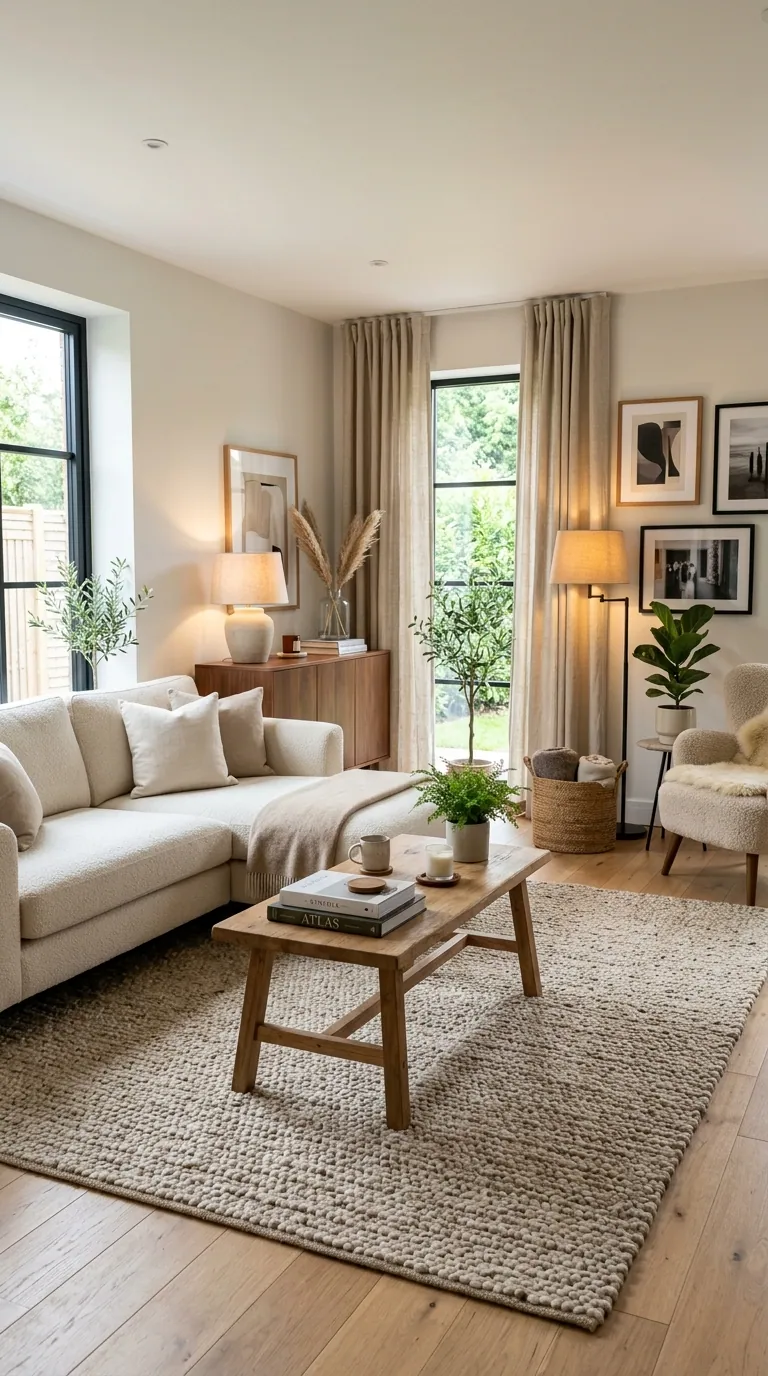
A finished living room does not have to look perfectly coordinated.
The strongest spaces usually combine comfort, useful furniture, warm lighting, natural materials, artwork, and personal objects into one cohesive environment.
How to Make a Living Room Feel More Comfortable
Comfort starts with the furniture layout.
Make sure there is enough space to walk around the coffee table and between major pieces. Seating should also face toward something useful—another seat, a fireplace, a view, or the television.
Then add softness through rugs, curtains, cushions, and throws. These materials absorb sound and make a room physically and visually more comfortable.
Finally, use warm lighting. A living room with several smaller lamps often feels considerably more relaxing than one illuminated entirely by a ceiling fixture.
How to Make a Living Room Feel More Put Together
Start by limiting the number of competing materials and colors.
You can still mix different pieces, but they should share a visual relationship. For example, natural oak furniture can work alongside walnut accents when the textiles and wall colors connect everything.
Pay attention to scale too. Artwork, rugs, coffee tables, and lighting should be large enough to relate to the furniture around them.
The goal is cohesion, not matching.
Living Room Ideas by Style
Warm Modern
Use cream upholstery, natural oak, rounded furniture, textured rugs, simple artwork, and warm lighting.
Minimal
Choose fewer furniture pieces, restrained colors, clean lines, and plenty of open space.
Organic Modern
Combine wood, linen, ceramics, greenery, natural textures, and earthy neutral colors.
Traditional
Use classic furniture shapes, framed artwork, patterned textiles, warm wood, and timeless lighting.
Collected
Mix contemporary pieces with vintage furniture, books, artwork, handmade objects, and meaningful accessories.
Easy Living Room Updates on a Budget
You do not need to replace your sofa to make the room feel different.
Start with the things that are easiest to change: cushions, throws, lamps, artwork, curtains, and coffee-table styling.
Moving furniture can also dramatically improve the room. Try pulling the sofa slightly away from the wall or repositioning chairs to create a more conversational layout.
A secondhand wooden table or vintage cabinet can also introduce more character than buying an entirely matching furniture set.
How to Choose the Right Living Room Rug
The rug should be large enough to visually connect the seating area.
For a larger room, choose a rug that allows the front legs of the sofa and chairs to sit on it. In smaller rooms, make sure the rug still relates to the furniture rather than floating alone in the center.
Texture and durability matter too. A living room rug should be comfortable underfoot but practical enough for everyday use.
Living Room Decorating Mistakes to Avoid
Furniture pushed against every wall
Not every piece needs to touch the walls. Sometimes bringing furniture inward creates a much more comfortable arrangement.
A rug that is too small
Tiny rugs can make even beautiful furniture look disconnected.
Too many small accessories
Several tiny objects can create more visual noise than one or two substantial pieces.
Relying on overhead lighting
A single ceiling fixture rarely creates the warm atmosphere most living rooms need.
Ignoring the television
If the television is part of your daily life, design around it rather than pretending it does not exist.
Choosing style over comfort
A living room should actually be comfortable. Beautiful furniture that nobody wants to sit on is not a successful design.
Frequently Asked Questions
How can I make my living room look better without buying furniture?
Rearrange the furniture, improve the lighting, restyle the coffee table, add artwork, change textiles, and remove unnecessary clutter.
What makes a living room feel cozy?
Comfortable seating, layered lighting, soft textiles, warm colors, natural materials, and personal objects all contribute to a cozy atmosphere.
Should a living room sofa be against the wall?
Not necessarily. In larger rooms, pulling the sofa away from the wall can create a better seating arrangement and improve circulation.
How big should a living room rug be?
Ideally, the rug should be large enough to visually connect the main seating pieces. At minimum, the front legs of major furniture should generally sit on the rug.
How do I decorate a small living room?
Prioritize appropriately scaled furniture, maintain clear walking paths, use multifunctional storage, and avoid filling every surface with decor.
How many pillows should be on a sofa?
There is no fixed number. Use enough to make the sofa comfortable and layered while leaving enough seating space for people to actually sit.
Final Thoughts
A living room becomes beautiful when it works well for the people using it.
Start with comfortable furniture and a sensible layout. Then build around it with a properly sized rug, warm lighting, curtains, artwork, natural materials, and a few objects that have genuine meaning.
You do not need to copy a perfectly styled room. The best living rooms feel comfortable first, beautiful second, and personal throughout.

