
A home office doesn’t have to look like a corporate workspace to be functional. The best home offices balance practical needs with the character of the rest of the home.
A comfortable chair, good lighting, enough storage, and a desk that fits the space can make a noticeable difference. From there, smaller details such as artwork, books, plants, curtains, and personal objects can make the room feel like somewhere you actually want to spend time.
You also don’t need an entire room to create a useful workspace. A quiet corner of a bedroom, living room, hallway, or dining area can become an effective home office with the right layout.
These ideas focus on creating workspaces that are comfortable, useful, attractive, and easy to live with rather than chasing a particular decorating trend.
1. Warm Neutral Home Office
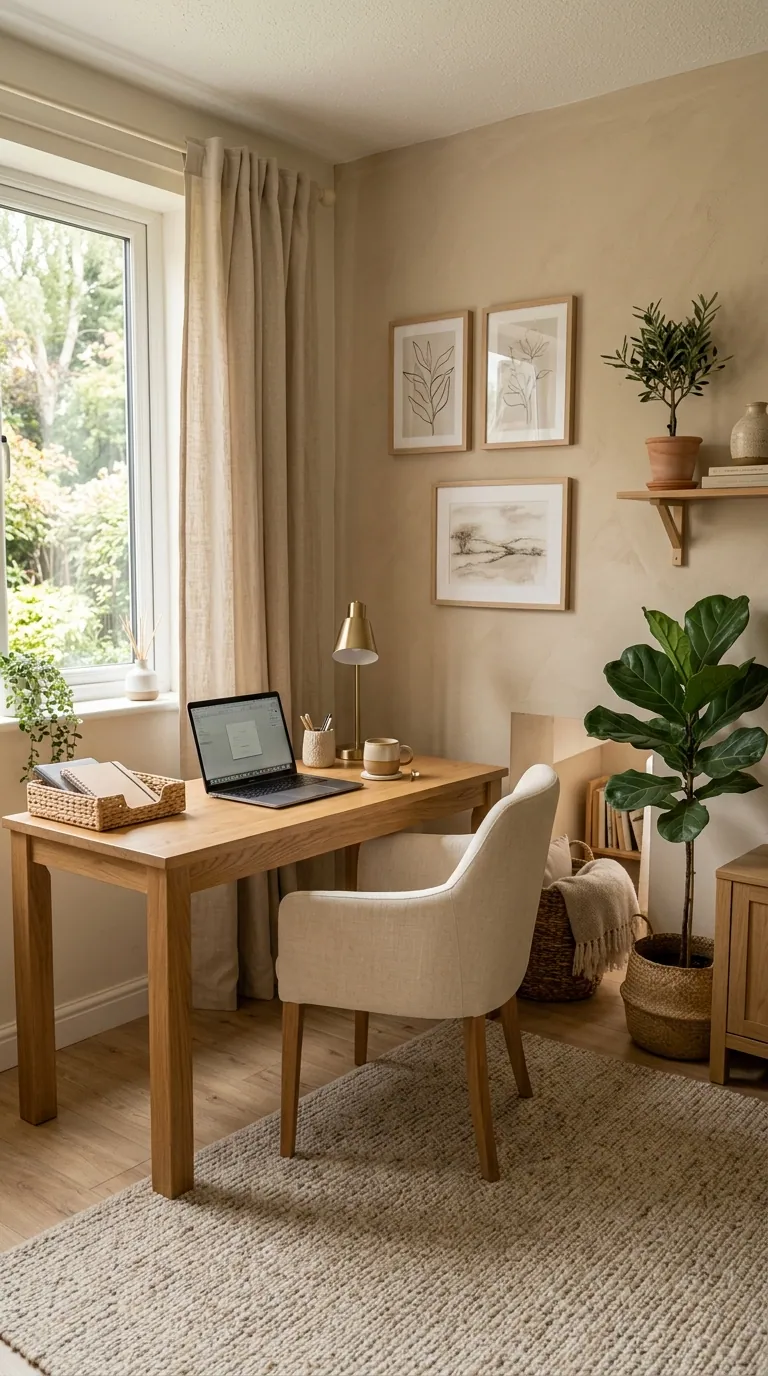
A warm neutral palette can make a home office feel calm without becoming boring.
Use cream, beige, soft brown, and natural wood across the larger pieces. A wooden desk, upholstered chair, textured rug, and simple curtains can create enough variation while keeping the room visually peaceful.
This approach works especially well when the office connects directly to another living space.
2. Natural Wood Desk
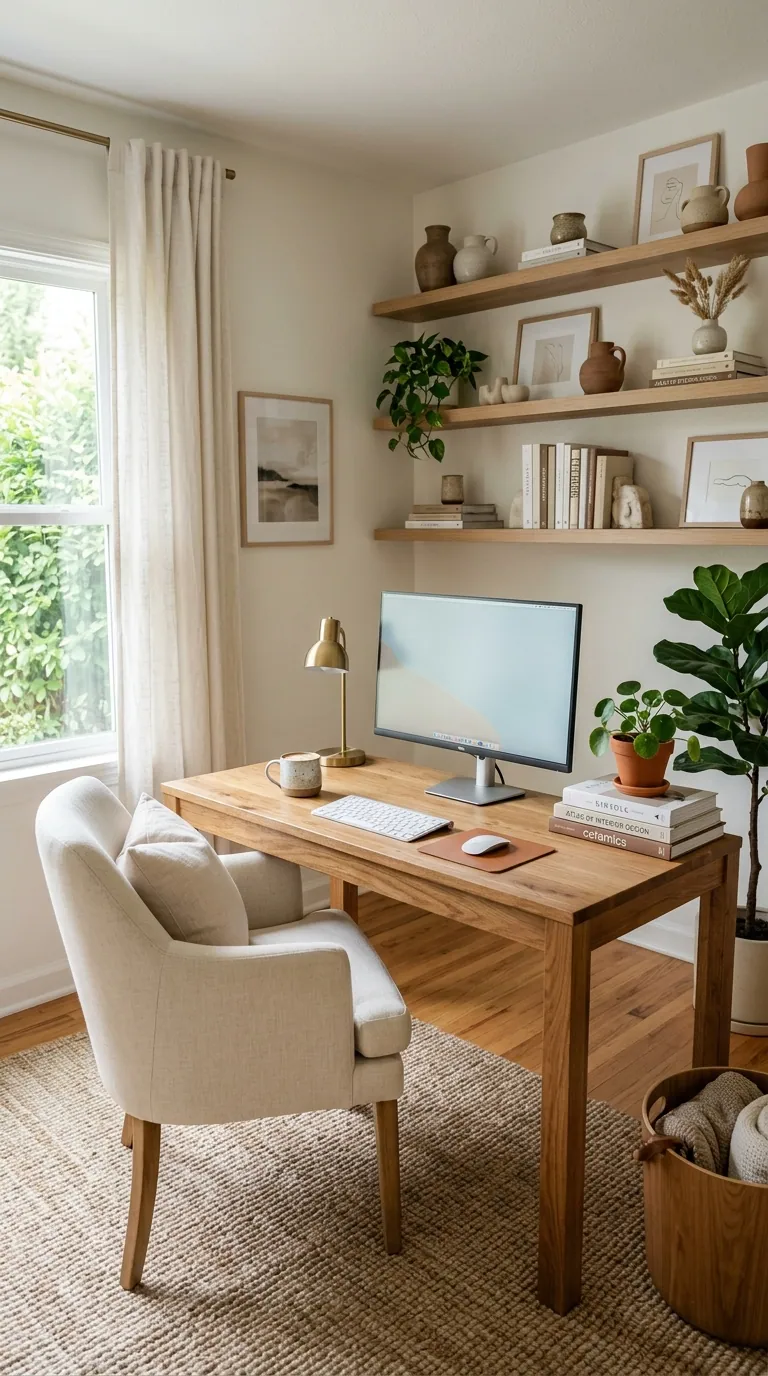
A solid-looking wooden desk can become the foundation of an office without requiring much additional decoration.
Choose a finish that works with the existing furniture in your home. Oak creates a lighter appearance, while walnut can make the room feel deeper and more traditional.
Keep the desktop relatively clear so the wood remains part of the visual design.
3. Comfortable Desk Chair
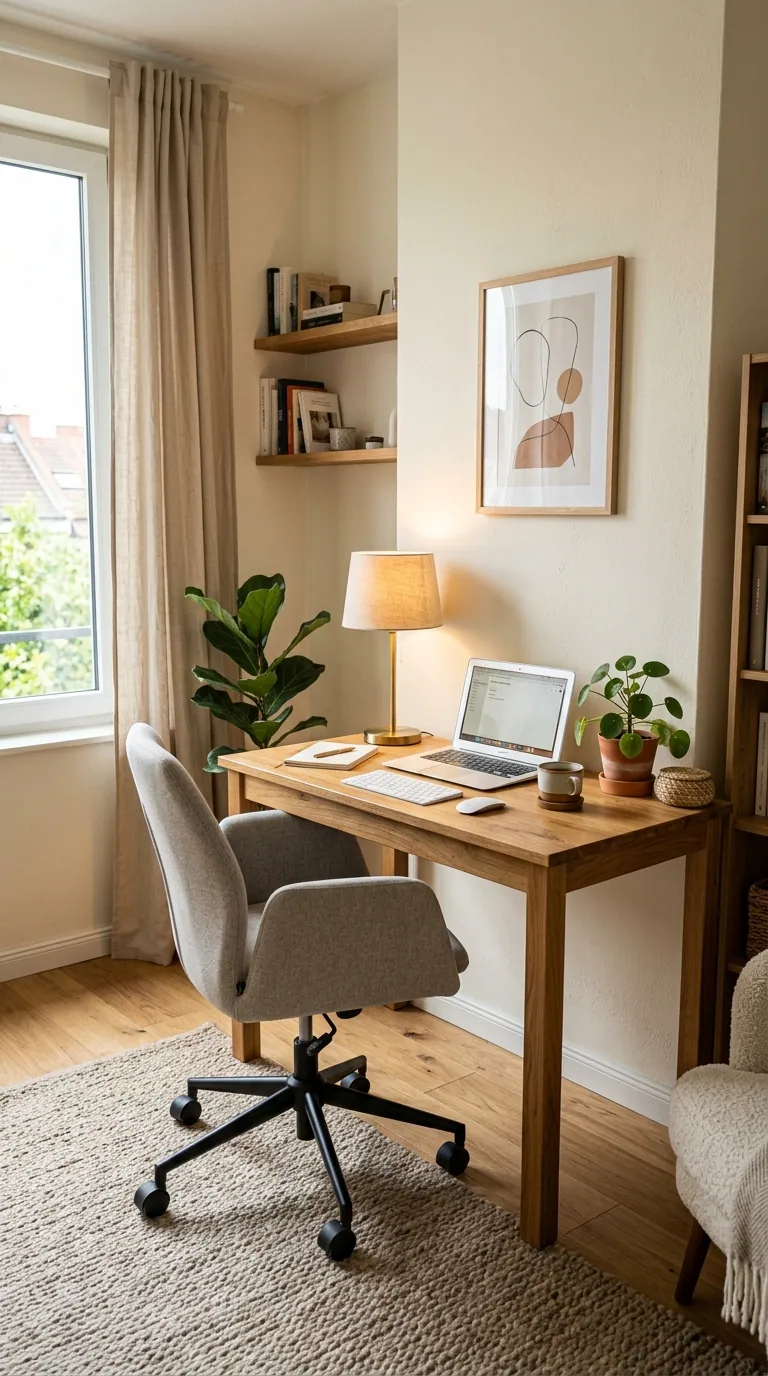
The desk chair is one of the most important pieces in a home office.
Look for proper back support, comfortable seating, and a height that works with your desk. If the office is visible from the living room, an upholstered or thoughtfully designed chair can also make the workspace feel more connected to the rest of the home.
Comfort should come before appearance, but fortunately you don’t have to sacrifice one for the other.
4. Window-Facing Workspace
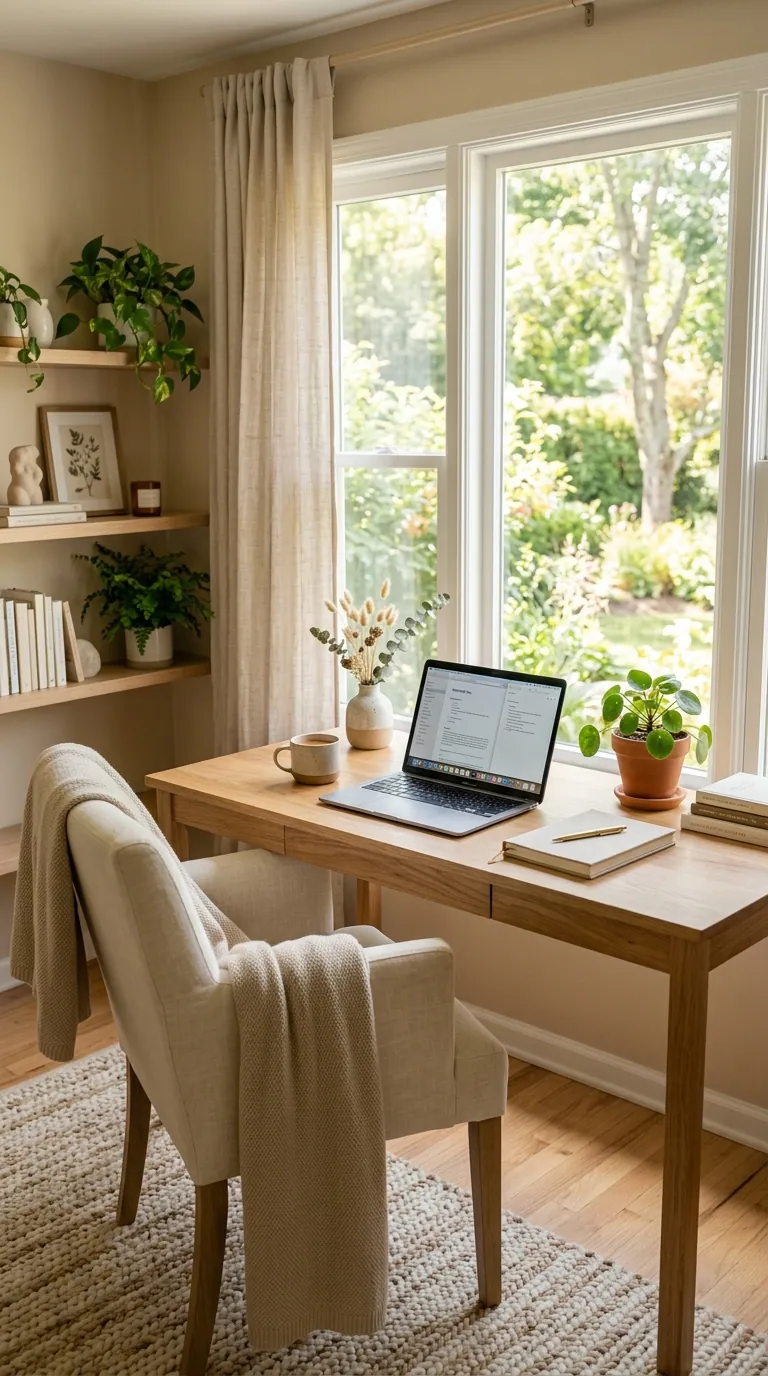
If possible, position your desk near a window where you can benefit from natural daylight.
A view outside can also give your eyes a break during long periods of screen time. Keep the area around the window relatively simple so the desk doesn’t become visually crowded.
Linen or lightweight curtains can soften strong daylight while keeping the room bright.
5. Built-In Home Office
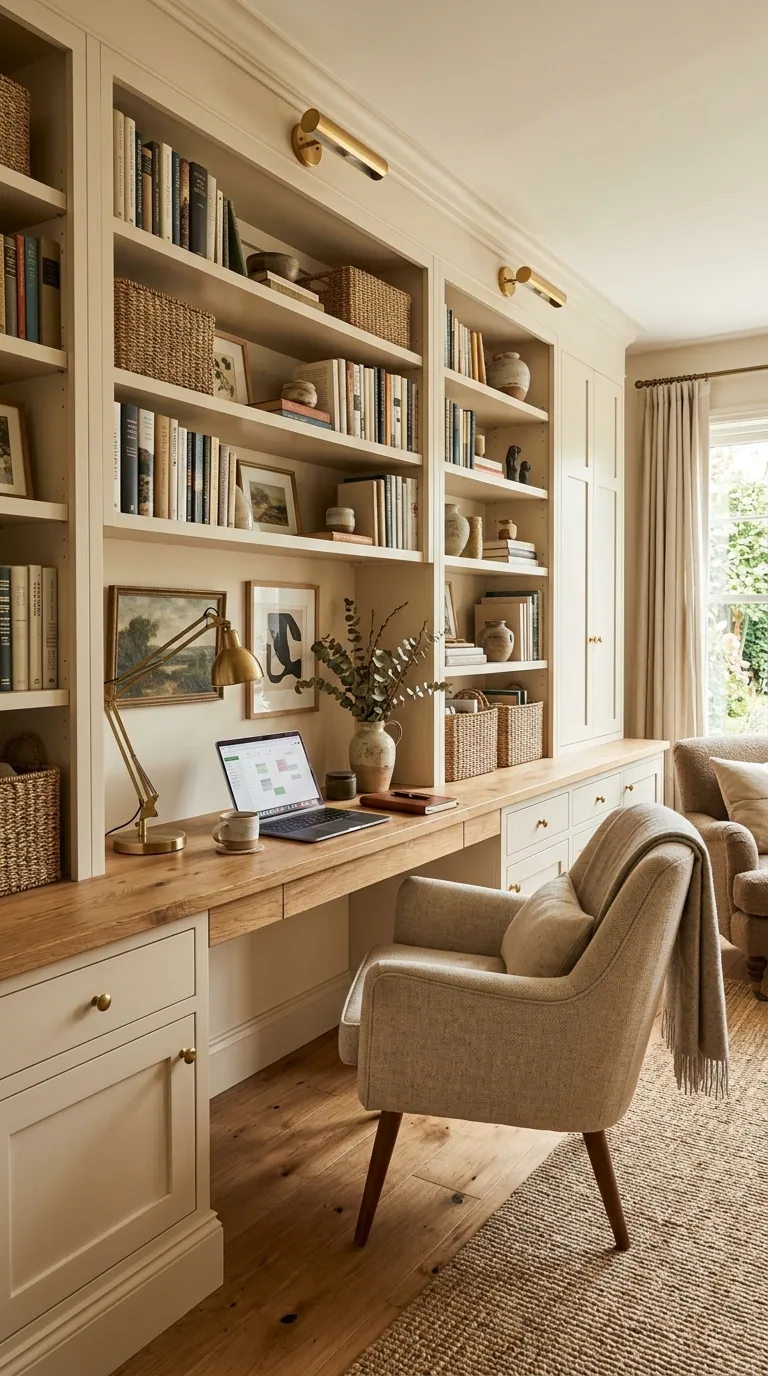
Built-in desks are particularly useful when you need to make the most of a specific wall.
Shelves above the desk can provide space for books, files, baskets, and decorative objects without taking up valuable floor area.
Paint the cabinetry or shelving in a color that works with the room so the entire workspace feels intentional rather than added on later.
6. Small Home Office Corner
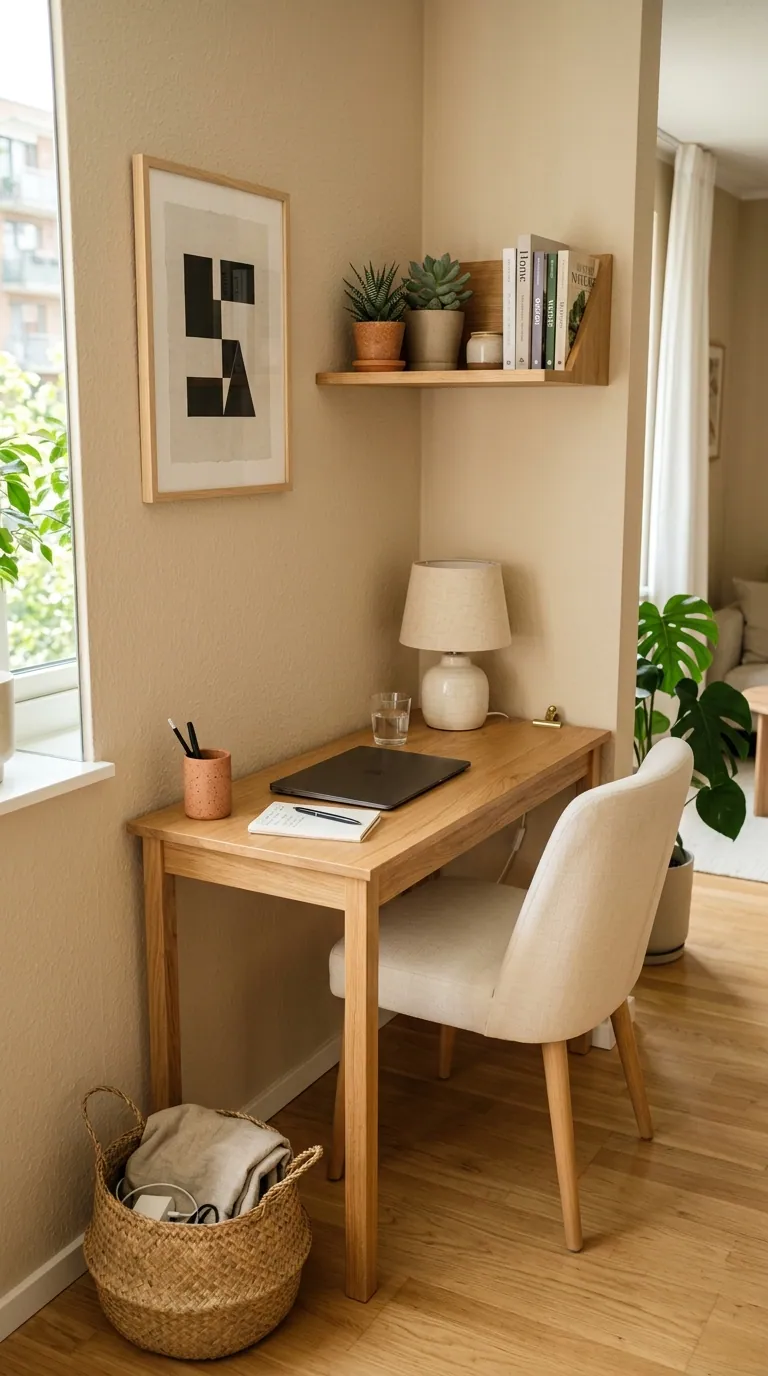
You don’t need a dedicated office to create a functional workspace.
A narrow desk can fit into an unused corner of a bedroom, living room, or hallway. Add a comfortable chair, task lighting, and one or two storage solutions.
The smaller the workspace, the more important it becomes to keep only the things you actually use.
7. Home Office With Open Shelving
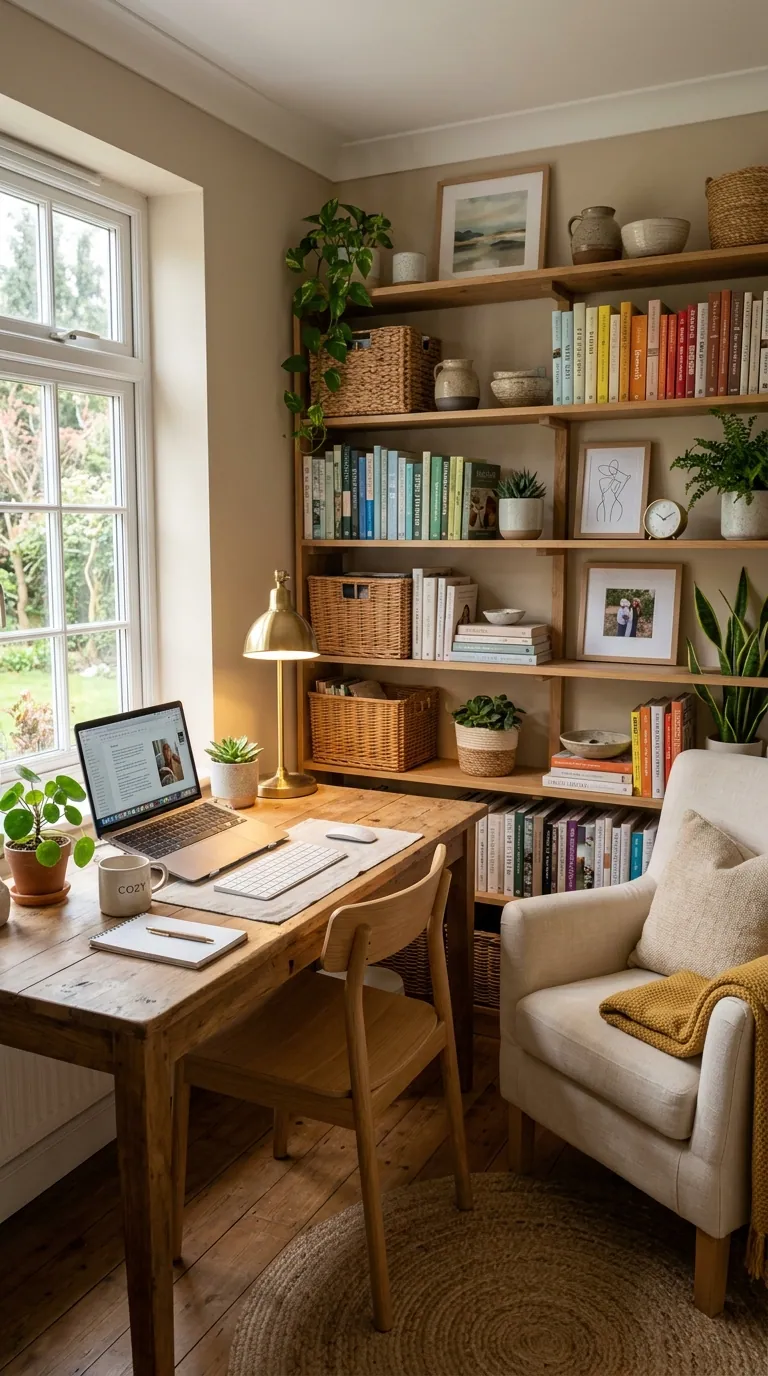
Open shelving gives a home office both storage and personality.
Use a combination of books, woven baskets, framed artwork, ceramics, and practical containers. Avoid filling every shelf because some empty space will keep the arrangement from feeling cluttered.
Place frequently used items within easy reach and less-used supplies higher up.
8. Office With a Statement Lamp
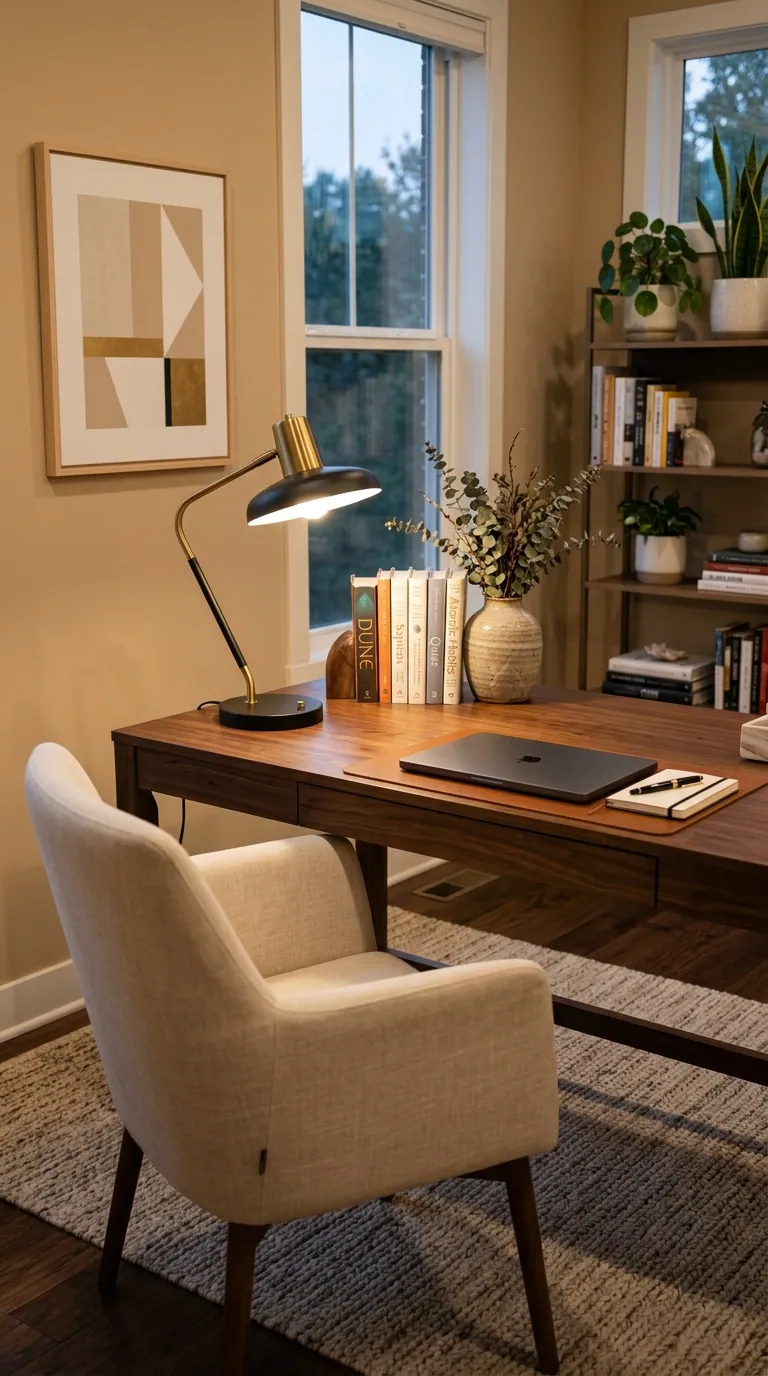
Good lighting is essential for a workspace, but it doesn’t have to look purely functional.
A sculptural desk lamp or floor lamp can become part of the room’s decor while providing useful task lighting.
If you work at night, combine focused desk lighting with softer ambient lighting elsewhere in the room to avoid creating a harsh environment.
9. Compact Writing Desk
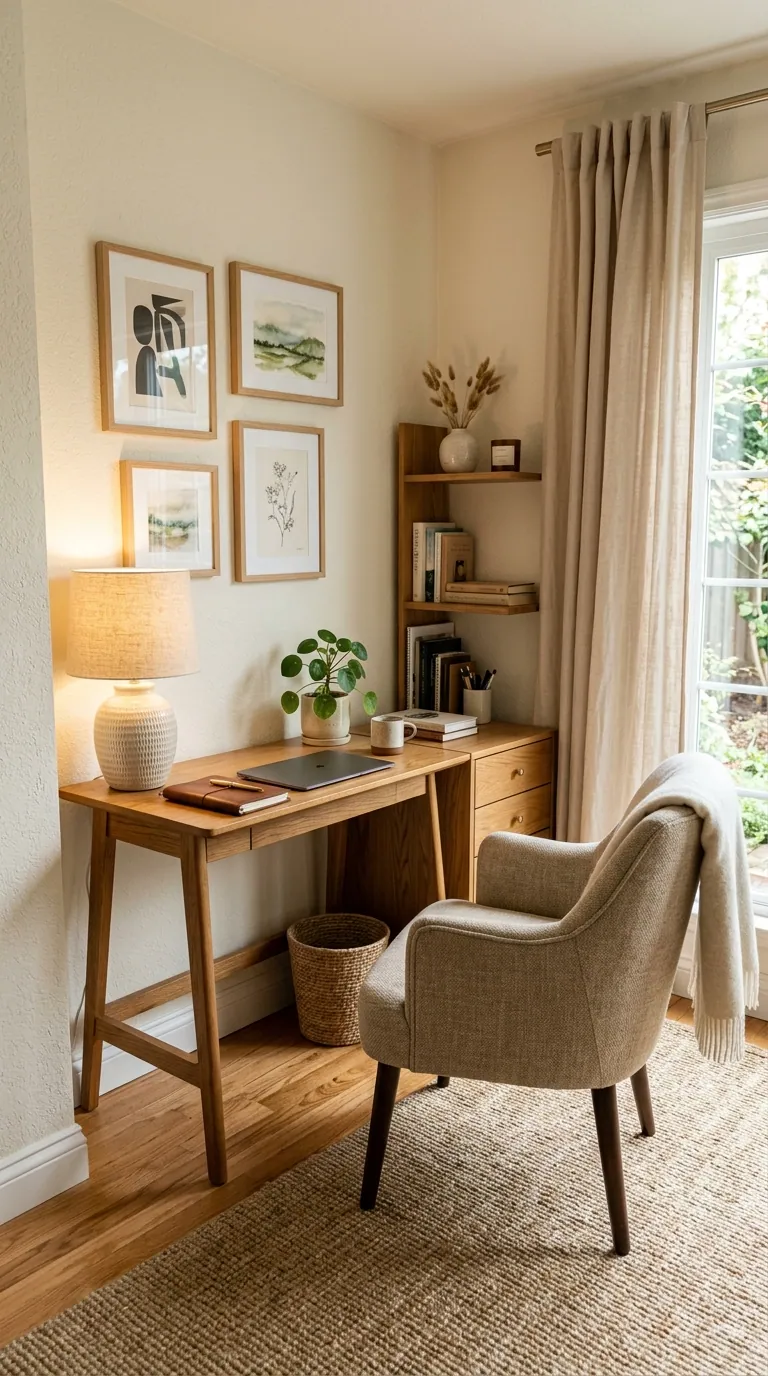
A slim writing desk can be enough for a laptop and basic office supplies.
This is particularly useful in apartments or rooms where a full-size workstation would overwhelm the available space.
Choose a desk with drawers if possible so everyday clutter can disappear quickly at the end of the workday.
10. Home Office Gallery Wall
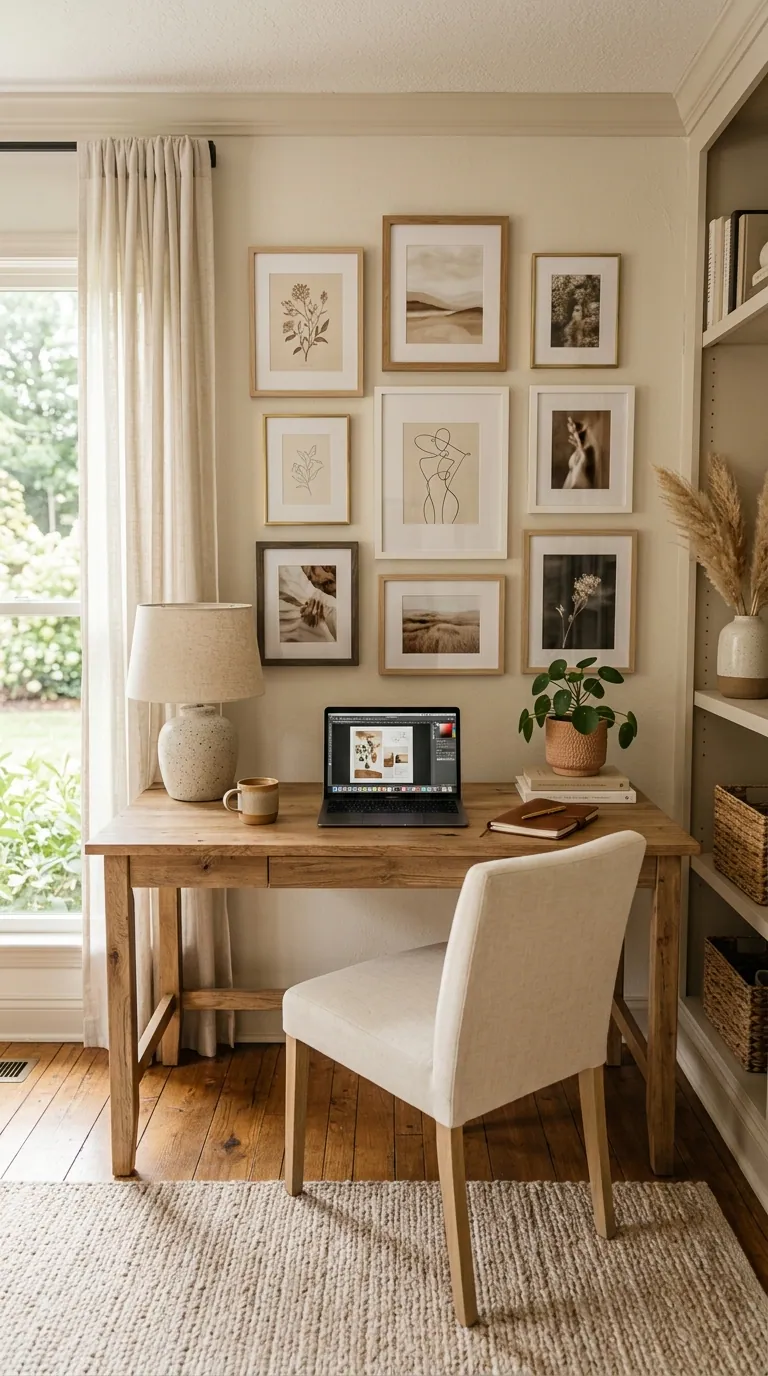
Artwork can make a home office feel considerably more personal.
Create a small gallery wall above or beside the desk using artwork, photographs, prints, or simple framed pieces.
Choose a connected color palette rather than making every frame identical. This creates a collected appearance without making the wall feel chaotic.
11. Office With Closed Storage
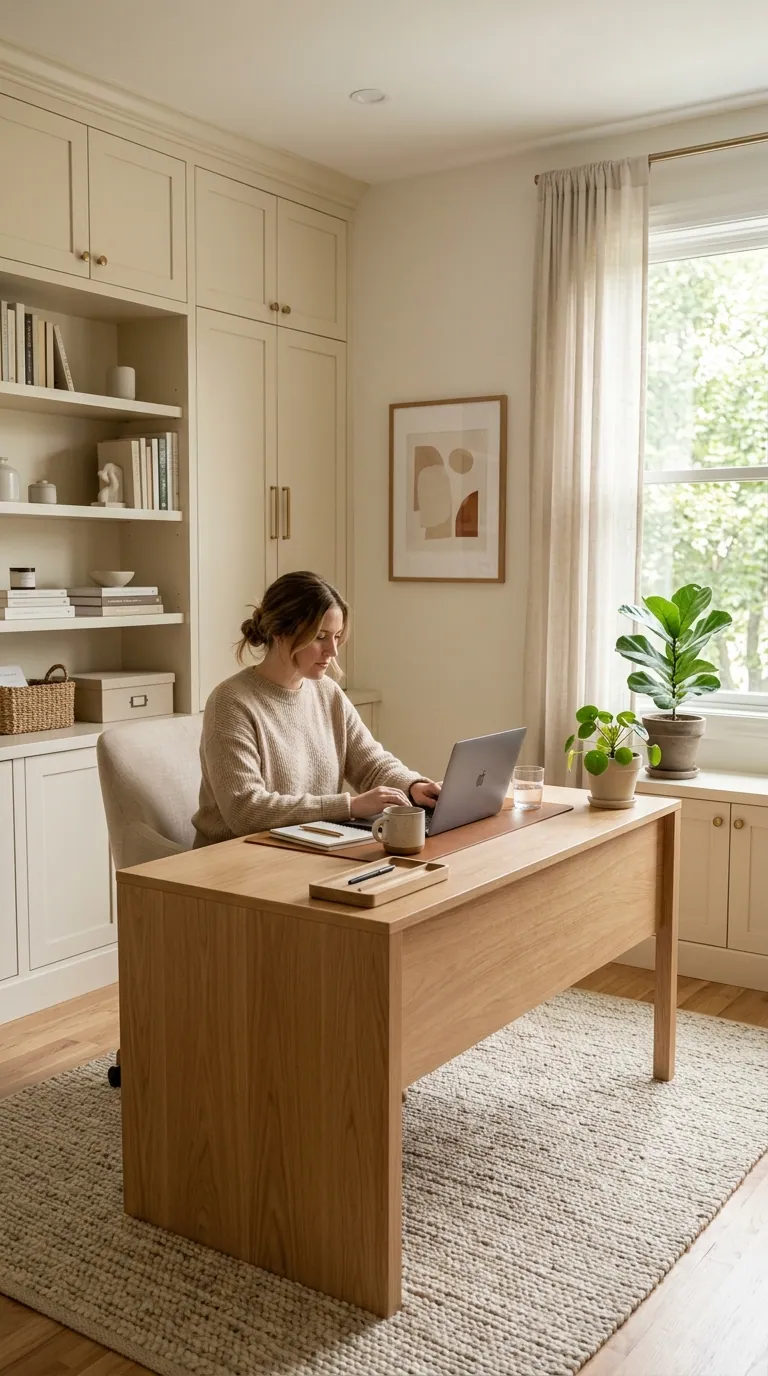
Closed cabinets are ideal if you prefer a visually quiet workspace.
Files, cables, stationery, and miscellaneous supplies can all be hidden behind doors, leaving the desk and surrounding room looking much cleaner.
This is especially helpful when the office is part of a bedroom or living room and needs to look presentable outside working hours.
12. Cozy Reading and Work Corner
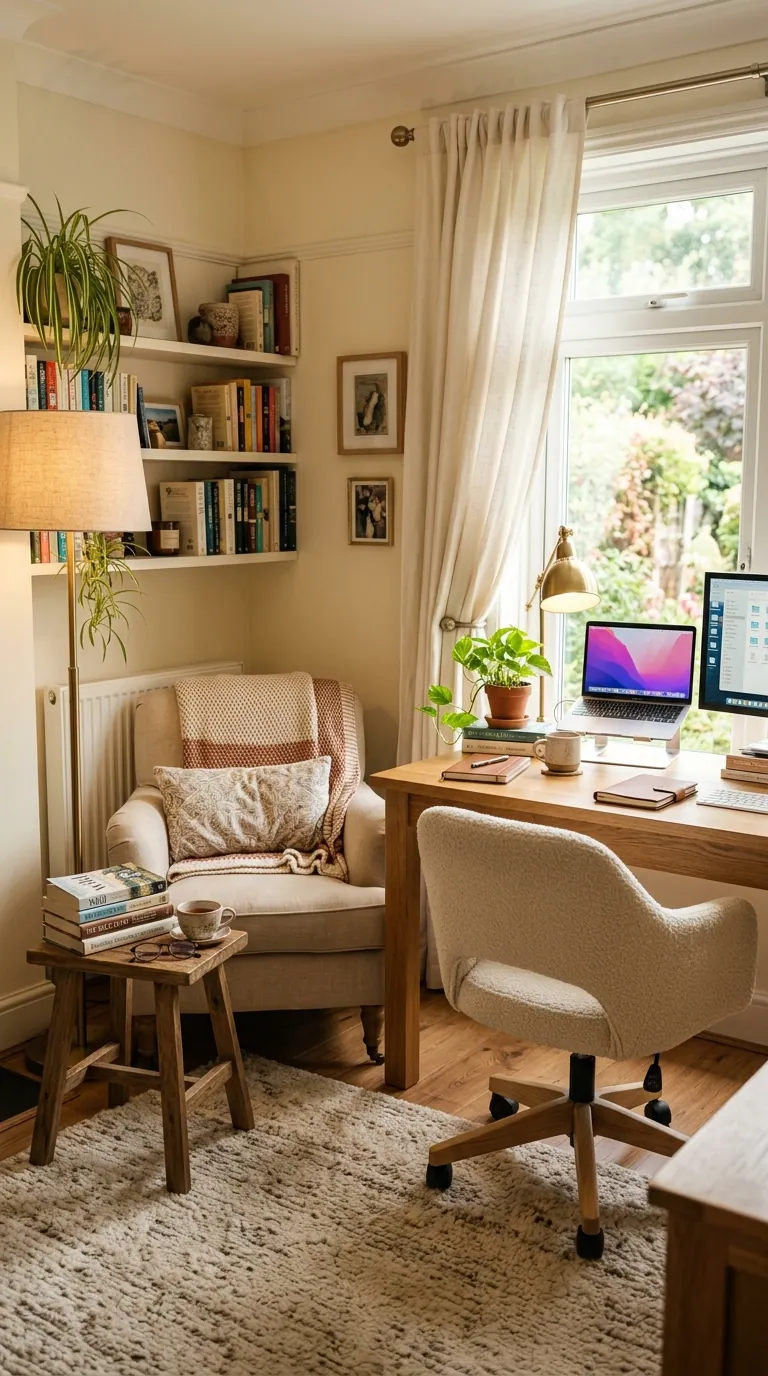
If you have enough room, create a small secondary seating area beside the desk.
A comfortable accent chair, small side table, and floor lamp can provide a place for reading, taking a break, or reviewing documents away from the computer.
It also prevents the entire room from feeling like it exists only for work.
13. Desk With Wall-Mounted Storage
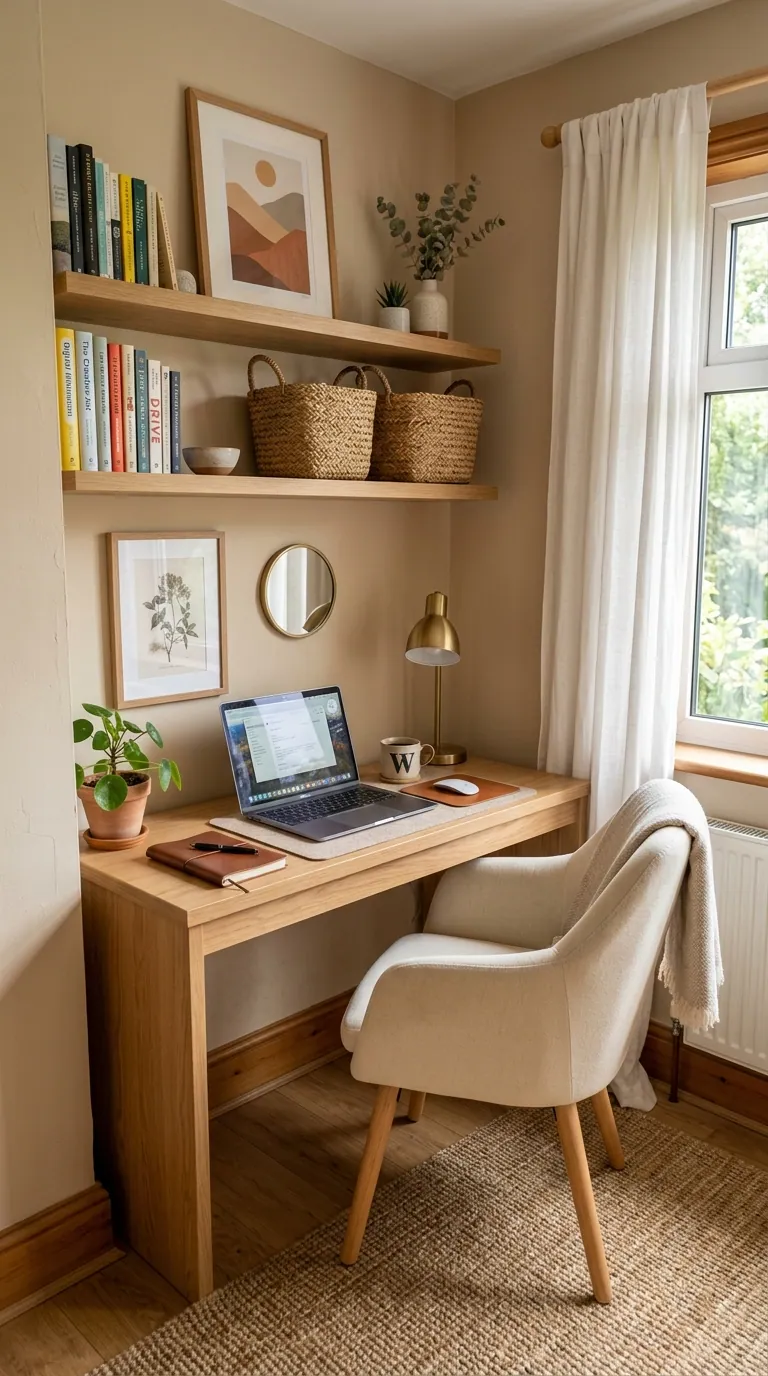
When floor space is limited, use the wall.
Floating shelves, pegboards, narrow cabinets, or wall-mounted organizers can keep essential items accessible without taking up desk or floor space.
Keep the most visible storage areas organized because they become part of the room’s overall appearance.
14. Soft Green Home Office
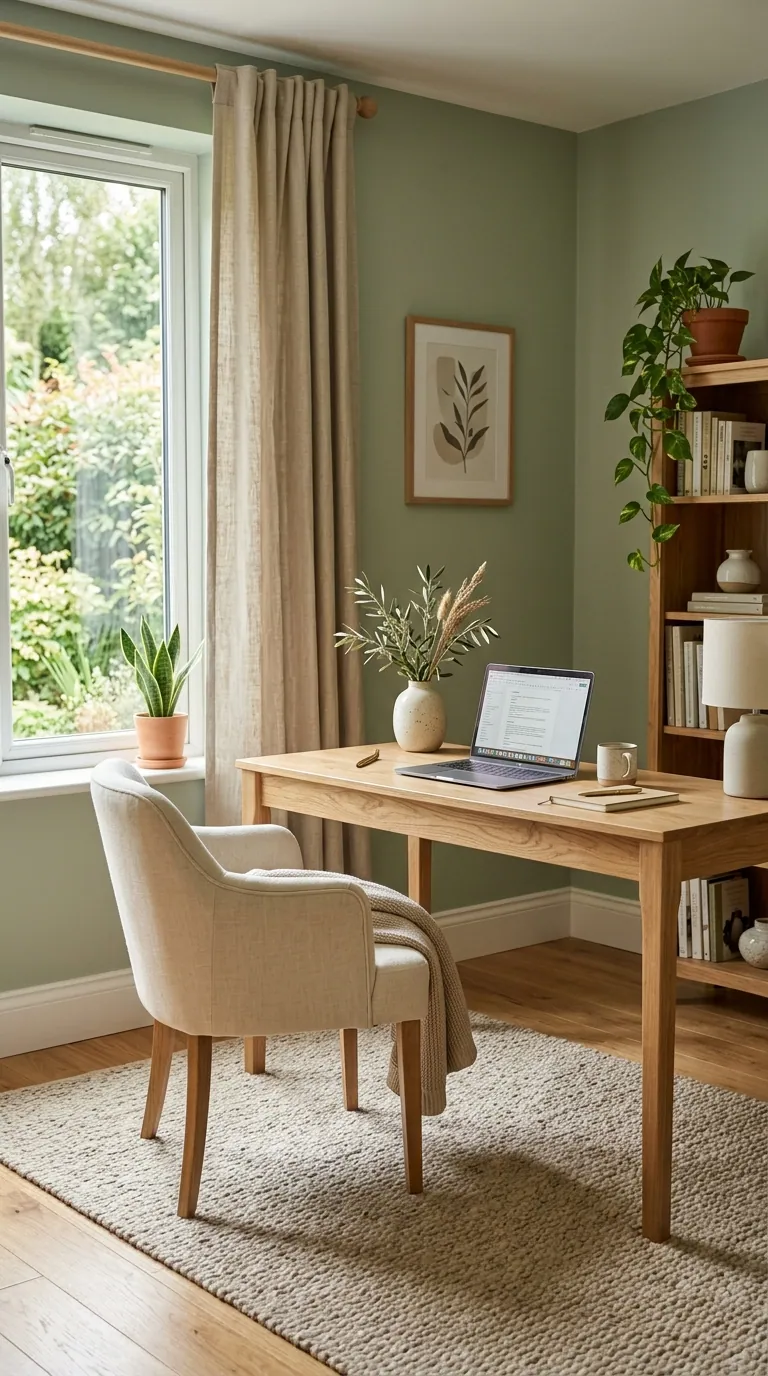
Soft green can create a relaxed atmosphere while still giving the office some color.
Use muted green on the walls, cabinetry, curtains, or a single accent piece. Pair it with natural wood, cream upholstery, and simple artwork.
The result can feel fresh without becoming visually distracting.
15. Home Office With a Rug
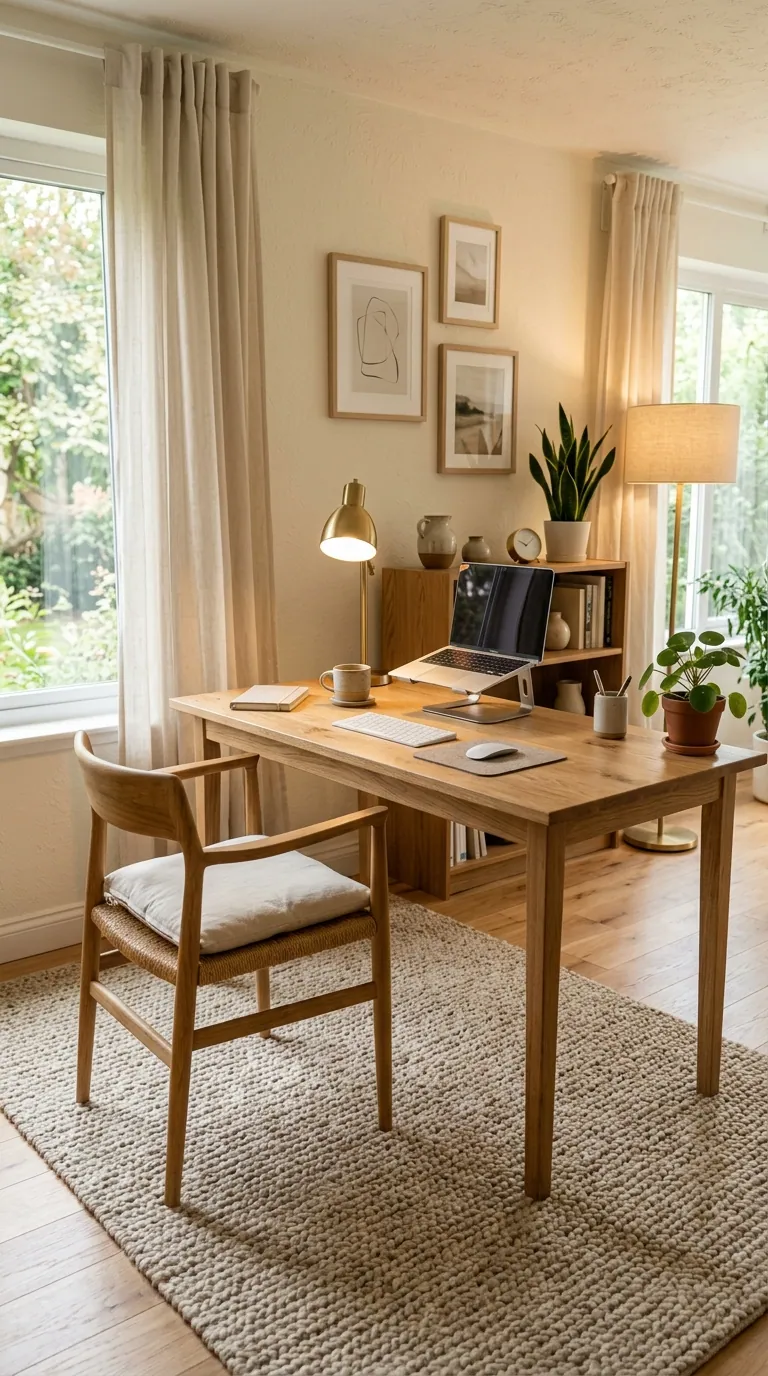
A rug can make a home office feel more finished and comfortable.
Choose a size that allows the main furniture to sit comfortably within the area rather than using a tiny rug that only fits under the chair.
Neutral textured rugs are particularly versatile because they add warmth without competing with the desk or artwork.
16. Double Desk Workspace
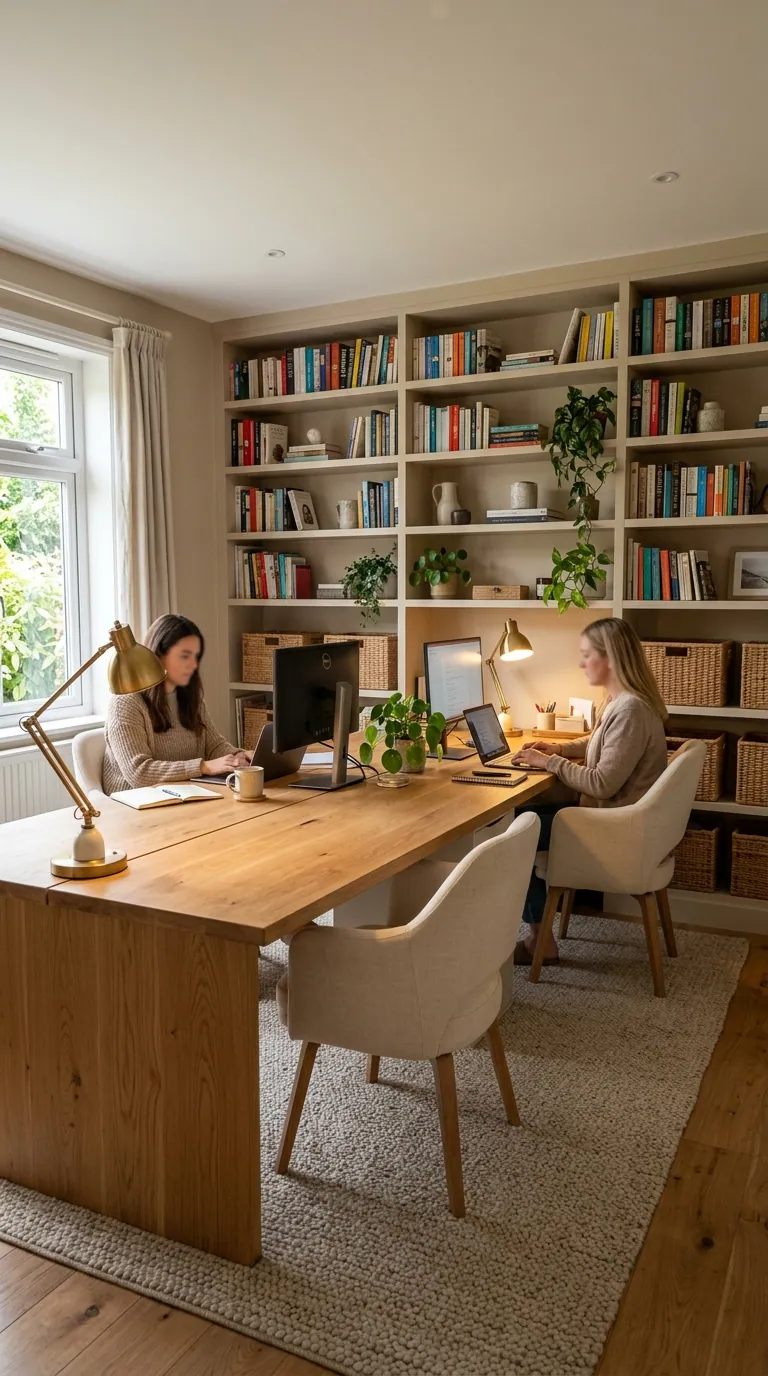
If two people need to work in the same room, create clearly defined work areas.
A long desk can provide two separate stations while keeping the room visually unified. Give each person dedicated storage and enough personal space.
Matching chairs or lighting can create consistency without requiring the entire room to be identical.
17. Bedroom Office Nook
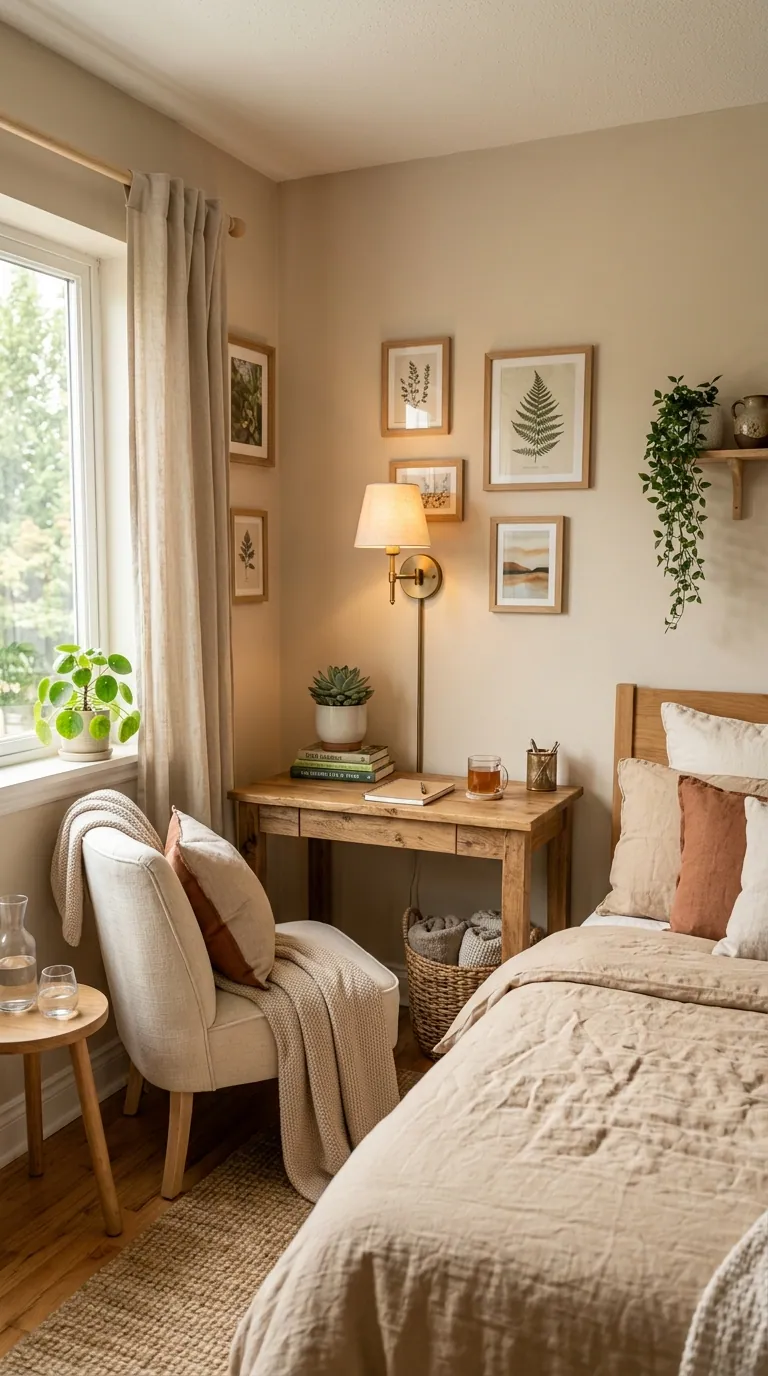
A bedroom corner can become a practical office when a separate room isn’t available.
Choose a compact desk that doesn’t dominate the bedroom and keep office supplies contained. A wall-mounted lamp can save valuable surface space.
When possible, visually separate the workspace from the bed using furniture placement or a small rug.
18. Moody Home Office
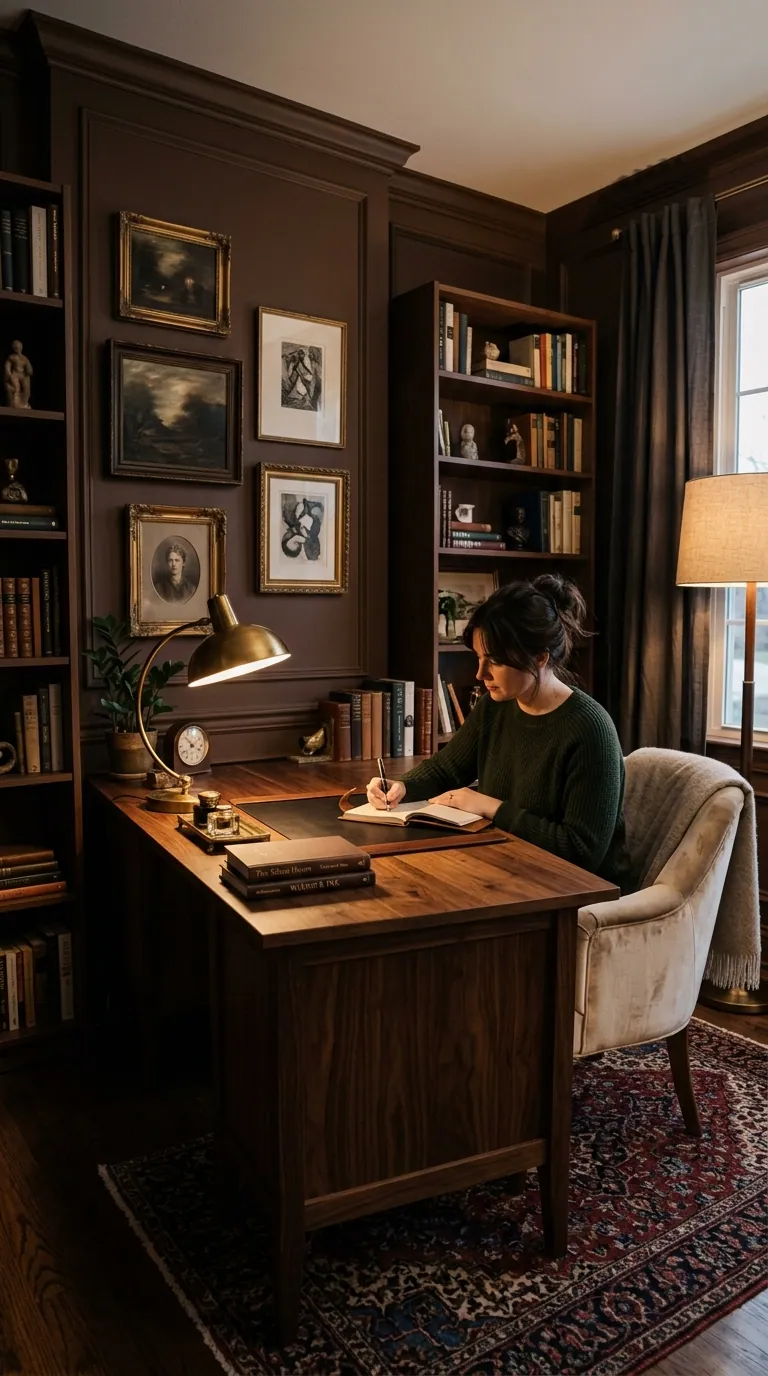
Darker colors can make a home office feel focused and intimate.
Deep brown, charcoal, muted green, or blue can work well on walls or cabinetry. Balance darker surfaces with warm lighting, natural wood, and lighter textiles.
This style works especially well in rooms with limited direct sunlight where a deliberately atmospheric feeling can be more appealing than trying to make everything bright.
19. Minimal Desk Setup
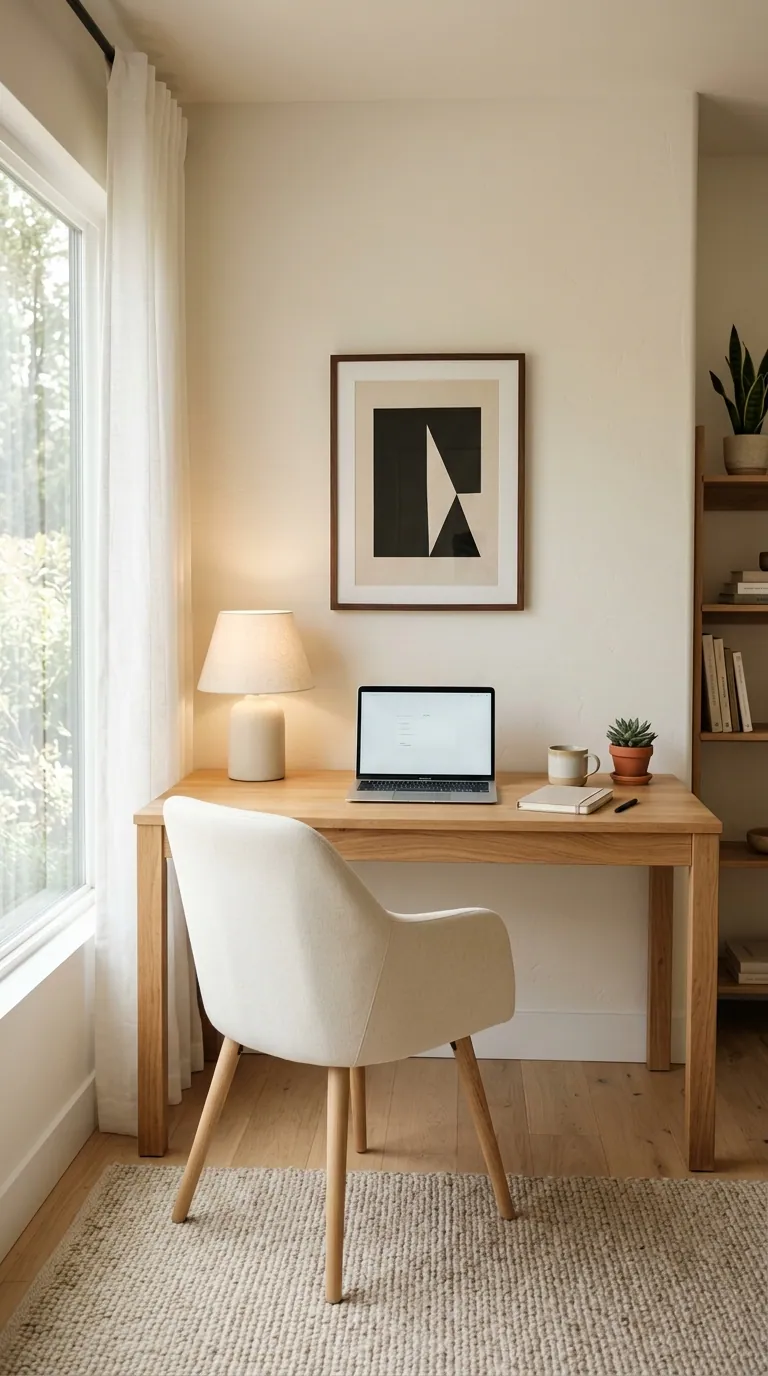
A minimalist workspace doesn’t mean an empty room.
Focus on keeping the desk limited to the things you actually use: your computer, a lamp, perhaps a notebook, and one or two useful accessories.
Use drawers or nearby storage for everything else. The result is a workspace that feels easier to maintain throughout a busy week.
20. Home Office With Plants
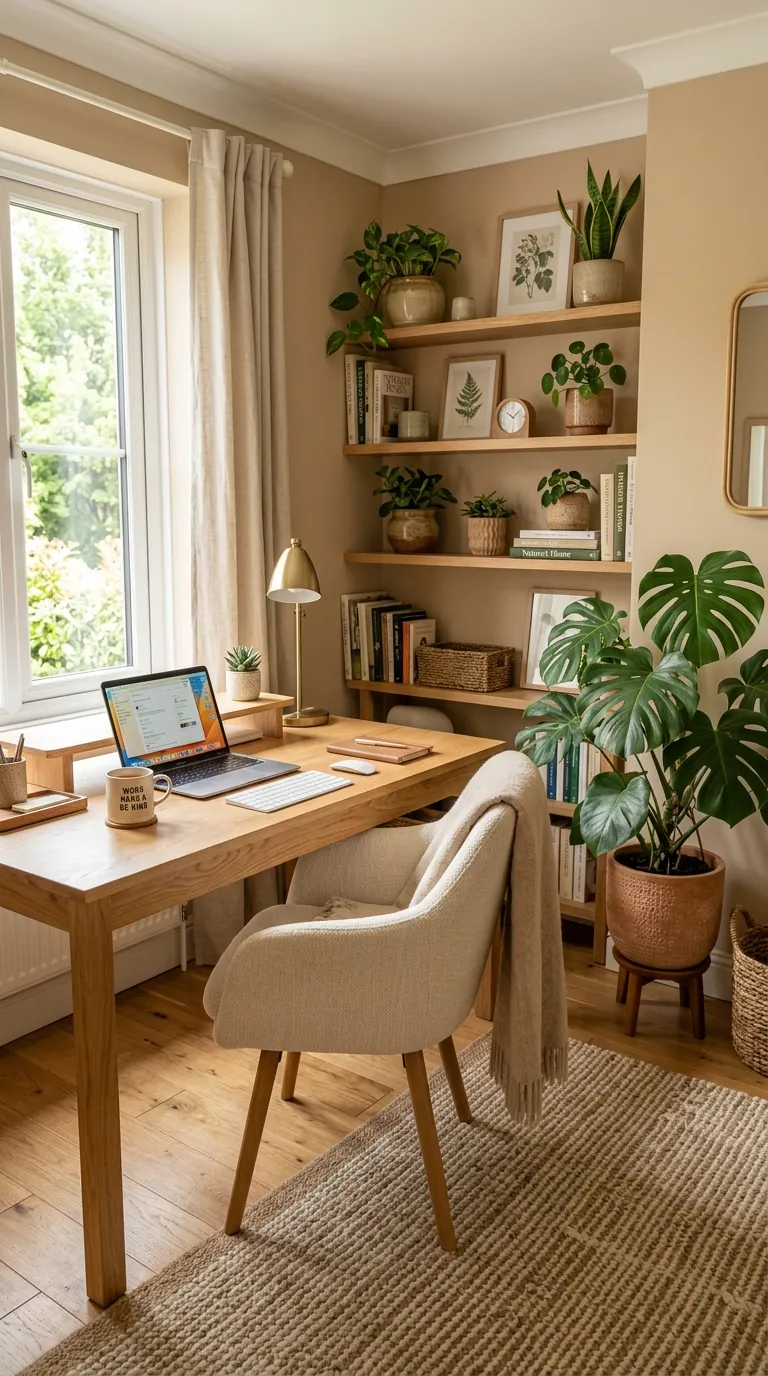
Plants can add life and softness to an office filled with hard surfaces and electronics.
Place one larger plant near the desk or use smaller plants on shelves and window ledges. Choose varieties that suit the available light and your ability to maintain them.
Keep the arrangement intentional rather than turning every available surface into a plant shelf.
21. Classic Home Office
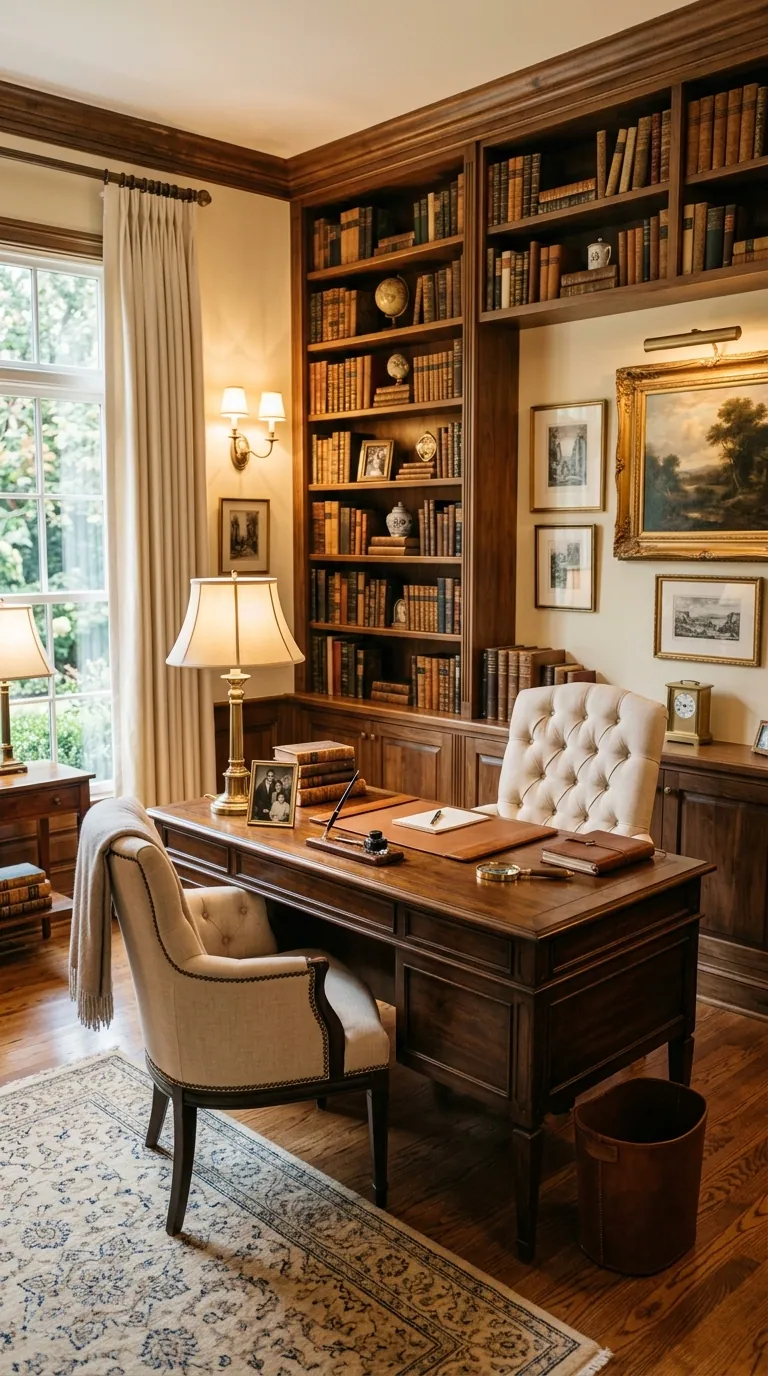
A classic office can combine a substantial wooden desk, comfortable upholstered chair, framed artwork, books, and traditional lighting.
Warm wood and darker accents can make the space feel established and comfortable.
You don’t need matching furniture throughout the room. A mixture of complementary pieces often makes the office feel more personal.
22. Small Desk With Large Artwork
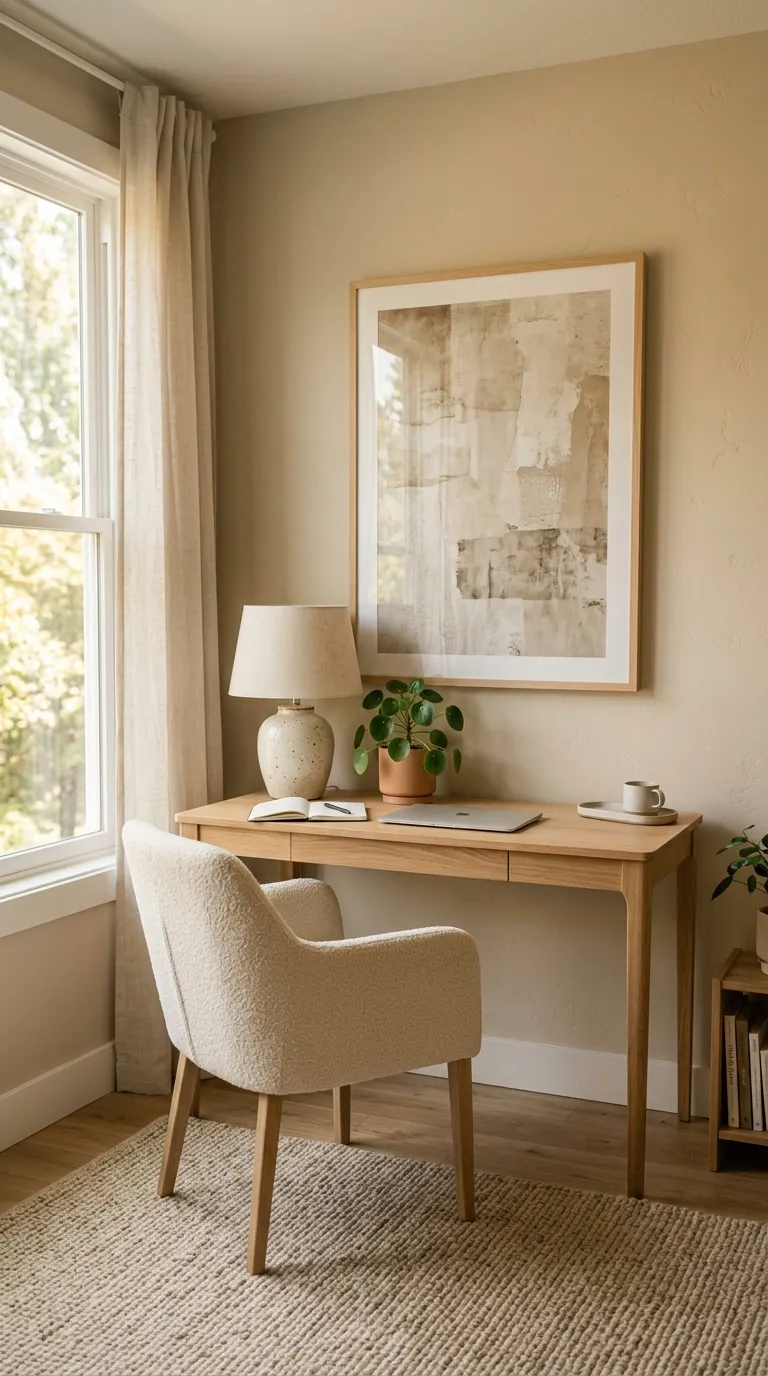
A small desk doesn’t have to create a visually small-looking workspace.
One large piece of artwork above the desk can give the area a stronger focal point and make the arrangement feel intentional.
Keep the rest of the wall relatively simple so the artwork has enough space to stand out.
23. Home Office With a Storage Wall
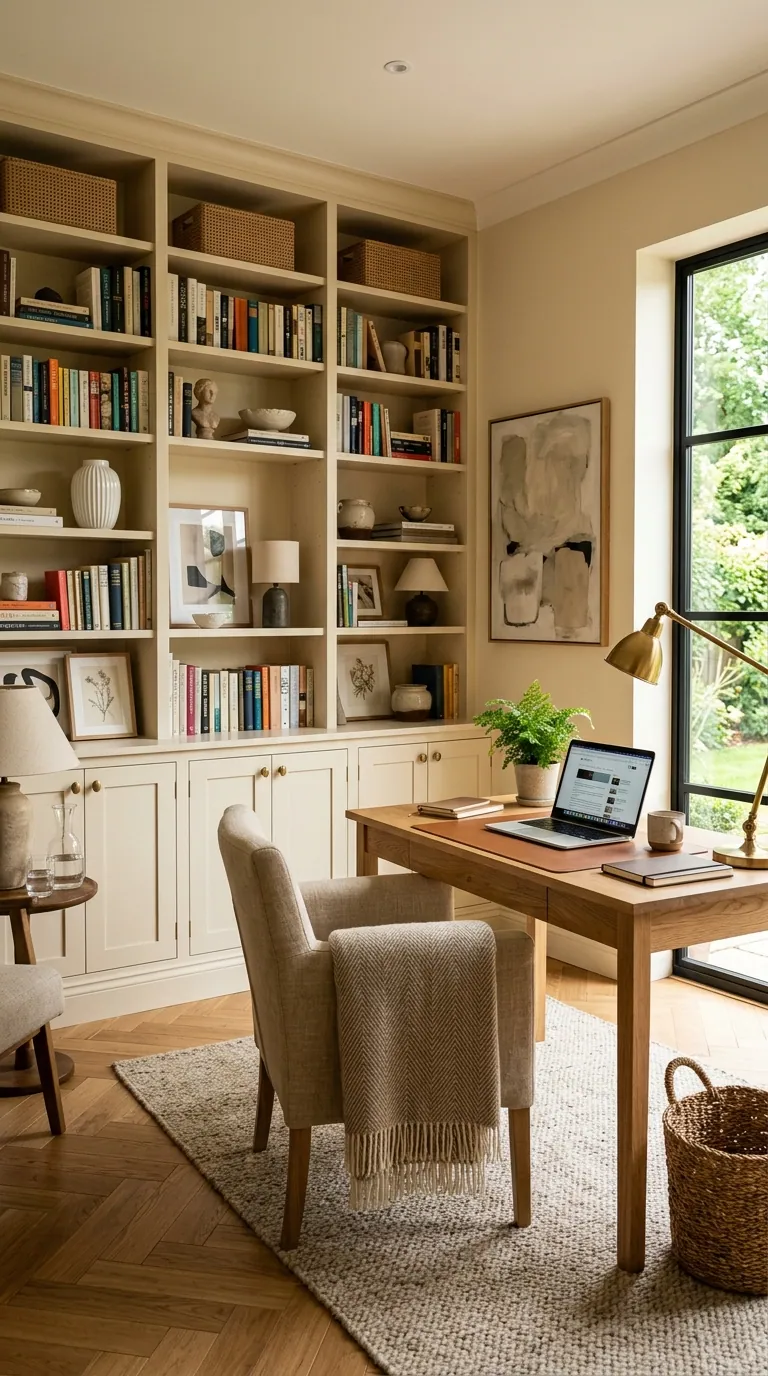
A full storage wall can transform an underused room into a highly functional office.
Combine open shelving, closed cabinets, drawers, and a dedicated desk area. This allows different types of supplies to have their own places.
Use baskets or boxes to contain smaller objects so the shelves remain visually organized.
24. Warm Apartment Workspace
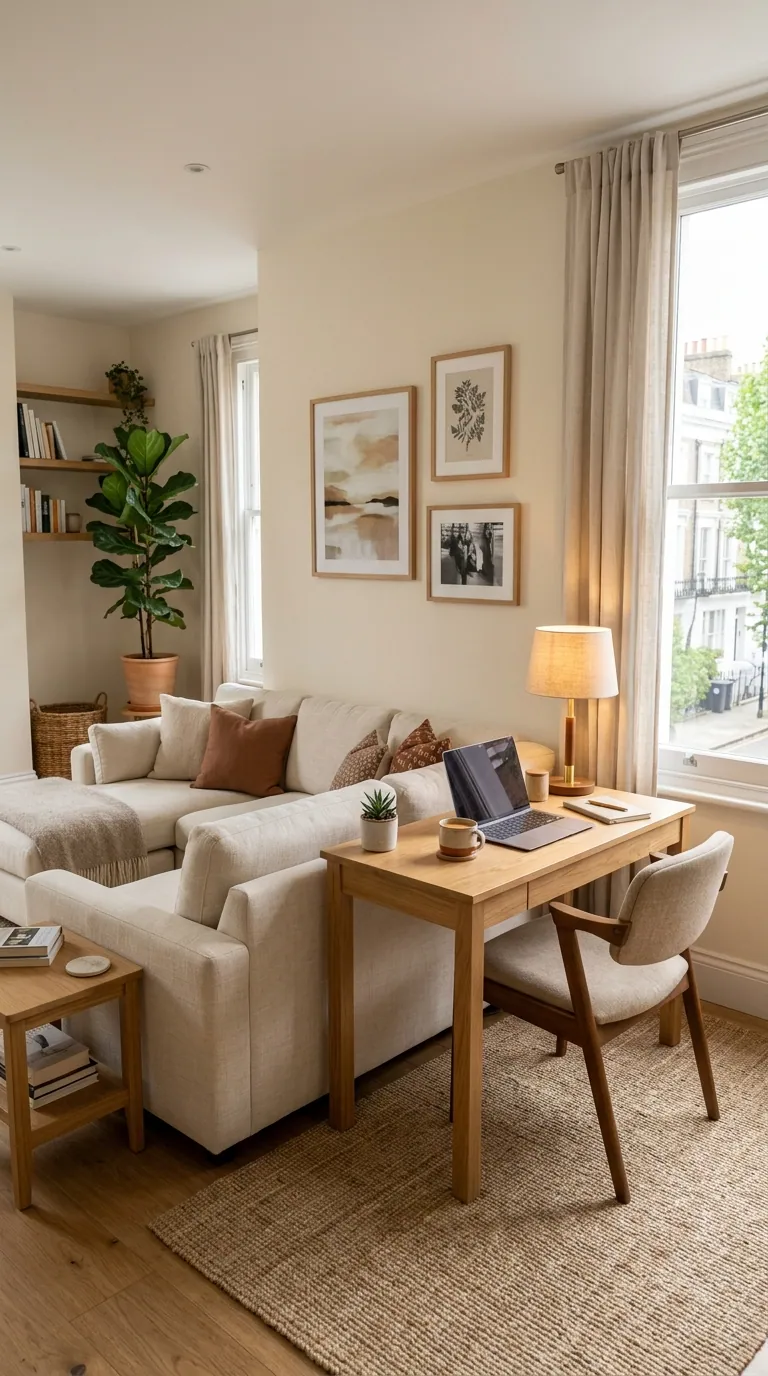
In an apartment, the home office often needs to coexist with another room.
Choose furniture that looks like normal home furnishings rather than office equipment. A wooden desk, comfortable upholstered chair, attractive lamp, and framed artwork can blend naturally into a living room.
This approach allows the workspace to disappear visually when you’re not working.
25. Complete Comfortable Home Office
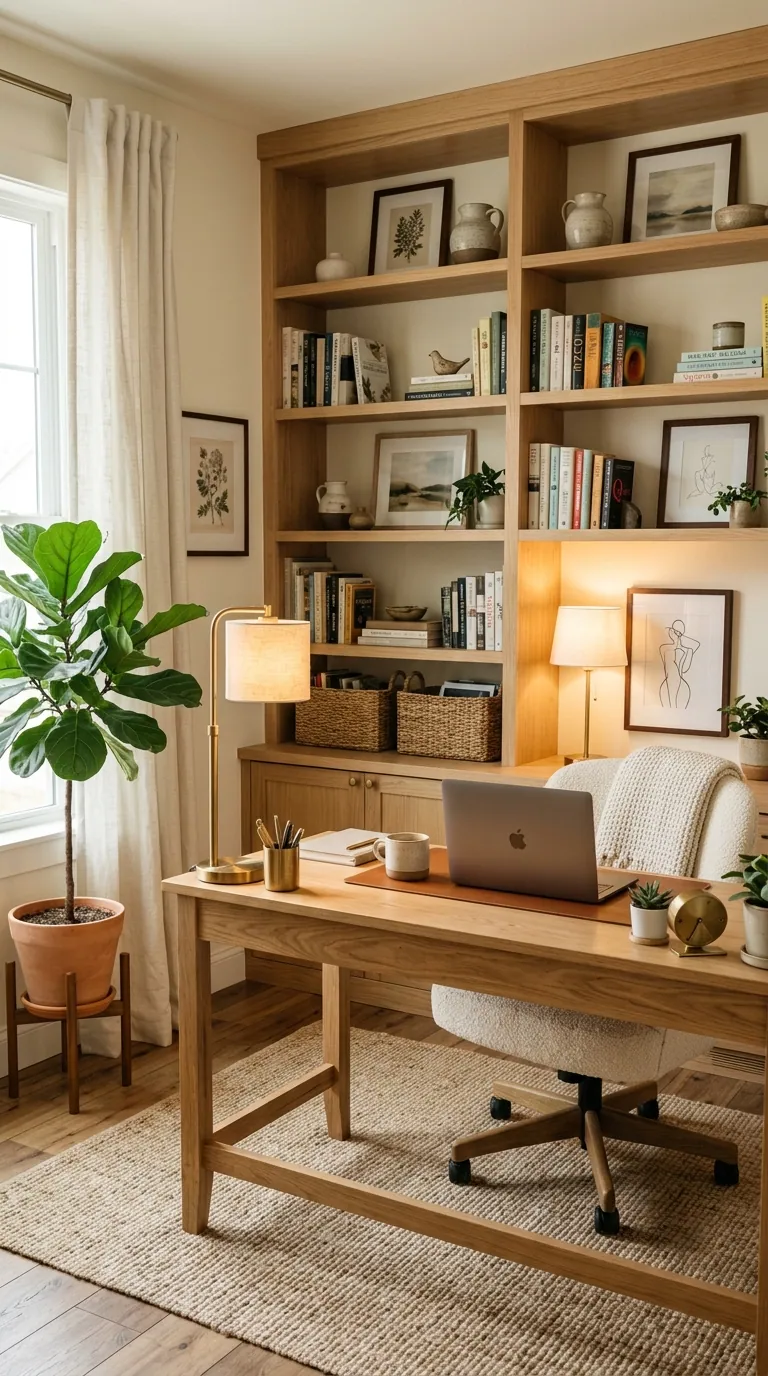
The best home office combines everything that makes a workspace practical with everything that makes a home comfortable.
Start with a desk and chair that genuinely work for you. Add adequate lighting, useful storage, and enough space to move comfortably.
Then bring in the details that make the room yours: artwork, books, plants, textiles, ceramics, photographs, or objects that have meaning to you.
A home office should support your work without feeling disconnected from the rest of your home.
How to Make a Home Office Feel Comfortable
Comfort comes from more than having a good chair.
Think about everything you interact with throughout the day. Your monitor should be positioned comfortably, your desk should provide enough working surface, and frequently used items should be within easy reach.
Lighting also matters. Ideally, combine natural daylight with focused task lighting and softer ambient light.
Finally, don’t overlook temperature, acoustics, and the ability to take short visual breaks from the screen. A comfortable office is easier to spend time in than one designed purely around appearance.
Home Office Ideas for Small Spaces
If you’re working with limited space, prioritize the essentials.
A compact desk can replace a large workstation. Wall-mounted shelves can provide storage without using floor space, while a narrow drawer unit can hide office supplies.
Look upward as well as outward. Vertical storage is often one of the easiest ways to increase capacity without making a small room feel crowded.
And when your office shares a room with another purpose, choose furniture that fits naturally into that room rather than making the workspace look like an entirely separate zone.
How to Keep a Home Office Organized
Good organization should make your daily routine easier rather than create more work.
Give common items permanent homes. Keep paperwork together, contain small supplies, and use cable management to prevent wires from spreading across the desk.
At the end of the day, spend a few minutes returning everything to its place.
A clean desktop makes it easier to begin the next morning without first having to deal with yesterday’s clutter.
How to Make a Home Office Look More Stylish
Start with the larger elements before worrying about accessories.
A good desk, comfortable chair, attractive lighting, and suitable rug will have a much bigger visual impact than dozens of small decorations.
Then introduce personality through artwork, books, plants, ceramics, and textiles.
Try to repeat a few materials or colors throughout the room. For example, natural wood can appear in the desk and shelves, while warm beige can connect the rug, curtains, and upholstery.
Common Home Office Decorating Mistakes
Choosing Style Over Comfort
A beautiful chair that becomes uncomfortable after an hour isn’t a good office chair.
Using Too Much Open Storage
Open shelves can quickly become visually overwhelming when every item is exposed.
Ignoring Lighting
A single ceiling fixture rarely provides ideal lighting for an entire workday.
Making the Desk Too Small
A desk should provide enough room for the equipment and materials you actually use.
Filling Every Wall
Artwork and shelves need breathing room. Empty space can make a workspace feel calmer.
Forgetting Cable Management
Even a beautifully decorated office can look messy when cables are visible everywhere.
Frequently Asked Questions
What should every home office have?
At minimum, a comfortable desk and chair, suitable lighting, enough storage, and a layout that allows you to work without feeling cramped.
How can I create a home office without a separate room?
Use a compact desk in an unused corner of a bedroom, living room, dining area, or hallway. Wall-mounted storage can help when floor space is limited.
What color is best for a home office?
There isn’t one perfect color. Warm neutrals, soft greens, muted blues, beige, and even darker shades can work well depending on the amount of natural light and the atmosphere you want.
How do I make a small home office look bigger?
Use appropriately scaled furniture, keep the desk relatively clear, use vertical storage, and avoid filling every available wall or surface.
Should a home office have a rug?
A rug isn’t essential, but it can add warmth, texture, and visual definition to the workspace, particularly when the office is part of a larger room.
How can I hide office clutter?
Use drawers, cabinets, baskets, boxes, and closed shelving for items that don’t need to remain visible. Keep the desktop reserved for things you use regularly.
Final Thoughts
A good home office should make everyday work easier without making your home feel like a workplace.
Start with the practical pieces: a comfortable chair, suitable desk, good lighting, useful storage, and enough room to move. Once those are working, add the details that make the space feel personal.
Whether you’re working from a dedicated room or a small corner of an apartment, the goal is the same: create a workspace that feels comfortable enough to use every day and beautiful enough to feel like part of your home.

