A kitchen should be more than a practical place to prepare meals. It is often where mornings begin, conversations happen, groceries are unpacked, and friends and family naturally gather.
The right kitchen design can make those everyday moments feel easier and more enjoyable. And you don’t necessarily need a complete renovation to get there. Small changes—warmer lighting, better organization, natural wood, updated hardware, open shelving, or a more thoughtful color palette—can make a surprisingly noticeable difference.
The key is finding the right balance between style and function. A beautiful kitchen still needs enough storage and workspace, while a highly practical kitchen can feel much more inviting when you add texture, warmth, and personality.
Whether your kitchen is modern, traditional, farmhouse-inspired, minimalist, or somewhere in between, these 29 kitchen ideas offer practical ways to make the space feel more beautiful, organized, and comfortable.
1. Start With a Warm Neutral Base
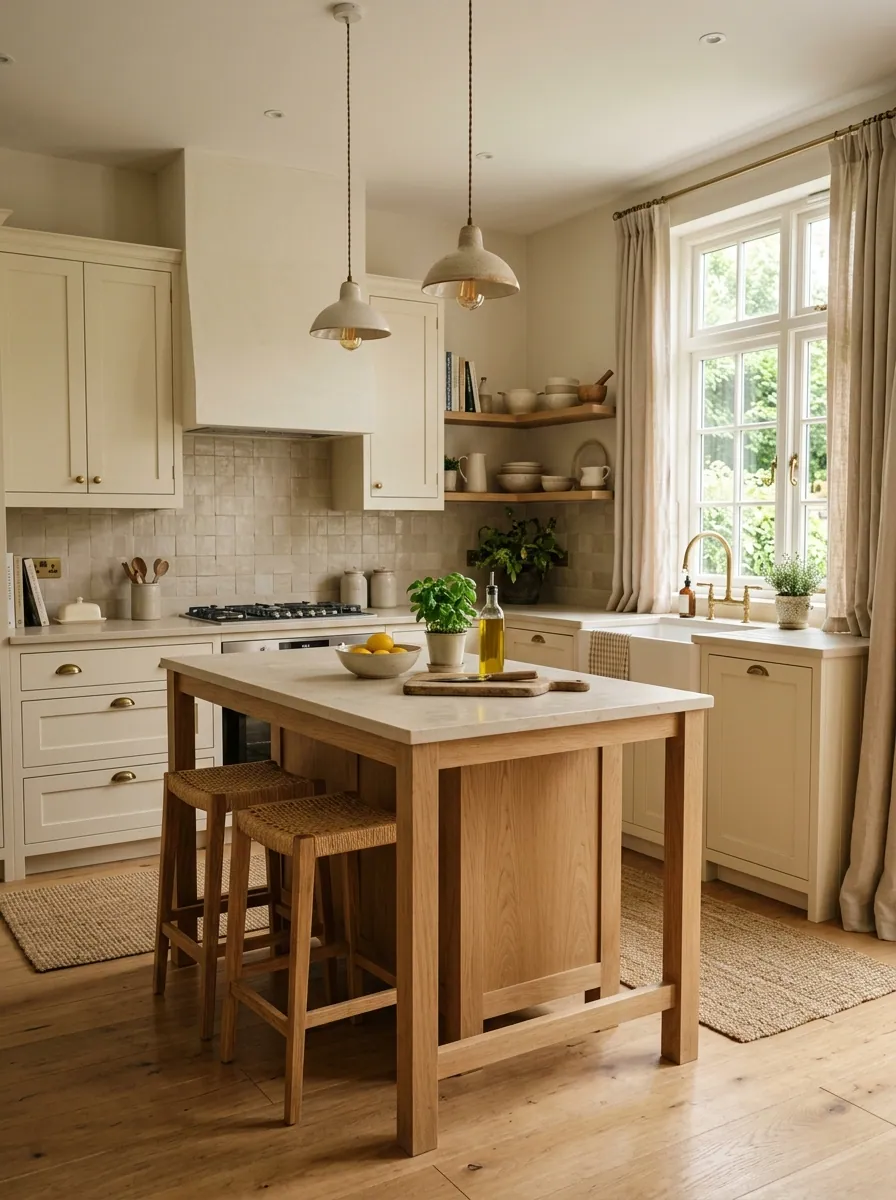
A neutral kitchen creates a flexible foundation that can work with almost any decorating style.
Instead of choosing one shade and repeating it everywhere, layer several related tones. Warm white cabinets can work beautifully with beige walls, light wood, creamy countertops, and slightly darker accessories.
This keeps the kitchen cohesive without making it feel flat.
If you eventually want to introduce color, a neutral foundation also makes that much easier. You can change stools, textiles, artwork, or accessories without having to redesign the entire room.
2. Make the Kitchen Island a Focal Point
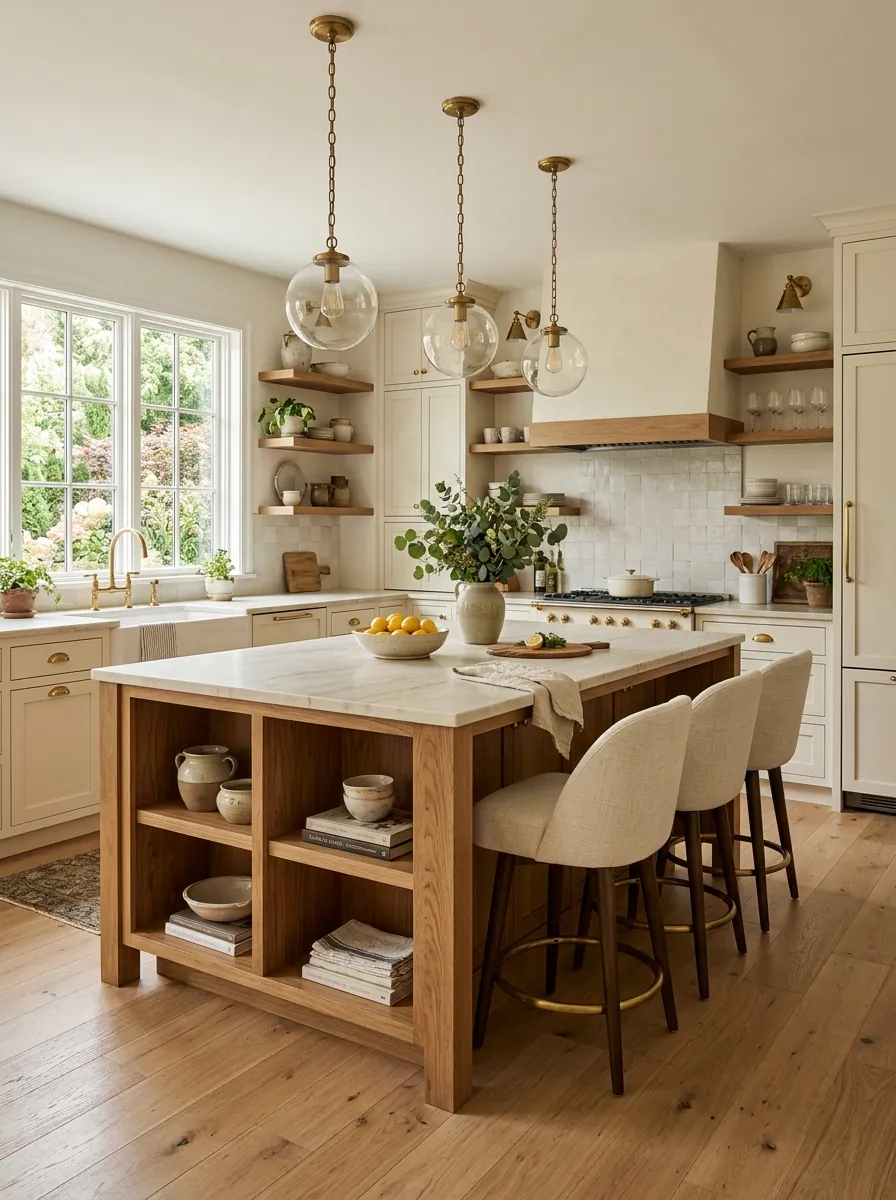
The kitchen island is often the visual and functional center of the room.
Instead of treating it as simply another work surface, give it some personality. A contrasting wood finish, waterfall-style countertop, distinctive stools, or beautiful pendant lights can turn the island into a focal point.
Keep the styling practical. A bowl of fruit, wooden cutting board, or simple ceramic vase can add warmth without taking away valuable workspace.
3. Add Natural Wood
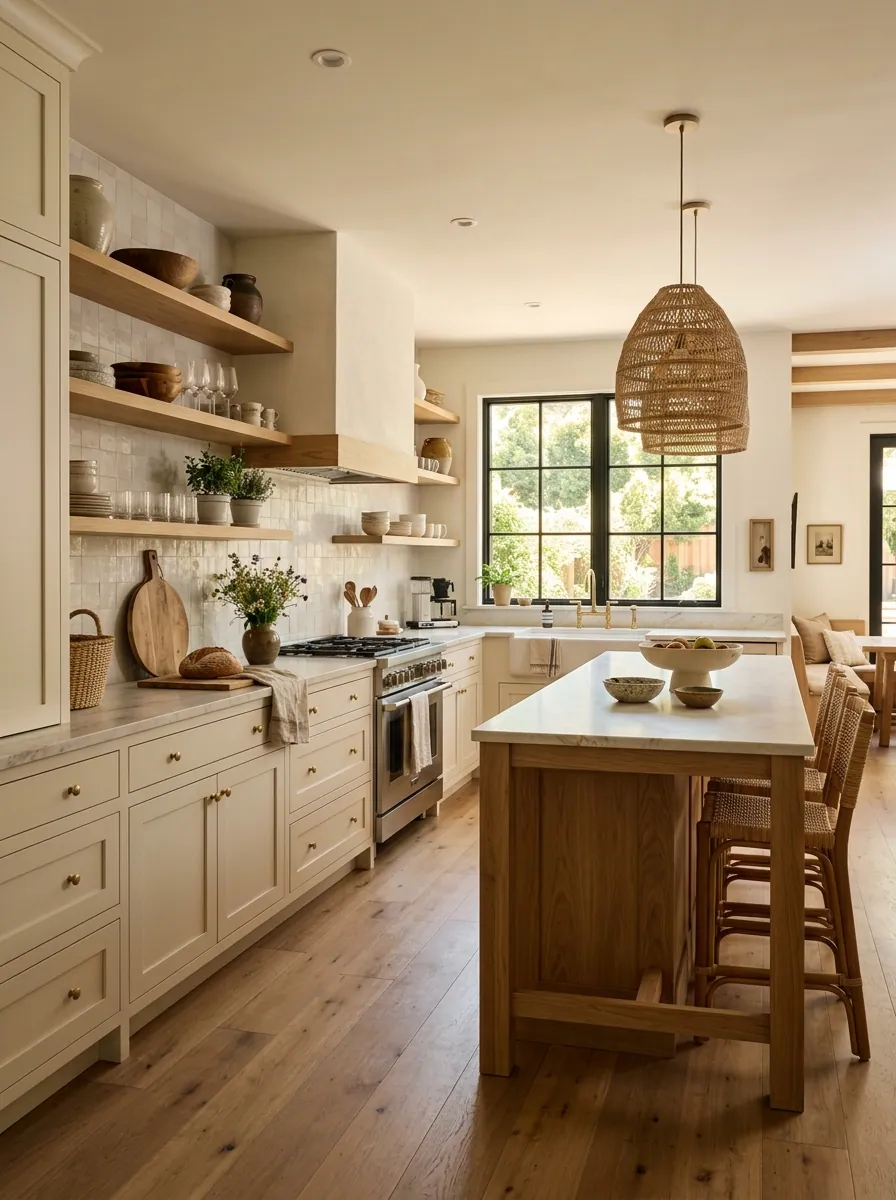
Natural wood can prevent a kitchen from feeling overly clinical.
Light oak creates an airy appearance, while walnut and darker woods add depth and richness.
You can introduce wood through:
- An island
- Floating shelves
- Bar stools
- Cutting boards
- Cabinet accents
- Dining furniture
- Decorative bowls
You don’t need every wooden element to match perfectly. Slight variations in tone often make the space feel more natural and collected.
4. Layer the Kitchen Lighting
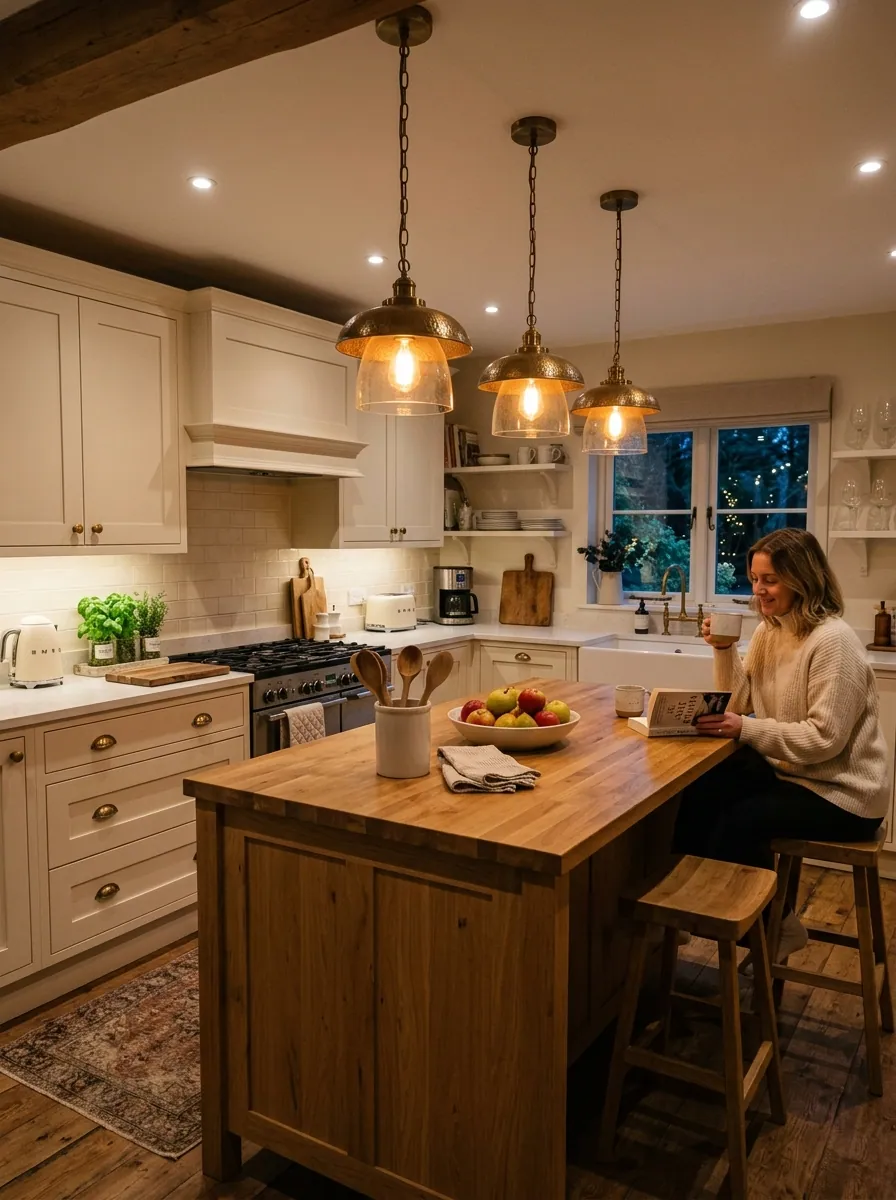
Kitchen lighting needs to be practical, but that doesn’t mean it has to feel harsh.
Use different types of lighting for different purposes. Pendant lights can illuminate the island, under-cabinet lighting can brighten work surfaces, and ceiling fixtures can provide general illumination.
In the evening, warmer accent lighting can make the kitchen feel much more inviting.
A combination of light sources creates depth instead of making every part of the room equally bright.
5. Use Pendant Lights Over the Island
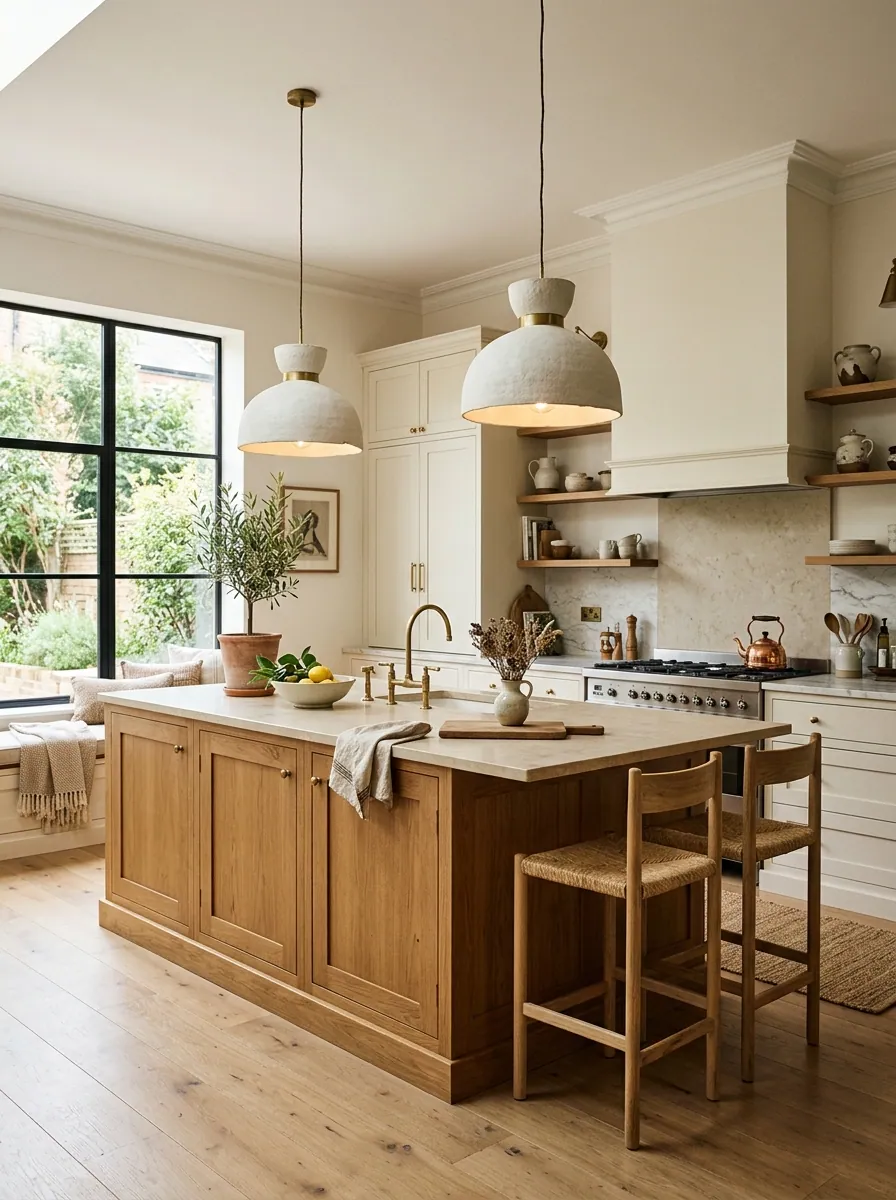
Pendant lights are an opportunity to add personality without changing the entire kitchen.
Woven shades create warmth, glass fixtures feel lighter, while metal or sculptural designs can give a modern kitchen more character.
When using multiple pendants, keep their spacing visually balanced with the size of the island.
The fixtures should feel intentional rather than randomly placed above the workspace.
6. Create an Organized Coffee Station
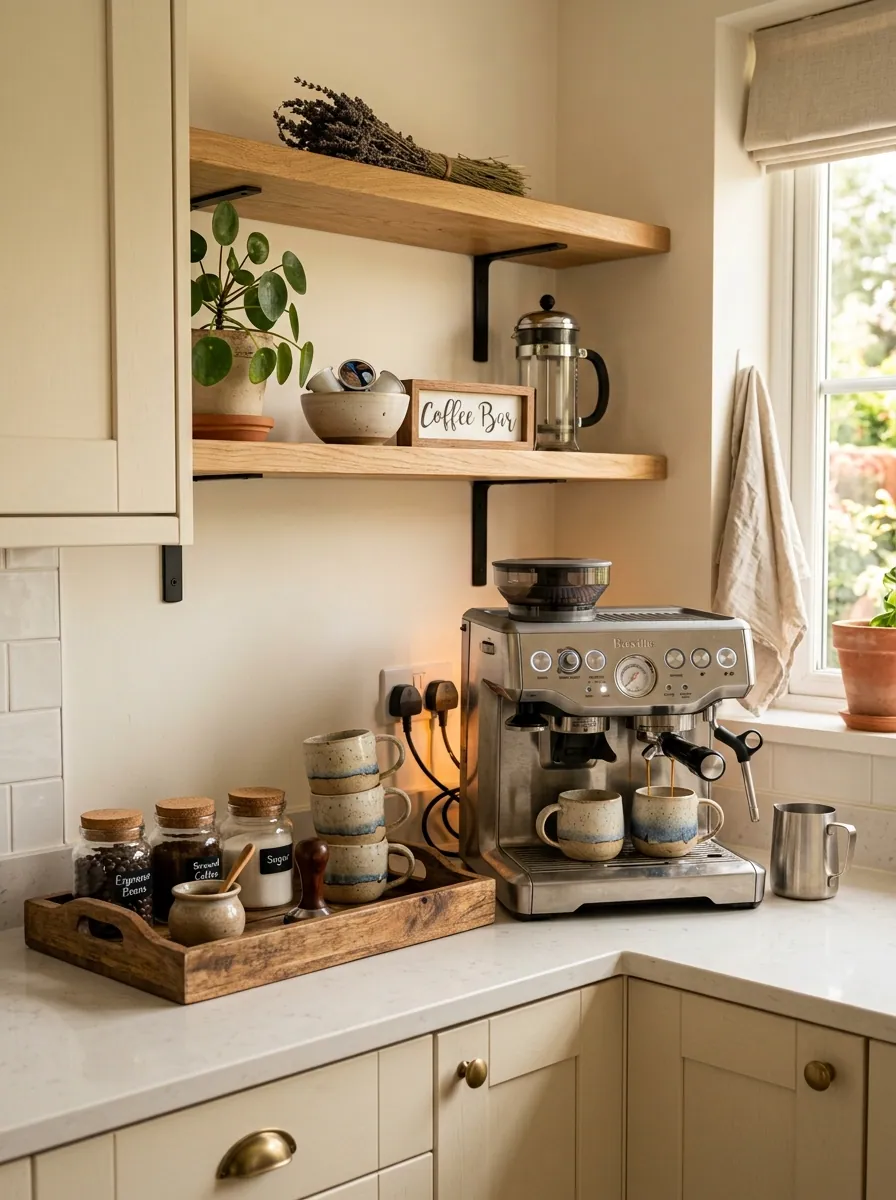
A dedicated coffee station can turn an everyday routine into a small design feature.
Use a tray to group the coffee machine, mugs, jars, and other essentials together.
If you have open shelving nearby, display a few attractive mugs or ceramic pieces.
The important thing is keeping the area organized. A coffee station should make your morning easier, not create another cluttered countertop.
7. Try Open Shelving
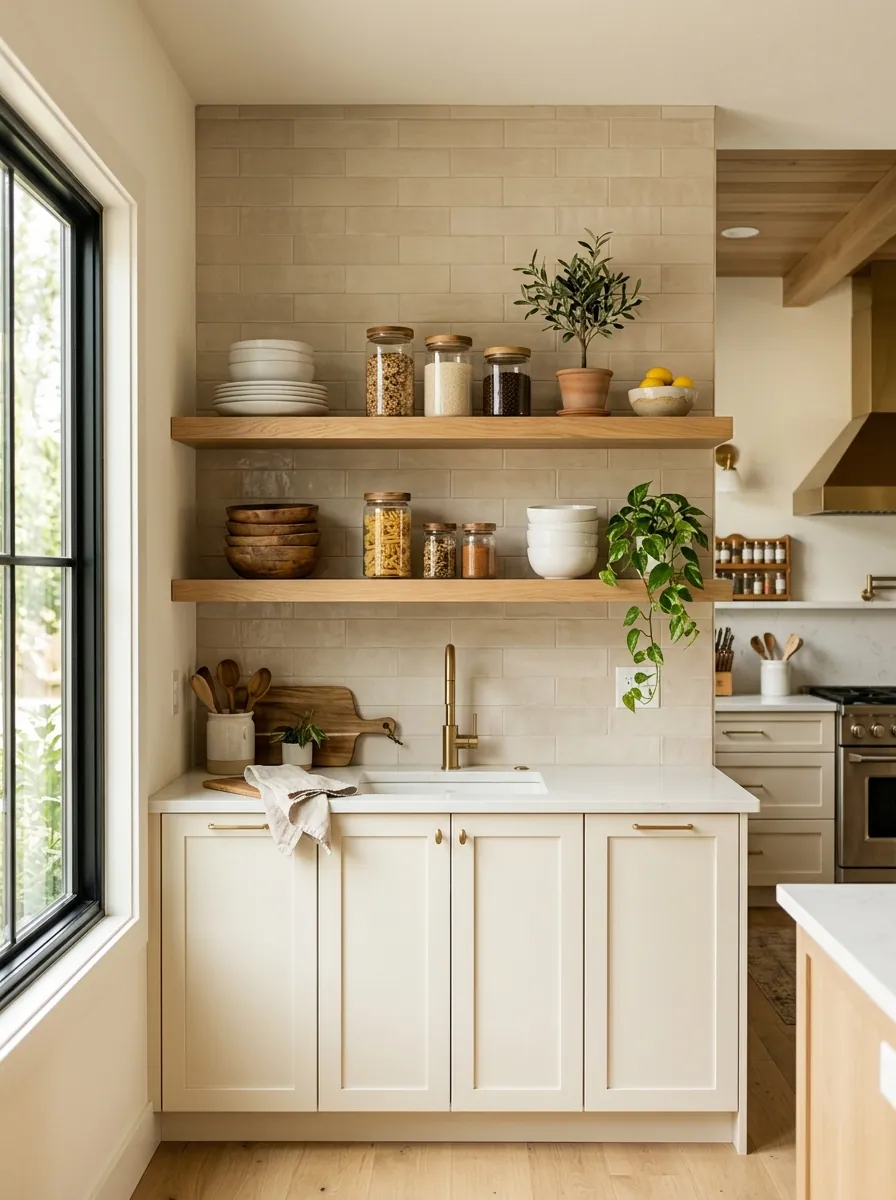
Open shelves can make a kitchen feel lighter and more personal.
Use them to display items you actually use, such as plates, bowls, glasses, or mugs.
Add one or two decorative pieces for visual interest, but avoid filling every inch.
A little empty space allows each object to stand out and prevents the shelves from looking cluttered.
8. Add a Large Kitchen Rug
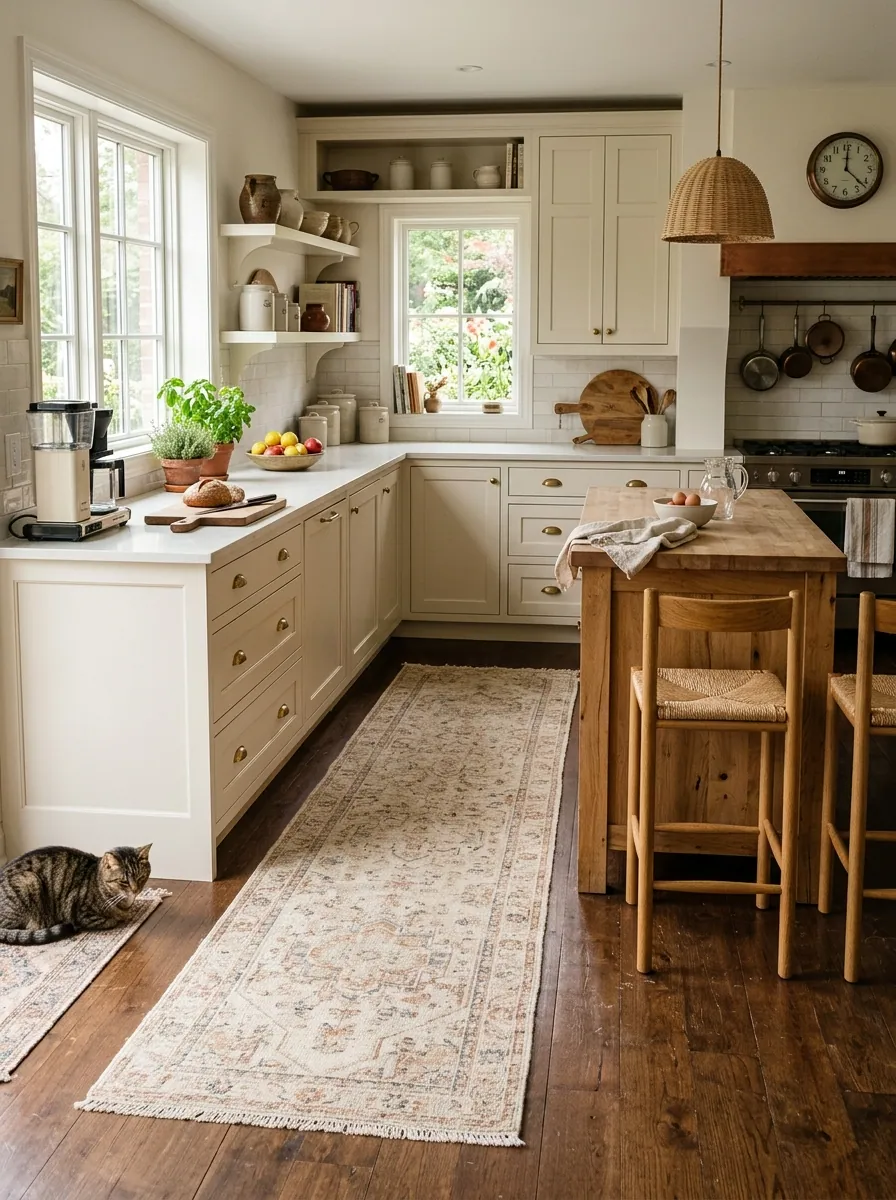
A kitchen runner can add surprising warmth to a space dominated by hard surfaces.
Choose a washable or easy-care design for a busy kitchen.
A subtle vintage pattern or warm neutral color can hide everyday marks while adding character.
Keep the proportions appropriate to the kitchen so the rug feels like part of the layout rather than an afterthought.
9. Use Warm Brass Hardware
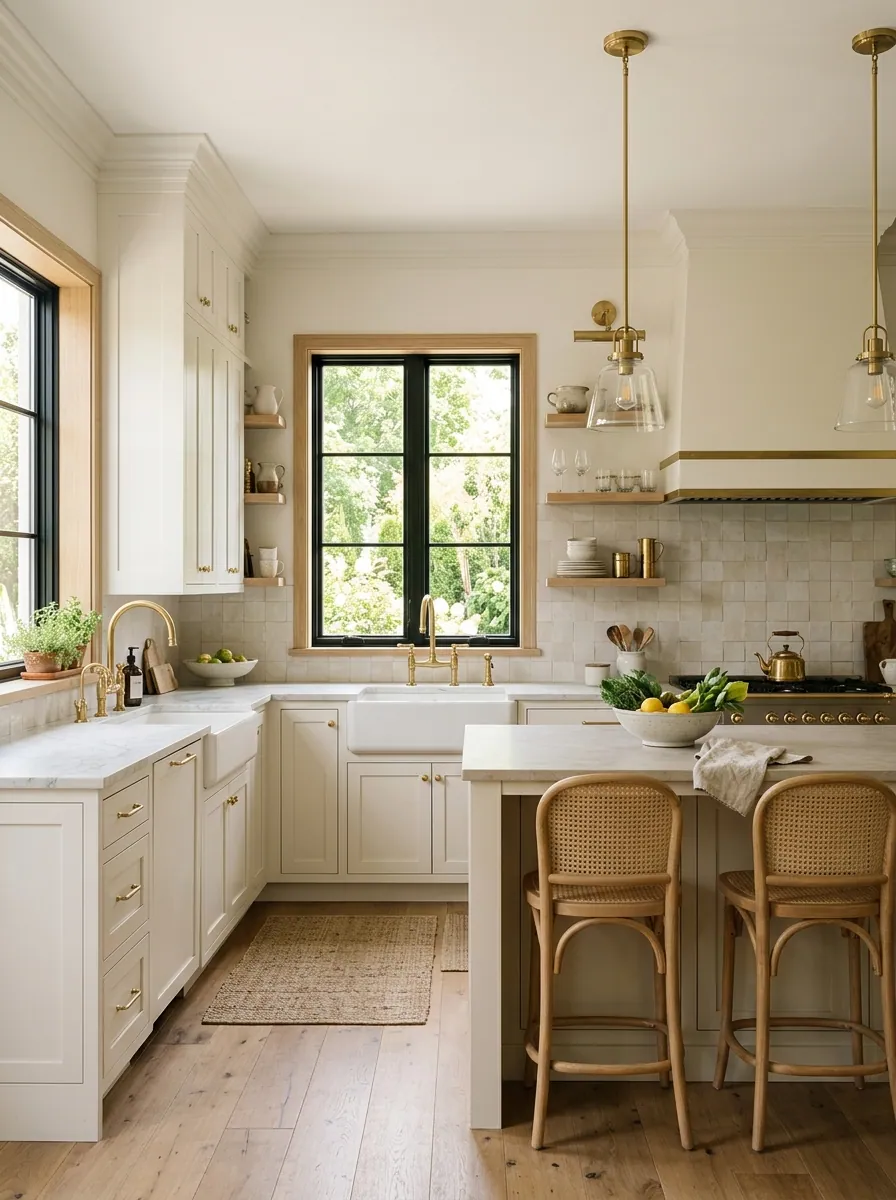
Changing cabinet hardware is one of the easiest ways to update a kitchen without replacing the cabinets.
Warm brass works particularly well with cream, beige, white, walnut, and natural oak.
If you use brass hardware, consider repeating the finish through the faucet or lighting so it feels intentional.
You don’t need brass everywhere. A few coordinated details can be enough.
10. Create a Beautiful Countertop Moment
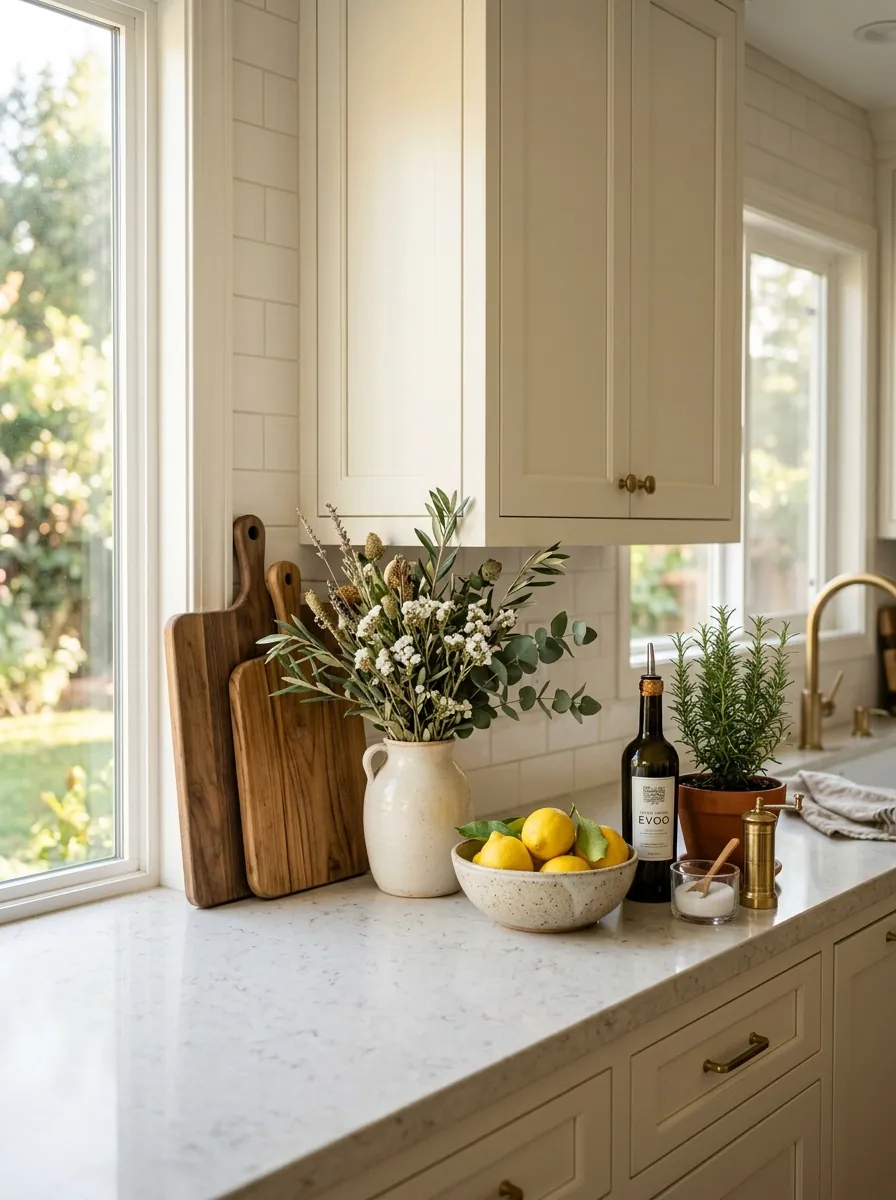
Countertops should remain functional, but that doesn’t mean they need to look completely bare.
Choose a small area to create a decorative arrangement.
A wooden cutting board leaning against the backsplash, ceramic container, bowl of fresh fruit, and small plant can create warmth without taking over the workspace.
The rest of the countertop can remain relatively clear.
11. Add Greenery
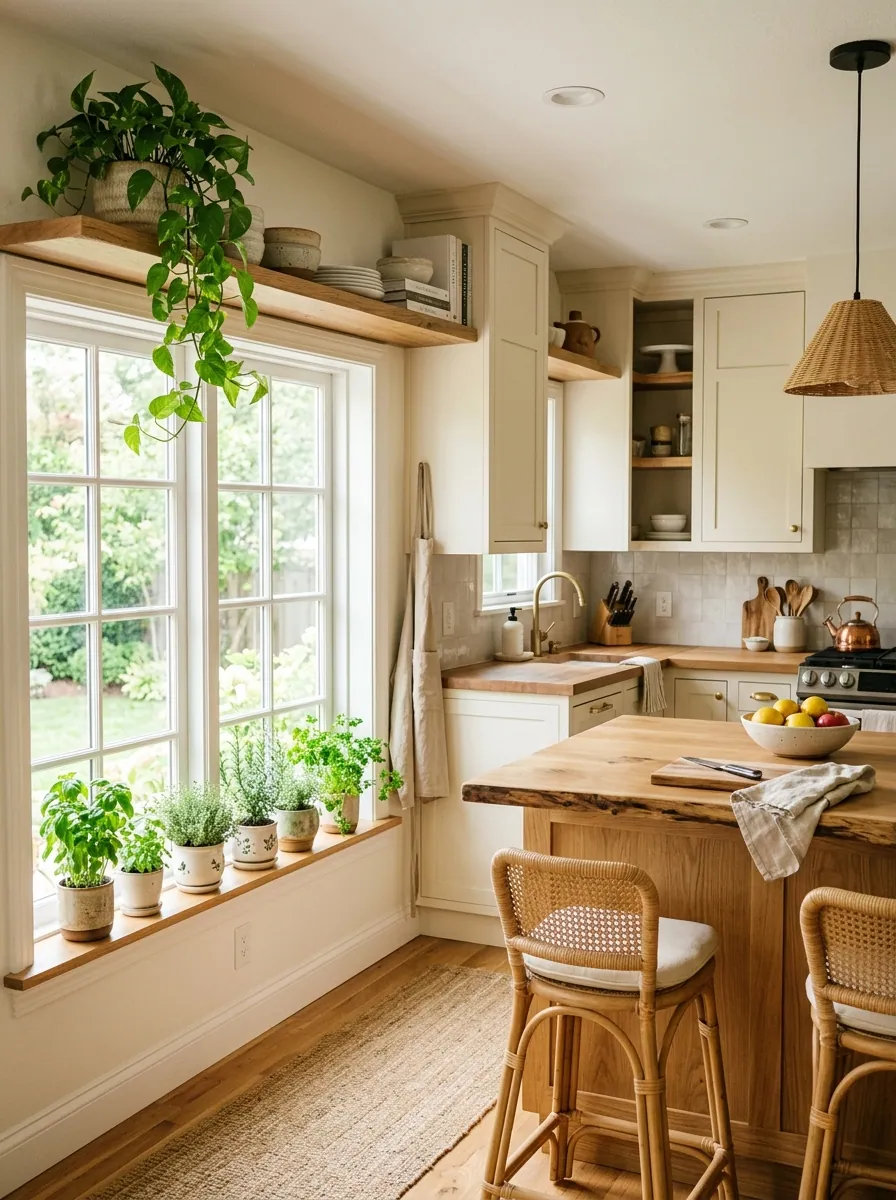
Plants bring softness and life into kitchens.
A small herb collection near a sunny window can also be genuinely useful.
If natural light is limited, choose plants appropriate for lower-light conditions or use realistic faux greenery.
Keep the number of plants controlled. A few well-positioned plants usually have more impact than turning every surface into a garden.
12. Mix Cream Cabinets With Wood
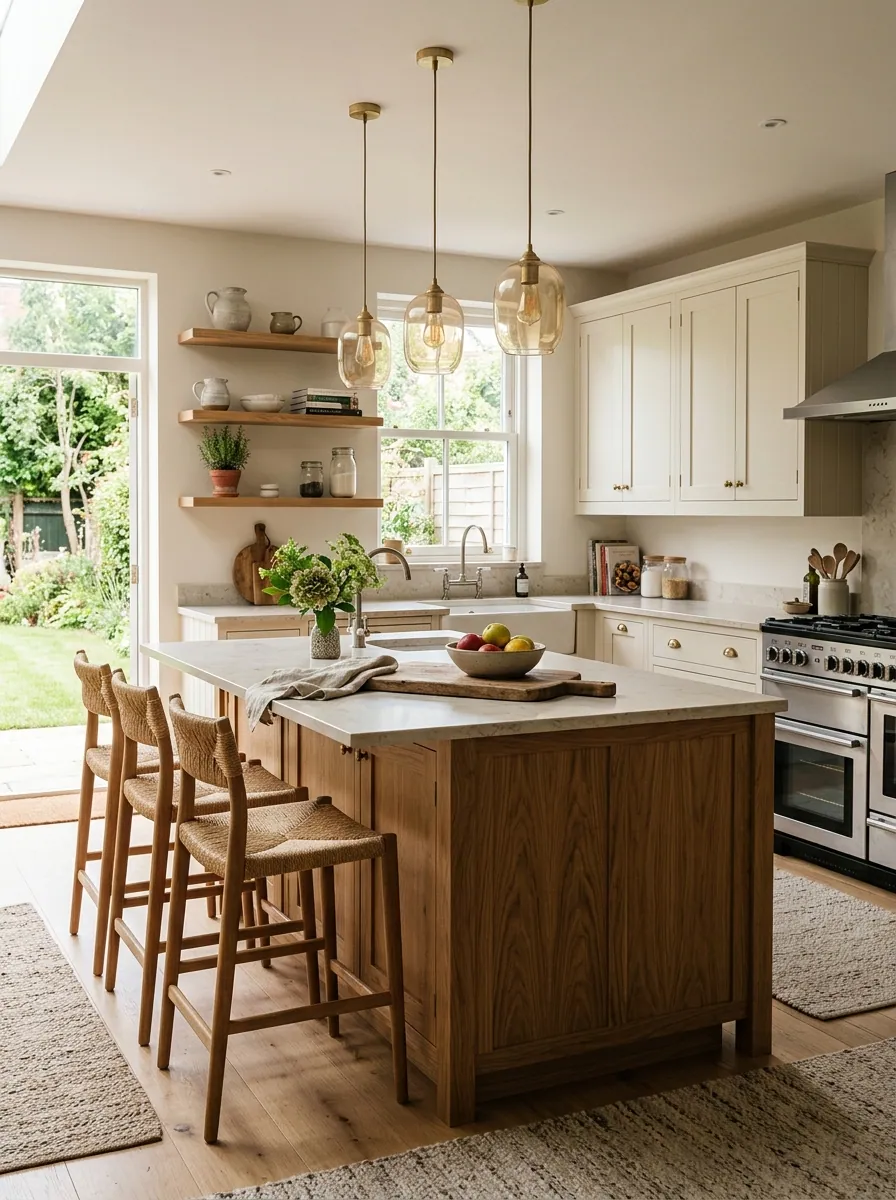
Cream and wood are a particularly effective combination for creating a kitchen that feels warm without becoming visually heavy.
The cream keeps the room bright while wood adds natural texture.
This pairing works with modern, traditional, Scandinavian, farmhouse, and transitional interiors.
13. Create a Pantry Organization Zone
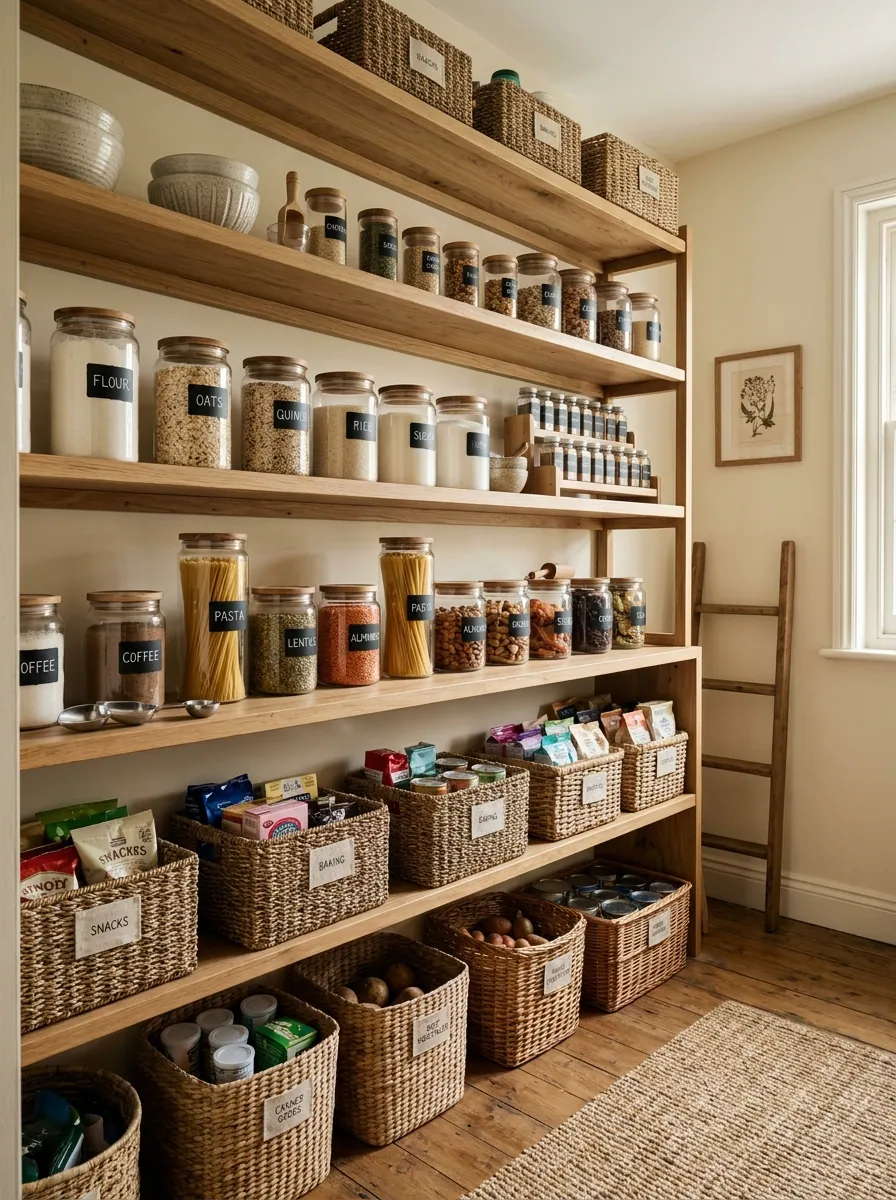
Organization can be part of the kitchen’s aesthetic.
Use matching containers for frequently used dry goods, baskets for smaller items, and clear jars where visibility is useful.
The goal isn’t to make the pantry look perfect for photographs. It is to make everyday items easier to find.
Good organization reduces visual clutter throughout the rest of the kitchen.
14. Choose Comfortable Counter Stools
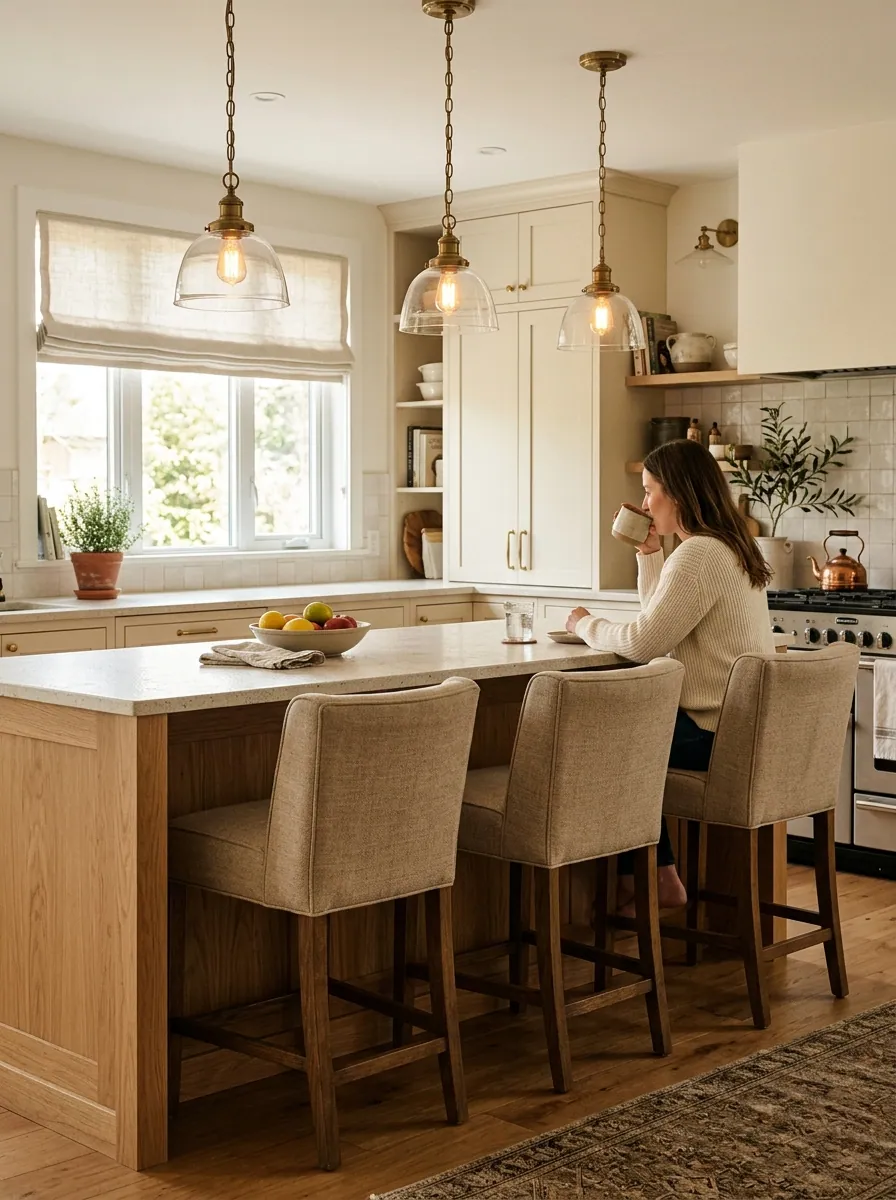
Counter stools are often overlooked even though they contribute significantly to how the kitchen feels.
Instead of choosing stools based only on appearance, consider comfort, height, durability, and how much space they require.
Upholstered stools can make a kitchen feel softer, while wood stools create a more natural appearance.
15. Display Wooden Cutting Boards
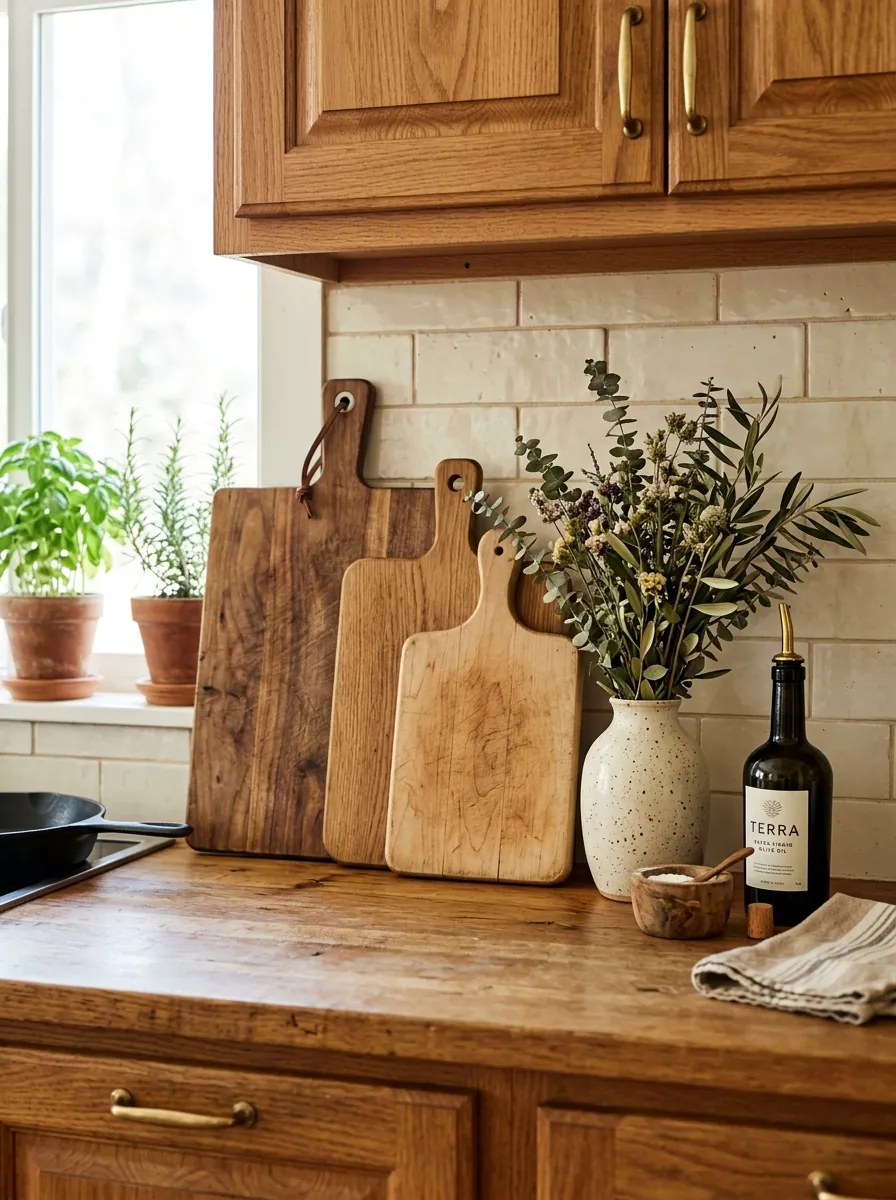
Wooden cutting boards can become decorative objects when displayed thoughtfully.
Lean two or three boards of different sizes against the backsplash.
This adds warmth and texture while keeping useful kitchen tools within easy reach.
Avoid displaying too many. A small collection looks more intentional.
16. Add a Statement Backsplash
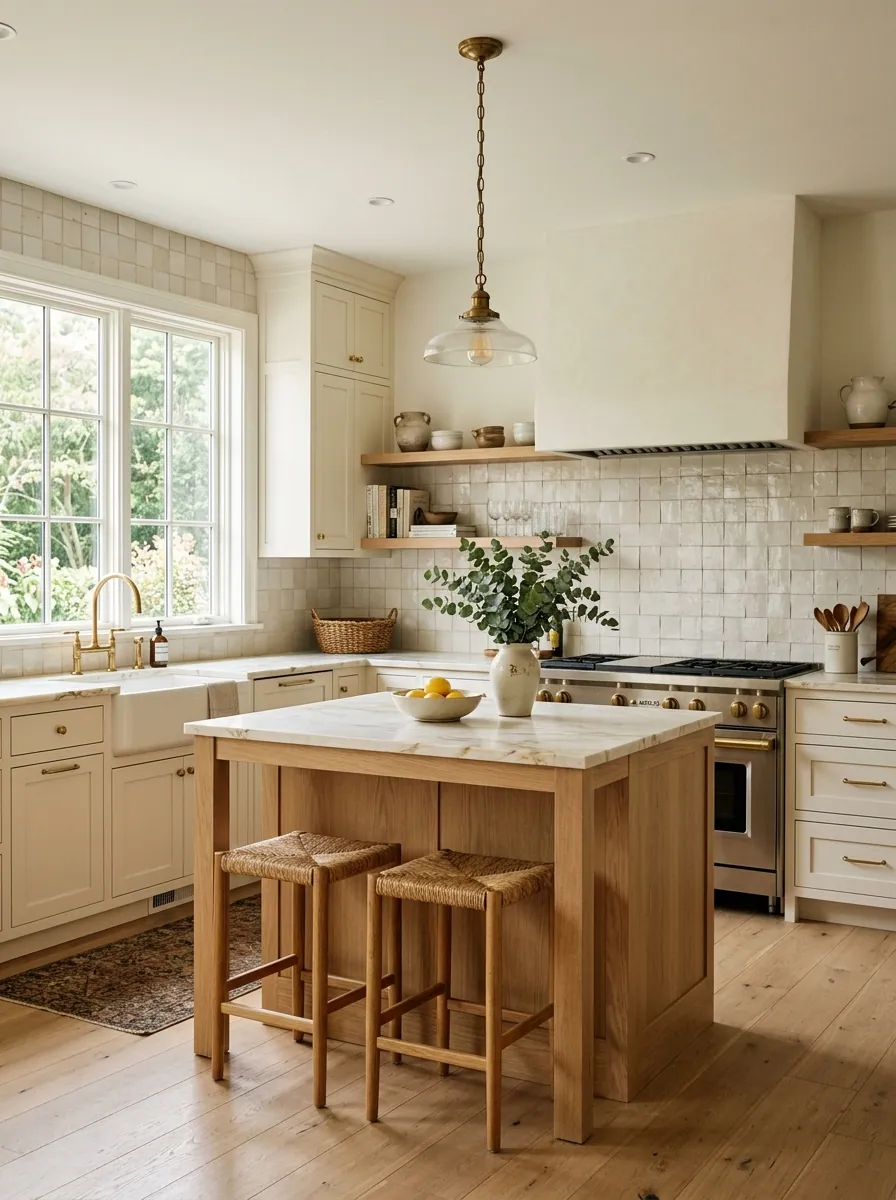
The backsplash is an excellent place to add character.
Consider handmade-look tiles, subtle stone, warm-toned ceramic, or a softly textured surface.
If the cabinets and countertops are already visually strong, keep the backsplash quieter.
A beautiful backsplash doesn’t have to be bold to become an important design element.
17. Create a Small Breakfast Nook
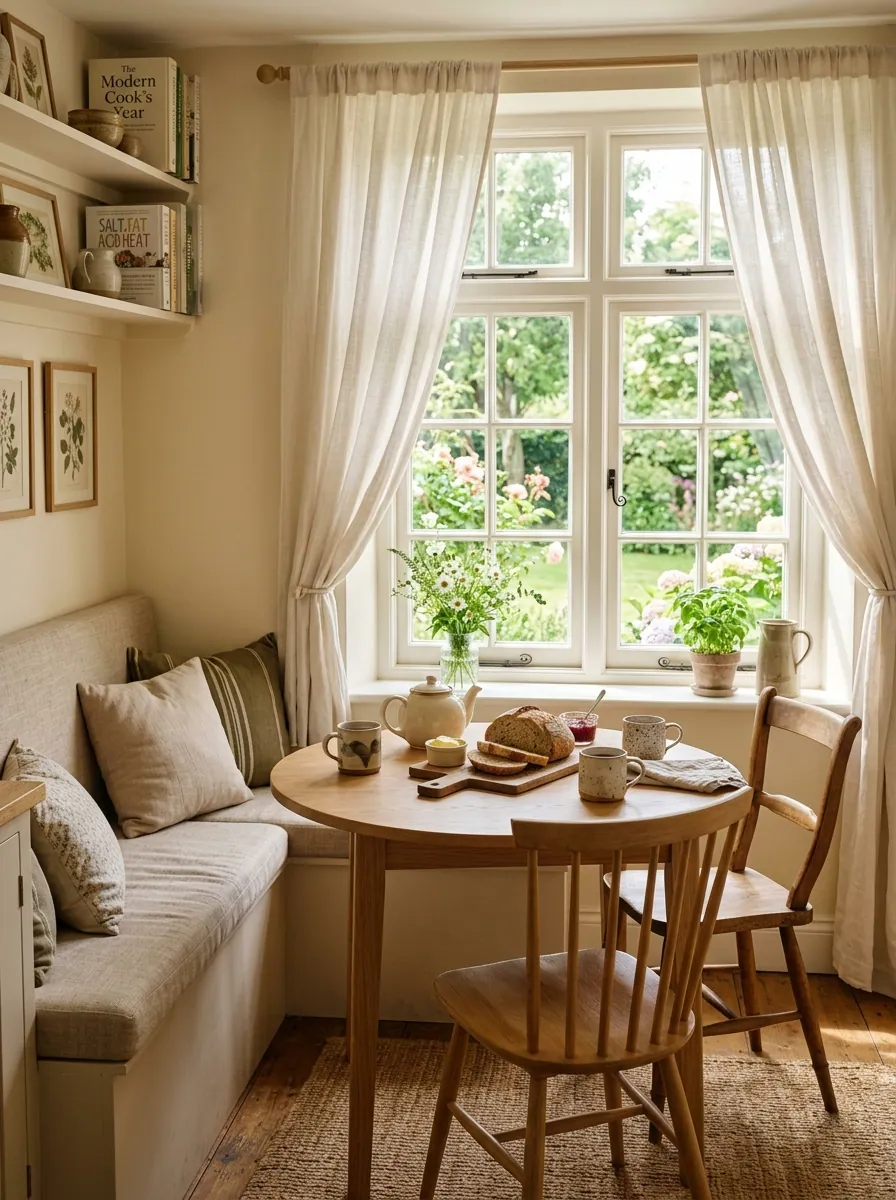
If you have an unused corner near a window, turn it into a breakfast nook.
A small round table is often easier to fit into a compact space than a large rectangular table.
Add comfortable seating, a simple pendant, and soft curtains to create an area that feels separate from the main kitchen without requiring a wall.
18. Use a Gallery Wall in the Kitchen
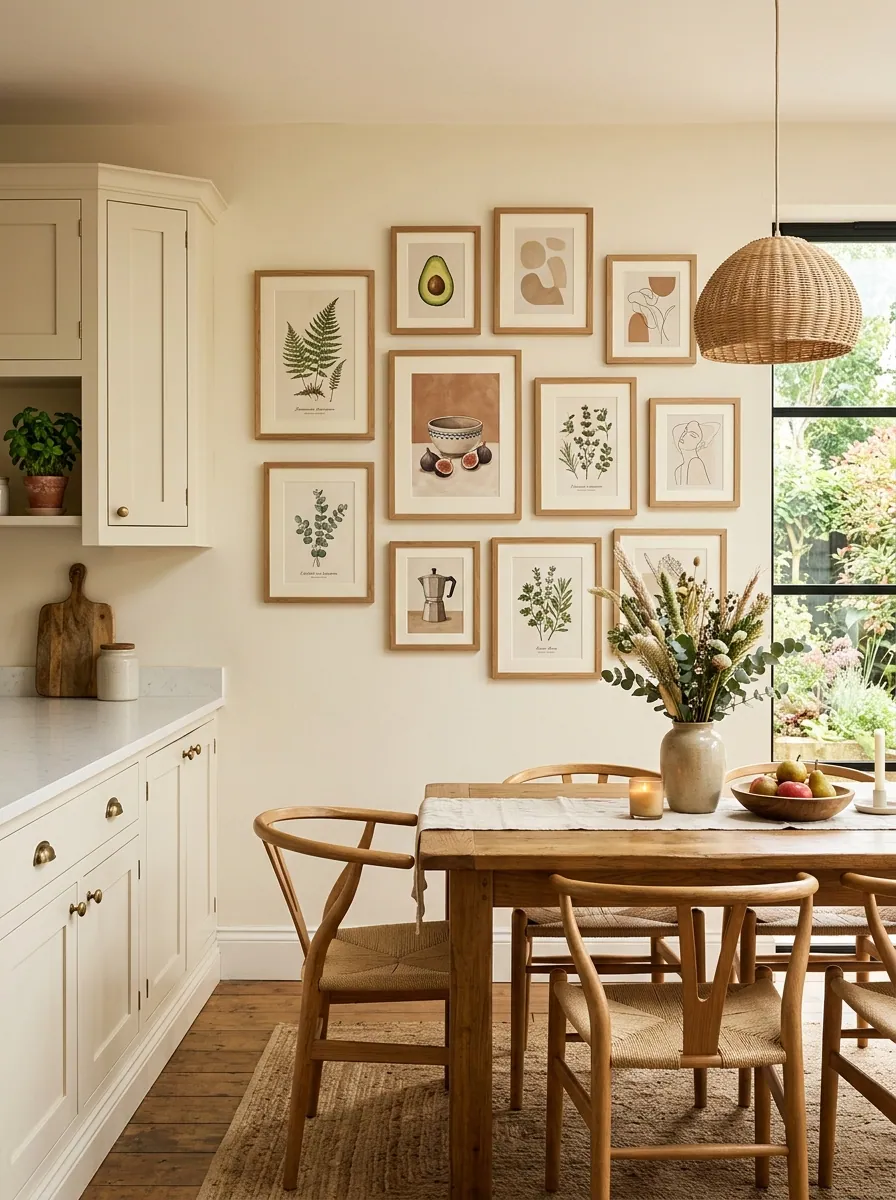
Artwork isn’t reserved for living rooms and bedrooms.
A small gallery wall can make a kitchen feel much more personal.
Choose food illustrations, botanical prints, vintage-inspired artwork, photography, or simple abstract pieces.
Keep the colors connected to the kitchen so the artwork feels integrated rather than randomly added.
19. Add a Vintage-Inspired Piece
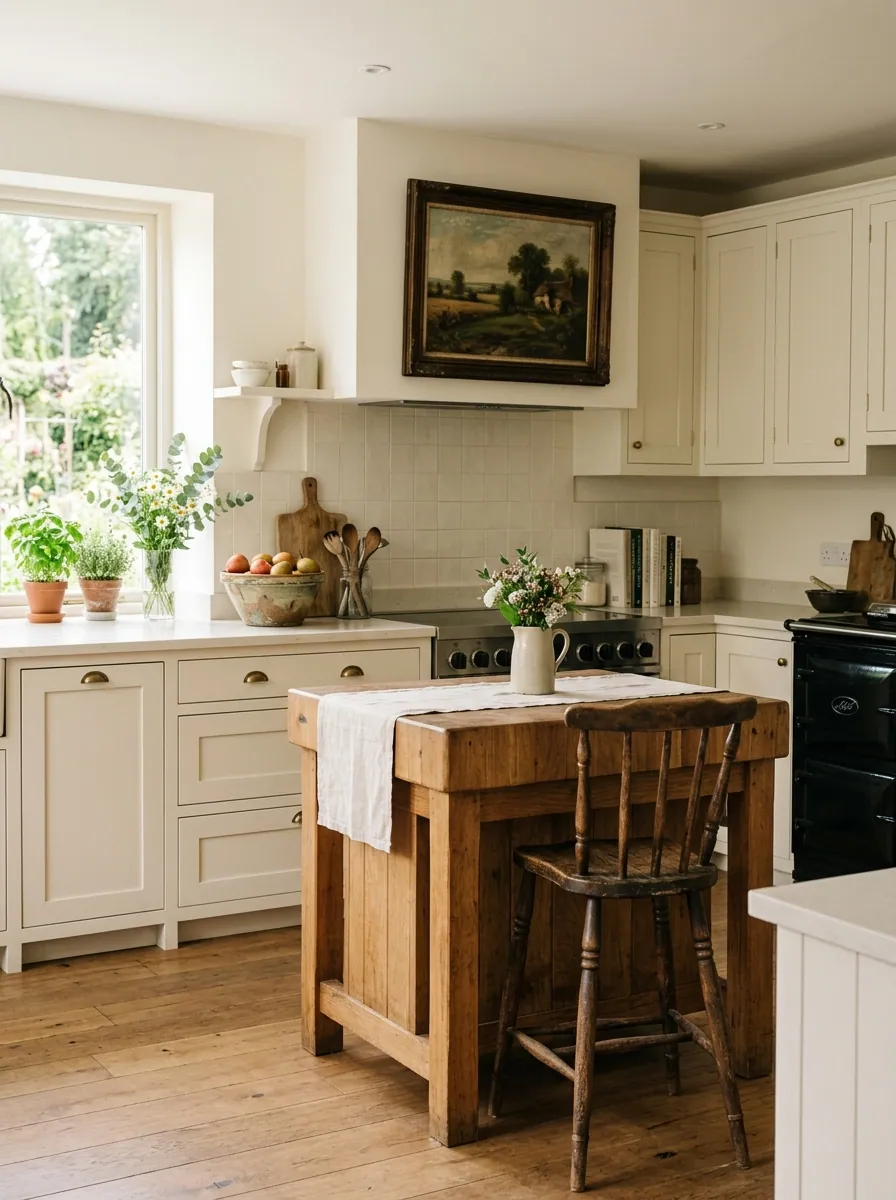
A kitchen where everything is brand new can sometimes feel too polished.
Introduce one piece with character—a vintage stool, antique-style mirror, old wooden cutting board, traditional ceramic bowl, or secondhand cabinet.
The contrast between old and new can make the kitchen feel more personal and collected.
20. Use Glass Cabinet Doors
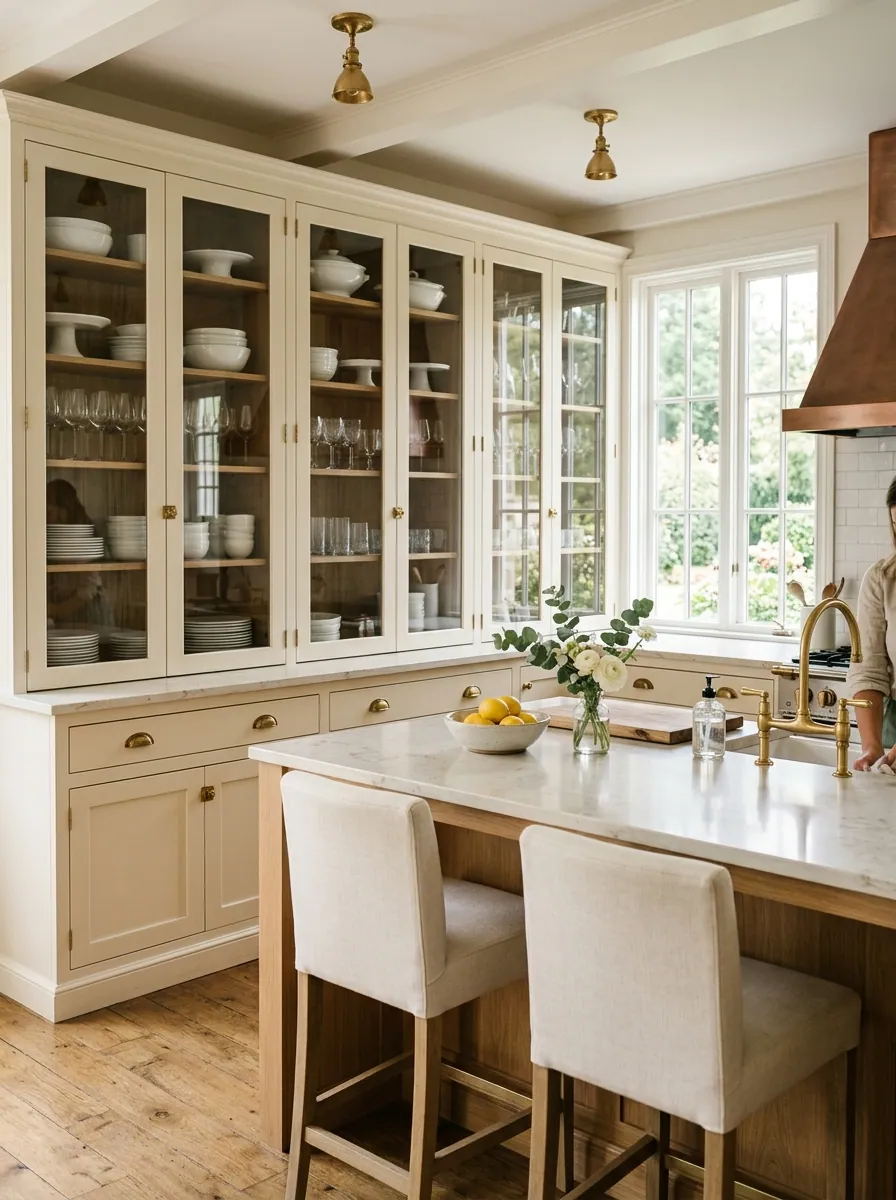
Glass-front cabinets can break up a long stretch of solid cabinetry.
Use them to display your nicest everyday pieces.
Because the contents remain visible, keep the arrangement relatively simple. Similar colors and coordinated dishware will create a much cleaner appearance.
21. Make a Small Kitchen Feel Bigger
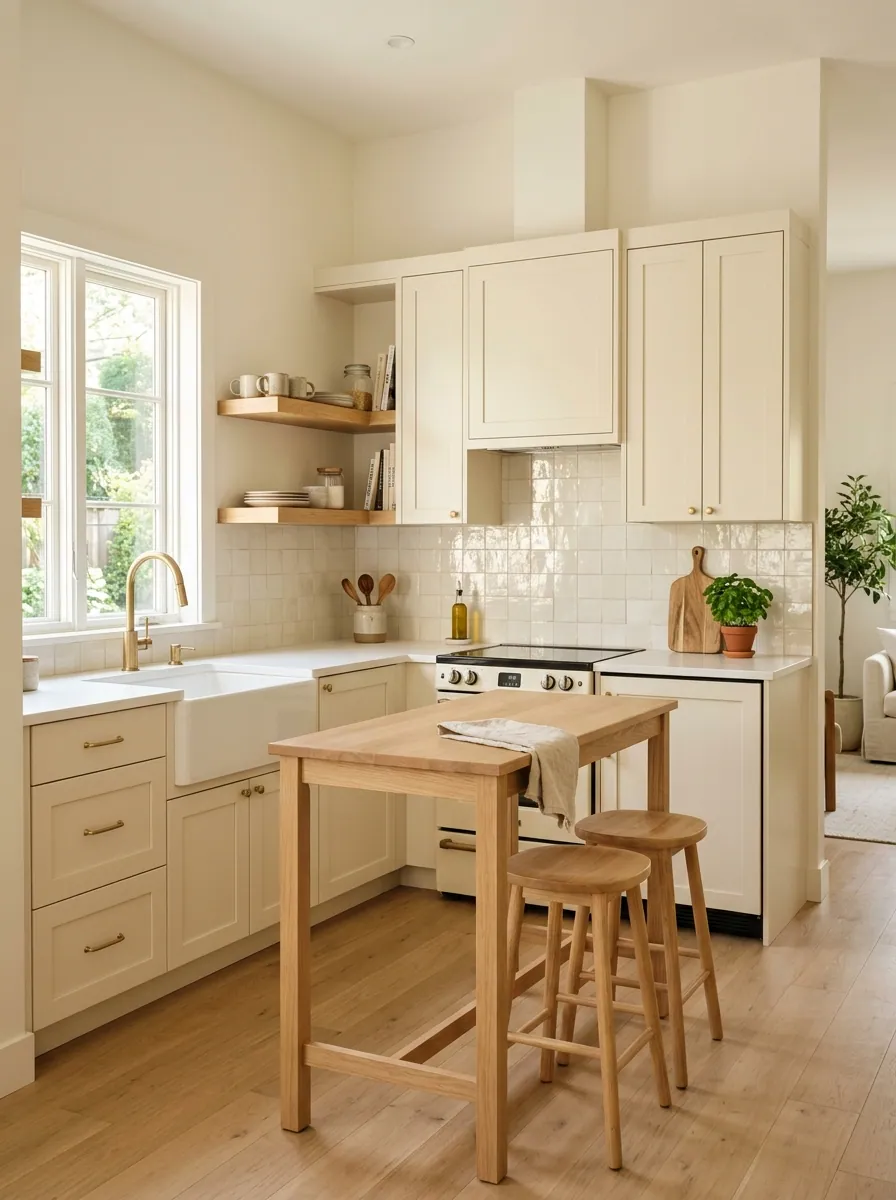
Small kitchens benefit from thoughtful visual editing.
Avoid oversized furniture and unnecessary countertop accessories.
Light cabinetry, reflective surfaces, open shelving, and appropriately scaled furniture can help the room feel more open.
Most importantly, keep pathways clear. A functional small kitchen will always feel better than a crowded one.
22. Use a Deep Earthy Accent
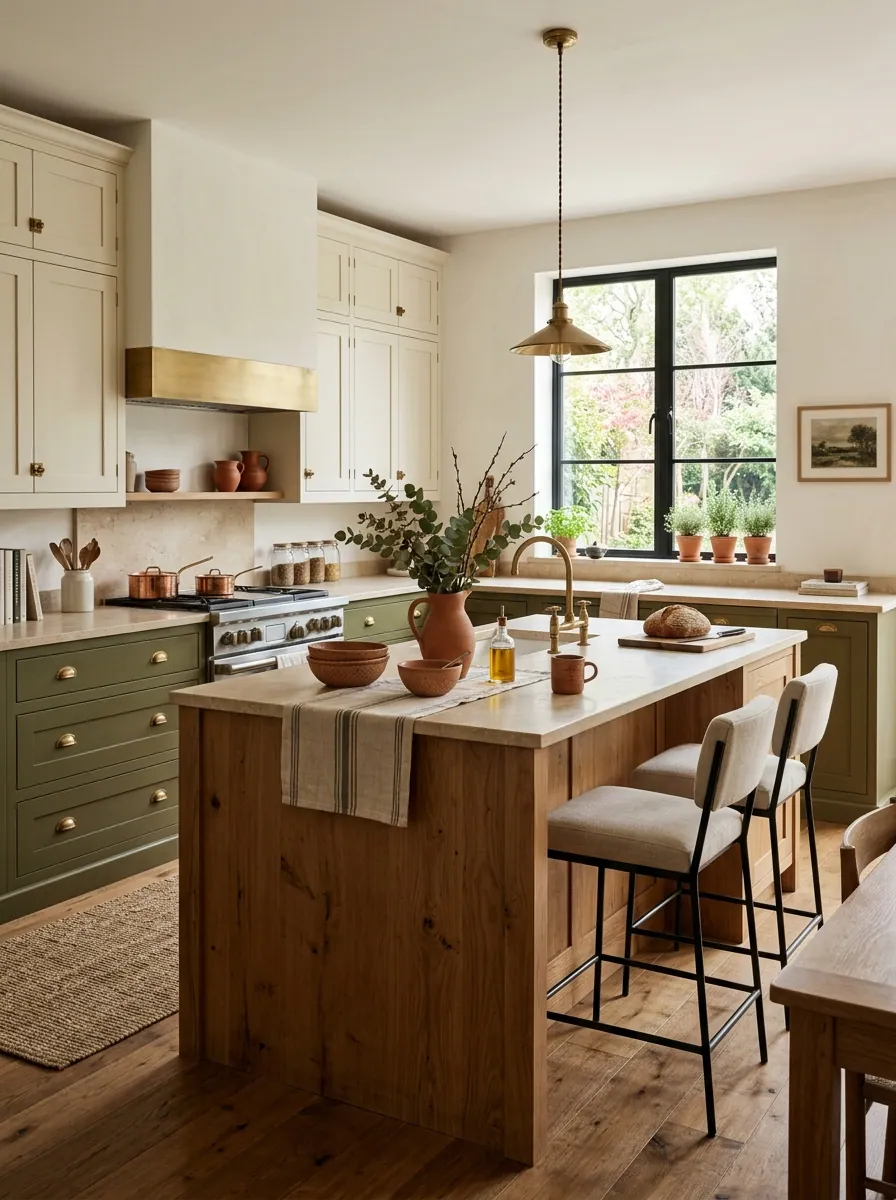
If an all-neutral kitchen feels too predictable, introduce one earthy color.
Olive, muted green, terracotta, warm brown, or dusty blue can add personality without overwhelming the room.
Use the color selectively through lower cabinets, a painted island, stools, artwork, or accessories.
23. Style the Sink Area
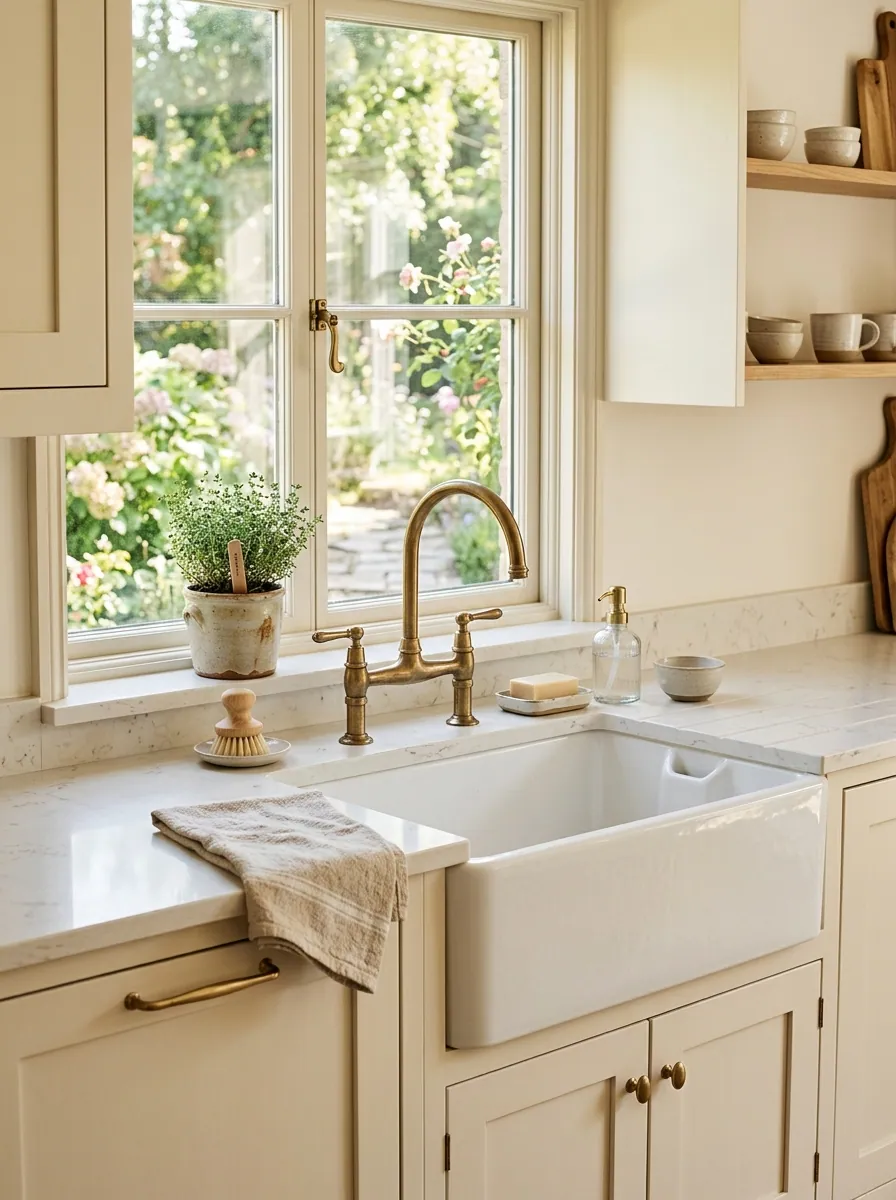
The sink area is used constantly, so it deserves thoughtful design.
A beautiful faucet, simple soap dispenser, small herb plant, wooden brush, and linen towel can make the everyday workspace feel more considered.
Keep only the items you actually use.
24. Add a Slim Kitchen Cart
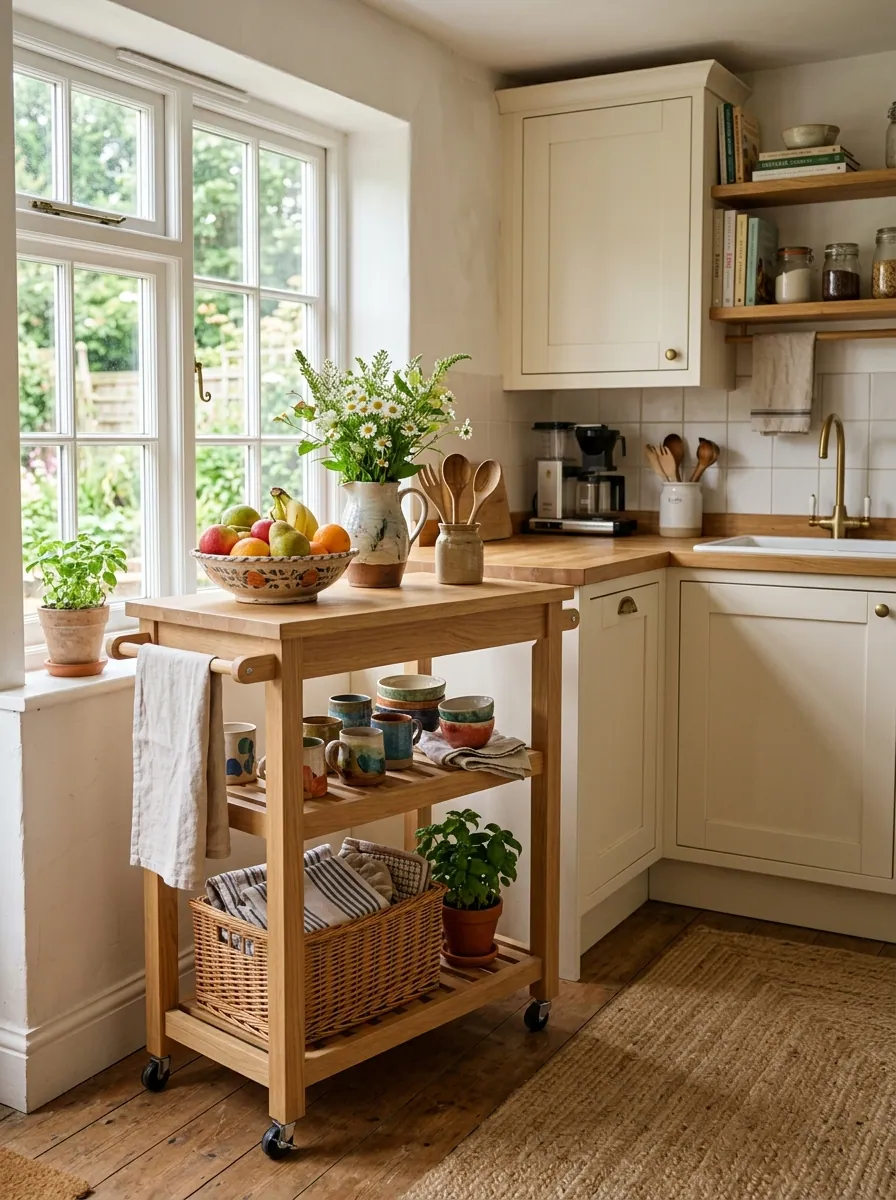
A kitchen cart can provide additional storage and workspace without requiring permanent construction.
Use it for coffee supplies, cookbooks, produce, or frequently used appliances.
A slim design can be particularly useful in smaller kitchens because it can be moved when necessary.
25. Bring in Woven Texture
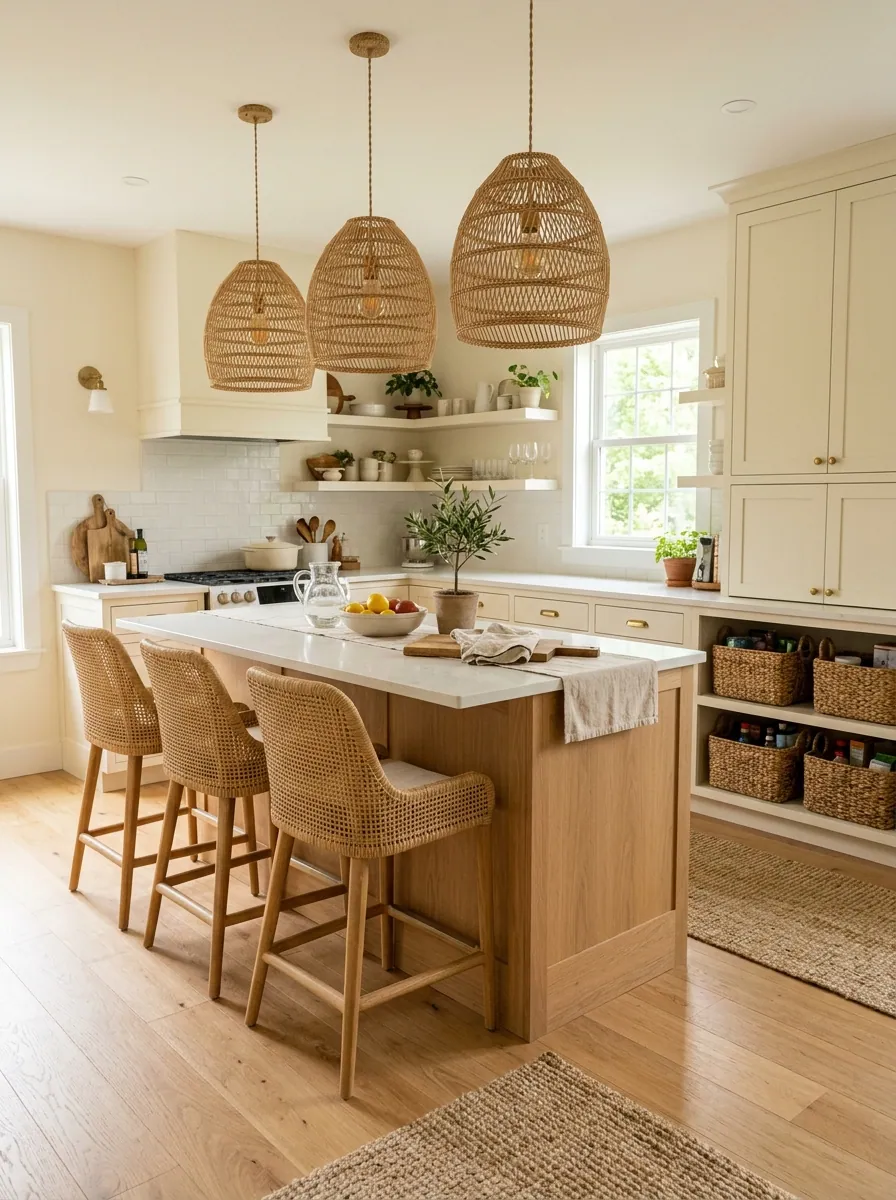
Kitchens contain many hard materials—stone, tile, metal, glass, and cabinetry.
Woven textures help soften that combination.
Try woven pendant shades, baskets, counter stools, or small natural-fiber accessories.
A little texture can make a large difference.
26. Keep Countertops Intentionally Clear
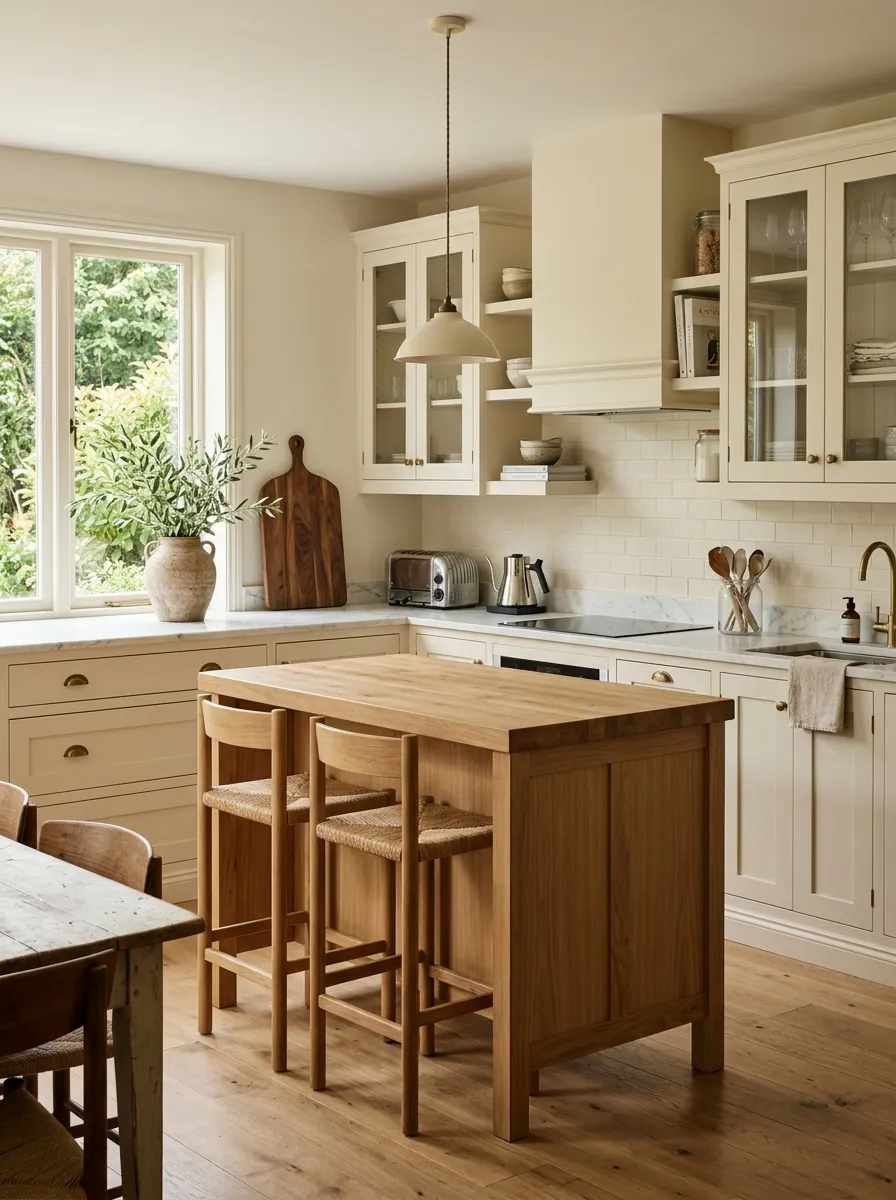
One of the easiest ways to make a kitchen look more expensive is to reduce visual clutter.
You don’t have to hide every appliance. Instead, decide which objects deserve to remain visible.
Keep frequently used items accessible and store everything else when possible.
The result is a kitchen that feels calmer without sacrificing functionality.
27. Create a Cozy Evening Kitchen
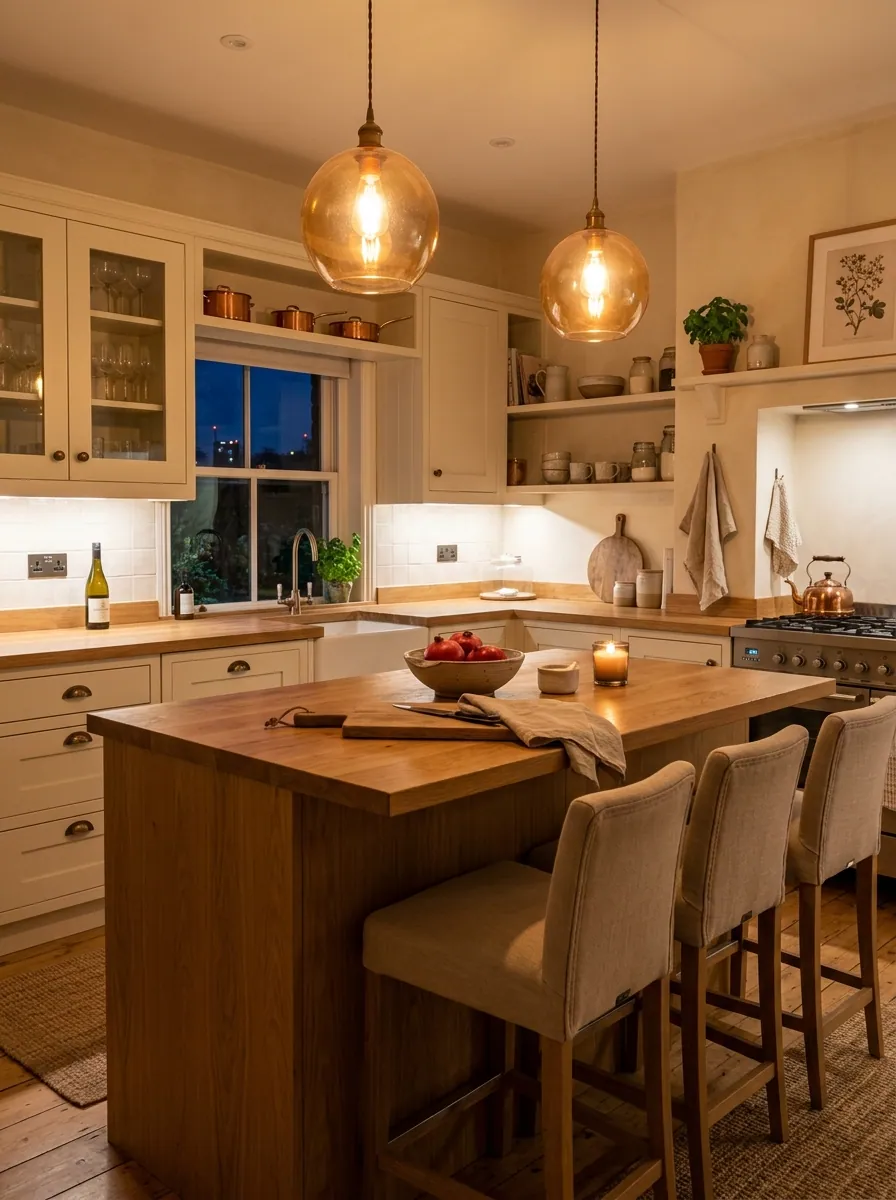
A kitchen can feel completely different after sunset.
Turn on pendant and under-cabinet lighting while keeping the rest of the room softly illuminated.
Warm light reflecting from wood, cream cabinetry, and natural materials creates an atmosphere that feels welcoming rather than purely functional.
28. Connect the Kitchen to the Dining Area
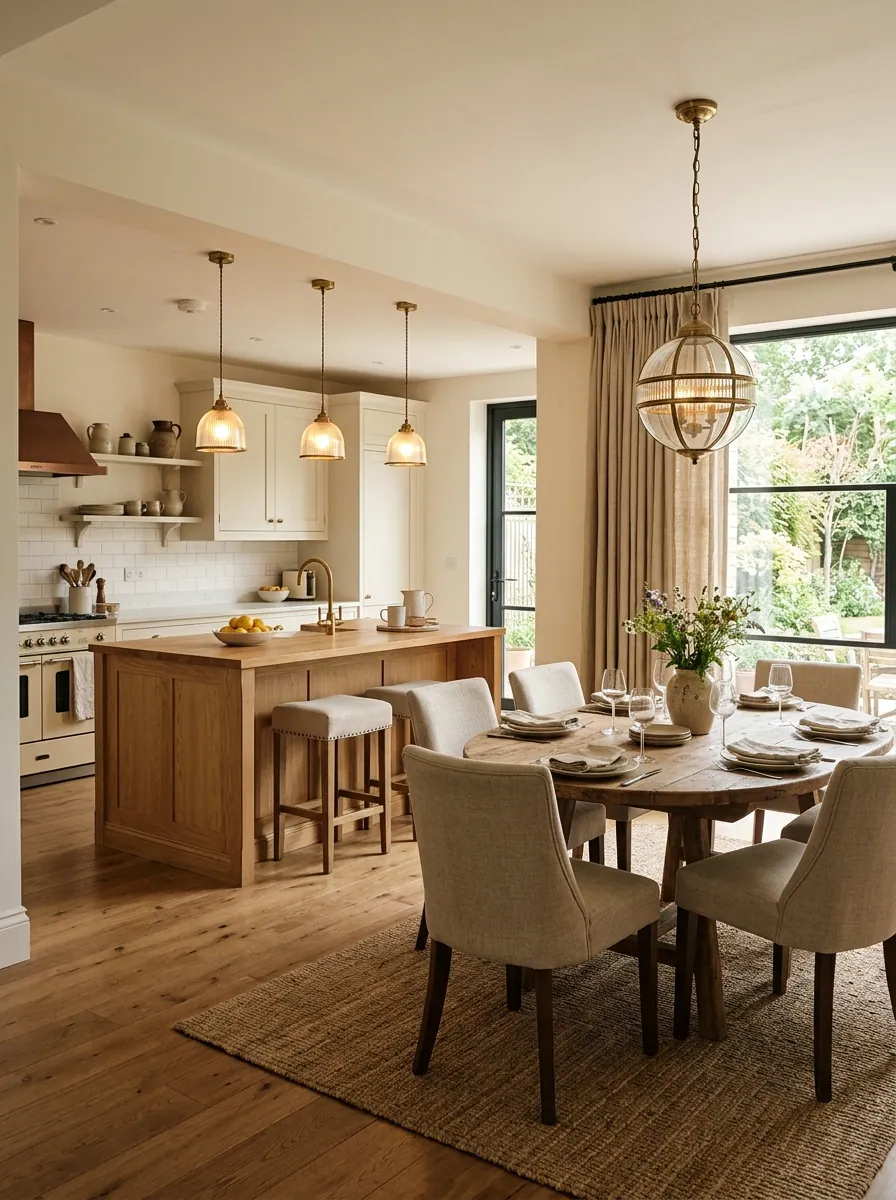
If your kitchen opens into a dining area, treat both spaces as parts of one design.
Repeat materials and colors between them. For example, natural oak in the kitchen can be echoed through the dining table, while cream upholstery can appear on both counter stools and dining chairs.
This creates a smoother visual transition between the spaces.
29. Create a Complete Cozy Kitchen
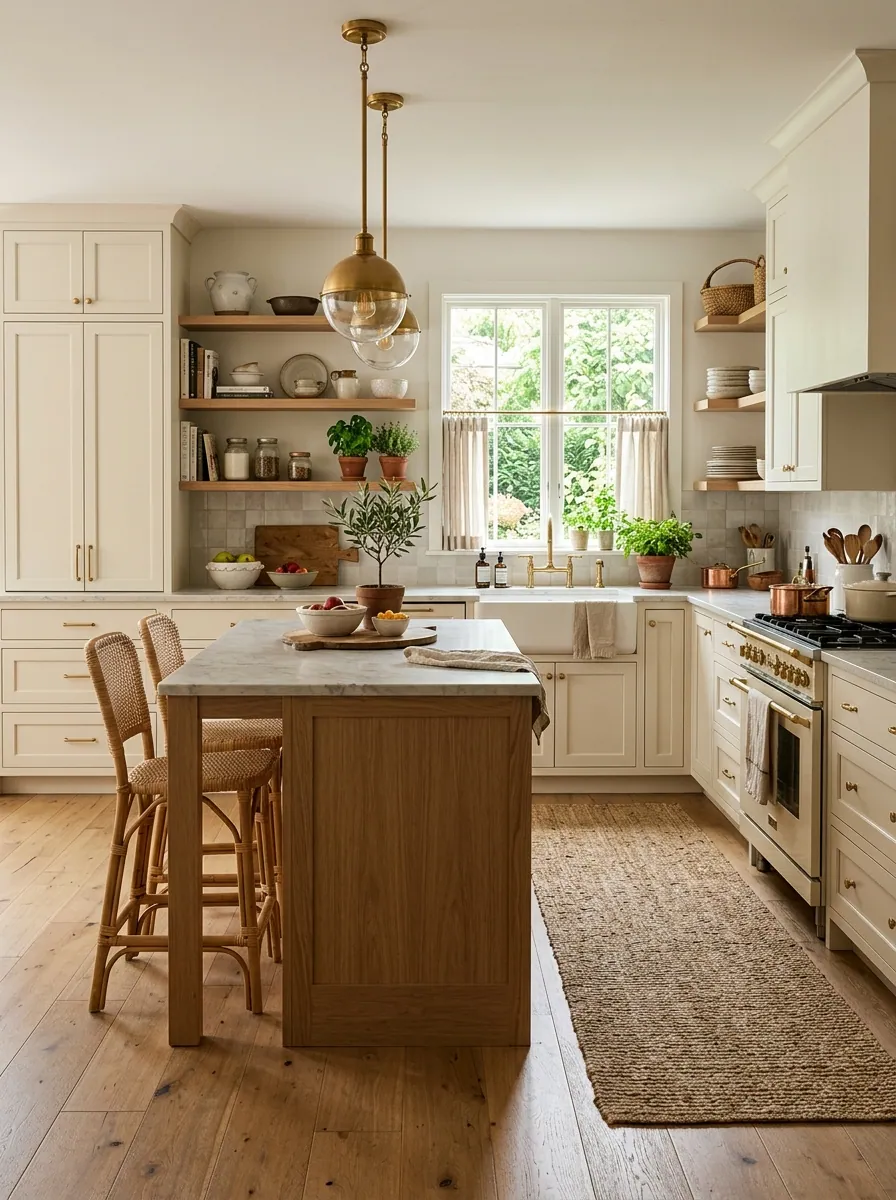
The best kitchens aren’t simply collections of beautiful individual details.
The cabinets, lighting, countertops, furniture, accessories, storage, and colors should all work together.
Start with the largest elements first, then add texture and personality gradually.
A cohesive kitchen doesn’t need to be perfectly styled at all times. It simply needs a strong foundation that still works when real life happens.
How to Make a Kitchen Feel Cozy Without Renovating
You don’t have to replace your cabinets or countertops to change the atmosphere of your kitchen. Start with the elements that are easiest to modify:
- Change the lighting: Replace harsh bulbs with warmer lighting and add a table lamp, pendant, or under-cabinet lighting where appropriate.
- Add natural materials: Wooden cutting boards, woven baskets, ceramic bowls, and natural-fiber stools can soften a kitchen immediately.
- Reduce countertop clutter: Put away appliances and objects that aren’t used regularly to restore visual calm.
- Introduce textiles: A runner, linen towel, seat cushions, or curtains can make a kitchen feel considerably warmer.
- Add greenery: Fresh herbs or leafy plants introduce vibrant life and organic color.
- Update the hardware: New cabinet handles can give existing cabinets a completely fresh character.
These smaller changes are often far more affordable than a full renovation while still making a dramatic visual impact.
Kitchen Ideas by Style
Modern Kitchen
Modern kitchens usually benefit from clean cabinetry, simple hardware, minimal accessories, and strong materials. To prevent a modern kitchen from feeling cold, introduce natural wood, textured rugs, warm lighting, and handmade-looking ceramics.
Minimalist Kitchen
A minimalist kitchen focuses on functionality and visual simplicity. Keep countertops clear, choose a restrained color palette, and use closed storage for items that don’t need to be displayed. The goal isn’t an empty kitchen—it is an organized kitchen where everything has a purpose.
Farmhouse-Inspired Kitchen
Farmhouse-inspired kitchens work beautifully with natural wood, cream cabinetry, traditional hardware, woven baskets, ceramic pieces, and vintage-inspired accessories. A few well-placed traditional details can create the feeling without making the room look themed.
Cozy Modern Kitchen
For a cozy modern kitchen, combine clean-lined cabinetry with warmer materials. Cream cabinets, oak, soft lighting, textured runners, comfortable stools, and simple ceramics can soften a contemporary design.
Earthy Kitchen
Earthy kitchens use colors and materials inspired by nature. Try olive green, terracotta, warm brown, cream, natural stone, and wood. Keep the palette relatively controlled so the different materials can stand out.
Easy Kitchen Updates on a Budget
You can make a kitchen feel noticeably different without spending money on a complete remodel. Try these smaller upgrades first:
- Change cabinet hardware: A fast, high-impact update using brass, matte black, or brushed nickel.
- Add a kitchen runner: Brings softness and color to high-traffic floor space.
- Replace harsh light bulbs: Switch to warm 2700K bulbs for instant evening warmth.
- Introduce warm pendant lighting: Anchors an island or dining nook with focused illumination.
- Display wooden cutting boards: Leaning boards against the backsplash adds instant rustic warmth.
- Add a few ceramic pieces: Artisanal bowls or vases break up sterile surfaces.
- Organize open shelves: Use negative space and curated everyday dishware.
- Add a plant or herbs: Place basil, rosemary, or pothos near natural light.
- Replace old counter stools: Elevates the island with upholstered or woven textures.
- Frame simple artwork: Botanical prints or culinary illustrations make the space feel curated.
- Add woven baskets: Practical storage that adds tactile richness.
- Declutter countertops: Keep only beautiful, high-use essentials on view.
- Add a small coffee station: Groups daily coffee rituals into an intentional nook.
Focus your budget on things you see and touch every single day.
How to Choose Kitchen Colors
Start with the permanent elements. Look at your countertops, flooring, cabinets, backsplash, and appliances before choosing new colors.
If these elements are already neutral, you have plenty of freedom. Some timeless combinations to consider include:
- Cream + oak + beige
- Warm white + walnut + brass
- Cream + olive + natural wood
- Beige + terracotta + oak
- Ivory + chocolate brown + brass
- Warm white + muted blue + wood
The goal isn’t to follow a rigid color formula. Instead, choose colors that work naturally with the materials and daylight already present in your kitchen.
Kitchen Organization Mistakes to Avoid
Keeping everything on the countertop
A few frequently used items are practical. Too many objects quickly create visual clutter and reduce prep space.
Choosing style over function
A beautiful kitchen still needs usable storage, comfortable seating, and enough workspace for actual cooking.
Using too many finishes
Mixing wood, brass, stone, tile, and several cabinet colors can become overwhelming. Choose a few dominant materials and repeat them cohesively.
Ignoring lighting
Even a beautifully designed kitchen can feel cold under harsh overhead lighting. Layer different light sources with dimmable controls.
Filling every open shelf
Open shelving works best when there is plenty of negative space between objects so the room feels airy.
Choosing furniture that is too large
Oversized islands and stools can choke walkways. Always consider the proportions and circulation paths of the room.
Forgetting everyday maintenance
Materials that look beautiful but are difficult to clean may become frustrating over time. Choose finishes and surfaces that suit how your kitchen is actually used.
Frequently Asked Questions
How can I make my kitchen look more stylish?
Start with the biggest visual elements. Improve the lighting, reduce countertop clutter, add natural materials, and create a cohesive color palette. A few intentional decorative pieces can then complete the look.
What is the easiest way to make a kitchen feel cozy?
Warm lighting, natural wood, textiles, greenery, and ceramic accessories are some of the easiest ways to soften a kitchen and give it a comfortable atmosphere.
How can I make a small kitchen feel bigger?
Keep pathways clear, avoid oversized furniture, use lighter colors, reduce countertop clutter, and consider reflective surfaces or open shelving where appropriate.
Should kitchen cabinets and island match?
Not necessarily. A contrasting island can create a beautiful focal point. Cream cabinets with natural oak or walnut, for example, can create warmth and visual interest.
How do I decorate kitchen countertops without making them cluttered?
Choose one or two areas to style rather than decorating every surface. A wooden cutting board, ceramic vase, fruit bowl, or small plant can be plenty.
What colors make a kitchen feel warm?
Cream, beige, warm white, taupe, natural wood, terracotta, olive, caramel, and soft brown can all create a warmer atmosphere.
Are open shelves practical in a kitchen?
They can be, especially for items used frequently. The key is keeping the arrangement simple and avoiding objects that collect excessive dust or grease.
Final Thoughts
A beautiful kitchen doesn’t have to look like a showroom.
The most inviting kitchens balance function, comfort, organization, and personality. They have enough storage to handle everyday life, enough open space to work comfortably, and enough warmth to make people want to stay a little longer.
Start with the changes that will have the biggest impact: lighting, organization, color, and the materials you see most often. Then add smaller details such as greenery, ceramics, artwork, textiles, and natural wood.
Whether you love a warm neutral kitchen, a modern space, an earthy design, or a more traditional look, the goal is the same: create a kitchen that works beautifully for your everyday life while still feeling like a space you’re proud to come home to.

